Content audit service
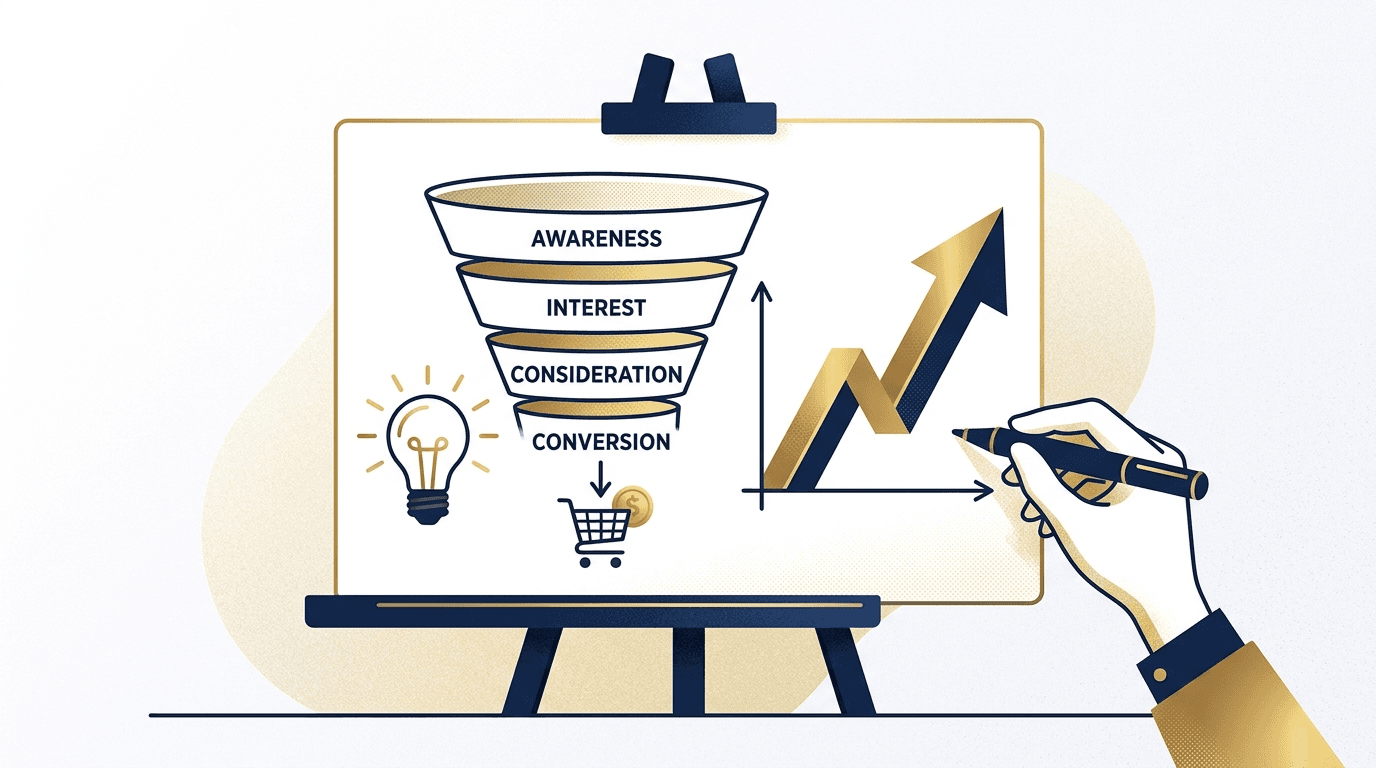
A content audit service evaluates every relevant website asset against search demand, buyer intent, quality, accessibility and commercial performance. It identifies what to retain, improve, consolidate or remove, then prioritises action according to qualified leads, sales and revenue. The result should be an accountable content plan, not another spreadsheet of page views.
Introduction
A website can accumulate years of articles, service pages, landing pages and outdated offers without anyone knowing what contributes to revenue. A content audit replaces assumptions with evidence. It shows where content supports buyers, where pages compete with each other and where effort is being wasted.
For Australian SMEs and mid-market organisations, this matters because content is rarely an isolated publishing exercise. It affects organic visibility, paid campaign relevance, conversion rates, brand positioning and sales conversations. This guide explains what a proper audit covers, how decisions should be made and what to expect from a content audit service.
Key takeaways
The value of a content audit comes from the decisions it enables, not the size of its spreadsheet. A useful audit connects page-level evidence with buyer intent and commercial outcomes. It also distinguishes content problems from technical, positioning and measurement problems that cannot be solved by rewriting copy alone.
Audit content against qualified leads, sales and revenue, not traffic alone.
Combine analytics, search data, conversion tracking and manual quality review.
Assign every page a clear action: retain, improve, consolidate, redirect or remove.
Protect useful pages before pruning low-performing content.
Prioritise high-intent service and product pages before speculative publishing.
Fix measurement before claiming that content has succeeded or failed.
Summary table
A commercial content audit should separate evidence, diagnosis and action. The table below shows the main audit areas, the questions each one answers and the decisions that should follow. These areas overlap, but treating them separately prevents a weak metric, such as low traffic, from becoming the sole reason to delete useful content.
Audit area | Core question | Evidence reviewed | Likely action |
Search demand | Does the page match language buyers use? | Search queries, rankings, impressions and intent | Reposition, expand or consolidate |
Commercial value | Does it contribute to enquiries or revenue? | Leads, assisted conversions, sales and CRM outcomes | Retain, strengthen or deprioritise |
Content quality | Is it useful, accurate and complete? | Expert review, factual currency and task completion | Update, rewrite or retire |
Technical health | Can search engines access and understand it? | Indexing, canonicals, internal paths and metadata | Repair or redirect |
User experience | Can visitors understand and act on it? | Page structure, readability, mobile use and calls to action | Restructure or simplify |
Brand alignment | Does it support current positioning and offers? | Tone, claims, audience fit and message consistency | Reframe or remove |
What is a content audit service?
A content audit service is a structured review of website content, performance data and commercial relevance. It creates a complete inventory, evaluates each asset against agreed criteria and converts the findings into prioritised actions. Unlike a basic SEO scan, it considers whether content attracts the right buyers and supports measurable business outcomes.
The inventory commonly covers service pages, product pages, articles, guides, landing pages, location pages, case studies and downloadable resources. It may also include content outside the main website when those assets influence search visibility or conversion paths.
A strong service combines machine-assisted collection with human judgement. Crawling software can collect titles, headings, status information and metadata. Analytics can show visits and tracked actions. Search Console can reveal queries, impressions and clicks. None of those tools can independently decide whether a page reflects the offer, answers a buyer's concern or creates a credible path to enquiry.
That judgement is the difference between a content audit and a data export.
Digital NSW's content audit guidance assesses whether content is accessible, useful, readable, accurate, findable and appropriate for the brand or voice. Those are sound public-sector criteria. For a commercial website, I add another requirement: can the content be connected to buyer progression, qualified leads or revenue?
What should a professional content audit assess?
A professional audit should assess content quality, organic search performance, technical accessibility, buyer intent, conversion contribution and brand alignment. These dimensions must be reviewed together. A page can attract traffic while generating no meaningful demand, or receive little traffic while supporting high-value sales conversations and paid campaigns.
Audience and buyer intent
The first question is not whether a page ranks. It is whether the page serves a buyer the organisation wants.
An audit should map content to the ideal customer profile, the problem being solved and the likely stage of consideration. It should distinguish informational research from commercial comparison and immediate service demand. Search volume can indicate demand, but intent determines whether that demand is relevant.
For example, a mortgage broker may attract broad traffic through explanations of financial terminology. That content can be useful, but a suburb service page or loan comparison page may sit closer to an enquiry. The audit should recognise those different roles rather than judging both pages by traffic alone.
Usefulness, accuracy and depth
Google's guidance on creating helpful, reliable, people-first content asks whether material provides original information, substantial coverage and a satisfying experience. A content audit should apply these questions page by page rather than treating word count as a proxy for quality.
Reviewers should check whether the page answers the implied question, supports claims, reflects current services and includes necessary caveats. Thin content is not simply short content. A concise service page can be effective when it explains the offer, audience, process, proof and next step without forcing visitors through irrelevant text.
Accuracy also requires ownership. Each important page should have someone responsible for reviewing claims when products, regulations, prices or internal processes change.
Findability and technical signals
Content cannot perform organically if search engines cannot reliably discover, index and interpret it. The audit should examine indexability, canonical signals, internal linking, duplicate topics, metadata and page status.
Search performance data adds context. A page with impressions but weak clicks may have a title, intent or competitive positioning problem. A page ranking for the wrong query may need tighter focus. Several pages receiving impressions for the same commercial topic may need consolidation.
Technical findings still require restraint. Changing a title or redirecting a URL can affect established visibility. Recommendations should account for existing queries, backlinks and conversion value before implementation.
Accessibility and readability
Accessible content benefits people using different devices, browsers and assistive technologies. The W3C Web Content Accessibility Guidelines provide a recognised framework covering perceivable, operable, understandable and robust digital content.
At page level, an audit should review heading order, descriptive link text, image alternatives, table structure, form labels and plain language. It should also consider whether dense paragraphs, unexplained jargon or vague buttons create unnecessary friction.
Conversion and commercial contribution
A page should be assessed against its intended job. That may be generating an enquiry, supporting product discovery, answering an objection or helping a salesperson close an opportunity.
This requires more than counting form submissions. The audit should examine call tracking, ecommerce revenue, CRM lead quality and assisted journeys where available. If measurement is incomplete, that limitation should be documented. Missing tracking is not evidence that the content has no value.
How does the content audit process work?
The process should move from business context to inventory, measurement validation, page review, prioritisation and implementation planning. Starting with a crawler is backwards. Before collecting URLs, the auditor needs to understand the offer, ideal customer, profitable services, sales process and outcomes the website is expected to support.
Profile: define the commercial context
Our Profile, Plan, Perform framework starts by finding the advantage hiding in plain sight. For a content audit, Profile means clarifying positioning, ideal customers, priority offers and buyer concerns before scoring pages.
This step prevents generic recommendations. A recruitment firm's candidate content, for example, should not be judged by the same commercial criteria as its employer service pages. Both audiences matter, but they create different journeys and outcomes.
The auditor should also document constraints. These may include compliance requirements, internal approval processes, seasonal demand and the organisation's capacity to implement recommendations.
Plan: build and validate the inventory
The inventory combines crawl data with analytics, Search Console, XML sitemaps, content management system records and other known assets. This reduces the risk of missing orphaned pages or campaign landing pages that are not prominent in navigation.
Each asset should be labelled by content type, topic, audience, intent and intended conversion. Performance evidence can then be added without confusing unlike pages.
The measurement setup must be checked before analysis. Google Analytics events may capture button clicks or submissions, but an event is not automatically a qualified lead. Search Console clicks show organic visits, not sales. CRM and revenue data provide the missing commercial layer where integrations are available.
Perform: make and implement decisions
The final stage assigns an action, owner, rationale, priority and measurement requirement to each relevant asset. Recommendations should be grouped into implementation batches based on expected impact, risk and effort.
Accountable execution matters here. A long list of recommendations without ownership or sequencing simply moves the content problem into a spreadsheet. High-intent pages with clear measurement gaps should usually be addressed before low-value editorial opportunities.
After implementation, affected pages should be monitored against their intended outcomes. Rankings and traffic remain useful diagnostic signals, but reporting should be against leads and revenue wherever the data permits.
How should pages be retained, improved or removed?
Page decisions should account for relevance, demand, quality, authority, conversion value and strategic purpose. Low traffic alone is not a deletion rule. The safest approach is to preserve proven value, improve pages with credible potential, consolidate overlapping assets and remove content only when it has no defensible user or business role.
Retain
Retain content that is accurate, useful and performing its intended role. Avoid rewriting successful pages merely to demonstrate activity. Even apparently minor changes can alter relevance or reduce clarity.
A retained page may still need monitoring, stronger internal visibility or a clearer conversion path. Retain does not mean ignore.
Improve
Improve pages where the topic and intent are valuable but execution is weak. Typical changes include sharpening the audience, answering missing questions, adding credible evidence, correcting outdated claims, restructuring headings and improving calls to action.
The recommendation should identify the actual gap. Instructions such as "add more words" or "make it more SEO friendly" are not adequate briefs.
Consolidate and redirect
Consolidation is appropriate when several pages compete for the same intent or divide useful information unnecessarily. The strongest destination should satisfy the complete task, while retired URLs should be redirected where a relevant replacement exists.
Consolidation requires checking existing search queries, inbound links and conversions. Combining pages without this evidence can remove useful entry points.
Remove
Removal is justified when content is inaccurate, irrelevant, unsupported and without meaningful demand or strategic value. Examples include expired offers with no replacement, obsolete service descriptions and duplicate pages created by past campaigns.
Do not equate pruning with SEO progress. Deleting weak pages does not automatically improve the remaining site. The commercial question is whether removal improves clarity, trust, crawl paths or buyer experience.
What results should a content audit produce?
A content audit should produce a defensible action plan, cleaner measurement and a better allocation of content effort. Its commercial impact comes through implementation: stronger priority pages, reduced topic overlap, clearer conversion paths and fewer resources spent maintaining assets that do not support current buyers or offers.
The core deliverables should include:
a validated inventory of relevant assets
clear assessment criteria and known data limitations
page-level actions with reasons
topic and intent mapping
priority recommendations grouped by impact and risk
content briefs for important rewrites or missing pages
measurement requirements and reporting responsibilities
Results should not be reduced to traffic growth. My position is simple: more activity is not progress unless it produces qualified leads, sales or revenue.
I saw this clearly with a Queensland mortgage broker that had been relying on outbound lead chasing. Targeted SEO, content and high-intent keyword optimisation moved its primary keyword from page three to the leading organic position. According to 3P Digital's own account data, organic traffic increased 312% in six months and search generated more than 40 qualified leads per month.
The important result was not the traffic increase by itself. It was the connection between improved visibility and qualified demand.
A national recruitment firm provides another example. We replaced heavy dependence on job boards with an SEO and content strategy built around consistent organic demand. According to 3P Digital's own campaign data, that strategy generated 574 leads at a 63.5% lower cost per lead. Again, the standard was commercial efficiency, not publishing volume.
When does a business need a content audit?
A business needs a content audit when its website has accumulated conflicting pages, organic performance has weakened, offers have changed or reporting cannot explain which assets contribute to demand. Audits are also valuable before a redesign, migration, rebrand, acquisition or major content investment, when careless decisions carry greater risk.
Common warning signs include:
several pages targeting the same service or search intent
articles generating visits but few relevant enquiries
important offers buried beneath outdated content
inconsistent claims, tone or audience definitions
declining impressions or rankings without a clear diagnosis
leads that cannot be traced back to meaningful content interactions
a publishing calendar driven by topic volume rather than buyer demand
Audit frequency should reflect change and risk rather than an arbitrary calendar. A large catalogue, active publishing programme or frequently changing service mix needs more regular review than a stable professional services website.
Monitoring should continue between formal audits. Search visibility, conversion tracking and content accuracy can change at different speeds. A full audit is the deeper decision process, while monitoring identifies when that process should be repeated.
How should you choose a content audit service?
Choose a provider that can connect content recommendations to positioning, search intent, analytics and revenue measurement. Ask how it validates lead quality, handles existing rankings and prioritises implementation. Avoid services that promise value based mainly on automated scores, page counts or the volume of recommendations delivered.
A capable provider should be able to explain:
what information it needs about customers, offers and margins
which data sources it will review
how manual assessment complements automated collection
how it handles pages with limited or missing data
how recommendations account for migration and redirect risk
what implementation support is included
how outcomes will be measured after changes are made
Pricing will vary with site complexity, data quality, catalogue size and the depth of manual review. A small service website is different from an ecommerce catalogue or a multi-location organisation. Scope should therefore be based on decision complexity, not simply the number of crawlable URLs.
Ask to see a sample deliverable with commercially sensitive information removed. You should be able to understand why an action is recommended, what happens next and how success will be judged.
The audit should start with profitable intent, not old content
My contrarian view is that most content audits begin in the wrong place. They start with everything the business has published. I start with what the business needs to sell, who should buy it and how demand is measured. Only then is the existing library useful as evidence.
This changes the priority order.
Imagine a professional services website with a large article archive and weak service pages. A conventional audit may spend most of its time grading articles because they dominate the URL count. A commercially focused audit first asks whether buyers can find, understand and act on the core offer. The service pages may deserve attention before the archive.
The same logic applies to scale. According to 3P Digital's own project data, we optimised 324 product pages for a medical ecommerce catalogue in one day, with 192 ranking in Google's top 10 when results were verified in July 2026. That speed was possible because the catalogue structure, search intent and optimisation rules were clearly defined. It was not a licence to automate judgement indiscriminately.
A useful audit therefore creates separate workstreams. High-intent commercial assets receive detailed manual attention. Repetitive catalogue pages may use controlled templates and validation. Informational content is assessed according to its role in discovery, trust and assisted conversion.
This is Profile, Plan, Perform applied to content. Understand the commercial profile, plan around buyer intent and perform with tracking in place. Budget only scales where the tracked return justifies it.
If your website contains years of content but cannot show which pages contribute to qualified demand, visit /contact. No pitch. 15 minutes. We will identify whether you need a full audit or a narrower measurement, SEO or conversion review.
FAQs
These questions cover the practical issues Australian business owners and marketing managers commonly raise before commissioning a content audit service. The right answer depends on website complexity, business priorities and measurement quality, but the principles remain consistent: protect proven value, prioritise buyer intent and connect recommendations to accountable execution.
What is included in a content audit service?
A content audit service should include asset inventory, analytics and search review, manual quality assessment, intent mapping, technical checks, conversion analysis and prioritised recommendations. The scope may also include rewrite briefs, redirect planning, accessibility review and implementation support. Confirm whether the provider audits only website copy or the complete content journey.
How long does a content audit take?
Timing depends on site size, content variety, data access and the required depth of manual review. A catalogue with repeatable page structures differs from a specialist website requiring detailed expert assessment. Data cleanup, stakeholder interviews and measurement validation may require more effort than collecting the URLs themselves.
How much does a content audit service cost?
Cost depends on the number and complexity of assets, available data, manual review requirements and implementation scope. Be cautious of pricing based only on URL volume. A smaller website with unclear positioning and broken measurement can require more strategic work than a larger, well-structured catalogue.
Will deleting old content improve SEO?
Not automatically. Remove content only when it is inaccurate, irrelevant, duplicated or unsupported by a useful strategic purpose. Before deletion, review search queries, backlinks, conversions and possible replacement pages. Consolidating overlapping material or updating a useful page is often safer than broad content pruning.
Is a content audit different from an SEO audit?
Yes. An SEO audit usually focuses on crawling, indexing, technical signals, links and organic performance. A content audit examines usefulness, accuracy, audience fit, buyer intent, brand alignment and commercial contribution. The strongest projects connect both because content and technical performance affect each other.
Can a content audit improve lead quality?
It can improve lead quality when recommendations sharpen audience targeting, prioritise high-intent topics and create clearer paths to relevant offers. The effect must still be measured through CRM outcomes, call tracking or qualified enquiry data. More form submissions do not prove better lead quality.
References
These sources support the quality, accessibility, search and measurement principles used in this guide. They do not replace commercial analysis or professional judgement. Website owners should also consider industry-specific regulation, internal compliance requirements and the Australian Privacy Principles when collecting or connecting user, analytics and customer data.
Digital NSW, Content audit
Google Search Central, Creating helpful, reliable, people-first content
Google Search Console Help, Performance report
Google Analytics Help, About events
World Wide Web Consortium, Web Content Accessibility Guidelines
Office of the Australian Information Commissioner, Australian Privacy Principles
FAQ_SCHEMA_JSON