Google Ads Remarketing for Australian Businesses: How to Re-Engage Lost Visitors and Convert Them Into Customers in 2026
Ninety-six percent of first-time website visitors leave without taking any action. They browse, compare, get distracted, and move on. For most Australian SMEs, that traffic is gone forever because there is no system in place to bring it back. That is not a traffic problem. It is a remarketing problem.
Here is the uncomfortable truth: many Australian businesses are spending thousands of dollars each month driving cold traffic to their website, then doing absolutely nothing to re-engage the people who almost converted. They are paying to fill a leaky bucket rather than fixing the holes. Google Ads remarketing is how you fix those holes. It lets you stay in front of warm audiences who already know your brand, segment them by behaviour, and serve them targeted messages that match where they are in the buying journey.
In this guide, I am going to walk you through exactly how remarketing works in the Australian market in 2026, covering the different campaign types, how to build high-intent audience segments, how to stay compliant with Australian privacy law, and how to measure whether your remarketing is actually working. Whether you are running a mortgage broking practice in Queensland, a professional services firm in Melbourne, or an ecommerce store anywhere in the country, this is the playbook.
Key Takeaways
Remarketing is one of the highest-ROI channels available to Australian businesses because it targets people who have already shown purchase intent
There are four main remarketing types in Google Ads: standard display remarketing, remarketing lists for search ads (RLSA), dynamic remarketing, and Customer Match, each with different use cases and cost profiles
Effective audience segmentation by page visited, time on site, and funnel stage is what separates profitable remarketing from wasted spend
Australian businesses must comply with the Privacy Act 1988 and the Australian Privacy Principles when collecting and using audience data for remarketing
Budget allocation and bidding strategy need to reflect the smaller pool sizes of remarketing audiences relative to cold traffic campaigns
Measuring incrementality rather than last-click attribution is the only honest way to evaluate whether your remarketing budget is delivering genuine returns
Summary Table: Google Ads Remarketing Types Compared
Remarketing Type | Typical CPM/CPC (AUD) | Complexity | Best Use Case | Typical ROAS Range |
Standard Display Remarketing | $2-$8 CPM | Low | Brand recall, top-of-funnel re-engagement | 2x-5x |
RLSA (Search) | $1.50-$6 CPC | Medium | Bid adjustments on high-intent search queries | 3x-8x |
Dynamic Remarketing | $3-$10 CPM | High | Ecommerce, product-specific re-engagement | 4x-12x |
Customer Match | $2-$7 CPM | Medium | CRM list re-engagement, upsell, cross-sell | 3x-9x |
Video Remarketing | $0.01-$0.05 CPV | Low-Medium | Awareness and consideration for warmer audiences | 2x-6x |
ROAS ranges are indicative and vary by industry, offer quality, and landing page conversion rate.
Why Most Australian Businesses Waste Their Remarketing Budget
Let me be direct: most remarketing campaigns I see when we audit new client accounts are poorly structured, broadly targeted, and measured against the wrong metrics. The business owner knows they should be doing remarketing because they have heard it works, so they tick a box in Google Ads, set up a generic "all website visitors" audience, and run a single display ad at a low budget. Then they look at last-click conversions, see a few, and conclude it is working.
It is usually not working as well as they think, and here is why.
First, a single undifferentiated "all visitors" audience treats someone who spent four seconds on your home page the same as someone who spent twelve minutes reading your services page, viewed your pricing, and abandoned your contact form. Those are not the same prospect. They should not receive the same message or the same bid.
Second, last-click attribution in Google Ads will attribute a conversion to your remarketing campaign even if that person would have converted anyway through a direct visit or branded search. This inflates the apparent performance of remarketing and hides the true incremental value.
Third, most Australian SMEs running Google Ads without specialist support are not building the audience segments correctly in GA4, are not linking their audiences to their campaigns properly, and are running creative that is identical to what they show to cold traffic. Warm audiences need a different message. They need acknowledgement that they have already been to your site, a reason to come back, and a lower-friction next step.
We have seen this pattern repeatedly across the 250+ clients we have worked with at 3P Digital. When we take over an account and rebuild the remarketing architecture from scratch, the improvement in cost per conversion is significant. For one Queensland building and pest inspection client, restructuring the Google Ads account including audience segmentation reduced cost per conversion by $37.93 and cost per click by $12.56 per click, generating 574 additional leads in the process. That result came not from spending more but from spending smarter.
Remarketing Types Explained
Standard Display Remarketing
Standard display remarketing shows image and responsive display ads across the Google Display Network to people who have previously visited your website. This is the most common starting point and the easiest to set up.
The Display Network reaches approximately 90% of global internet users across millions of websites, apps, and YouTube. In Australia, this translates to broad reach at a low CPM, typically between $2 and $8 AUD. The trade-off is that display ads tend to have lower click-through rates than search ads, usually sitting between 0.1% and 0.5% for remarketing audiences.
Display remarketing is most effective for brand recall and top-of-funnel re-engagement. If someone visited your site and is now browsing news.com.au or a property listing, seeing your logo and a relevant message keeps you present in their consideration set. It is not designed to close deals on its own. It is designed to maintain presence until the prospect is ready to act.
For Australian professional services businesses in particular, display remarketing works well for audiences in the 7-30 day window post-visit, where the buyer is still in research mode and has not yet made a decision.
Remarketing Lists for Search Ads (RLSA)
RLSA is, in my view, the most underused and most powerful remarketing tool available to Australian service businesses. Instead of showing display ads, RLSA allows you to adjust your bids on search campaigns based on whether the searcher is already in your remarketing audience.
Here is a practical example. Suppose you run a mortgage broking practice in Brisbane. Someone visited your refinancing page last week. Today they search "home loan refinancing Brisbane". With RLSA, you can increase your bid for that specific person by 30%, 50%, or more, because you know they already know your brand and are actively in market. You can also show them a different ad copy that acknowledges they have been to your site, perhaps with a stronger call to action or a specific offer.
RLSA can also be used to exclude recent converters from your campaigns, preventing you from paying to advertise to people who just became clients. This alone saves Australian service businesses a meaningful amount of wasted ad spend each month.
The minimum audience size for RLSA is 1,000 users on the Search Network, which means this tactic requires a reasonable volume of traffic to your site. For most Australian SMEs with more than 500 monthly visitors, you will reach this threshold within a month or two.
Dynamic Remarketing
Dynamic remarketing is the tool that shows people the specific products or services they viewed on your website. If you run an ecommerce store and someone viewed a particular product but did not purchase, dynamic remarketing will automatically generate an ad featuring that exact product, the price, and a link back to the product page.
This requires a product or service feed connected to your Google Ads account, usually via Google Merchant Center for ecommerce. For service businesses, dynamic remarketing can be configured with a custom feed to promote specific service categories.
The setup complexity is higher than standard display remarketing, but the ROAS is typically stronger because the relevance of the ad to the individual viewer is significantly higher. Seeing the exact product you were browsing yesterday is more compelling than seeing a generic brand ad.
For Australian ecommerce businesses, dynamic remarketing combined with strong product imagery and competitive pricing callouts is one of the most cost-effective conversion tools available.
Customer Match
Customer Match allows you to upload a list of email addresses from your CRM and create a Google Ads audience from those contacts. Google matches the email addresses to signed-in Google users and lets you serve them ads across Search, Display, Gmail, YouTube, and Shopping.
This is particularly valuable for Australian businesses with a meaningful CRM list, whether that is a list of past clients, newsletter subscribers, or trial users. You can segment by recency of purchase, service type, or engagement level, and tailor messaging accordingly.
From a privacy compliance perspective, Customer Match requires that the data was collected with appropriate consent under the Australian Privacy Principles. I will cover this in detail in the privacy section below. The short version: only upload email addresses from contacts who have consented to receive marketing communications from you.
Customer Match is also one of the most effective tools for upsell and cross-sell campaigns. If a client purchased one of your services six months ago, a well-timed Customer Match campaign can reintroduce complementary services without the cost of acquiring a cold audience.
Video Remarketing
Video remarketing on YouTube allows you to serve skippable or non-skippable video ads to people who have previously visited your website or interacted with your YouTube channel. The cost-per-view (CPV) is typically between $0.01 and $0.05 AUD, making it one of the lowest-cost formats for maintaining brand presence with a warm audience.
For Australian businesses with video assets, this is an effective way to stay top of mind during longer consideration cycles, particularly in industries like property, finance, education, and professional services where the decision timeline can stretch over weeks or months.
How to Build High-Intent Audience Segments in GA4
The quality of your remarketing campaigns depends almost entirely on the quality of your audience segments. A generic "all website visitors" list is the starting point, not the strategy.
Here is how to build audience segments in GA4 that actually reflect buying intent.
Segment by Page Visited
Create separate audiences for people who visited specific high-intent pages: pricing pages, services pages, contact pages, and case study pages. Someone who viewed your pricing page has demonstrated significantly higher intent than someone who landed on your home page and bounced. These audiences should receive different messaging and, in RLSA, different bid adjustments.
In GA4, navigate to Admin, then Audiences, then create a new audience. Use the condition "page path contains" followed by your pricing or services URL path. Set the membership duration based on your sales cycle. For a service with a short consideration period, 7-14 days is appropriate. For higher-ticket services like financial advice or enterprise software, extend to 30-60 days.
Segment by Time on Site
Not all page visits are equal. Someone who spent 30 seconds on your services page was probably not that engaged. Someone who spent five minutes reading it, scrolled to the bottom, and then navigated to your about page is a much warmer prospect.
In GA4, you can create audience conditions based on session duration. Set a condition for sessions where "session duration is greater than X seconds" to filter for genuinely engaged visitors. Combine this with page path conditions to create a high-engagement, high-intent segment.
Segment by Funnel Stage
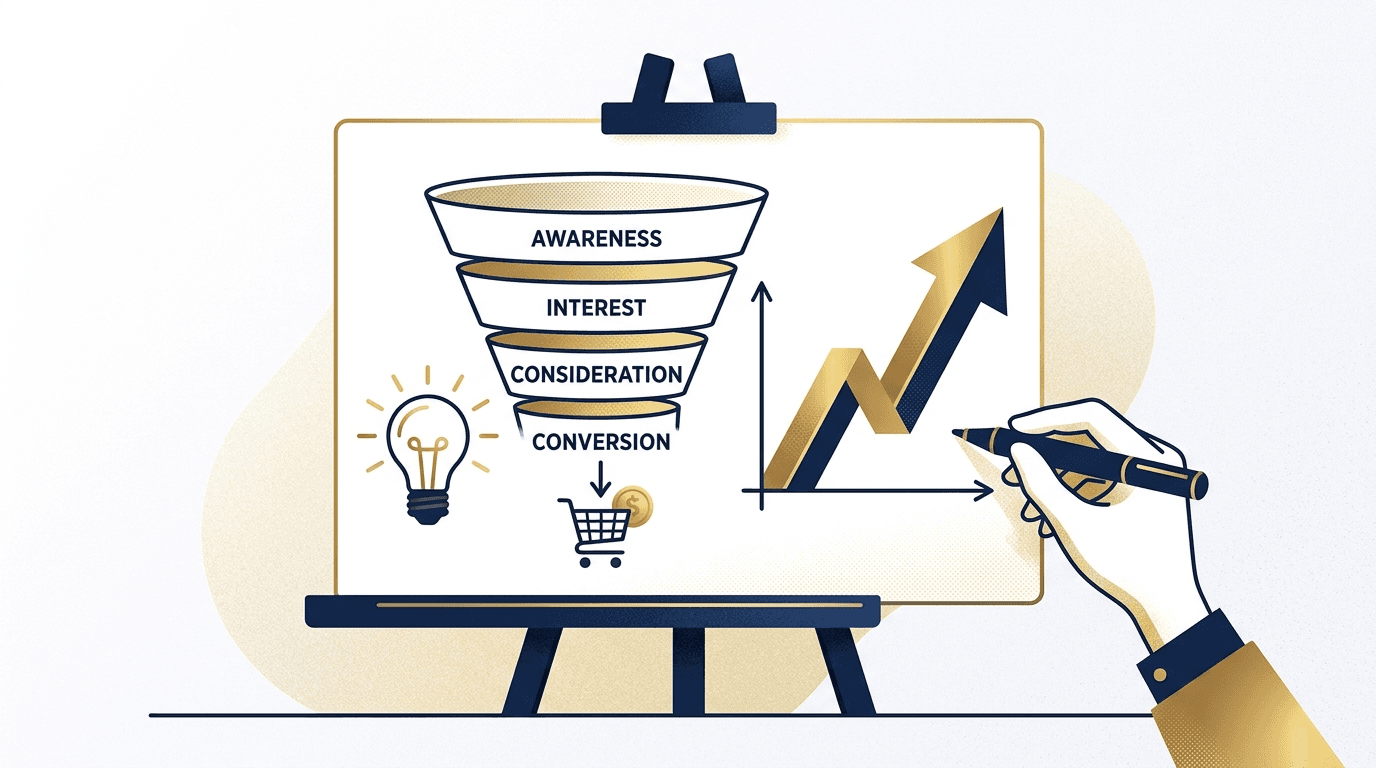
Map your audience segments to your sales funnel:
Top of funnel: Blog readers, home page visitors with low time on site
Middle of funnel: Services page visitors, case study readers, pricing page viewers
Bottom of funnel: Contact page visitors who did not submit, cart abandoners, quote page visitors
Bottom-of-funnel audiences are your highest-priority remarketing targets. These are people who came within one or two clicks of converting. They deserve the most aggressive bidding, the most compelling creative, and the most direct call to action.
Exclude Recent Converters and Irrelevant Segments
Always create exclusion audiences. Exclude people who have already converted in the relevant time window. There is no value in paying to show ads to someone who became a client last week. Also exclude people who bounced in under 10 seconds, as these are likely low-quality visits from bots, misclicks, or irrelevant traffic.
Setting Up Your First Remarketing Campaign Step by Step
Step 1: Install and Verify Your Google Tag
You need the Google tag (formerly known as the global site tag) installed correctly on every page of your website. If you are using Google Tag Manager, deploy the Google Ads conversion linker tag and your remarketing tag through GTM. Verify installation using the Tag Assistant Chrome extension before proceeding.
Step 2: Link GA4 to Google Ads
Link your GA4 property to your Google Ads account via the Admin panel in GA4 under Product Links. Once linked, audiences created in GA4 will be available for use in Google Ads campaigns. This is the preferred method in 2026 because it gives you access to the full power of GA4's audience builder, including behavioural conditions that are not available through the basic Google Ads tag alone.
Step 3: Build Your Audience Segments in GA4
Following the segmentation principles above, create at minimum:
All website visitors (30-day membership duration)
High-intent page visitors (pricing, services, contact)
Cart or form abandoners
Recent converters (for exclusion)
Allow 24-48 hours for the audiences to populate before checking size. Google requires a minimum of 100 users for Display Network audiences and 1,000 for Search Network audiences.
Step 4: Create Your Campaign in Google Ads
For a display remarketing campaign, create a new Display campaign with the goal set to "Sales" or "Leads". Under Audience segments, select "Your data" and choose the remarketing lists you created. Set your targeting to "Targeting" rather than "Observation" to ensure your ads only show to people in your remarketing lists.
For RLSA, navigate to your existing search campaign, go to Audience segments, and add your remarketing lists with the mode set to "Observation". Then apply bid adjustments at the audience level. Start with a +20% bid adjustment for your high-intent segments and optimise from there based on performance data.
Step 5: Write Segment-Specific Ad Creative
Do not use the same ad creative you run to cold traffic. Remarketing audiences already know your brand. Your creative should:
Acknowledge they have already shown interest (e.g., "Still thinking about X?")
Address the most common objection for that funnel stage
Offer a lower-friction next step (e.g., a free consultation rather than a direct purchase)
Include a clear, time-sensitive call to action where appropriate
Step 6: Set Up Conversion Tracking
Make sure every conversion action is tracked accurately before you launch. This includes form submissions, phone calls, chat initiations, and for ecommerce, transactions. Without accurate conversion tracking, you cannot optimise your campaigns or measure ROI. Our analytics services cover full conversion tracking setup if you need support getting this right before you spend a dollar on remarketing.
Creative and Messaging Best Practices for Australian Audiences
Australian consumers are pragmatic and somewhat sceptical of marketing. Hyperbolic claims and generic ad copy perform poorly. What works is specificity, social proof, and a clear value proposition.
For display remarketing, use real photography where possible rather than stock imagery. Australian audiences respond well to local context: references to specific suburbs, cities, or states where relevant signal that the business understands their market. A mortgage broker targeting refinancing leads in Sydney will outperform a generic competitor if their ads reference Sydney property specifically.
For responsive display ads, supply Google with at minimum five headlines, five descriptions, and a mix of square and landscape image assets. Google's machine learning will test combinations and optimise toward your conversion goal, but it needs sufficient assets to work with.
For RLSA search ads, write a separate ad group with ad copy tailored to returning visitors. Even a simple addition like "Welcome back, get a free consultation today" or "Seen our [service] page? Book your strategy call" can meaningfully lift click-through rates.
For Customer Match campaigns targeting past clients, the tone should shift to relationship rather than acquisition. These people already know and trust you. Speak to them accordingly.
Budget and Bidding Strategy for Remarketing
One of the most common mistakes I see is Australian businesses allocating an equal budget to remarketing and cold traffic acquisition. Remarketing audiences are smaller by definition. You cannot spend $5,000 a month on an audience of 2,000 people without either burning frequency through the roof or wasting budget through misconfigured targeting.
A reasonable starting point for most Australian SMEs is to allocate 20-30% of your total Google Ads budget to remarketing. If you are spending $3,000 a month on Google Ads, roughly $600 to $900 should be directed at remarketing audiences. As your remarketing audience grows and your data proves out the ROI, you can increase this proportion.
For bidding, start with Target CPA or Maximise Conversions if your campaign has at least 30 conversions in the past 30 days. If you are below that threshold, start with manual CPC or Target Impression Share to build data before switching to automated bidding.
Frequency capping is critical for display remarketing. Without a frequency cap, a small audience will see your ad dozens of times per day, which creates ad fatigue and negative brand associations. A cap of 3-5 impressions per user per day is a reasonable starting point. Monitor your frequency report weekly and adjust if you see it creeping above 7 impressions per day on average.
For Australian audiences, the competitive CPC landscape varies significantly by industry. Legal, finance, and property services see some of the highest CPCs on the Google Search Network, often between $8 and $30 AUD per click for competitive terms. Remarketing on these same audiences via RLSA can justify higher CPCs because the conversion probability is meaningfully higher than for cold traffic.
If you want a detailed review of how to structure your paid media budget holistically, our paid media services page covers how we approach budget allocation across channels for Australian businesses.
Privacy Compliance in Australia
This section is not optional reading. Running remarketing campaigns in Australia without understanding your privacy obligations is a real legal and reputational risk.
The Privacy Act 1988 and Australian Privacy Principles
The Privacy Act 1988 governs how Australian businesses collect, use, and disclose personal information. The Australian Privacy Principles (APPs) under the Act set out the rules for handling personal data. In the context of remarketing, the most relevant obligations relate to:
Informing users that their data is being collected for advertising purposes (APP 5)
Allowing users to opt out of targeted advertising (APP 3 and APP 12)
Ensuring that data shared with third parties like Google is disclosed in your privacy policy (APP 6)
The Office of the Australian Information Commissioner (OAIC) has issued guidance on online tracking and advertising. Australian businesses that use cookies and pixels for remarketing are required to disclose this in a clear, accessible privacy policy and, where required, obtain consent.
Consent Requirements in 2026
As of 2026, the consent requirements for online tracking in Australia have been strengthened following ongoing reforms to the Privacy Act. The key practical implications for remarketing are:
Your website must have a clear, compliant privacy policy that discloses the use of the Google tag for remarketing purposes and identifies Google as a third-party recipient of user data. The policy must be accessible from every page of your website.
For audiences built through Customer Match, the email addresses must have been collected with explicit consent to receive marketing communications. Do not upload contacts who only provided their email for transactional purposes (e.g., an order confirmation) without specific consent to receive marketing.
For cookie-based audiences (GA4 and Google Ads tags), a cookie consent banner that allows users to opt out of non-essential cookies is considered best practice and is increasingly expected by Australian regulators. Tools like Cookiebot, OneTrust, or CookieYes can be configured to block the Google remarketing tag from firing for users who decline non-essential cookies.
Practical Steps for Compliance
Update your privacy policy to specifically mention remarketing and the use of the Google Ads tag
Implement a cookie consent solution that gives users control over non-essential tracking
Ensure your Customer Match lists contain only contacts who have given marketing consent
Do not create remarketing audiences from sensitive categories of data (e.g., health conditions, financial hardship)
Review your data retention settings in GA4 to ensure user data is not held longer than necessary
If you are uncertain about your compliance posture, the OAIC website has published guidance specifically on online tracking and advertising that is worth reviewing.
Measuring True Remarketing ROI
This is where most Australian businesses go wrong. They look at the conversions attributed to their remarketing campaign in Google Ads and conclude it is working. Sometimes it is. Sometimes those conversions would have happened anyway, and the remarketing spend is taking credit it does not deserve.
The Last-Click Problem
Google Ads defaults to last-click attribution in many reporting views, which means the final ad clicked before a conversion gets full credit. If someone searched your brand name, clicked an organic result, then later clicked a display remarketing ad and converted, the remarketing campaign claims the conversion. But the organic search was the channel that brought them back. This is why last-click data alone overstates the value of remarketing.
Use Data-Driven Attribution
Switch your conversion actions to data-driven attribution in Google Ads. This model uses machine learning to distribute credit across all touchpoints in the conversion path, giving you a more accurate picture of where remarketing sits in the customer journey rather than artificially inflating its last-click performance.
Measure Incrementality with Conversion Lift Studies
For Australian businesses spending more than $5,000 per month on Google Ads, running a conversion lift study is the most rigorous way to measure whether your remarketing is genuinely driving additional conversions. Google's conversion lift study splits your remarketing audience into a test group (who sees your ads) and a holdout group (who does not), then compares conversion rates between the two. The difference is your incremental lift.
This is the honest measure of remarketing value. Everything else is directional.
Track Assisted Conversions in GA4
In GA4, navigate to Advertising, then Attribution, to see the assisted conversion report. This shows you how often your remarketing campaigns appeared in the conversion path even when they were not the final touchpoint. High assisted conversion numbers with low last-click numbers indicate that your remarketing is playing an important supporting role that pure last-click data would make you undervalue.
The Metrics That Actually Matter
For Australian service businesses running remarketing, focus on:
Cost per qualified lead (not just cost per click)
Lead-to-close rate from remarketing traffic versus cold traffic
Incremental conversions from lift studies
Return on ad spend (ROAS) on a data-driven attribution model
Frequency and its relationship to conversion rate (high frequency with declining CVR signals audience exhaustion)
Our conversion optimisation services include landing page analysis specifically designed to improve the conversion rate of remarketing traffic, which directly improves your ROAS without requiring a higher ad budget.
Case Study 1: Building and Pest Inspection Business, Queensland
When I took on this client, they were running a Google Ads account that looked busy on the surface but was leaking budget in every direction. Non-serviceable area leads were eating up to 30% of the budget. The remarketing setup was a single "all visitors" list with no segmentation. Ad creative was identical across cold and warm audiences.
We restructured the entire account. For remarketing, we built separate audience segments for home page visitors, service page visitors, and contact page abandoners. We implemented RLSA with a 40% bid uplift for contact page abandoners who subsequently searched for pest inspection or building inspection terms. We created dedicated ad copy for each segment, with the contact page abandoner group receiving copy that specifically addressed the most common objection ("Not sure what's included? Here's exactly what our inspection covers").
The result: 574 additional leads, cost per conversion reduced by $37.93, and cost per click reduced by $12.56. The client needed to hire additional staff to manage the increased volume. That is what properly structured remarketing looks like when it is built on audience clarity rather than guesswork.
Case Study 2: National Recruitment Firm
This engagement started with a brief to reduce dependency on job boards. The client was spending heavily on per-post fees with no compounding return. Our initial instinct was that the answer was not just SEO but an integrated approach that included remarketing to warm audiences: people who had visited the site, engaged with content, or previously registered as candidates.
We built a Customer Match audience from their CRM of past candidates and past client contacts. For the candidate segment, we ran Gmail ads promoting new role categories relevant to their skill set. For the client segment, we ran RLSA campaigns targeting anyone in the list who searched for hiring or recruitment terms, with a 50% bid premium and specific creative that highlighted the firm's placement success rate.
Across the integrated campaign, the firm generated 574 leads at a 63.5% lower cost per lead compared to their previous job board spend. The remarketing component contributed approximately 35% of total leads, primarily from the Customer Match and RLSA campaigns.
As one of the firm's directors told us: "We went from chasing candidates on job boards to having the right people come to us. The shift in how we think about marketing has been as valuable as the leads themselves."
When to Bring in an Agency
Remarketing is not complex in theory, but profitable remarketing at scale requires ongoing optimisation, audience refresh, creative testing, and attribution analysis. If you are spending more than $2,000 a month on Google Ads and your remarketing is built on a single undifferentiated audience list with no segmentation, you are likely leaving significant returns on the table.
At 3P Digital, we operate on a pay-per-performance model. We only succeed when you succeed. That alignment means every decision we make about your remarketing architecture is filtered through one question: does this make every dollar work harder and deliver qualified leads, not just traffic?
If you want to see how our 3P Framework (Profile, Plan, Perform) applies to your specific business context, you can review our approach at our framework page or browse our case studies for examples across industries. If you are ready to talk, reach out directly and we will start with an honest audit of where your current remarketing is losing money.
For a broader guide to Google Ads management in Australia, our Google Ads PPC management guide covers the full account structure, campaign types, and optimisation principles that underpin profitable paid media.
FAQs
How much does Google Ads remarketing cost in Australia?
Remarketing costs in Australia vary by campaign type and industry. Display remarketing typically costs between $2 and $8 AUD CPM (cost per thousand impressions). RLSA costs are closer to your standard search CPCs, which range from $1.50 to $30 AUD depending on your industry and keyword competition. For most Australian SMEs, a functional remarketing programme can be started with a budget of $500 to $1,500 AUD per month, though the ROI improves as audience sizes grow and bidding algorithms accumulate conversion data.
How long does it take to set up remarketing in Google Ads?
A basic remarketing setup, including tag installation, GA4 audience creation, and a single display remarketing campaign, can be completed in one to two business days. A more comprehensive setup covering RLSA, dynamic remarketing, Customer Match, and multi-segment audience architecture typically takes five to ten business days, including QA and testing. You should allow an additional four to eight weeks of live data collection before drawing conclusions about performance, as automated bidding algorithms need conversion data to optimise effectively.
Is remarketing compliant with Australian privacy law?
Yes, remarketing can be run compliantly in Australia, but it requires deliberate setup. You must disclose the use of advertising cookies in a clear privacy policy, provide users with the ability to opt out of non-essential tracking, and ensure that Customer Match lists contain only contacts who have given marketing consent. The OAIC has published guidance on online tracking and advertising that outlines these obligations. Non-compliance with the Australian Privacy Principles can result in regulatory action and reputational damage, so this is not an area to cut corners on.
How many website visitors do I need before remarketing is effective?
For Google Display Network remarketing, you need a minimum of 100 users in your audience list before ads will serve. For RLSA (remarketing on the Search Network), the minimum is 1,000 users. For Customer Match audiences, the minimum is 1,000 matched users. In practical terms, if your website receives fewer than 300 unique monthly visitors, your remarketing audiences will be too small to generate meaningful volume. Focus on growing traffic first, then layer remarketing once you have sufficient audience size to work with.
What is the difference between RLSA and display remarketing?
RLSA (Remarketing Lists for Search Ads) shows your ads on the Google Search Network to people in your remarketing audience who are actively searching for relevant keywords. Display remarketing shows image ads on websites and apps across the Google Display Network to people in your audience while they are browsing. RLSA typically delivers higher intent and stronger conversion rates because the user is actively searching, but display remarketing offers significantly wider reach and lower CPM costs. The two approaches complement each other and should ideally be used together rather than as alternatives.
Should I use the same ad creative for remarketing as for cold traffic campaigns?
No. Cold traffic creative needs to introduce your brand and establish why a prospect should care. Remarketing creative should acknowledge prior engagement, address the specific objection or hesitation relevant to that audience segment, and offer a clear, lower-friction next step. Using identical creative across cold and warm audiences is one of the most common and costly mistakes in Google Ads remarketing. Even a simple change in headline that acknowledges the return visit can improve click-through rates by 20-40% for warm audience segments.
When does it make sense to hire an agency for Google Ads remarketing?
If you are spending more than $2,000 a month on Google Ads and have not set up segmented remarketing audiences, the opportunity cost of not having a specialist involved is likely exceeding the cost of agency fees. Profitable remarketing requires ongoing work: audience refresh, creative testing, bid optimisation, attribution analysis, and privacy compliance management. If you do not have the internal resources or expertise to manage these disciplines consistently, an agency with a proven track record in Australian paid media is worth the investment. Look for agencies that tie their fees to performance outcomes rather than activity reports.
Can remarketing work for B2B service businesses in Australia?
Absolutely. B2B remarketing is particularly effective for professional services, financial services, and technology businesses where the sales cycle is long and multiple decision-makers are involved. RLSA and Customer Match are the most effective formats for B2B because they target people who are actively searching or who are already known contacts. Display remarketing for B2B works best when it is used to maintain brand presence during a long consideration cycle rather than to drive direct conversions. Pair remarketing with strong LinkedIn retargeting for maximum coverage of Australian B2B decision-makers across platforms.
References
Google Ads Help Centre: About Remarketing - Google's official documentation covering the setup, audience requirements, and campaign types available for remarketing in Google Ads, including dynamic remarketing configuration and minimum audience size thresholds for each network.
Office of the Australian Information Commissioner (OAIC): Online Tracking and Advertising Guidance - OAIC guidance outlining how the Privacy Act 1988 and Australian Privacy Principles apply to online behavioural advertising, cookie use, and the sharing of user data with third-party advertising platforms.
IAB Australia: Digital Advertising Report 2026 - Industry data covering Australian digital advertising expenditure, channel growth trends, and consumer attitudes toward online advertising and data privacy, produced by the Interactive Advertising Bureau Australia.
Google Analytics 4 Help: Create and Edit Audiences - Official GA4 documentation covering how to build, configure, and publish audience segments for use in Google Ads remarketing campaigns, including available conditions and membership duration settings.
Australian Bureau of Statistics (ABS): Internet Activity, Australia - ABS data on Australian internet usage, device penetration, and online behaviour patterns, providing context for reach estimates across the Google Display Network and YouTube in the Australian market.
Google Ads Help: About Conversion Lift Studies - Documentation covering how Google's conversion lift study methodology works, eligibility requirements, and how to interpret incremental conversion data to measure the true additive value of remarketing campaigns.