LinkedIn Ads vs Google Ads for B2B in Australia: A Real Cost-Per-Lead Comparison for 2026
Australian B2B marketers are burning through budget every single month by advertising on the wrong platform. The problem is not a lack of effort. It is a lack of local benchmarks. Most cost-per-lead data floating around the internet is North American, outdated, or averaged across industries so broadly it is useless. A SaaS founder in Melbourne and a recruitment firm in Brisbane have completely different ideal customers, different buying cycles, and different platforms that will actually move the needle.
I have run paid media campaigns for Australian B2B companies across professional services, recruitment, SaaS, mortgage broking, and enterprise technology. What I keep seeing is the same mistake repeated: businesses defaulting to Google Ads because it feels safer, or jumping onto LinkedIn because they heard it is where decision-makers live, without ever stress-testing which platform actually delivers qualified pipeline at an acceptable cost. The result is wasted spend, frustrated sales teams, and marketing budgets that get cut because ROI cannot be demonstrated.
This guide is a frank, numbers-first comparison of LinkedIn Ads versus Google Ads for B2B in Australia in 2026. You will get real CPL benchmarks by industry, a clear decision framework for which platform suits your situation, and an honest look at how a blended model works when it is executed properly. If you want surface-level advice, there are plenty of other articles for that. If you want to make a better budget allocation decision this quarter, keep reading.
Key Takeaways
Google Ads captures high-intent demand and typically delivers lower CPL in the short term, but LinkedIn Ads often wins on lead quality and account-based precision for niche B2B audiences
Australian B2B CPLs on LinkedIn range from $120 to $400+ depending on industry and offer type, while Google Ads B2B CPLs range from $60 to $250 for comparable verticals
LinkedIn's audience targeting by job title, company size, and seniority makes it the superior platform for reaching senior decision-makers in low-search-volume niches
A blended model, where Google captures existing demand and LinkedIn creates new demand, consistently outperforms either platform used in isolation
Minimum viable budgets matter: LinkedIn requires at least $3,000 per month to generate meaningful data, while Google Ads can produce results from $1,500 per month in less competitive B2B verticals
Platform selection should be anchored to your Ideal Customer Profile (ICP), not to platform popularity or competitor behaviour
Platform Comparison: LinkedIn Ads vs Google Ads for B2B Australia (2026)
Factor | LinkedIn Ads | Google Ads |
Average CPL (Australia, B2B) | $150 to $400+ | $60 to $250 |
Average CTR (B2B campaigns) | 0.3% to 0.6% | 3% to 8% (search) |
Lead Quality | High (intent verified by role/company) | Variable (depends on keyword match quality) |
Sales Cycle Alignment | Long-cycle, considered purchases | Short-to-mid cycle, high intent |
Targeting Precision | Job title, seniority, industry, company size | Keyword intent, audience segments, remarketing |
Minimum Viable Monthly Budget | $3,000+ | $1,500+ |
Best Fit | ABM, niche professional audiences, enterprise | High-intent search capture, lead gen at scale |
Attribution Complexity | High (longer consideration period) | Moderate (closer to conversion point) |
Creative Requirements | Strong copy and lead gen forms or landing pages | Strong ad copy, landing page CRO critical |
Brand Building Capability | High (Thought Leadership ads, video) | Low to moderate |
How Google Ads B2B Campaigns Work in Australia
Search Campaigns: The Intent Capture Engine
Google Search is the most direct advertising channel available to B2B marketers. When a procurement manager in Sydney types "enterprise HR software Australia" or a CFO searches "outsourced CFO services Melbourne," they are raising their hand. They have a problem, they know they need a solution, and they are actively looking. That is the core advantage of Google Search for B2B: you are not interrupting someone, you are answering a question they are already asking.
For Australian B2B campaigns, Search tends to perform best when the product or service has a defined search behaviour attached to it. Professional services like accounting, legal, IT managed services, and recruitment all have reasonable search volumes in Australia. The challenge is that Australian search volumes are inherently lower than US or UK equivalents, which means smaller keyword pools and sometimes less data for Google's machine learning to optimise against.
In practical terms, a well-structured B2B search campaign in Australia targeting a niche like "cloud migration services" or "commercial insurance broker" might have a monthly search volume of only two to five thousand queries nationally. That limits how quickly you can scale, but it also means less competition and often lower CPCs than comparable US campaigns.
For our paid media clients, Google Search campaigns in B2B typically run at CPCs between $8 and $35 depending on the vertical, with conversion rates on well-optimised landing pages sitting between 4% and 12%. That puts CPLs in the $80 to $250 range for most professional services and SaaS categories.
Performance Max and Display: Proceed with Caution in B2B
Google's Performance Max (PMax) campaigns have been pushed aggressively by Google as the catch-all campaign type, and for B2C e-commerce with strong product feeds and conversion data, they can work well. For B2B in Australia, my honest assessment is that PMax requires significantly more conversion volume than most Australian B2B advertisers generate to optimise properly. If you are getting fewer than 30 to 50 conversions per month, PMax will often default to chasing cheaper, lower-quality signals.
Display campaigns can serve a remarketing function effectively, keeping your brand visible to site visitors and warm audiences as they move through a longer buying cycle. But as a cold prospecting tool in B2B, display clicks rarely produce qualified pipeline. The exception is highly targeted placement strategies on industry-specific publications, but this requires careful management.
The Keyword Strategy Problem Unique to Australian B2B
One of the most overlooked challenges in Australian B2B Google Ads is the sheer difference in search behaviour compared to the US. Australian buyers often search with different terminology ("superannuation" not "401k," "financial adviser" not "financial advisor"), and some B2B categories have so little local search volume that running Search campaigns is genuinely not viable without supplementing with demand generation from another channel. This is where LinkedIn becomes critically important.
How LinkedIn Ads Target B2B Decision-Makers
The Targeting Advantage No Other Platform Can Replicate
LinkedIn's core value proposition for B2B advertisers is simple: no other platform lets you serve an ad specifically to a Chief Financial Officer at a 200-person Australian manufacturing company who has been in their role for less than two years. That level of professional targeting precision is unique. Facebook and Instagram can approximate it using interest and behaviour signals, but LinkedIn verifies professional data because members self-report and update it to manage their careers. The data quality is structurally superior for professional targeting.
For Australian B2B marketers, LinkedIn's most powerful targeting dimensions include job title and job function, seniority level (executive, director, manager), company size and industry, and skills. You can layer these to build an audience that closely mirrors your ICP. For example, if you are selling a workforce management platform to mid-market retail and logistics businesses in Australia, you can target HR Managers, Operations Directors, and People and Culture Leads at companies with 200 to 1,000 employees in those specific industries.
LinkedIn Ad Formats That Actually Work in B2B
Not all LinkedIn ad formats are created equal for B2B lead generation. Based on what we see working across our Australian clients in 2026, here is the hierarchy:
Lead Gen Forms are the highest-converting format for direct lead capture. They pre-populate contact fields from the user's LinkedIn profile, which removes friction and typically produces conversion rates of 8% to 15% when the offer is compelling. The trade-off is that the data stays within LinkedIn and you need to integrate with your CRM promptly.
Single Image Ads with a strong value proposition and direct CTA remain the workhorse format. They are straightforward to produce, easy to test, and give you flexibility to drive traffic to landing pages where you can control the full conversion experience.
Thought Leadership Ads are a newer format that allows you to promote content from a personal profile rather than a company page. For founder-led businesses or professional services firms where personal credibility is central to the buying decision, this format can generate exceptional engagement and brand trust at relatively low CPMs.
Message Ads and Conversation Ads are hit and miss. When targeting is very tight and the message is genuinely relevant, they can produce strong CPLs. When overused or poorly targeted, they generate complaints and opt-outs. We recommend using them as a late-stage tactic to warm audiences who have already engaged with your content.
The Cost Structure Reality
LinkedIn is expensive by any standard metric. CPMs in Australia typically range from $25 to $55 for B2B audiences, and CPCs sit between $8 and $20 for standard sponsored content. This means you need either a high-value offer to justify the CPL, or a long-term view that accounts for the quality of the pipeline generated. A $300 CPL from LinkedIn for a client whose product generates $50,000 in annual recurring revenue is a very different conversation to a $300 CPL from Google Ads for a product with a $2,000 sale price.
Real Australian CPL Benchmarks by Industry
These benchmarks are drawn from actual campaign data across our client base and aligned with published benchmarks from LinkedIn Marketing Solutions and WordStream's Google Ads data, adjusted for Australian market conditions in 2026.
Professional Services (Accounting, Legal, Consulting)
Google Ads: CPL ranges from $80 to $180. High-intent keywords like "business accountant Sydney" or "commercial lawyer Brisbane" convert well. The challenge is low search volume for specialist services outside major capitals.
LinkedIn Ads: CPL ranges from $150 to $280. Lead quality is noticeably higher because you can target by company revenue or industry, filtering out small businesses looking for cheap solutions. For firms targeting CFOs or General Counsels at companies with 50+ employees, LinkedIn is typically the superior channel.
Recruitment and HR Technology
Google Ads: CPL ranges from $60 to $140 for recruitment services. Search intent is strong because HR managers actively search for recruitment partners. However, competition from Indeed, Seek, and large national recruiters drives CPCs up in metro areas.
LinkedIn Ads: CPL ranges from $120 to $220, but conversion-to-placement rates are higher because you can target HR Directors and Talent Acquisition Managers directly. Several of our recruitment clients have found that a LinkedIn-sourced lead is 40% more likely to convert to a retained search engagement than a Google-sourced lead.
SaaS and Technology
Google Ads: CPL ranges from $100 to $250. B2B SaaS in Australia is competitive, and many category keywords are dominated by global players with deep pockets. Niche or problem-aware keywords ("automate accounts payable process") tend to outperform category keywords ("accounting software").
LinkedIn Ads: CPL ranges from $180 to $400+. SaaS companies targeting enterprise buyers or specific verticals (construction software, legal tech, HR platforms) often find LinkedIn indispensable because search volume for their specific category simply does not exist at scale in Australia.
Finance and Mortgage Broking
Google Ads: CPL ranges from $120 to $350 for B2B finance services. Commercial lending and equipment finance keywords are moderately competitive in Australia. ASIC regulations mean careful compliance review of ad copy is non-negotiable.
LinkedIn Ads: CPL ranges from $200 to $380, but lead quality for commercial finance products targeting business owners and directors can be exceptional. LinkedIn's ability to exclude employees and target only business owners or C-suite personnel makes it particularly effective for products that are irrelevant to employees.
Lead Quality vs Lead Volume: The Metric That Actually Matters
This is the conversation most B2B marketers avoid because it requires honest communication between marketing and sales. CPL is a useful efficiency metric, but it tells you nothing about the quality of the pipeline being created. A campaign generating 50 leads per month at $80 each is not better than a campaign generating 15 leads per month at $200 each if only two of those 50 convert to opportunities versus eight of those 15.
What matters in B2B is Cost Per Qualified Lead, Cost Per Opportunity, and ultimately Cost Per Acquired Customer. When we track campaigns through to these downstream metrics using proper analytics infrastructure, the picture often looks very different from what surface-level CPL data suggests.
In multiple Australian B2B client accounts, we have found that LinkedIn-sourced leads close at 2 to 3 times the rate of Google Ads leads for high-ticket services, which completely changes the channel ROI calculation even though LinkedIn CPLs are significantly higher. The reason is alignment: LinkedIn allows you to serve an ad to a person with the exact job title, at the exact company size, in the exact industry you are targeting. Google Ads serves ads to people with purchase intent, but that person might be a junior researcher, a student, or a competitor.
The practical implication: build your attribution model to track leads through to revenue, not just to form fill. If your CRM does not connect to your ad platforms, you are flying blind on the metric that actually determines budget allocation.
When to Use Google Ads Only
Google Ads should be your primary or sole channel when:
Your ICP actively searches for your product or service category in meaningful volumes (2,000+ monthly searches in Australia)
Your average deal value is under $5,000, making LinkedIn's CPL economics difficult to justify
You need to generate leads quickly with a limited budget, as Google Search can produce results within days of launch
You are in a category with strong comparison and review search behaviour where appearing at the top of search is a competitive necessity
Your sales cycle is short (two weeks to two months) and decision-makers are reachable via search intent
Examples: IT support services, commercial cleaning, accounting software trials, cloud hosting for SMEs.
When to Use LinkedIn Ads Only
LinkedIn should be your primary or sole channel when:
Your target audience has a specific job title, seniority level, or company characteristic that can be matched precisely in LinkedIn's targeting
The search volume for your product category in Australia is too low to sustain a viable Google Search campaign
You are running an Account-Based Marketing strategy targeting a defined list of companies
Your offer is educational or awareness-focused and designed to generate demand rather than capture existing demand
Your average deal value is $20,000 or higher, making a $200 to $400 CPL economically justified
Examples: Enterprise SaaS targeting Operations Directors at logistics firms, executive coaching targeting C-suite, niche B2B consulting to specific industry verticals.
The Blended Model: How 3P Digital Allocates Budget Across Both
For most Australian B2B companies with a budget above $5,000 per month, the right answer is neither Google Ads alone nor LinkedIn Ads alone. It is a coordinated blended model where each platform does the job it is best suited for.
Here is the allocation logic we use within our 3P Framework:
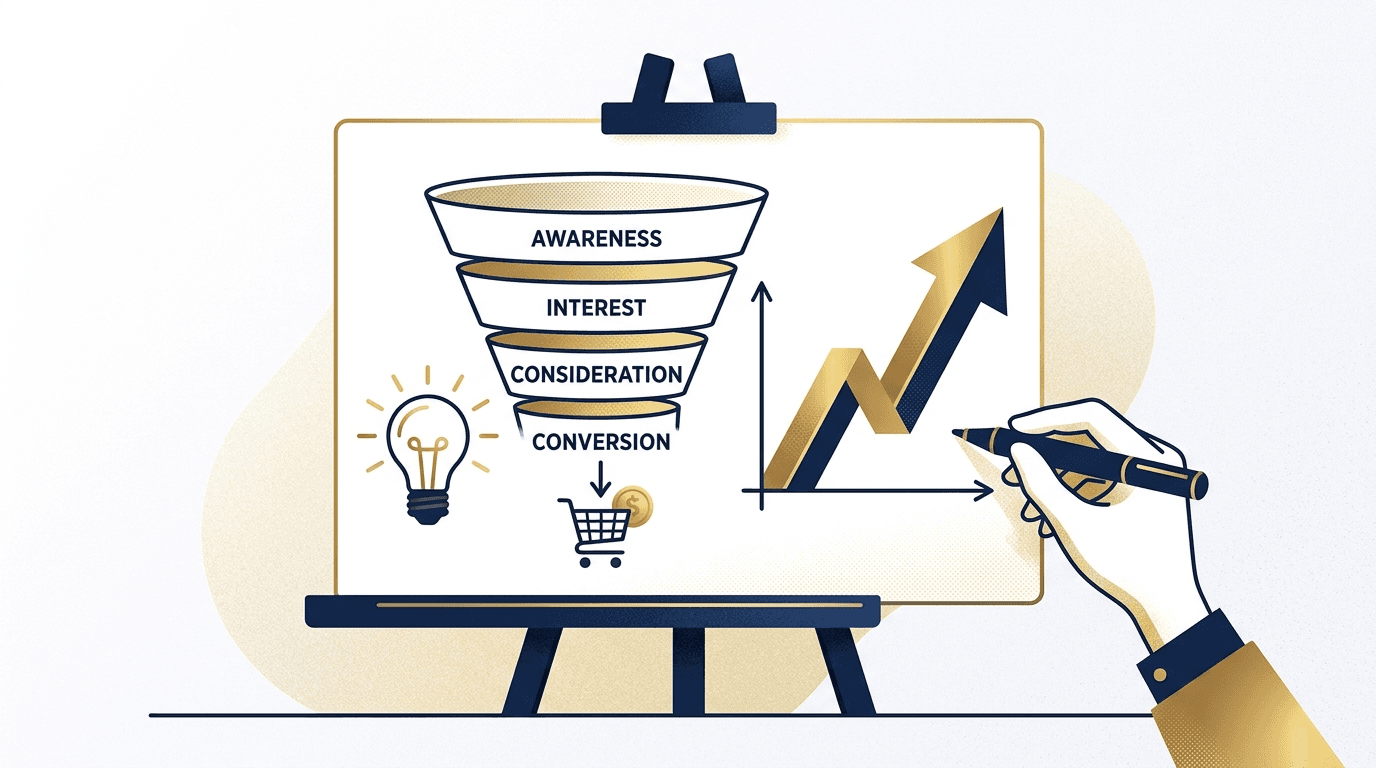
LinkedIn Ads create demand and build authority by reaching cold audiences who match the ICP before they are actively searching. This means they encounter your brand through Thought Leadership content, educational resources, or compelling offers. This activity primes the market.
Google Ads capture the demand that LinkedIn creates by appearing when those now-warmed prospects search for a solution. A prospect who saw your LinkedIn ad about inventory management software last week is far more likely to click your Google Search ad when they type "inventory management software for manufacturers" than a completely cold prospect.
This flywheel effect means the two channels amplify each other's performance when run simultaneously and strategically.
Typical Budget Allocation Framework
For a $10,000 per month B2B paid media budget targeting senior decision-makers in a professional services context, we would typically structure allocation as follows:
50% to LinkedIn Ads (Sponsored Content and Lead Gen Forms targeting cold ICP audiences)
30% to Google Search (capturing branded and non-branded high-intent keywords)
15% to Google Remarketing / Display (re-engaging site visitors and LinkedIn-driven traffic)
5% to testing (rotating new creative, new LinkedIn ad formats, or new keyword clusters)
This is not a fixed formula. It shifts based on search volume in the category, sales cycle length, and the client's existing brand awareness in market.
Case Study 1: Recruitment Technology Firm, Melbourne
A Melbourne-based recruitment technology firm came to 3P Digital running Google Ads exclusively with a $6,000 monthly budget. They were generating approximately 45 leads per month at an average CPL of $133. The problem: their sales team classified only 8 of those 45 as qualified opportunities each month, putting their true Cost Per Qualified Lead at $750.
We restructured their approach using our B2B digital marketing strategy framework. The revised split allocated $3,500 to LinkedIn Ads targeting HR Directors and Talent Acquisition Managers at companies with 100 to 500 employees, and $2,500 to Google Search refined to problem-aware keywords only.
After 90 days:
LinkedIn delivered 18 leads per month at an average CPL of $194, with 11 classified as qualified opportunities (61% qualification rate)
Google Search delivered 28 leads per month at an average CPL of $89, with 9 classified as qualified (32% qualification rate)
Combined Cost Per Qualified Opportunity dropped from $750 to $310
Closed revenue in month four was 2.4x the revenue generated in the equivalent period from the previous Google-only approach
Case Study 2: Boutique CFO Advisory Firm, Brisbane
A Brisbane-based fractional CFO firm had never run paid advertising. They relied entirely on referrals and occasional speaking engagements. Budget available was $4,000 per month. Their ICP was specific: business owners and CEOs of private companies with $5M to $50M revenue in Southeast Queensland.
The problem with Google Ads for this client was clear from the outset: search volume for "fractional CFO Brisbane" and related terms was fewer than 200 queries per month. There was insufficient volume to justify a meaningful Google Search campaign.
We launched LinkedIn Ads exclusively, with $3,500 in spend targeting company founders and CEOs in Queensland-based industries with strong revenue characteristics (construction, professional services, manufacturing). The remaining $500 went to Meta retargeting to re-engage LinkedIn-driven site visitors.
After 60 days:
LinkedIn generated 14 leads per month at an average CPL of $250
9 of those 14 (64%) converted to discovery calls
3 became retained clients within the first 90 days at an average annual engagement value of $48,000
First 90-day return on ad spend: 14.4x
"Before 3P Digital, I had no idea which of our marketing activities was generating revenue. Now I know exactly what each client costs to acquire and the platform doing the heavy lifting. LinkedIn was the channel I never would have considered without their guidance." — CFO Advisory Firm Principal, Brisbane
How the 3P Framework Aligns Platform Selection to Your ICP
Our 3P Framework operates across three phases: Profile, Plan, and Perform. Platform selection is a Plan-phase decision that is only made after the Profile phase is complete.
Profile involves deep ICP development. Who is your ideal buyer? What is their job title, company size, industry, location, and buying trigger? What language do they use when searching for solutions? Where do they consume content? Without this work, platform selection is guesswork.
Plan translates the ICP into channel strategy. If your ideal buyer is a senior decision-maker in a low-search-volume category, LinkedIn is non-negotiable. If your ideal buyer is actively searching with clear intent signals, Google Search leads the allocation. If both are true, a blended model is designed with clear budget ratios and KPIs for each channel.
Perform is where campaigns launch, data is collected, and optimisation happens continuously. We track leads not just to form fill but through CRM stages to closed revenue. This is the only way to know whether your Cost Per Qualified Lead and Cost Per Customer Acquired are trending in the right direction.
If you want to see how we apply this to specific industries and situations, you can review our case studies or contact us directly to discuss your current setup.
FAQs
How much does LinkedIn Ads cost per lead in Australia?
For B2B campaigns in Australia in 2026, LinkedIn Ads CPLs typically range from $120 to $400 depending on the industry, offer type, and targeting specificity. Professional services and consulting tend to sit in the $150 to $280 range, while enterprise SaaS or niche technology campaigns targeting very senior audiences can exceed $400 per lead. These figures assume a reasonably optimised campaign with a compelling lead magnet or offer. Poorly structured campaigns with weak offers can produce CPLs significantly higher than these benchmarks.
Which platform is better for B2B lead generation: LinkedIn or Google Ads?
There is no universal answer, and any agency that gives you one without asking about your ICP, deal size, and sales cycle is not serving you well. Google Ads wins when your buyers are actively searching for your category and when deal values allow for lower CPL thresholds. LinkedIn wins when your buyers have specific professional characteristics that can be targeted precisely and when search volume in your category is too low to sustain a viable Google Search campaign. For most Australian B2B companies with budgets above $5,000 per month, a coordinated blended approach outperforms either channel in isolation.
What is the minimum budget needed to run LinkedIn Ads effectively in Australia?
LinkedIn's own minimum daily budget requirements are low, but generating statistically meaningful data requires a realistic spend level. For Australian B2B campaigns, we recommend a minimum of $3,000 per month in LinkedIn ad spend to generate enough impressions and leads to optimise effectively. Below this level, you may spend two to three months gathering data before you have enough signal to make confident decisions. For Google Ads in B2B, $1,500 per month is a workable floor in less competitive verticals, though $2,500 to $3,000 per month is preferable.
Which industries in Australia get the best results from LinkedIn Ads?
Based on our campaign data and published LinkedIn Marketing Solutions benchmarks, the industries that consistently generate strong ROI from LinkedIn Ads in Australia include: enterprise and mid-market SaaS targeting specific verticals, professional services firms (consulting, legal, accounting) targeting senior buyers, recruitment firms targeting HR leadership and talent acquisition decision-makers, financial services companies targeting business owners and C-suite rather than consumers, and B2B technology companies selling to specific industry verticals where search volume alone is insufficient. Industries with high search volume and shorter sales cycles often get better initial returns from Google Ads.
How do you track attribution across both LinkedIn and Google Ads?
Cross-platform attribution in B2B is one of the most underrated challenges in digital marketing. The key steps are: implement UTM parameters consistently across all campaigns so every traffic source is identifiable in Google Analytics 4 or your analytics platform; integrate your CRM (HubSpot, Salesforce, or similar) with both ad platforms so you can track leads through to opportunity and closed-won stages; use a data-driven attribution model in GA4 rather than last-click to give appropriate credit to LinkedIn's upper-funnel role; and set up offline conversion imports in Google Ads to pass CRM deal stage data back to the platform. Our analytics team sets this infrastructure up as a standard part of every paid media engagement because without it, channel ROI is impossible to measure accurately.
Should I run LinkedIn Ads and Google Ads simultaneously from the start, or phase them in?
For most Australian B2B companies starting from zero, we recommend launching Google Search first if search volume in your category supports it. This allows you to validate offer messaging, landing page conversion rates, and lead qualification criteria with faster feedback loops and lower CPL. Once the Google Search campaign is stable and generating consistent qualified leads, introduce LinkedIn Ads to expand reach to audiences who are not yet actively searching. If your category has insufficient search volume to justify Google Search from the outset, LinkedIn becomes the primary launch channel immediately. Phasing reduces risk, but do not delay the blended model indefinitely — the flywheel effect of both platforms running together is where compound performance gains emerge.
When should a B2B company consolidate to one platform?
Consolidation makes sense in specific scenarios. If your monthly budget is under $3,000 total, split across two platforms it is unlikely either will have enough data to optimise properly, so concentrate spend on the single channel most aligned with your ICP and buying behaviour. If one platform is consistently delivering Cost Per Qualified Leads more than double the other after 90 days of optimisation, reallocation is logical. If your sales cycle is very short and high-intent search is generating all your qualified pipeline, LinkedIn's longer nurture model may not fit your go-to-market motion. Consolidation is a data-driven decision, not a cost-cutting one. Make it with attribution data in hand, not from gut feel.
References
LinkedIn Marketing Solutions B2B Benchmarks Report (2025/2026) — LinkedIn's own published data on ad performance benchmarks, CPM ranges, engagement rates by format, and lead gen form conversion statistics for B2B campaigns globally, with regional breakdowns including Asia-Pacific markets. Used to validate LinkedIn CPL and CTR benchmarks cited in this article.
WordStream Google Ads Industry Benchmarks (2025 edition) — WordStream's annual analysis of Google Ads performance data across industries, covering average CTR, CPC, and conversion rates by sector. Referenced for Google Ads CPL ranges and click-through rate data in B2B categories, adjusted for Australian market conditions.
Demand Gen Report: B2B Buyer Behaviour Study (2026) — US-based but globally relevant research on how B2B buyers move through the purchase journey, which channels they engage with at each stage, and how multi-touch attribution affects channel value assessment. Used to support the argument for blended platform models.
Australian B2B Marketing Benchmark Report by Salesforce Australia (2025) — Salesforce's research into the state of B2B marketing in Australia, covering technology adoption, lead generation priorities, and budget allocation trends among Australian marketing teams. Used to contextualise Australian market-specific behaviour differences.
Google Ads Help Centre — Performance Max Campaign Guidance (2026) — Google's official documentation on Performance Max campaign requirements, including recommended minimum conversion thresholds for effective machine learning optimisation. Referenced in the PMax section discussing volume requirements for B2B advertisers.
HubSpot State of Marketing Report (2026) — HubSpot's annual global marketing report covering channel effectiveness, CPL trends, and B2B marketing ROI data across industries. Referenced for context on lead quality versus lead volume metrics and cross-platform attribution practices.