Marketing Attribution Modelling Services Australia
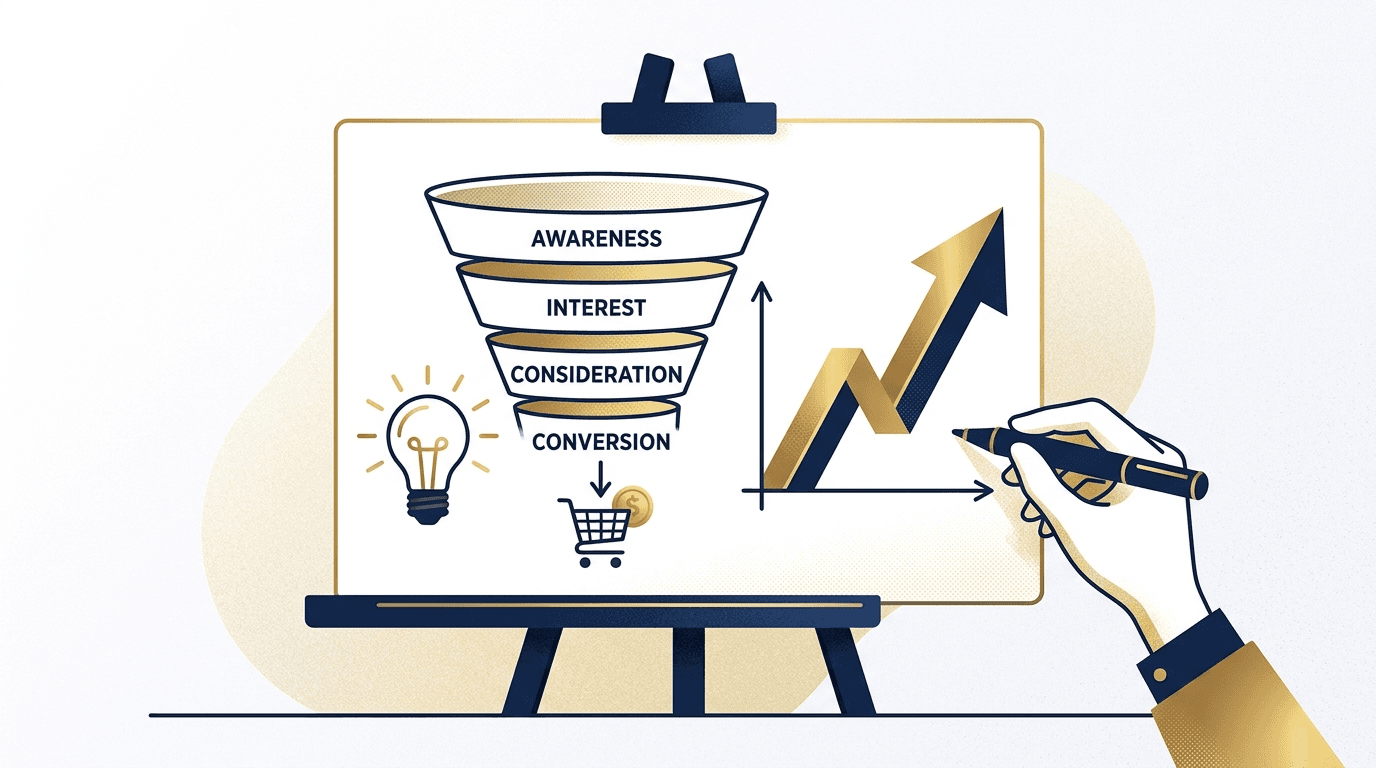
Marketing attribution modelling services connect marketing activity to qualified leads, sales and revenue. The work combines commercial definitions, reliable tracking, CRM alignment and an attribution model suited to the buying journey. It replaces isolated channel reports with evidence that helps Australian businesses allocate budget, assess performance and reduce wasted spend.
Most marketing dashboards can show where traffic came from. Far fewer can explain which channels influenced a sale, which campaigns attracted qualified buyers or where the business should invest its next dollar.
At 3P Digital, attribution is not treated as another software installation. It is a commercial measurement discipline built around buyers, not vanity traffic. This page explains how we design attribution systems that are useful, auditable and realistic about the limits of tracking.
Key takeaways
Attribution should connect marketing activity to qualified leads, sales and revenue, not stop at clicks or form fills.
Reliable modelling starts with shared commercial definitions and clean source, campaign, CRM and transaction data.
First-touch, last-touch, linear, position-based, time-decay and data-driven models answer different questions.
Multi-touch attribution modelling is useful, but it cannot recover interactions that were never recorded.
The 3P Digital approach follows Profile → Plan → Perform, moving from commercial clarity to accountable execution.
Attribution supports stronger decisions, but it does not prove causation or create perfect tracking.
Summary table
Attribution component | Question it answers | Common failure | 3P Digital approach |
Commercial definitions | What counts as a meaningful outcome? | Every form fill is treated equally | Define qualified leads, opportunities, sales and revenue events |
Tracking architecture | Can important interactions be recorded reliably? | Platforms use conflicting tags and conversion rules | Review analytics, tag management, advertising and consent settings |
Source governance | Where did the interaction originate? | Inconsistent UTMs fragment campaign reporting | Establish naming rules and controlled source classifications |
CRM alignment | What happened after the lead arrived? | Marketing data ends at the enquiry | Connect source data with qualification, pipeline and sales outcomes |
Attribution model | How should credit be assigned? | Last-click is accepted without scrutiny | Select and compare models against the actual buying journey |
Reporting | What should the business do next? | Dashboards report activity without decisions | Report performance against commercial outcomes and budget choices |
Why conventional marketing reporting distorts performance
Conventional reports distort performance because each platform observes only part of the customer journey and has an incentive to claim credit. Long buying cycles, multiple devices, offline conversations, privacy controls and incomplete CRM records create further gaps. A neat dashboard can therefore present precise figures without delivering a reliable commercial explanation.
A buyer might discover a business through organic search, return through paid social, read a case study and later click a branded search advertisement. They may then call the sales team rather than submit the tracked form.
In this journey, several systems can produce different answers:
The advertising platform may credit its own click or view.
Web analytics may assign the session to branded search.
The CRM may record the lead as direct, website or unknown.
The salesperson may say the lead came through a referral.
Finance may record the sale without any marketing source attached.
None of those records necessarily tells the complete story. They reflect different attribution windows, identity rules, event definitions and data capture methods.
Fragmented platforms create competing versions of performance
SEO, paid media, email, social media and referral platforms usually report within their own boundaries. Their figures may be useful for campaign management, but adding them together can double-count outcomes.
This is especially common when view-through attribution, cross-device modelling and platform-specific conversion windows are involved. An analytics platform and an advertising platform can both claim the same sale according to their own rules.
The answer is not to declare one platform universally correct. The answer is to define a reporting source of truth for each business question. Media platforms can guide campaign optimisation. Analytics can explain website behaviour. The CRM and finance records should usually carry more weight when the question concerns qualified pipeline or realised revenue.
Long and offline buying journeys break simple models
Last-click reporting is least reliable when the buying process includes research, comparison, internal approval or a sales conversation. This is common in mortgage broking, recruitment, professional services and considered business purchases.
The final click may have captured demand rather than created it. Branded search often receives credit because an earlier channel introduced the business and the buyer later searched for its name. Removing that earlier channel based only on last-click revenue can weaken future demand.
Offline interactions create another break. Telephone calls, meetings, proposals, showroom visits and manually entered opportunities require disciplined CRM processes. If source fields are optional or routinely overwritten, no attribution model can restore the missing history.
Cross-device behaviour and privacy limit certainty
A person may research on a mobile, return from a work computer and purchase from another device. Authentication can connect some interactions, but many businesses cannot identify the person consistently across that journey.
Australian organisations must also consider the Privacy Act, the Australian Privacy Principles and their own consent obligations. The Office of the Australian Information Commissioner explains that organisations should manage personal information transparently and only for appropriate purposes. Attribution design should therefore include data minimisation, access controls, retention decisions and accurate privacy disclosures.
Perfect tracking is not a credible promise. The practical objective is decision-grade evidence, clear limitations and consistent measurement.
What our marketing attribution modelling service includes
Our service covers the commercial, technical and operational work required to connect marketing with revenue. It includes discovery, outcome definitions, tracking review, campaign governance, CRM alignment, model selection, reporting and ongoing improvement. We do not present attribution as a proprietary platform or assume software can resolve unclear business rules.
Deep discovery and commercial definitions
We begin with Deep discovery. Before inspecting tags or dashboards, we establish how the organisation makes money and how a buyer progresses towards a sale.
This work can cover:
Priority customer profiles and buying intent
Products, services and markets that matter commercially
Lead qualification rules
Pipeline stages and ownership
Sales cycle characteristics
Repeat purchases and account expansion
Revenue, margin or recurring-value fields
Online and offline conversion paths
Existing reporting responsibilities
A conversion must mean something specific. A downloaded brochure, general enquiry, booked consultation, sales-qualified opportunity and completed sale are not interchangeable outcomes.
We work with the relevant teams to define each event. That includes who records it, where it lives, when it becomes valid and whether it can be connected to a source. This definition layer prevents marketing reports from claiming success through low-value actions that sales would never accept as genuine opportunities.
Tracking and data-quality review
We review the measurement chain from the first interaction to the commercial result. Depending on the environment, this may include GA4 implementation, Google Tag Manager, advertising pixels, consent controls, call tracking, ecommerce events, CRM fields and sales reporting.
The review looks for practical problems such as:
Duplicate or missing conversion events
Tags firing before consent requirements are satisfied
Internal traffic contaminating acquisition reports
Payment providers or external booking systems replacing the original source
Cross-domain journeys creating false referrals
Campaign parameters being stripped or entered inconsistently
Lead forms that do not pass source data into the CRM
Revenue values using inconsistent GST treatment
Test transactions appearing as genuine sales
CRM stages that are skipped, overwritten or applied retrospectively
A technically firing tag is not necessarily a trustworthy conversion. Validation must confirm that the event represents the intended action, appears once, carries the correct value and reaches the systems used for decision-making.
Source and campaign governance
Attribution quality deteriorates quickly when campaign naming is uncontrolled. Variations in capitalisation, spacing, channel labels and UTM parameters can split one campaign across multiple rows.
We create governance rules covering source, medium, campaign, content and other relevant classifications. The goal is not to produce an elaborate naming catalogue that nobody follows. It is to establish a usable standard, assign ownership and reduce ambiguous traffic.
Rules should also address partner referrals, QR codes, email signatures, offline campaigns and sales-generated links. Otherwise, these interactions often collapse into direct or unassigned traffic.
CRM and sales alignment
Digital marketing attribution becomes commercially useful when lead-source data survives beyond the initial enquiry. We map website and campaign data into CRM records, then align those records with qualification, opportunity and sales stages.
The exact architecture depends on the systems already in place. In some cases, a native integration is enough. In others, the organisation needs hidden form fields, persistent identifiers, automation or a structured data import.
Technology is only part of the solution. Sales teams need clear field definitions and practical rules. If staff replace an original source with the most recent conversation, historical attribution becomes unreliable. Original source, latest source and self-reported source should remain distinct where each serves a useful purpose.
Model selection and reporting
We select models according to the decisions the business needs to make. Reports may compare several models rather than force every stakeholder to accept one universal allocation.
A useful attribution report should help answer:
Which channels introduce qualified buyers?
Which channels assist evaluation and return visits?
Which campaigns capture existing demand?
Which sources generate opportunities that sales accepts?
Which channels produce tracked revenue or stronger lead quality?
Where is spend increasing without a corresponding commercial return?
Looker Studio reporting can provide a consolidated decision layer, but the dashboard is the final surface, not the attribution system itself. The system includes definitions, collection, storage, identity handling, governance and validation beneath it.
Ongoing validation and optimisation
Attribution is not finished when a dashboard launches. Websites change, campaigns are renamed, forms are replaced and CRM workflows evolve. Platform attribution settings also change over time.
We establish checks for event volume, source quality, revenue reconciliation and unexplained movements. Budget only scales where the tracked return justifies it. Where evidence remains incomplete, we label the uncertainty instead of presenting modelled credit as an audited fact.
How to choose the right attribution model
The right attribution model depends on the buying journey, data quality and decision being made. First-touch explains discovery, last-touch explains conversion capture, while multi-touch models distribute credit across interactions. Data-driven attribution can identify patterns at scale, but no model compensates for missing events, weak CRM discipline or unclear commercial outcomes.
First-touch attribution
First-touch attribution assigns credit to the earliest recorded interaction. It is useful when the business wants to understand how prospects first enter the measurable journey.
It can help evaluate awareness, non-branded search, educational content and other demand-creation activity. Its weakness is that it ignores every later interaction, including the campaign that brought the prospect back when they were ready to act.
First-touch is also only the first known touch. Cookie deletion, consent choices and cross-device behaviour can hide earlier exposure.
Last-touch attribution
Last-touch attribution assigns credit to the final recorded interaction before conversion. It is simple, easy to explain and useful for understanding which channels capture immediate demand.
The model becomes misleading when treated as a complete account of marketing effectiveness. It tends to favour branded search, direct visits, remarketing and channels used near the decision point. It can undervalue SEO, content, prospecting and other activity that created the original demand.
Last-click reports are not useless. They answer a narrow question. The mistake is allowing that narrow answer to control the entire budget.
Linear attribution
Linear attribution distributes credit evenly across recorded interactions. It recognises that several touchpoints may contribute and provides a straightforward introduction to multi-touch attribution modelling.
However, equal credit is an assumption, not an observed fact. A brief social visit and a detailed product comparison may receive the same allocation despite playing very different roles. Linear attribution is most useful as a neutral comparison model rather than a final statement of influence.
Position-based attribution
Position-based attribution gives greater emphasis to the first and final interactions, with the remaining credit distributed across the middle of the journey. It reflects the view that creating demand and converting demand are especially important.
This can suit considered purchases where the introduction and final conversion are both strategically significant. The model still relies on a chosen weighting. That weighting should be treated as a business rule, not scientific proof.
Time-decay attribution
Time-decay attribution gives more credit to interactions closer to the conversion. It can be useful where recent activity is reasonably expected to have more influence, such as a sales campaign with a defined decision window.
It may undervalue early education in long buying cycles. A guide that introduced a buyer months earlier can receive little credit even if it was essential to the eventual sale.
Data-driven attribution
Data-driven attribution uses observed conversion and non-conversion paths to estimate the contribution of different interactions. Google describes its data-driven model as using account data to calculate the contribution of each interaction where the model is available and enough suitable data exists.
This approach can detect patterns that fixed rules miss. It also carries important limitations:
The method may be difficult for stakeholders to inspect.
The output depends on the events and identities the platform can observe.
Sparse or biased data can weaken the result.
Platform-specific models may not include offline or cross-platform interactions.
Modelled contribution is not the same as experimental proof of causation.
We do not select data-driven attribution because it sounds advanced. We use it where the available data and business question make it useful, then compare its conclusions with CRM, sales and finance evidence.
Choosing models by decision, not fashion
A business may use first-touch reporting to assess discovery, last-touch reporting to manage demand capture and a multi-touch view to examine the full journey. These views are not mutually exclusive.
The better question is not, Which model is correct? It is, Which model provides the most useful evidence for this decision, and what does it leave out?
When budget decisions would materially affect the business, model comparison should be supplemented by controlled tests where practical. Geographic tests, campaign pauses, matched-market comparisons and carefully designed experiments can provide stronger causal evidence than attribution alone. Their suitability depends on traffic, geography, sales cycles and operational risk.
The 3P Framework for attribution
Our Profile → Plan → Perform framework keeps attribution tied to commercial decisions. Profile defines the buyers, intent and meaningful outcomes. Plan turns those definitions into a measurement architecture and attribution rules. Perform implements, validates and improves the system against qualified leads, sales and revenue rather than channel activity alone.
Profile: define buyers and commercial value
Profile establishes who the business wants to attract and what a valuable outcome looks like. This prevents the measurement plan from treating every visitor or enquiry as equally important.
We examine ideal customer profiles, priority services, market advantage, buying triggers and disqualification signals. For a mortgage broker, a high-intent lending enquiry may matter more than general finance traffic. For a recruitment firm, candidate registrations and employer opportunities require different definitions and reporting paths.
The advantage hiding in plain sight is often already present in sales conversations. Objections, qualification notes and reasons for winning or losing can identify the behaviours worth measuring.
Plan: create the strategic blueprint
Plan converts the commercial requirements into a strategic blueprint. It documents the events, systems, fields, naming standards, attribution assumptions and reporting responsibilities.
The plan should identify:
Primary and supporting conversion events
Required event parameters and revenue values
Online and offline identifiers
Source and campaign naming rules
CRM fields and stage definitions
Attribution models to compare
Reporting ownership and access
Privacy and consent considerations
Validation and reconciliation procedures
This stage also identifies what cannot be measured reliably. Those limitations belong in the plan, not in small print after a dashboard has been built.
Perform: implement and improve
Perform is accountable execution. We configure the agreed measurement architecture, test it across realistic customer paths and reconcile results with downstream records.
The work does not stop at implementation. We monitor whether decision-makers can use the reporting, whether sales teams trust the definitions and whether budget changes correspond with commercial results.
When reporting exposes a weak campaign, the response is not automatically to switch it off. We examine intent, lead quality, attribution position and supporting influence. When the account data supports increased investment, spend can scale with clear controls.
Deliverables and business outcomes
The deliverables provide a documented, usable measurement system rather than another isolated dashboard. Businesses gain clearer visibility from source to sale, stronger budget discussions and earlier identification of wasted spend. The result is better evidence for decisions, not perfect tracking, guaranteed revenue or proof that every attributed interaction caused the outcome.
Depending on scope and existing systems, deliverables can include:
Commercial outcome and conversion definitions
Current-state measurement audit
Tracking and tag remediation plan
Campaign naming and UTM governance
CRM source and lifecycle mapping
Attribution model recommendation
Model comparison reporting
Lead, opportunity, sale and revenue dashboards
Data-quality checks and validation records
Team documentation and reporting guidance
Ongoing measurement reviews
Clearer budget allocation
Attribution helps move budget discussions beyond platform claims. Decision-makers can compare channels using qualified opportunities, sale values and tracked revenue where those records are available.
This does not mean every dollar must be assigned to a single touchpoint. Some investment creates demand, some assists evaluation and some captures buyers who are ready. A sound reporting system shows those roles instead of forcing every channel into one last-click ranking.
Stronger channel decisions
Digital marketing attribution can reveal when a cheap lead source produces poor sales outcomes or when a higher acquisition cost is justified by stronger qualification and revenue.
It can also expose branded activity taking credit for demand created elsewhere. That evidence supports better SEO, paid media, content, social media and conversion optimisation decisions.
Visibility from lead source to sale
The most valuable change is often connecting acquisition data with what happens after the form submission. Marketing can see whether enquiries became accepted leads. Sales can see which campaigns produce useful conversations. Leadership can compare spend with pipeline and realised revenue.
This shared view reduces arguments based on incompatible reports. It does not eliminate judgement, but it gives each team a common evidence base.
Correlation is not causation
Attribution identifies associations between recorded interactions and outcomes. It does not automatically prove that the interaction caused the sale.
A channel may appear frequently in converting journeys because high-intent buyers prefer it. A campaign pause, controlled experiment or external market change may reveal a different incremental effect.
We report attribution as decision evidence, not causal certainty. This distinction matters whenever a model is used to justify substantial budget changes.
Attribution should be managed as a decision system
My view is that attribution projects fail when businesses treat them as dashboard projects. The real product is a decision system: agreed outcomes, disciplined data collection, explicit assumptions and rules for acting on evidence. A visually polished report has little value if sales rejects the leads or finance cannot reconcile the revenue.
The clearest example comes from a packaging ecommerce account where the original problem was not a lack of advertising data. The problem was an unreliable connection between spend, buying intent, product economics and sales revenue.
We rebuilt revenue tracking and restructured campaigns around profitable product lines and commercial search behaviour. We also added 85 negative keywords across May and June 2026 to reduce irrelevant demand.
According to 3P Digital account data, $14,028 in advertising spend produced $132,746 in tracked revenue from January to June 2026. That equalled a 9.5x return on ad spend. Every month returned at least 7x, with a 12.4x best month.
Those figures are not a universal benchmark or a guarantee. They show why measurement must affect campaign management. Revenue tracking exposed which searches and product lines justified investment. Negative keywords reduced activity that did not support the commercial objective. The outcome came from measurement, structure and optimisation working together.
The same principle applies outside ecommerce. According to 3P Digital's own results, an automotive dealership group achieved the agency's best recorded SEO return of 46:1 over 12 months. The useful lesson is not that every SEO campaign should achieve that figure. It is that SEO should be assessed against commercial value where the required revenue and cost data can be connected.
Results, not activity reports, is the standard. Traffic and clicks can diagnose what is happening, but they are not the final business outcome.
Why work with 3P Digital
3P Digital combines marketing strategy, analytics, paid media, SEO, conversion optimisation and commercial reporting. That breadth matters because attribution problems rarely sit inside one platform. Our work begins with commercial clarity, follows Profile → Plan → Perform and stays focused on evidence that business owners, marketing teams and revenue leaders can audit.
According to 3P Digital's agency records, we have served more than 250 clients and maintain a 98% client retention rate. These figures reflect our own client base. They are not claims about the wider agency market.
We do not promise a proprietary attribution platform or pretend that one model can observe every interaction. We work with the organisation's existing analytics, advertising, CRM, ecommerce and sales systems, then recommend changes where the commercial benefit justifies them.
Our approach is suitable for Australian SMEs and mid-market organisations that:
Invest across several marketing channels
Have a considered or offline-assisted sales process
Cannot reconcile platform conversions with CRM or finance records
Need to compare lead volume with lead quality
Want clearer evidence before reallocating budget
Have outgrown last-click and channel-by-channel reporting
Related work may include GA4 implementation and migration, Google Tag Manager services, Looker Studio reporting, Google Ads audits, SEO, conversion optimisation, CRM alignment and sales enablement. The right scope depends on the gaps found during discovery.
Book an attribution and measurement consultation
Bring your current analytics, CRM, media and sales-reporting challenges to an attribution and measurement consultation with 3P Digital. We will examine where the evidence breaks, which commercial definitions need alignment and what measurement architecture would make your next budget decision more defensible.
The objective is straightforward: connect marketing activity with qualified leads, sales and revenue, then scale only when the account data justifies it.
Frequently asked questions about marketing attribution modelling
Marketing attribution questions usually concern model selection, implementation, data requirements, platform differences and tracking limitations. The answers depend on each customer journey and technology environment, but the underlying rule remains consistent: attribution is only useful when it connects reliable interaction data with clearly defined commercial outcomes and supports an actual decision.
What is marketing attribution modelling?
Marketing attribution modelling is the process of assigning credit to recorded marketing interactions that occur before a conversion or sale. Models can credit the first interaction, final interaction or several touchpoints. The purpose is to understand how channels contribute to outcomes, while recognising that recorded contribution does not necessarily prove causation.
What is multi-touch attribution modelling?
Multi-touch attribution modelling distributes credit across several recorded interactions in a customer journey. Linear, position-based, time-decay and data-driven approaches are common examples. It can provide a broader view than last-click reporting, but its reliability depends on identity resolution, event quality, CRM data and the interactions the system can observe.
Is GA4 enough for marketing attribution?
GA4 can support digital marketing attribution by recording website and app events, traffic sources and selected attribution views. It is not a complete solution when sales happen offline, CRM stages determine lead quality or revenue sits elsewhere. Most considered-purchase businesses need analytics, CRM and sales data to work together.
Which attribution model is best for an Australian SME?
There is no universally best model for an Australian SME. First-touch can explain discovery, last-touch can show demand capture and multi-touch models can examine assisted journeys. The appropriate choice depends on the sales cycle, channel mix, data volume and decision. Comparing models is often more useful than selecting one permanently.
Can attribution show exactly which campaign caused a sale?
Attribution can show which recorded interactions were associated with a sale and allocate credit according to defined rules. It usually cannot prove that one campaign caused the outcome. Controlled experiments can provide stronger causal evidence, but they also have practical limits. Good reporting distinguishes attributed contribution from incremental impact.
How should we prepare for an attribution consultation?
Bring access or examples from your analytics, tag management, advertising platforms, CRM, ecommerce system and sales reports. Also bring your lead definitions, pipeline stages and current reporting questions. The consultation can then focus on where source data disappears, which outcomes matter and what decisions the improved reporting must support.
References
Google Analytics Help, Attribution models and reporting guidance: https://support.google.com/analytics/answer/10596866
Google Ads Help, About data-driven attribution: https://support.google.com/google-ads/answer/6394265
Office of the Australian Information Commissioner, Australian Privacy Principles: https://www.oaic.gov.au/privacy/australian-privacy-principles
Salesforce Australia, Multi-touch attribution: https://www.salesforce.com/au/marketing/multi-touch-attribution/
3P Digital internal account and client data supplied for this page, including agency client totals, retention, SEO ROI and packaging ecommerce advertising results.