Introduction
Digital marketing strategy is frequently misunderstood as a static list of tactics, yet it functions more like a game where every decision you make alters the environment for other participants. Success in the Australian market requires a shift in focus from short term traffic to the foundational choices that define your future. This involves understanding the quadrant positioning used by leaders like Howard Schultz and the psychological impact of pricing. At 3P Digital, we help businesses identify the moves their competitors are unwilling to make. By doing so, you move out of a crowded market and into a space where you can lead.
Key Takeaways
Choices Influence Rivals: Your strategic moves force your competitors to react or concede specific segments.
Positioning as a Move: Howard Schultz moved Starbucks into a new quadrant to avoid competing with functional coffee brands.
Time is a Controlled Axis: Consistency over years creates a moat that faster moving competitors cannot easily cross.
The Future is Chosen: Your choice of customers and distribution determines your eventual outcome.
Pricing as Communication: The price of a digital service often carries more weight in the buyer's mind than the technical features.
Summary Table: Strategic Pillars for Digital Positioning
Pillar | Strategic Focus | Competitive Impact |
Quadrant Move | Finding a gap in the market context | Exits the price war |
Time Axis | Long term seed planting | Builds insurmountable authority |
Pricing Story | Price as a signal of quality | Targets high value segments |
Scaffolding | Customer Onboarding Systems | Increases referral and retention |
Customer Choice | Selecting who you serve | Prevents friction and races to the bottom |
Article
The Mechanics of the Strategic Move
A strategic game is defined by choices that affect other players. In digital marketing, this means that your move to offer high value education or premium pricing directly impacts how your rivals must position themselves. Howard Schultz is the primary example of this logic. He did not just try to make better coffee than the existing shops. He moved Starbucks into a different quadrant by offering a "Third Place" between home and work. This move satisfied a specific group of people who cared about the environment and experience as much as the product.
During my time on the Google CEO Advisory Board in 2019 and 2020, I observed how technical infrastructure began to prioritise these distinct brand entities. Google’s guidelines state that the quality of the Main Content (MC) is determined by how well it allows the page to achieve its purpose. When you race to the bottom by cutting prices or using generic ad copy, you are playing your competitor's game. They usually have more resources to sustain that race. The goal is to move into a different quadrant where you offer something unique to a specific kind of person.
The Invisible Axis of Time
Time is an invisible component of strategy that is distributed equally to everyone. While you might not be the fastest person in the Australian market today, you can win by being the one who is still running years from now. Many business owners lose interest when digital results are not immediate.
Planting seeds when others say it is not important allows you to carve out spaces that become your own. By the time a category becomes highly competitive, you have already gotten there. This steady approach is often the most reliable path to market authority. You saw this with early bloggers who maintained their streaks for years: by the time competitors tried to catch up, the authority gap was already too wide.
Choice as the Architect of the Future
The most critical choice a business owner makes is who their customers will be. If you spend your days trying to please difficult clients in your digital funnel, you have signed up for a future of constant friction. A business owner once noted that he gives difficult customers one warning before they are no longer welcome. He realised that engaging with them was a bad strategic use of his time.
There are four primary choices that define your digital outcome:
The Customer: They dictate your daily operations and your brand reputation.
The Distribution: Who controls how your message reaches the market?
The Competitor: If you choose to compete with rule breakers, you will be forced to break rules to survive.
The Validation: Are you measuring short term vanity metrics or long term client success?
Building Digital Scaffolding
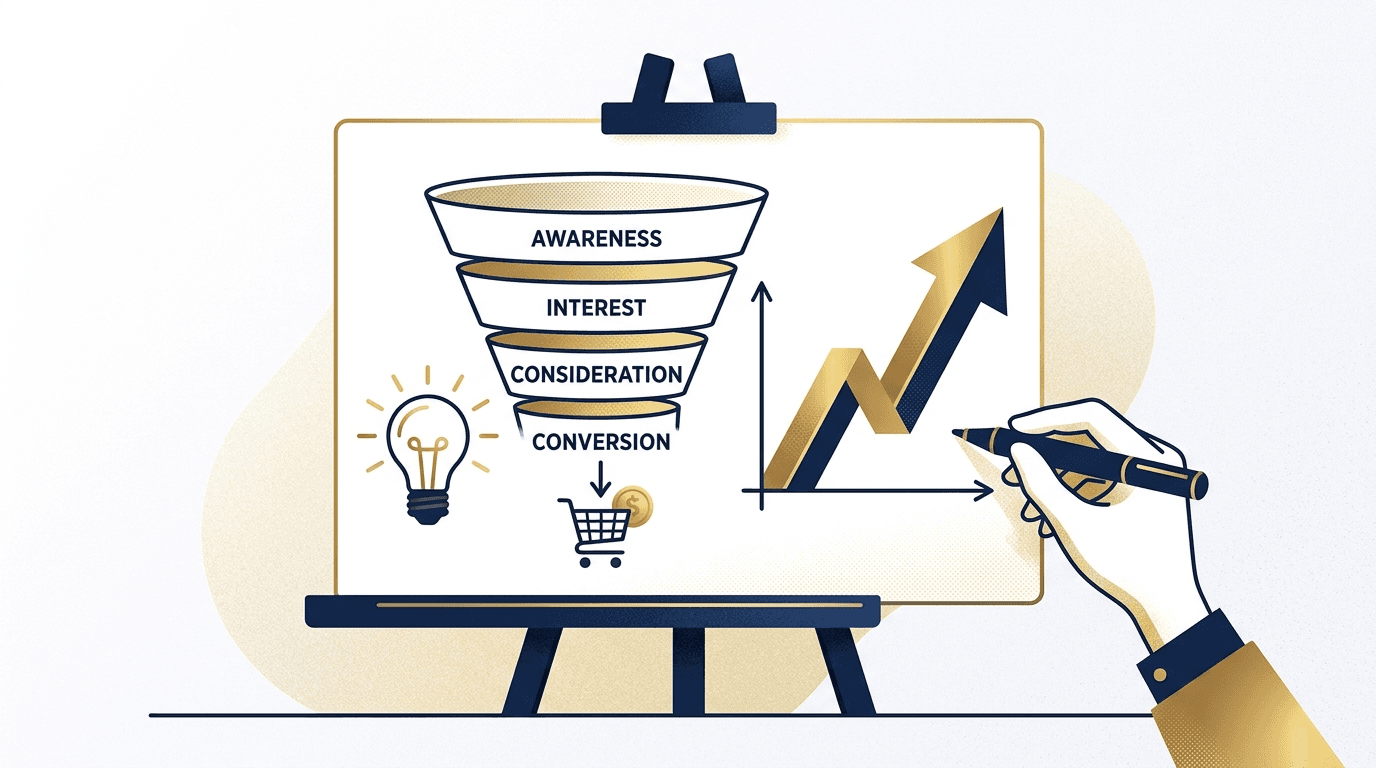
Scaffolding is a concept where a teacher or system intervenes to help a student reach the next level. In marketing, you must build scaffolding to move your customers from awareness to advocacy. This might involve an effortless onboarding process or a system that makes it easy for them to refer friends. Facebook's growth was largely due to engineers building scaffolding that made it simple to invite others. For small businesses, this means creating a journey that supports the customer at every step.
Pricing: The Signal of Quality
Price is more than an exchange of money: it is a story. A study by the Journal of Wine Economists found that people prefer expensive wine, even when the contents are identical to a cheaper bottle. The story of the price creates the experience. When you set your price in a digital proposal, you are sending a signal to people who do not have time to research every detail. You can be the cheapest and most convenient, which is a difficult position. Alternatively, you can say that you provide more value than the price suggests. If you can make that story true, you will attract an audience that is not interested in the race to the bottom.
FAQs
What is a quadrant move in digital marketing?
A quadrant move involves changing the context of your service to avoid direct competition on price or basic features. You move into a space where you offer a unique experience or specialised focus that rivals concede.
How does choosing the wrong customer affect my digital strategy?
Picking the wrong customer dictates your daily workflow and the feedback you receive. If your digital ads attract difficult clients, your brand will evolve to accommodate friction rather than excellence.
Why shouldn't I compete with big businesses on convenience?
Large corporations use economies of scale to dominate on convenience and speed. Small businesses should instead focus on high touch care and specialised expertise that massive institutions are unwilling to provide.
What is the difference between timing and time in strategy?
Timing relies on external factors and luck. Time is an axis you control by consistently building authority and trust over years, creating a moat that new competitors cannot easily cross.
How can I use pricing to tell a better brand story?
Pricing is a signal of your status and expertise. By positioning yourself as a premium option and delivering more value than promised, you attract high value clients who prioritise results over the lowest possible cost.
References
Understanding the Purpose of a Webpage.
Quality of the Main Content (MC).
Reputation of the Website.
YMYL Topics: Experience or Expertise?
Authoritativeness.
High Quality Main Content.
High Level of E-E-A-T.
Very High Quality MC.