Analytics Audit Service Australia: Find the Gap Between Your Spend and Your Revenue
An analytics audit service is a paid, one-off diagnostic that inspects your entire measurement stack, GA4 configuration, conversion tracking, CRM handoff and campaign attribution, to find where tracked data breaks down. 3P Digital delivers this as the Profile stage of the Profile, Plan, Perform framework, producing a prioritised fix list and a live dashboard reporting tracked leads and revenue.
Most Australian business owners we speak with are not short on marketing activity. They are running Google Ads, posting on LinkedIn, paying an SEO retainer, maybe running Meta campaigns too. What they cannot do is answer a simple question: which of those channels actually produced last month's qualified leads. That question is not a strategy problem. It is a tracking problem wearing a strategy costume.
This article sets out what a proper analytics audit inspects, what you get at the end of it, and why we run it as a single complete pass rather than a slow drip of fixes. We will also show you what changed for real Australian businesses once their tracking was fixed first, before a single dollar of new spend was allocated.
Key Takeaways
Most marketing underperformance traces back to broken tracking, not bad strategy or weak creative.
A proper analytics audit checks GA4 events, conversion definitions, consent handling, ad platform imports, UTM discipline, CRM handoff and the reporting layer.
The output is a prioritised remediation list, a clean lead and revenue definition, and a live dashboard, not a slide deck.
One complete audit pass across the whole measurement stack compounds faster than fixing issues one at a time over months.
Clean tracking has preceded 3P Digital's headline results: a 312% average organic traffic increase, a 46:1 best documented SEO ROI, and a 63.5% lower cost per lead in recruitment.
Audits are sold month to month with no lock-in, supported by a 98% client retention rate across 250-plus clients.
Summary Table: What an Analytics Audit Covers
Audit Area | What It Typically Reveals | Why It Matters |
GA4 configuration and events | Duplicate events, missing key conversions, unfiltered internal traffic | Wrong numbers feed every downstream decision |
Conversion and lead definitions | "Conversions" that include form abandons or bot fills | Budget gets allocated against noise, not real leads |
Consent and cookie handling | Consent Mode misconfigured, tracking blocked for a share of visitors | Silent data loss that looks like a traffic drop |
Ad platform conversion imports | Google Ads and LinkedIn optimising on the wrong signal | Ad platforms bid to maximise the wrong outcome |
UTM and campaign naming | Inconsistent tagging across channels and agencies | Channel performance can't be compared like-for-like |
CRM and form handoff | CRM shows more leads than GA4 or Ads ever recorded | Sales and marketing argue over numbers instead of leads |
Reporting layer (Looker Studio) | Dashboards built on the wrong data source or stale connectors | Reports nobody trusts enough to act on |
The Symptoms of Broken Analytics
Broken analytics shows up as disagreement, not silence. Google Ads reports one conversion count, GA4 reports another, and the CRM shows more leads than either platform tracked. Reports still get produced every month, but nobody changes a budget because of them. That gap between activity and action is the real cost.
We see the same pattern across mortgage broking, recruitment, fitness and professional services. A broker's CRM logs 60 new enquiries in a month. GA4 shows 38 form-fill conversions. Google Ads claims 22 conversions from paid search. Nobody in the business can say with confidence how many of those 60 enquiries came from paid search, organic search, referral, or a client simply typing the brand name into Google. The marketing manager defaults to whichever number makes the meeting easiest.
A recruitment firm might see the reverse problem: candidate applications flooding the CRM from job boards, while the website's own conversion tracking sits almost flat, because form submissions on a third-party careers page were never wired back into GA4 at all. A fitness studio's booking widget often sits on a separate domain, which breaks the referral chain and makes every trial booking look like direct traffic, no matter which ad or email actually drove it.
The common thread: reports get built, meetings get held, and nobody acts, because nobody trusts the numbers enough to bet a budget decision on them. That is the signal an audit exists to fix.
What a 3P Analytics Audit Actually Inspects
A 3P analytics audit inspects eight layers of the measurement stack in one pass: GA4 configuration, conversion definitions, consent handling, ad platform imports, UTM discipline, CRM handoff, the reporting layer, and data retention settings. Each layer is checked against what the business actually needs to report, not a generic checklist.
We treat this as diagnostic work, the same discipline we apply during the Profile stage of every engagement, before we touch a campaign or a page. In practice, the audit covers:
GA4 configuration and event structure. We check whether key events are actually configured as conversions, whether duplicate or auto-generated events are inflating counts, and whether internal traffic and known bot traffic are filtered out.
Conversion and lead definitions. A "conversion" that includes a newsletter signup, a form abandon, and a genuine sales enquiry is not a lead metric, it is noise. We rebuild the definition around what sales actually calls a qualified lead.
Consent and cookie handling. Since Google's Consent Mode requirements tightened, a meaningful share of Australian sites are silently under-reporting because consent banners are misconfigured. This looks like a traffic drop. It is usually a tracking gap.
Google Ads and LinkedIn conversion imports. If the wrong event is imported as the optimisation goal, both platforms will happily spend budget maximising the wrong outcome, at scale, for months.
UTM and campaign naming discipline. Every channel, every agency, every campaign needs a consistent tagging convention, or channel comparison becomes guesswork. This is where search term policing on paid campaigns and clean channel attribution start.
CRM and form handoff. We trace every form and phone tracking number back to its source, so the CRM record and the GA4 event agree on where the lead came from.
Looker Studio reporting layer. Dashboards are only as good as their data source. We check connectors, date ranges, and filters, so the report a board sees matches the account data behind it.
Data retention and filters. GA4's default retention settings quietly discard raw event data after a set period unless changed, which matters for anything analysing longer buyer cycles like mortgage broking or professional services.
This is the same depth we apply in a standalone Google Ads audit or a content audit, but here every layer is inspected together, because a fix in one layer that ignores another just moves the problem downstream.
The Output: What You Get at the End
The output of a 3P analytics audit is a prioritised remediation list ranked by revenue impact, a written lead and revenue definition every stakeholder signs off on, and a live dashboard built on that clean definition. You do not get a slide deck of observations. You get something the business can act on immediately.
The remediation list ranks fixes by how much they distort spend decisions, not by how easy they are to implement. A misconfigured Google Ads conversion import that is actively misdirecting budget outranks a cosmetic dashboard issue, even if the dashboard fix takes five minutes and the conversion fix takes half a day.
The lead and revenue definition is a short, plain-language document: what counts as a marketing qualified lead, what counts as a sales qualified lead, and how each maps to a GA4 event, a CRM field, and (where relevant) a dollar value. Every department, sales, marketing, finance, works from the same definition afterwards.
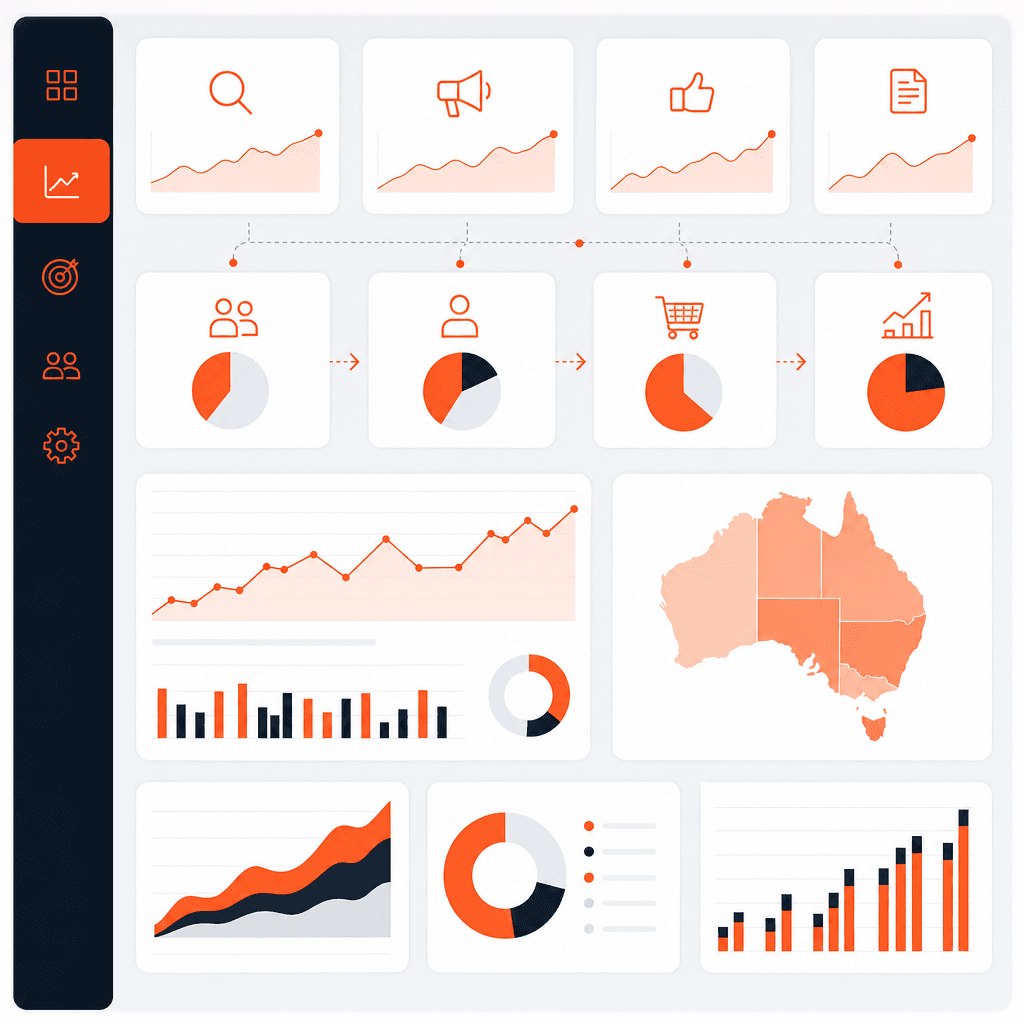
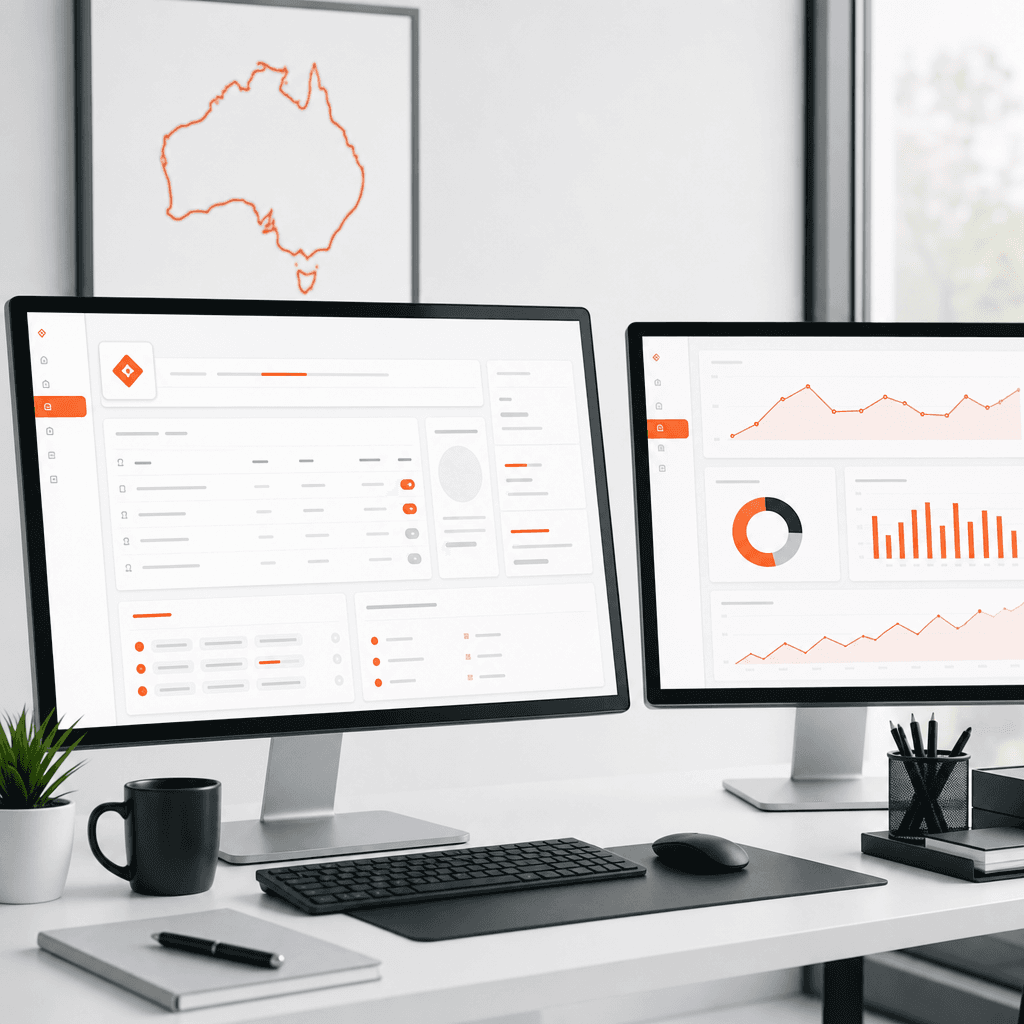
The dashboard is where it becomes usable day to day, built in Looker Studio and connected directly to the corrected data sources, so the numbers a board or owner sees each month are the same numbers the ad platforms and CRM are using to make decisions.
Why One Full Sweep Beats a Slow Drip
An analytics audit works best as a single complete pass across the whole measurement stack, not a page-by-page or platform-by-platform drip fix over several months. Partial fixes leave some data clean and some data broken at the same time, which makes the interim reporting less trustworthy than before the audit started.
This is a position we hold firmly, and it is not the industry default. Most agencies will fix GA4 this month, revisit Google Ads tracking next quarter, and get to the CRM handoff eventually. We think that approach costs more than it saves. Half-fixed tracking is often worse than fully broken tracking, because it looks credible while still being wrong.
We have applied the same one-pass logic outside of analytics work. When we rebuilt an ecommerce packaging client's product catalogue, we rewrote all 325 product pages in a single day rather than a handful each week. The whole catalogue started compounding in search results at the same time, instead of most of the site sitting under-optimised for months while competitors caught up. The same logic applies to a measurement stack. Fix GA4, conversion imports, consent, UTMs and the CRM handoff in one coordinated pass, and every subsequent decision, budget, bidding, reporting, is built on the same clean foundation from day one.
The Numbers Behind Clean Tracking
Every headline result in our book of business happened after tracking was fixed first, not after a bigger budget was approved. That order matters. You cannot optimise toward a number you cannot trust, and you cannot defend a budget decision to a board using data two platforms disagree on.
A Queensland mortgage broker came to us stuck on page three of Google for their primary keyword, relying almost entirely on paid and referral leads because organic search wasn't contributing anything measurable. Once we profiled the market, rebuilt content around high-intent search terms, and cleaned up how organic leads were actually being tracked, they reached position one for their primary keyword within six months. Organic traffic rose 312%, and organic search alone was delivering more than 40 qualified leads a month, a number we could state with confidence because the tracking behind it was no longer in dispute.
A national recruitment firm was pouring most of its acquisition budget into job boards, with no scalable organic pipeline and no clean way to compare the cost of a job board lead against an organic one. We replaced a large share of that job board spend with an SEO and content strategy built around actual candidate and client search behaviour. Once lead tracking was rebuilt to compare like-for-like, the result was 574 leads at a 63.5% lower cost per lead than the previous job-board-driven approach. That comparison was only possible because both channels were finally being measured the same way.
An automotive dealership group had underused local SEO and unoptimised service pages, leaving high-intent local searches uncaptured, and no reliable link between that traffic and actual sales. A local SEO overhaul, paired with corrected conversion tracking back to genuine enquiries, produced a 46:1 return on SEO investment within 12 months, our best documented ROI figure to date.
A B2B professional services firm had thin inbound enquiry volume and no coordinated acquisition strategy. A full overhaul spanning SEO, paid media and conversion rate optimisation, underpinned by a rebuilt conversion tracking setup, lifted qualified enquiries by 247%, roughly tripling inbound volume.
None of these results came from spending more first and measuring later. They came from getting the measurement right, then pointing budget at what the clean data showed was actually working. That is the whole argument for buying an audit before you buy more media.
What Changes After the Fix
Once tracking is clean, budget allocation decisions stop being arguments and start being calculations. You can compare channels on tracked cost per lead, not platform-reported clicks or impressions. You can defend marketing spend to a board using the same numbers the ad platforms are using internally, because they are the same numbers.
The practical shifts we see most often: underperforming campaigns get identified and cut faster, because the reporting no longer hides them behind vanity traffic metrics. Cost per lead typically falls, not because media got cheaper, but because spend stops leaking into channels that were never producing tracked, qualified leads in the first place. And reporting to a board or investor stops being a defensive exercise, because every figure traces back to tracked revenue, not activity.
This is the difference between an agency reporting on impressions and reach, and one reporting on tracked revenue, straight from the account data. It is also why we operate month to month with no lock-in. If the dashboard shows the work isn't producing tracked leads and revenue, that is a conversation we have immediately, not something buried in a 12-month contract.
How to Buy: Scope, Timeline and Access
A 3P analytics audit is a fixed-scope, paid engagement, typically completed within two to three weeks depending on how many platforms and properties are in play. It is sold as a standalone service, not bundled into a long-term retainer, and it can be bought whether or not you go on to run any other campaign work with us.
To run the audit, we need read or admin access to GA4, whichever ad platforms you are running (Google Ads, LinkedIn, Meta), your CRM or a data export from it, and your website CMS for tag verification. If you have existing UTM or campaign naming documentation, we review that too, though most businesses we audit don't have one, which is itself a finding worth acting on.
The audit sits at the front of the Profile stage in our Profile, Plan, Perform framework: profile the market and the measurement stack to find the advantage hiding in plain sight, build a plan that points every dollar at buyers rather than vanity traffic, then perform and report against tracked leads and revenue on a live dashboard. You can stop after the audit with a clean tracking foundation and a remediation list your internal team or existing agency can action. Or you can continue into the Plan and Perform stages with us, month to month, no lock-in. Across more than 250 clients, that arrangement has produced a 98% retention rate, which we think reflects accountable execution more than it reflects any contract term.
FAQs
How much does an analytics audit cost in Australia?
Pricing depends on how many platforms, properties, and conversion paths are involved. A single-property GA4 and Google Ads audit costs less than a multi-brand setup with LinkedIn, CRM integration and multiple domains. Ask for a fixed-scope quote rather than an hourly estimate.
How long does a GA4 audit take?
Most analytics audits, including a full GA4 health check, are completed within two to three weeks. Complexity, number of ad platforms, and how much CRM integration is involved can extend that timeline slightly.
Do I need a GA4 audit if I already migrated from Universal Analytics?
Yes. Migrating to GA4 does not guarantee the configuration, event structure, or conversion definitions were set up correctly. Many Australian businesses migrated under deadline pressure and inherited default settings that don't match how their business actually converts.
What's the difference between an analytics audit and ongoing analytics management?
An audit is a one-off diagnostic pass that fixes the current state of your tracking and produces a remediation list. Ongoing analytics management maintains that clean state as campaigns, platforms, and website changes are introduced over time.
Can you audit our Google Ads and LinkedIn conversion tracking too?
Yes. A proper analytics audit has to include ad platform conversion imports, because Google Ads and LinkedIn will optimise spend toward whatever conversion signal they're given, correct or not. Auditing GA4 alone without checking what's imported into the ad platforms leaves half the problem unfixed.
What access do you need to run the audit?
We typically need GA4 admin or read access, ad platform account access for Google Ads and LinkedIn (or whichever platforms you run), a CRM export or reporting access, and CMS access for tag verification. Existing UTM documentation is helpful if it exists.
References
Google, "About Consent Mode", Google Analytics Help: support.google.com/analytics
Office of the Australian Information Commissioner (OAIC), "Australian Privacy Principles": oaic.gov.au
Australian Competition and Consumer Commission (ACCC), "Digital Platforms Inquiry": accc.gov.au
Google Ads Help, "About Conversion Tracking": support.google.com/google-ads