How Performance-Based Pricing Models Work: A Transparent Explainer for Australian Businesses
Most Australian businesses are bleeding cash on digital marketing retainers. They sign 12 or 24-month lock-in contracts and receive glossy end-of-month activity reports detailing how many clicks they received. The problem is that clicks do not pay the bills or cover your GST liabilities. Unless that traffic consists of precisely targeted buyers, it is just vanity traffic.
As the founder of 3P Digital, I see this failure mode every day. Owners come to us frustrated by paying generic retainers for poor results. They want a marketing partner willing to back their strategies with measurable return on investment. Traditional agencies sell activity. We believe marketing must be reported strictly against revenue.
This post explains exactly how performance-based pricing models work. We will explore how paying for actual leads and revenue shifts the risk away from the Australian business owner, why foundational positioning dictates campaign profitability, and how a performance marketing agency in Australia structures these agreements transparently.
Key Takeaways
Activity is not an outcome: Standard agency retainers incentivise busywork. Performance pricing ties agency revenue directly to client revenue.
Positioning precedes performance: You cannot run a profitable performance campaign as a generalist competing on price.
Live reporting is mandatory: Month-to-month contracts and live revenue dashboards force agencies to prove their value constantly.
Risk alignment matters: The best marketing ROI pricing models absorb the media and execution risk on behalf of the business owner.
Real metrics drive decisions: Cost-per-click is irrelevant if cost-per-acquisition exceeds your profit margins.
Comparing Marketing Pricing Structures
Pricing Model | Payment Basis | Risk Allocation | Contract Length | Primary Agency Focus |
Traditional Retainer | Time and estimated effort | Client assumes all risk | 6 to 24 months | Activity, hours, deliverables |
Commission / Percentage of Ad Spend | Total media budget spent | Client assumes performance risk | 6 to 12 months | Increasing the ad spend pool |
Performance-Based | Specific actions, leads, or sales | Shared or agency-held risk | Month-to-month | Revenue, qualified leads, ROI |
The Flaw in Traditional Agency Retainers
Walk into any pitch meeting with a standard digital marketing agency and you will hear the same narrative. They will tell you they need a 12 to 24-month lock-in contract to deliver results and protect their cash flow. They will promise to optimise your campaigns and deliver growth.
The reality is that lock-in contracts incentivise complacency. When an agency guarantees its cash flow regardless of outcomes, the account moves to the back burner. The client receives a standard end-of-month report filled with click-through rates, impressions, and engagement metrics. These reports look impressive on the surface. However, they are a smokescreen for poor underlying performance. We call this vanity traffic.
Consider the standard behaviour of a typical agency managing a Google Ads campaign. They target broad, high-volume keywords because those keywords generate clicks. Clicks make the activity report look healthy. But high-volume keywords also attract price shoppers, bots, and irrelevant searchers. The client pays for the click, the agency gets paid for managing the click, and the business owner gets a zero return on investment.
Traditional retainers fail because the alignment of incentives is broken. The agency is rewarded for keeping the client enrolled and spending, not for generating profitable business. Australian SMEs cannot afford to subsidise an agency's learning curve or complacency.
How Performance-Based Pricing Models Actually Function
At its core, a performance-based pricing model aligns the financial success of the agency with the business outcomes of the client. Instead of paying for time or activity, the client pays for results. To execute this effectively, a performance marketing agency in Australia must track and attribute data with absolute precision.
Establishing the Baseline Metrics
Before a performance model begins, both parties must agree on what constitutes a valid result. We start by mapping historical data. This includes current lead volume, cost per acquisition, sales cycle length, and average order value. If a business does not have this data, we install the tracking required to capture it. This means setting up robust Google Analytics 4 configurations, CRM tracking, and call tracking.
We never start a performance engagement blind. Establishing a baseline ensures both parties know exactly what the starting point is.
Setting the Performance Targets
Once we have the baseline, we set specific, measurable targets. Performance pricing typically takes one of three forms.
Cost Per Lead (CPL): The client pays a fixed amount for every qualified lead generated. A lead might be a completed contact form, a tracked phone call lasting over two minutes, or a booked consultation.
Cost Per Acquisition (CPA): The client pays a fixed amount or a percentage for every completed sale. This is harder to track but offers the purest alignment with revenue.
Revenue Share: The agency takes a fixed percentage of the total revenue generated from the campaigns. This requires deep trust and highly accurate CRM tracking.
Tracking and Reporting Against Revenue
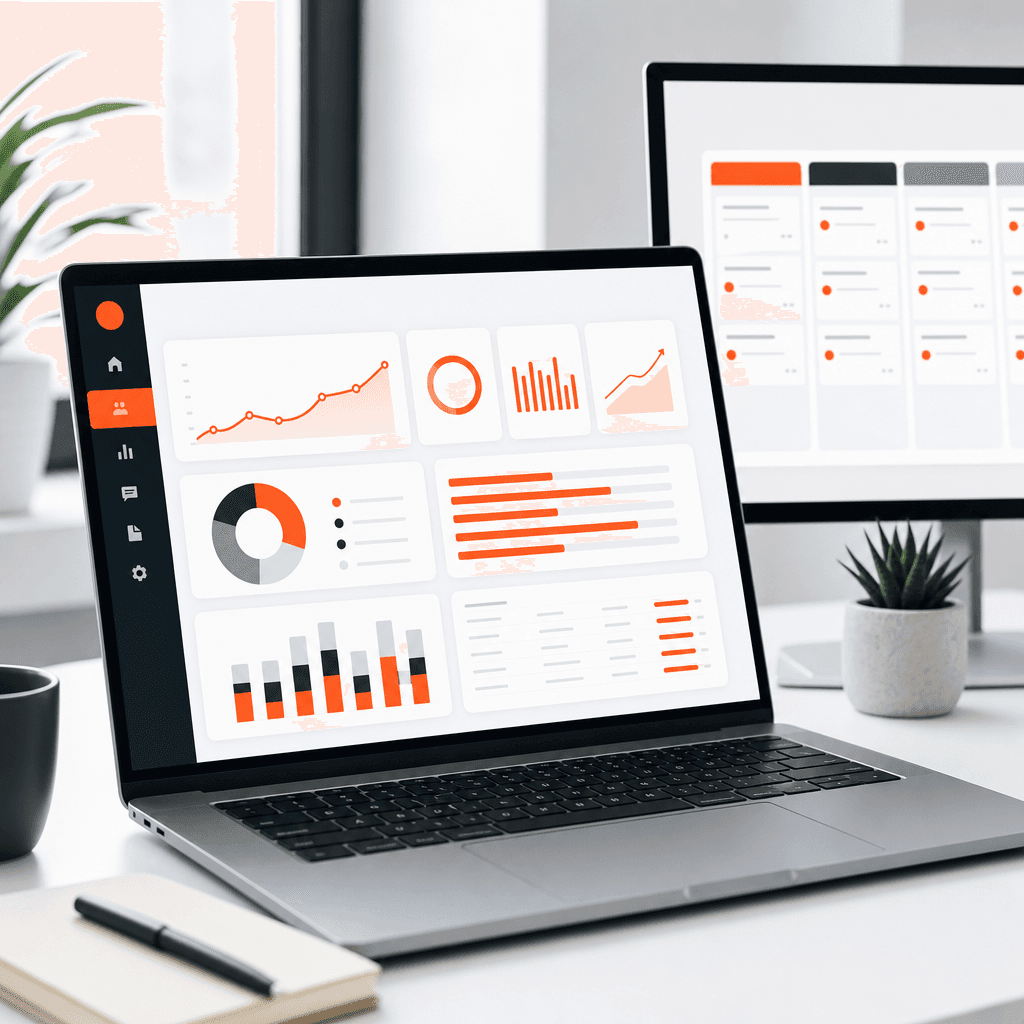
The mechanism that makes pay for results digital marketing work is strict tracking. Activity reports are discarded. Instead, the agency operates against a live revenue dashboard.
For example, we worked with a construction firm that was struggling with their ad spend. They were paying a retainer to a previous agency and receiving over 1,200 clicks a month. However, their cost per lead was an exorbitant $247 and their conversion rate was a dismal 1.2 percent. The clicks looked good in the report, but the leads were just price shoppers.
We took over the campaign on a performance basis. We interviewed their most profitable clients to reposition the brand for first-time renovators, rebuilt ad targeting, rewrote landing pages, and added CRM automation. Because our reporting was tied directly to their revenue, we had to find the advantage hiding in plain sight. The outcome was a 63 percent lower cost per lead, dropping to $91. Their conversion rate increased by 292 percent to 4.7 percent, and we shrank their sales cycle from 47 days to 21 days. We delivered this because our fee depended on generating qualified, profitable leads, not just clicks.
The Positioning Difference: Why Strategy Precedes Performance
Most businesses fail at performance marketing because they try to scale a broken offer. If you compete as a generalist, you fight on price. Fighting on price erodes your profit margins. When your margins are thin, performance marketing models collapse because there is not enough margin to share with the agency after paying for the media.
Before any performance pricing structure is deployed, a business must fix its positioning. We use the 3P Framework: Profile, Plan, Perform.
Phase 1: Profile
In the Profile stage, we map the market and build an ideal customer profile. We use deep discovery to find the specific advantage competitors have missed. We do not target broad audiences.
A national parts supplier was plateauing and losing market share to online competitors. Their marketing solely targeted retail DIY car owners. This was a bloodbath market. By analysing their business, we identified a blue ocean opportunity: the untapped B2B trade market of mechanics and workshops.
Phase 2: Plan
Once the profile is locked in, we move to the Plan stage. This is where we construct the campaigns, the landing pages, and the automation sequences. For the parts supplier, we implemented a dual-brand strategy and focused our plan entirely on trade-focused SEO content.
Phase 3: Perform
Perform is the Accountable execution phase. We deploy the campaigns, monitor the live revenue dashboard, and optimise strictly for return on investment. By shifting the positioning before execution, we achieved a 46:1 SEO ROI for the parts supplier, generating $2.3 million in new B2B revenue in 12 months, and increasing qualified trade leads by 127 percent.
Performance marketing without precise positioning is just burning money. You have to find the niche that competitors have ignored.
The Importance of Month-to-Month Value and Live Reporting
A performance marketing agency in Australia should operate month-to-month. If an agency claims it can deliver results, it should not need a 24-month cage to hold the client hostage.
Operating month-to-month shifts the entire dynamic of the relationship. It forces the agency to prove its value every single month. If the campaigns do not generate qualified leads and measurable ROI, the client leaves. This pressure creates a highly focused agency team.
Real-Time Dashboards vs Monthly Deception
Standard agencies rely on the end-of-month report because it gives them time to spin the narrative. If a campaign underperforms, they spend the last week of the month running cheap clicks to make the graph look like a hockey stick.
Performance models eliminate this deception. We use live revenue dashboards. The client has access to the same data we do, in real-time. They can see exactly how many leads were generated today, what the cost per acquisition is, and how much revenue has been attributed to the campaign.
The Sydney Tech Recruitment Case
We applied this principle to a Sydney tech recruitment agency. They were competing against over 200 generic recruiters. They were forced to compete on price, and their sales cycles dragged on for six months. They wanted us to run performance ads.
We refused to run ads immediately. The positioning was wrong. Running ads for a generic recruiter on a performance basis would have bankrupted both of us. Instead, we applied the 3P Framework. We identified a blue ocean opportunity and repositioned the firm to specialise exclusively in tech scale-ups.
Once the positioning was locked, we executed performance campaigns on a month-to-month basis. The client saw their average placement fees increase by 87 percent to $28,000. The sales cycle shrank to 2 months. We generated $2 million in new revenue from a 15 percent market share. This is the power of combining strict positioning with performance accountability.
Common Challenges and Caveats of Performance Pricing
While paying for results sounds ideal, it comes with strict requirements. Not every business is ready for a performance-based pricing model.
The Tracking Requirement
If you cannot track it, you cannot bill for it. A performance model requires flawless tracking infrastructure. We need to know exactly which keyword generated which lead, and which lead turned into a paying customer. If a business relies on walk-in foot traffic without identifying the acquisition channel, a performance model will not work. We require integration between your website, your CRM, and your reporting tools.
Cash Flow Considerations
Performance marketing requires the agency to carry the risk. The agency pays for the media, the copywriting, and the strategy upfront. If the campaigns fail, the agency loses money. To mitigate this, agencies often charge an upfront setup fee to cover the initial strategy and implementation. This is standard. The setup fee covers the foundational work, and the ongoing performance fee covers the risk and optimisation.
Data Sharing and Trust
Some Australian businesses are fiercely protective of their revenue data. A performance model cannot function in the dark. The agency needs access to sales data, close rates, and profit margins. If the client is unwilling to share this information, the alignment breaks down. Both parties must treat the relationship as a partnership.
Not Every Industry Fits the Model
Performance models work exceptionally well for lead generation businesses like mortgage broking, recruitment, fitness, and professional services. They are harder to execute for pure e-commerce brands with razor-thin margins, or for businesses selling enterprise software with 12-month sales cycles and complex buying committees. We analyse the viability of a performance model during the initial consultation.
Marketing ROI Pricing Models: A Deep Dive into the Numbers
Understanding how performance-based pricing models work requires an understanding of the underlying maths. Let us break down the mechanics of a successful marketing ROI pricing model.
Calculating the Maximum Cost Per Acquisition
Before setting a performance price, a business must know its numbers. Assume you run a professional services firm. Your average client lifetime value is $10,000. Your gross margin on that revenue is 50 percent, leaving you with $5,000. You are willing to spend 20 percent of your gross margin on marketing. That gives you a maximum cost per acquisition of $1,000.
If the agency can deliver clients at $600, the business owner profits $400 per client from the marketing budget, plus the remaining business margin. The agency might charge a flat performance fee of $600 per lead. The alignment is perfect.
Our Proven Client Data
At 3P Digital, we track our performance metrics rigorously across our entire client base. These numbers are not anomalies. They are the result of precise targeting and foundational positioning using the 3P Framework.
Average client traffic increase: 312 percent. This was calculated across our client base, including a 6-month mortgage broking engagement where we focused entirely on qualified local search intent rather than broad national terms.
Best SEO ROI achieved: 46:1. This was the 12-month B2B SEO engagement with the automotive parts supplier mentioned earlier. Every dollar invested in SEO returned $46 in reported revenue.
Google Ads spend reduction: 63.5 percent. We achieved this for a national recruitment firm by shifting away from broad match keywords and focusing on highly targeted intent-based SEO and content strategy. We reduced their wasted ad spend while increasing total lead volume.
Client retention rate: 98 percent. We retain nearly all of our clients because they can see the exact return on their investment on a live dashboard. They do not stay because of a contract. They stay because the numbers make sense.
Why Google Ads and SEO Need Performance Alignment
Too often, agencies separate search engine optimisation and pay-per-click advertising into distinct, disconnected buckets. They bill for SEO as a flat retainer and bill for PPC as a percentage of spend. This creates a disjointed strategy.
A true performance model looks at the unified goal: acquiring qualified buyers. Sometimes a buyer needs to see an educational SEO article to build trust before they click a retargeting ad. Sometimes a high-intent Google Ad is the fastest route to a conversion.
When an agency is paid purely on performance, they do not care which channel gets the click. They care which channel gets the sale. This leads to better allocation of marketing budgets. We shift funds into the channels that produce revenue and cut the channels that produce vanity traffic.
The Danger of Generic Competitors
The Sydney tech recruitment agency was failing because they were a generic competitor. They targeted the exact same keywords as 200 other recruiters. They were paying $45 per click on terms like "IT jobs Sydney". These terms are dominated by Seek and Indeed.
By shifting their strategy to target tech scale-ups, we changed the keywords. We targeted terms like "head of engineering jobs fintech Sydney". The search volume was lower, but the intent was pure. The candidates searching these terms were highly qualified. This specific targeting is what enables a performance model to thrive. You cannot pay for results if the results are hidden behind a wall of irrelevant traffic.
The Mechanics of a Performance Campaign Launch
To give you a clear picture of how a performance marketing engagement operates in reality, here is the standard lifecycle we follow.
Step 1: Discovery and Strategy
We do not touch Google Ads or write content until we understand the market. We conduct deep discovery interviews with the business owners and their best clients. We map out the ideal customer profile. We look for the blue ocean opportunity.
Step 2: Infrastructure and Tracking Setup
We implement the technical foundation. This includes CRM automation, conversion tracking, call tracking, and landing page construction. If the tracking is broken, the performance model fails. We ensure every action is attributable.
Step 3: Campaign Deployment
We launch the campaigns. This includes targeted Google Ads, SEO content, and social media retargeting. Every piece of creative is designed to speak directly to the ideal customer profile we identified in Step 1.
Step 4: Live Monitoring and Optimisation
We monitor the live dashboard. We do not wait for the end of the month. We watch the data daily in the first few weeks. We kill underperforming ads instantly. We shift budgets to the keywords generating qualified leads.
Step 5: Monthly Review and Scaling
Because we operate month-to-month, we sit down with the client every 30 days to review the revenue generated. We look at the cost per acquisition. If the numbers are profitable, we scale the spend. If a specific channel is not performing, we pivot the strategy.
This continuous feedback loop is the engine of pay for results digital marketing.
Frequently Asked Questions
What is a performance-based pricing model in marketing?
A performance-based pricing model is an agreement where the agency's compensation is tied directly to specific, measurable results, such as qualified leads or generated sales. Instead of paying for the agency's time or activity, the client pays for actual business outcomes. This shifts the performance risk from the client to the agency.
How does a performance marketing agency in Australia track results?
Agencies track results using integrated analytics systems. This includes Google Analytics 4, call tracking software, and Customer Relationship Management systems. The agency sets up strict conversion tracking so every phone call, form submission, and sale is attributed back to the specific marketing channel that generated it. This data is displayed on a live revenue dashboard.
Are performance-based pricing models suitable for small businesses?
Yes, performance models are excellent for small businesses because they remove the financial risk of paying a retainer with no guaranteed return. However, the business must have a viable product, clear profit margins, and be willing to integrate the necessary tracking software. The business must also be open to refining its positioning to ensure the campaigns are profitable.
Why do most agencies require long lock-in contracts?
Agencies require long lock-in contracts, typically 12 to 24 months, to protect their cash flow. Long contracts guarantee revenue for the agency regardless of the actual results they deliver. This model often leads to complacency. We believe agencies should operate month-to-month and prove their value continuously.
What is the difference between cost per lead and cost per acquisition?
Cost per lead (CPL) means the client pays a set fee for every qualified contact details received, such as a completed form. Cost per acquisition (CPA) means the client pays a fee only when a lead converts into an actual paying customer. CPA carries higher risk for the agency but offers the strongest guarantee for the client.
How much does performance-based marketing cost?
The cost varies depending on the industry, the average order value, and the target cost per acquisition. Most performance engagements require an initial setup fee to cover strategy, tracking, and campaign creation. After the setup, the ongoing fees are calculated based on the agreed cost per lead or revenue share percentage.
What industries work best for performance marketing?
Industries with high customer lifetime values and clear lead generation processes work best. This includes professional services, mortgage broking, recruitment, legal services, and B2B trade. Businesses with very low margins or long, complex enterprise sales cycles may find performance models harder to implement effectively.
References
Australian Competition and Consumer Commission (ACCC). (n.d.). Scams, misleading advertising and unfair business practices. Retrieved from https://www.accc.gov.au/business/advertising-and-promotions/online-selling-and-marketing
Australian Bureau of Statistics (ABS). (n.d.). Business Indicators, Business Use of Information Technology. Retrieved from https://www.abs.gov.au/statistics/industry/business-indicators
Google. (n.d.). Measure customer interactions with Google Analytics 4. Retrieved from https://support.google.com/analytics/answer/10089681
Chan Kim, W., & Mauborgne, R. (2005). Blue Ocean Strategy: How to Create Uncontested Market Space and Make Competition Irrelevant. Harvard Business Review Press.