How to Choose an Analytics Agency in Australia: What to Look For in 2026
Most Australian businesses are sitting on a goldmine of data and doing almost nothing useful with it. They have Google Analytics installed, a few dashboards tacked together in Looker Studio, and a monthly report that tells them sessions went up or down. What they don't have is someone turning that data into decisions that actually move revenue. That's the gap a proper analytics agency is supposed to close.
The problem is the market is flooded with agencies that call themselves data-driven but are really just reporting tool resellers. They'll set up a pretty dashboard, point to some vanity metrics, and invoice you every month while your real questions go unanswered. Choosing the wrong analytics partner doesn't just waste budget. It actively misleads your strategy, because you're making decisions based on incomplete or misattributed data.
This guide is designed to help Australian business owners and marketing managers cut through the noise. Whether you're evaluating your first analytics agency or replacing one that underdelivered, you'll walk away knowing exactly what to look for, what to avoid, and what a genuine data-driven partnership should cost in the Australian market in 2026.
Key Takeaways
A real analytics agency does far more than build dashboards. It owns your measurement strategy end-to-end, from tracking implementation through to strategic interpretation.
GA4 expertise, server-side tagging, and attribution modelling are non-negotiable technical capabilities in 2026.
Privacy compliance under the Australian Privacy Act and APP framework must be baked into your analytics setup, not bolted on afterward.
Expect to invest between $2,000 and $10,000 per month for a credible analytics agency engagement in Australia, depending on scope and complexity.
Full-service analytics agencies outperform freelance analysts and in-house hires on scalability and time-to-value for most SMEs and mid-market businesses.
Red flags like vanity metric reporting, no discussion of attribution, and lack of CRO integration should disqualify an agency early in the evaluation process.
Summary Table: Analytics Agency vs Freelance Analyst vs In-House Hire
Factor | Full-Service Analytics Agency | Freelance Analyst | In-House Hire |
Monthly Cost (AUD) | $2,000 to $10,000+ | $1,500 to $5,000 | $8,000 to $15,000 (salary + oncosts) |
Capability Breadth | High (GA4, tagging, attribution, CRO, dashboards) | Medium (specialist depth, limited breadth) | Variable (depends on hire) |
Scalability | High (team scales with your needs) | Low (single resource bottleneck) | Low to Medium |
Time to Value | Fast (existing tools, processes, templates) | Medium (ramp-up required) | Slow (3 to 6 month onboarding) |
Privacy Compliance Support | Yes (built into service) | Sometimes | Depends on hire |
Strategic Interpretation | Yes (CMO-level insight available) | Rarely | Sometimes |
Integration with Marketing Channels | Yes (paid, SEO, social, CRO) | Limited | Limited unless multi-skilled |
Why Australian Businesses Need a Dedicated Analytics Agency in 2026
The digital advertising landscape in Australia has matured significantly. According to IAB Australia's annual digital advertising expenditure report, digital ad spend in Australia continues to grow year-on-year, with performance channels like paid search and programmatic commanding the largest share of budgets. When that much money is flowing through digital channels, measurement isn't optional. It's the difference between scaling what works and bleeding budget on what doesn't.
But measurement has also gotten harder. The deprecation of third-party cookies, the rollout of iOS privacy changes, the transition from Universal Analytics to GA4, and tightening obligations under the Australian Privacy Act 1988 have all compounded to make analytics a genuine specialist discipline. It's no longer something a marketing coordinator can manage on the side.
Australian SMEs and mid-market companies face a specific version of this challenge. They typically don't have the budget to hire a full in-house data team, but they're running complex enough digital programs across paid search, SEO, email, and social that they need real measurement rigour. A dedicated analytics agency fills that gap efficiently, bringing specialist capability at a fraction of the cost of building internally.
The businesses I work with at 3P Digital that see the clearest ROI from analytics investment share one characteristic: they've stopped treating data as a reporting function and started treating it as a decision-making infrastructure. When your analytics setup is built correctly, every campaign optimisation, budget reallocation, and channel investment is grounded in evidence rather than gut feel.
What Does an Analytics Agency Actually Do?
This is where a lot of buyers get confused, because the term "analytics agency" gets applied to everything from a freelancer who builds Looker Studio dashboards to a full-stack measurement consultancy that rebuilds your entire data infrastructure. Let me be specific about what a genuine analytics agency should be doing for you.
GA4 Implementation and Audit
Google Analytics 4 is the current standard for web analytics, and it is fundamentally different from Universal Analytics in its data model, event structure, and reporting logic. A proper analytics agency doesn't just migrate your old UA configuration across. It rebuilds your measurement plan from scratch in GA4, ensuring that your events are meaningful, your conversions are correctly defined, and your data is reliable.
This includes configuring enhanced measurement correctly, setting up custom dimensions and metrics aligned to your business goals, filtering out bot traffic and internal traffic, and validating data accuracy through GA4's DebugView and direct comparison with backend data sources like your CRM or ecommerce platform.
For most Australian businesses we audit at 3P Digital, GA4 has been installed but not properly configured. Events are firing incorrectly, conversions are double-counting, and the data being reported is not trustworthy. Building strategy on that data is worse than having no data at all.
Server-Side Tagging
Client-side tag management through Google Tag Manager has limitations that matter increasingly in 2026. Ad blockers, browser privacy settings, and iOS restrictions all interfere with client-side tags, leading to data loss that can range from 15% to 40% of actual conversions depending on your audience and device mix.
Server-side tagging moves the data collection layer to a server you control, which improves data accuracy, speeds up page load times, and gives you more control over what data is shared with third-party platforms. It also supports first-party data strategies, which are now essential given the degradation of third-party tracking.
A credible analytics agency will have server-side tagging capability and will be able to advise you on whether the investment is justified given your traffic volume and channel mix.
Attribution Modelling
Attribution is arguably the most strategically important and most commonly botched aspect of digital analytics. Last-click attribution, which most businesses default to, systematically undervalues upper-funnel channels like SEO, display, and social, and overvalues the final touchpoint before conversion, usually branded paid search.
A proper analytics agency will help you understand your customer journey across multiple touchpoints and configure attribution models that reflect the reality of how your customers convert. In GA4, this means working with data-driven attribution where you have sufficient conversion volume, and understanding the limitations of the model where you don't. It also means integrating Google Ads, Meta, and other channel data to get a cross-channel view of performance.
For a deeper understanding of how attribution modelling works in practice, our guide to data-driven attribution models covers the mechanics in detail.
Dashboard Design and Customisation
A dashboard is only useful if it surfaces the right information to the right person at the right level of detail. An executive needs a different view than a campaign manager. A dashboard built for a mortgage broker needs to track lead quality metrics that are irrelevant to a fitness studio.
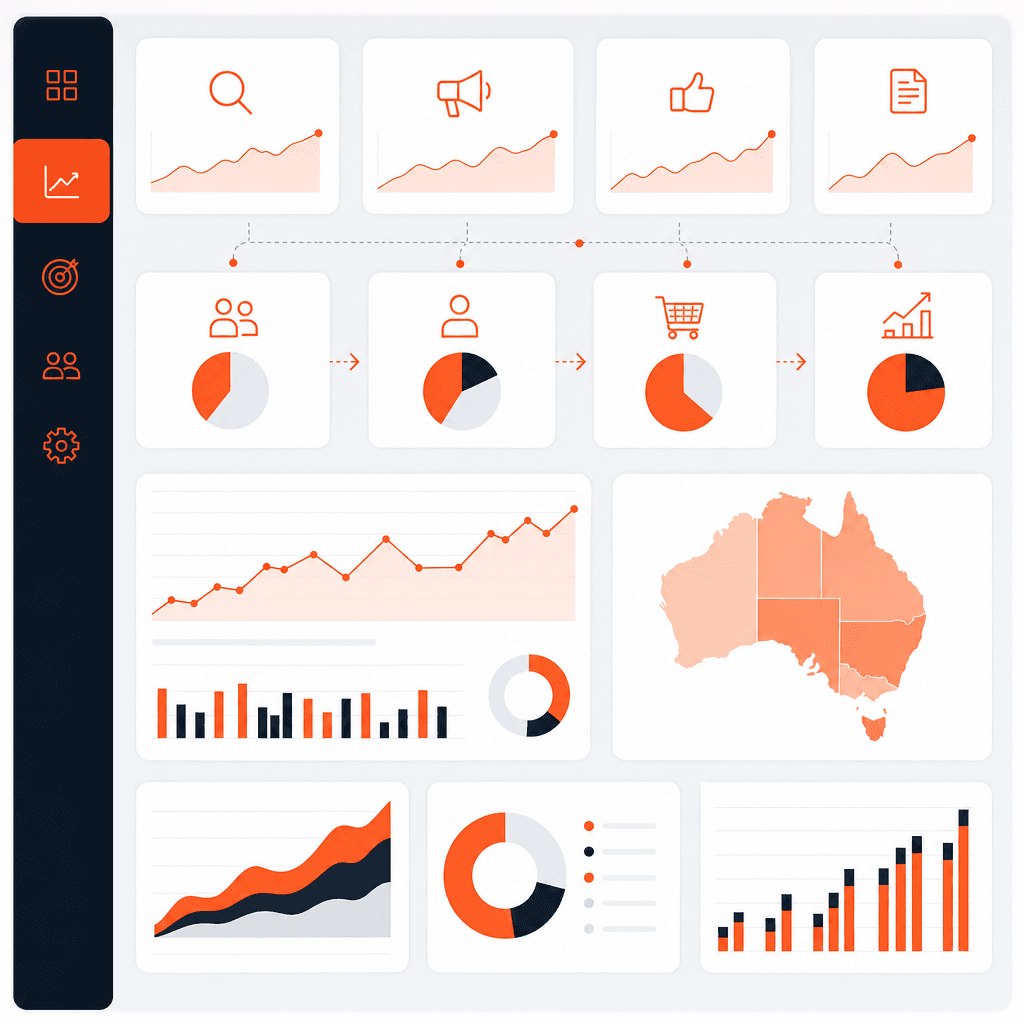
A good analytics agency designs dashboards around your specific decision-making needs, not around what's easy to pull from the data. That means custom Looker Studio or other BI tool builds, integrating data from multiple sources (GA4, Google Ads, Meta, CRM, call tracking), and setting up automated reporting cadences that save your team time.
Strategic Interpretation
This is the capability that separates a genuine analytics agency from a reporting tool. Anyone can schedule a weekly PDF of your Google Analytics data. What most businesses actually need is someone who can look at that data and say: "Your cost per lead from Meta has increased 32% over the last 60 days because your audience is fatigued and your creative rotation is insufficient. Here's what to do about it."
Strategic interpretation requires someone who understands marketing, not just data. It's the intersection of analytical capability and marketing strategy, and it's rare. When you're evaluating an analytics agency, push hard on this capability. Ask them for examples of insights they've surfaced that led to a specific business decision.
Conversion Rate Optimisation Data
Analytics and CRO are deeply interconnected. Your analytics data tells you where users are dropping off, which pages have high exit rates, and which traffic segments convert at different rates. A good analytics agency feeds this insight directly into a CRO programme.
At 3P Digital, our conversion optimisation services are built on top of the analytics infrastructure we set up for clients. The measurement informs the experiments, and the experiments feed back into the measurement. That loop is where real performance improvement lives.
7 Non-Negotiable Criteria When Evaluating Analytics Partners
1. GA4 Expertise That Goes Beyond the Basics
Ask prospective agencies to walk you through how they'd configure GA4 for your specific business model. Can they explain the difference between events, conversions, and key events in GA4's current terminology? Do they understand how to configure audiences for remarketing? Can they explain the data retention settings and their implications? Shallow answers here are a strong signal of shallow capability.
2. Server-Side Tagging Capability
Even if you don't implement server-side tagging immediately, your analytics agency should understand it and be able to advise you on its relevance to your situation. If they can't explain the difference between client-side and server-side data collection, they're not operating at the level the 2026 landscape requires.
3. Attribution Modelling Understanding
Ask them directly: "How do you approach attribution for a business that runs paid search, SEO, and social concurrently?" If the answer involves last-click attribution without any qualification, or if they can't articulate the limitations of GA4's data-driven attribution model, move on.
4. Privacy Compliance Knowledge
Australian businesses are subject to the Privacy Act 1988 and the Australian Privacy Principles (APPs) administered by the Office of the Australian Information Commissioner (OAIC). Your analytics setup must comply with these requirements, particularly around consent collection, data storage, and user data handling.
A competent analytics agency will be familiar with these obligations and will help you implement consent management correctly, including Google Consent Mode v2 for GA4 and Google Ads. They should also understand the implications of collecting data from European users under GDPR, which is relevant for any Australian business with international reach.
5. CRM and Channel Integration Capability
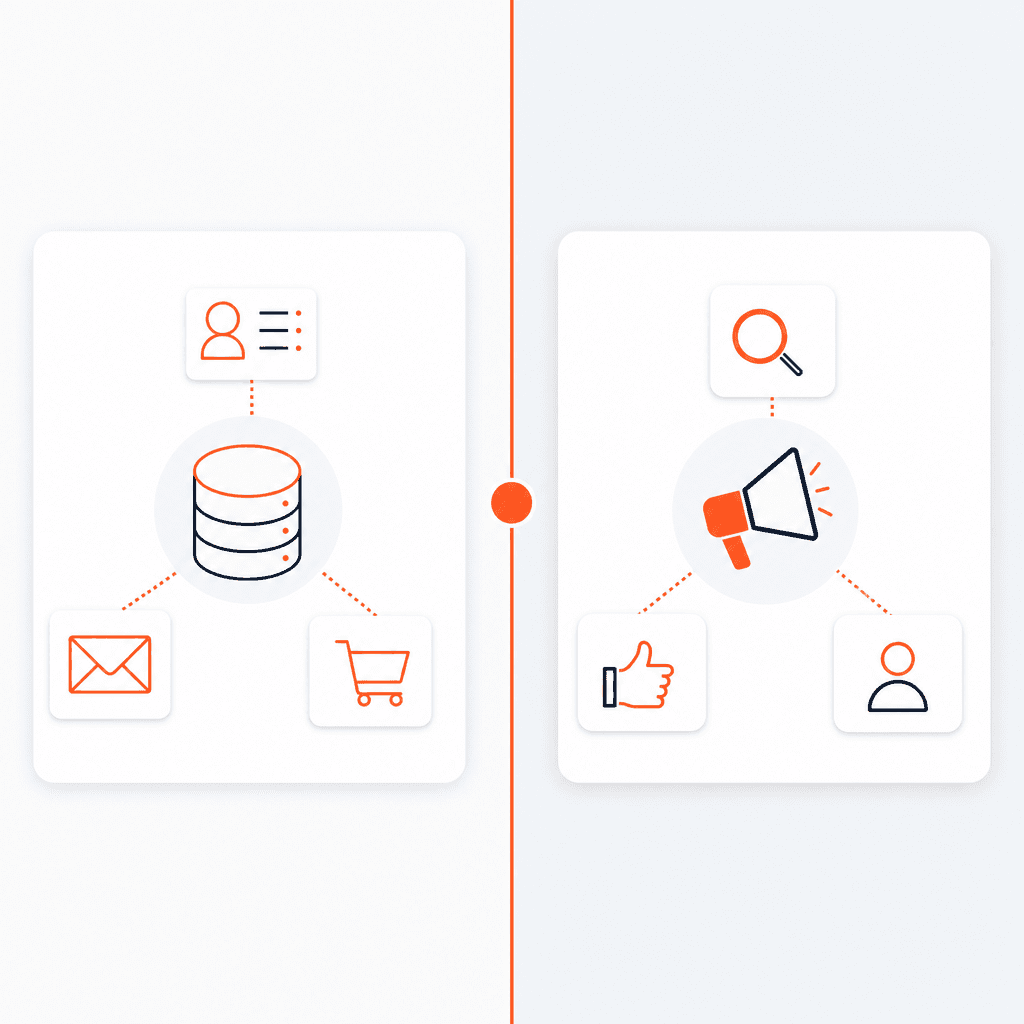
Standalone website analytics is limited. The most valuable insights come from connecting your analytics data with your CRM, your ad platforms, your email platform, and your call tracking system. Ask prospective agencies what integrations they've built and how they approach offline conversion tracking.
6. Reporting That Drives Decisions, Not Just Documents Them
Ask to see examples of their reporting outputs. Does the report surface insights and recommendations, or does it just present data? The best analytics agencies produce reports that end with a clear "therefore" — here's what the data means, and here's what we recommend doing about it.
7. Industry Relevant Experience
While strong analytics fundamentals transfer across industries, there are meaningful differences in how you measure success for a mortgage broker versus a SaaS company versus an ecommerce retailer. Ask for examples from industries adjacent to yours and probe the specifics. At 3P Digital, we've worked extensively in mortgage broking, recruitment, fitness, and professional services, and that sector depth shapes the quality of insight we can generate.
You can explore our analytics services for a more detailed breakdown of how we approach measurement across different business models.
Red Flags That Signal a Bad Fit
Knowing what to look for is only half the picture. Knowing what to run from is equally important.
They lead with the dashboard, not the measurement plan. If the first thing an agency talks about is how beautiful their Looker Studio templates are, they're selling you a tool, not a strategy. The dashboard is the output. The measurement plan, tracking architecture, and insight interpretation are the value.
They can't explain their tracking implementation methodology. Ask them: "How do you validate that the data in GA4 is accurate?" If they don't have a clear answer involving cross-referencing with backend data, using DebugView, and auditing tag firing behaviour, your data quality is at risk.
They report on sessions and pageviews as primary KPIs. These are vanity metrics for most businesses. A serious analytics agency will push the conversation toward business outcomes: leads generated, cost per acquisition, revenue attributed, pipeline influenced. If they're celebrating traffic growth without connecting it to revenue, they're not thinking about your business.
They have no position on privacy compliance. In 2026, "we just install GA4 and GTM" is not a complete answer. Every analytics implementation needs a consent management strategy. If an agency hasn't mentioned consent mode, cookie banners, or the Australian Privacy Principles, they're either unaware or dismissive of your legal obligations.
They can't show you outcomes, only outputs. Ask for a case study or client reference. Can they point to a specific insight their analytics work surfaced, a specific recommendation they made, and the business result that followed? Outputs are dashboards and reports. Outcomes are decisions that improved performance. You want an agency that produces outcomes.
They're vague about attribution. If an agency is reporting on your Google Ads conversion data without acknowledging that it's likely overcounting due to view-through conversions and cross-channel overlap, they're either not sophisticated enough or they're not being transparent.
How 3P Digital's Analytics Services Work
At 3P Digital, analytics isn't a standalone service. It's embedded in our proprietary 3P Framework, which moves through three stages: Profile, Plan, and Perform.
The Profile stage is where measurement strategy begins. Before we recommend any analytics configuration, we need to understand your business model, your customer journey, your conversion events, and the decisions your team actually needs to make. What does a good lead look like? What's your average sales cycle? Which channels are you investing in and what do you need to know about each one? This diagnostic work is what separates a measurement strategy from a GA4 installation.
In the Plan stage, we design your measurement architecture. This includes defining your event taxonomy, configuring GA4 with custom dimensions and conversions, setting up consent management to meet Australian privacy requirements, and designing your dashboard and reporting structure. If server-side tagging is warranted, we scope and implement it here.
In the Perform stage, we deliver ongoing analytics consulting. That means monthly reporting with strategic recommendations, attribution analysis, anomaly investigation, and continuous refinement of the measurement setup as your marketing programme evolves. We're not shipping a report and disappearing. We're in your corner interpreting the data and recommending action.
A concrete example: we worked with a professional services firm in Sydney that was investing heavily in Google Ads and reporting strong lead volumes, but their close rate was below 10% on those leads. When we audited their analytics setup, we found that their primary conversion event was a page visit, not a form submission. They were optimising Google Ads for traffic, not enquiries. After restructuring their GA4 configuration, rebuilding their conversion tracking around actual form completions, and integrating offline conversion data from their CRM, their effective CPA dropped by 44% within 90 days because the platform was finally optimising toward real outcomes.
That's the kind of work that a proper analytics agency should be delivering. If you'd like to see more examples, our case studies walk through specific client outcomes in detail.
Analytics Agency Pricing in Australia
Pricing in the Australian analytics agency market varies widely based on scope, complexity, and the type of agency you're engaging. Here's a realistic breakdown based on what we see in the market in 2026.
Entry level ($2,000 to $3,500 per month): Suitable for smaller businesses with a single website, limited channel mix, and relatively straightforward conversion tracking. This typically covers GA4 configuration, GTM management, a monthly dashboard, and a 60-minute strategy session. It does not usually include server-side tagging or complex attribution work.
Mid-range ($3,500 to $6,000 per month): Appropriate for SMEs running multi-channel programs across paid search, SEO, and social. This scope typically includes GA4 and GTM management, cross-channel reporting, attribution modelling, CRM integration, and regular strategic reporting with recommendations. This is the most common engagement range for our clients at 3P Digital.
Complex or enterprise ($6,000 to $10,000+ per month): Required for businesses with high traffic volumes, complex conversion funnels, ecommerce measurement, server-side tagging infrastructure, custom data pipelines, or multiple digital properties. This tier also often includes fractional analytics leadership, where the agency is effectively functioning as your Head of Analytics.
One-time project work such as GA4 audits, measurement strategy development, or tagging implementations typically ranges from $3,000 to $15,000 depending on the complexity of the existing setup and the scope of the rebuild.
Be cautious of agencies quoting below $1,500 per month for ongoing analytics work. At that price point, you're getting automated reporting, not strategic consulting. The cost of making bad decisions based on poorly configured or misinterpreted data will far exceed what you save on the retainer.
When to Hire an Analytics Agency vs Build In-House
This is a question I get regularly, and the honest answer depends on your scale and where you are in your growth trajectory.
Hire an analytics agency if you're an SME or mid-market business spending between $20,000 and $500,000 per month on digital marketing, you don't have an existing analytics function, you need capability across multiple tools and channels, and you want strategic interpretation alongside technical execution. An agency gives you a team with diverse skills at a cost that's a fraction of building that team internally.
Build in-house if you're at a scale where you need a dedicated analytics function working across multiple business units, your data complexity requires proprietary tools and custom infrastructure, and you have the budget and HR capability to attract, retain, and manage specialist data talent. In the Australian market, a senior marketing analytics hire costs $120,000 to $180,000 per year in base salary before oncosts, tools, and management overhead. For most SMEs, that's not the right investment.
The hybrid model is worth considering for mid-market businesses that have hired one internal analyst but need specialist support for advanced attribution, server-side infrastructure, or CRO analytics. An agency can work alongside your internal team, handling the deep technical work while your analyst manages day-to-day reporting.
The key question isn't cost. It's capability. An in-house hire who doesn't have deep GA4, server-side tagging, and attribution expertise will cost you more in bad decisions than a competent agency costs in fees.
FAQs
What does an analytics agency do?
An analytics agency designs and manages your digital measurement infrastructure. This includes configuring analytics platforms like GA4, implementing tag management systems, building attribution models, designing reporting dashboards, and providing strategic interpretation of your data. A good analytics agency translates raw data into business decisions, connecting your marketing activity to revenue outcomes. It goes well beyond producing reports to include implementation, quality assurance, and ongoing strategic consulting.
How much does an analytics agency cost in Australia?
In Australia, analytics agency retainers typically range from $2,000 to $10,000 per month depending on the complexity of your digital program and the scope of services. Entry-level engagements covering GA4 and basic reporting start around $2,000 to $3,500 per month. Full-service analytics programs for mid-market businesses with multi-channel attribution and CRM integration typically sit between $3,500 and $6,000 per month. Complex enterprise engagements or those including server-side tagging and data infrastructure can exceed $10,000 per month. One-time audit and implementation projects range from $3,000 to $15,000.
What is the difference between a reporting dashboard and analytics consulting?
A reporting dashboard presents data visually. Analytics consulting interprets that data, identifies the implications for your business, and recommends action. A dashboard tells you that your conversion rate dropped 18% last month. Analytics consulting tells you why it dropped, which segment was most affected, what the probable cause is, and what you should do about it. Most businesses have dashboards. Very few have genuine analytics consulting, and that gap is where most of the value lies.
Do I need help with GA4 migration or setup?
If you're still running a legacy analytics configuration or if your GA4 was installed without a proper measurement plan, yes. GA4 is fundamentally different from Universal Analytics in its event-based data model, and a poor implementation produces unreliable data. Many Australian businesses had GA4 installed by a web developer or marketing coordinator who followed a basic setup guide, but without correctly defining conversions, filtering internal traffic, configuring consent mode, or validating data accuracy. An analytics agency can audit your current setup and identify gaps before they lead to bad decisions.
How do analytics agencies handle privacy compliance?
Reputable analytics agencies will implement Google Consent Mode v2 as part of any GA4 setup, ensuring that data collection respects user consent choices. They should also be familiar with the Australian Privacy Principles under the Privacy Act 1988, particularly around the collection and handling of personal information. If your business serves European users, GDPR compliance requirements will also apply. A competent agency will help you configure a consent management platform, ensure your privacy policy accurately reflects your data collection, and set up GA4 to operate in compliance with applicable regulations. If an agency doesn't raise privacy compliance during scoping, that is a red flag.
Can an analytics agency improve my conversion rate?
Directly and indirectly, yes. An analytics agency provides the diagnostic data that drives conversion rate optimisation. By identifying where users drop off, which traffic segments convert poorly, and which pages or flows have friction, analytics work creates the brief for CRO experiments. At 3P Digital, our analytics and conversion optimisation services are deliberately integrated because the measurement informs the experiments and the experiments validate the measurement. Analytics alone won't improve your conversion rate, but without it, your CRO programme is guessing.
What should I ask an analytics agency in a discovery call?
Ask them to walk you through how they'd configure GA4 for your business model. Ask how they approach attribution across multiple channels. Ask them how they validate data accuracy. Ask for a specific example of an insight they surfaced that led to a measurable business improvement. Ask how they handle privacy compliance and consent management. Ask what their onboarding process looks like and how long before you'd have reliable data. The quality and specificity of their answers will tell you more than any proposal document.
References
Google Analytics 4 Documentation (Google): Official technical documentation covering GA4 implementation, event configuration, conversion tracking, consent mode, and data model differences from Universal Analytics. The primary reference for any GA4 implementation work.
Australian Privacy Principles (Office of the Australian Information Commissioner): The OAIC's guidance on the 13 Australian Privacy Principles under the Privacy Act 1988. Directly relevant to how Australian businesses must handle personal data collected through analytics platforms.
IAB Australia Digital Advertising Expenditure Reports: Annual and quarterly reports tracking digital advertising investment across channels in Australia. Used to contextualise the scale of digital ad spend and the importance of accurate measurement for Australian marketers.
Gartner Marketing Analytics Research: Gartner's ongoing research into marketing analytics maturity, technology adoption, and the gap between data collection capability and strategic data utilisation across organisations. Provides benchmarks for understanding where most businesses sit in their analytics maturity journey.
Google Tag Manager Server-Side Tagging Documentation (Google): Technical documentation covering server-side container setup, client configuration, and the differences between client-side and server-side data collection. Essential reference for understanding modern tag management architecture.
Google Consent Mode v2 Implementation Guide (Google): Google's documentation on implementing Consent Mode v2 for GA4 and Google Ads, covering how analytics and advertising tags behave when users decline consent and how modelled data fills measurement gaps.
Ready to find out what your data is actually telling you? Book a free analytics audit with 3P Digital and we'll identify the gaps in your current measurement setup within one session.