How to Choose a Paid Media Agency in Australia: What Smart Marketers Look For in 2026
Australian businesses are collectively pouring billions of dollars into paid media every year, and a significant chunk of that is being quietly burned through poor account structure, lazy audience targeting, and agencies that report on impressions instead of revenue. Conservative estimates suggest that between 25% and 40% of paid media budgets are wasted when campaigns are mismanaged. For a business spending $15,000 per month on Google Ads or Meta, that is potentially $72,000 per year going nowhere.
The problem is not always that paid advertising does not work. More often, the problem is the agency managing it. Choosing a paid media agency in Australia is one of the highest-leverage decisions a marketing manager or business owner will make. Get it right and you have a scalable, measurable growth engine. Get it wrong and you are funding someone else's learning curve while your competitors take market share.
This guide is written specifically for Australian marketing professionals and business owners who are either evaluating agencies for the first time or questioning whether their current setup is actually delivering. I will walk you through the non-negotiable capabilities to look for, the pricing models you will encounter, the red flags that should end a conversation early, and the questions that separate serious agencies from those just chasing retainers.
Key Takeaways
Australian businesses waste an estimated 25–40% of their paid media budget when working with underqualified or misaligned agencies
A legitimate paid media agency must demonstrate cross-platform capability, conversion tracking integrity, and clear attribution methodology before you hand over a dollar
Watch for red flags including guaranteed ranking promises, vanity metric reporting, locked-in ad creative ownership, and vague fee structures
Paid media agency pricing in Australia in 2026 typically ranges from $1,500 to $8,000+ per month depending on model, scope, and channel mix
Contracts should include clear performance benchmarks, ownership of ad accounts and creative assets, and a reasonable exit clause of no more than 30 days notice after an initial term
Paid Media Agency Pricing Models: At a Glance
Pricing Model | How It Works | Typical AU Pricing (2026) | Pros | Cons |
Monthly Retainer | Fixed fee regardless of spend | $1,500–$6,000/month | Predictable costs, agency incentivised on performance not spend | Can feel disconnected from actual budget scale |
Percentage of Ad Spend | Agency charges 10–20% of managed spend | 12–18% is typical in AU market | Scales with budget, simple to understand | Agency earns more when you spend more, potential misalignment |
Performance-Based | Fee tied to leads, sales, or ROAS targets | Variable; often a base plus CPA bonus | Strong alignment in theory | Hard to attribute fairly; agencies often prefer safer niches |
Hybrid (Retainer + Performance) | Base fee plus bonuses for hitting KPIs | $2,000–$4,000 base + bonus structure | Balanced alignment, agency has skin in the game | Requires clear, agreed attribution methodology upfront |
Why Choosing the Wrong Paid Media Agency Costs More Than You Think
Most business owners assess the cost of a paid media agency by looking at the management fee alone. That is the wrong frame entirely. The real cost of a bad agency partnership includes wasted ad spend, opportunity cost from missed leads, time lost in meetings that go nowhere, and the internal political capital burned trying to justify a strategy that is not performing.
Let me give you a concrete example. A recruitment firm we spoke to before engaging with 3P Digital had been running Google Ads for 14 months with a previous agency. Their account had 47 active campaigns, over 800 ad groups, and zero conversion tracking beyond a basic thank-you page view. They were spending $22,000 per month and had no reliable way to tell which campaigns were generating actual placements versus form fills that never converted. The agency was reporting a cost-per-click improvement quarter on quarter. CPC is not a business outcome.
The structural cost of bad paid media management compounds over time. When conversion data is corrupted or absent, machine learning algorithms inside Google Ads and Meta cannot optimise toward real outcomes. You end up training the algorithm on the wrong signals, which means every dollar spent is reinforcing a broken feedback loop. Fixing this is not just a matter of pausing bad campaigns. It often requires rebuilding the account from scratch, which means an additional 60 to 90 days of re-learning before performance stabilises.
In the Australian context, this issue is amplified by the relatively smaller audience sizes compared to the US or UK. If you are targeting commercial intent keywords in a niche B2B market like financial services, recruitment, or professional services in Sydney or Melbourne, your total addressable search volume is limited. Burning budget on poorly matched search terms does not just waste money. It exhausts the available audience and can suppress quality score across the entire account.
According to IAB Australia's digital advertising expenditure reporting, paid search and programmatic display continue to represent the dominant share of digital ad investment in Australia. With overall digital ad spend tracking toward $16 billion annually, the competitive stakes for effective management have never been higher.
The 7 Non-Negotiable Capabilities Every Paid Media Agency Must Have
Not all paid media agencies are built the same. Some are Google Ads specialists. Some are strong on Meta but weak on attribution. Some are excellent at generating clicks and genuinely useless at generating customers. Here is what separates a competent agency from one that will cost you money.
1. Conversion Tracking That Ties Back to Revenue
This is the foundation of everything. If an agency cannot set up and verify accurate conversion tracking before launching campaigns, walk away. That means Google Tag Manager implementation, GA4 event tracking, CRM integration where applicable, and server-side tagging for environments where browser-based tracking is unreliable. At 3P Digital, our analytics service is built to ensure that every paid media engagement starts with clean data infrastructure. You cannot optimise what you cannot measure.
2. Platform Depth Across Google Ads, Meta, and Programmatic
A genuine paid media agency should have certified expertise across the major platforms: Google Search, Google Performance Max, YouTube, Meta (Facebook and Instagram), LinkedIn where relevant, and programmatic display through platforms like DV360 or The Trade Desk. Ask specifically which platforms the team managing your account is certified in, and ask to see recent examples of campaigns across those platforms. Generalists who dabble in everything tend to be expert in nothing.
3. A Documented Account Structure Methodology
Strong agencies have a repeatable, documented approach to campaign architecture. For Google Ads, this means a clear position on match type strategy, ad group granularity, negative keyword management, and campaign segmentation by intent stage. Agencies that build accounts on the fly, without a framework, will produce inconsistent results. Ask to see their account structure documentation or have them walk you through how they would approach building your account from scratch. Our 3P Framework guides this process across every client engagement, from the initial profile and planning phase through to ongoing performance management.
4. Landing Page and Conversion Rate Optimisation Capability
Paid media does not stop at the click. If you are sending expensive traffic to a page with a confusing layout, a slow load time, or a generic value proposition, no amount of bidding strategy will save your ROAS. An agency that manages ads but ignores what happens after the click is solving half the problem. Look for agencies with in-house or embedded conversion optimisation capability, or at minimum, a clear process for reviewing and improving landing page performance as part of the engagement.
5. Audience Strategy and Segmentation
In 2026, spray-and-pray targeting is a budget killer. A capable paid media agency will define audience segments by intent level, customer lifecycle stage, and demographic or firmographic characteristics, and it will use that segmentation to drive distinct creative and bidding strategies. On Meta, this means layered custom audiences, lookalike pools built from high-value customer data, and exclusion lists that prevent budget waste on existing customers or unconvertible segments. On Google, it means audience bid adjustments, customer match lists, and in-market segment overlays.
6. Transparent, Revenue-Focused Reporting
Monthly reporting should lead with business outcomes, not platform metrics. Clicks, impressions, and CTR are contextual data points. They are not the headline. A properly structured report connects paid media spend directly to qualified leads, pipeline value, or revenue, depending on what your business tracks. Agencies that lead with vanity metrics are often hiding poor performance behind numbers that look acceptable on the surface.
7. Clear Ownership and Portability of Accounts and Assets
You should own your ad accounts. Full stop. Your Google Ads account, your Meta Business Manager, your creative assets, your audience lists, and your conversion data should all sit in accounts under your ownership. Agencies that insist on managing campaigns through their own accounts are creating a lock-in that serves them, not you. When you end the relationship, you lose everything. This is not a minor contractual detail. It is a fundamental question of data sovereignty and business continuity.
Red Flags That Signal a Bad Fit
Knowing what to look for in a good agency is only half the equation. Recognising the warning signs early saves you from expensive mistakes.
Guaranteed results on paid media. No legitimate agency guarantees a specific ROAS, CPA, or lead volume before they have audited your account, understood your market, and tested your offer. Paid media involves auction dynamics, market competition, and consumer behaviour, none of which are fully controllable. Guarantees are either dishonest or so heavily qualified as to be meaningless.
Reporting that never mentions cost per acquisition or return on ad spend. If your agency's monthly report focuses primarily on impressions, reach, and engagement rate, they are not a performance agency. They are a vanity metrics agency.
Lock-in clauses with no performance benchmarks. A 12-month contract with no exit clause and no agreed performance targets is a bad deal regardless of how compelling the pitch was. Legitimate agencies will set performance milestones and allow you to exit if those milestones are not met within a reasonable period.
No discovery or audit process before proposing. Agencies that send a proposal within 24 hours of an initial call without auditing your existing accounts, reviewing your competitive landscape, or understanding your ideal customer profile are guessing at what you need. That is not a foundation for a strategic partnership.
Outsourced campaign management presented as in-house. Some agencies white-label campaign management to overseas contractors, creating a communication chain that slows response times and dilutes accountability. Ask directly who will be managing your account day to day and where they are located.
Creative ownership tied to the agency. If the agency retains ownership of ad creative produced during the engagement, you lose the ability to use that creative if you switch agencies. This is especially problematic if the creative contains brand assets or customer testimonials.
Paid Media Agency Pricing in Australia: What to Expect in 2026
Pricing transparency is still inconsistent across the Australian paid media landscape, which is frustrating for buyers trying to make apples-to-apples comparisons. Here is what you should realistically expect in 2026.
For businesses spending between $5,000 and $20,000 per month on ad spend, a retainer-based model typically ranges from $1,800 to $4,500 per month for a single-channel focus (Google Ads or Meta), and $3,500 to $7,000 per month for a multi-channel setup including paid search, paid social, and display.
Percentage-of-spend models in Australia typically sit between 12% and 18% of total managed spend. At $10,000 monthly ad spend, that means $1,200 to $1,800 in management fees. At $30,000 spend, that is $3,600 to $5,400 per month. This model becomes economically attractive at higher spend levels and less attractive at lower ones, where a flat retainer may offer better value.
Performance-based models, where fees are tied to leads or revenue outcomes, are less common in practice than in theory. Most agencies offering this model operate in high-volume, easily attributable verticals like e-commerce. For B2B or service-based businesses with longer sales cycles, attribution is harder to isolate, and agencies are reluctant to take full performance risk.
The hybrid model, combining a base retainer with a performance bonus structure, tends to produce the best alignment. A base of $2,500 per month plus a $50 bonus per qualified lead over a target threshold, for example, gives the agency stability while incentivising them to push for quality outcomes.
Be cautious of fees that appear unusually low. An agency charging $800 per month to manage $15,000 in ad spend is either running templated campaigns with minimal strategic input or is overloading account managers with too many clients to give your account meaningful attention. In Australia's labour market, a skilled paid media strategist commands a salary of $80,000 to $120,000 per year. The economics simply do not support deep, strategic work at $800 per month.
How to Evaluate Reporting and Attribution
Reporting is where the quality gap between agencies becomes most visible. Here is what a genuinely good reporting setup looks like.
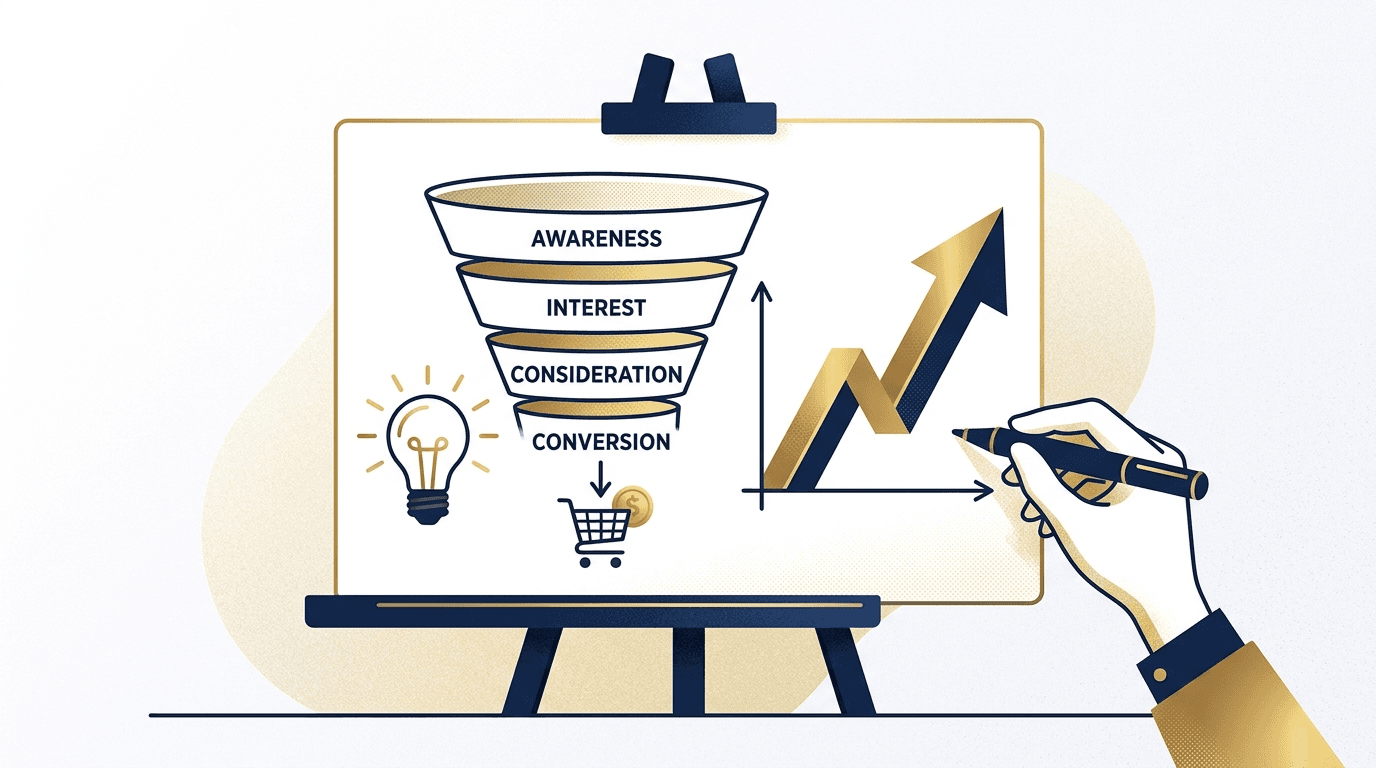
First, the reporting should connect spend to outcomes at every stage of the funnel. That means tracking not just form fills but qualified leads, sales conversations held, proposals sent, and ideally closed revenue. This requires integration between ad platforms, your website analytics (GA4), and your CRM. It is more setup work upfront, but the resulting data is exponentially more useful.
Second, the agency should have a clear position on attribution modelling. Last-click attribution, which credits the final touchpoint before conversion, systematically undervalues top-of-funnel channels like display and YouTube. Data-driven attribution, available in Google Ads and GA4, distributes credit across the conversion path based on observed behaviour. Ask your prospective agency which attribution model they use and why.
Third, reporting frequency and format should suit your decision-making cadence. Weekly summary emails for high-spend accounts, monthly deep-dives with trend analysis and strategic recommendations, and quarterly reviews that assess whether the channel mix and budget allocation still match your business objectives. Reporting that is only delivered monthly with no mid-month visibility is not enough for accounts where daily spend can shift significantly.
At 3P Digital, our reporting framework ties directly back to the Perform phase of our 3P Framework, ensuring that every metric reported maps to a business objective established during onboarding. You can explore our full paid media service to understand how we structure this in practice.
Case Study: Recruitment Client — 167% Increase in Qualified Leads, 34% Reduction in CPA
One of the clearest demonstrations of what structured paid media management can do comes from a recruitment industry client we worked with over a six-month engagement.
When they came to us, their Google Ads account had been running for over a year with another agency. The account had significant structural problems: overly broad match types pulling in irrelevant traffic, no audience segmentation between candidate and employer personas, and conversion tracking that was counting page views rather than genuine lead submissions.
Our approach began with a full account audit and a rebuild of the campaign architecture around two distinct intent journeys: employers looking to fill positions and candidates looking for roles. Each segment received separate campaigns, ad groups, creative, and landing pages. We rebuilt conversion tracking with verified form submission events and layered in CRM data to track which leads were actually being worked by the sales team.
Over six months, the results were significant. Qualified lead volume increased by 167%, meaning leads that the sales team identified as meeting their criteria for a genuine placement opportunity. Cost per acquisition dropped by 34% compared to the same period with the previous agency. The budget did not change substantially. What changed was how precisely it was deployed and what it was optimised toward.
You can explore more outcomes like this in our case studies section.
Case Study: Fitness Industry Client — 3.2x ROAS Improvement Through Audience Segmentation
A fitness industry client running Meta campaigns for gym memberships came to us with a common problem. Their ads were generating clicks but not memberships. ROAS was sitting below 1.5x, which was below the threshold needed to justify their acquisition spend.
The core issue was audience and message mismatch. They were running the same creative to cold audiences and warm retargeting audiences simultaneously, with no differentiation in messaging. Cold audiences were seeing offer-focused ads before they had any reason to trust the brand. Warm audiences, people who had visited the site or engaged with previous content, were seeing brand awareness content when they were ready for an offer.
We restructured the campaign architecture around a three-stage audience model: cold awareness (interest and lookalike targeting), warm consideration (website visitors and video viewers), and hot conversion (cart abandoners, lead form openers, and past trial members). Each stage received distinct creative, distinct copy, and distinct offers aligned to where someone was in their decision process.
We also aligned landing pages to match the message at each stage. Cold traffic went to a page focused on social proof and community. Hot audiences went directly to a conversion page with a time-limited trial offer.
Over a 90-day optimisation period, ROAS improved from 1.4x to 4.5x. That is a 3.2x improvement in return on ad spend from the same underlying budget, driven entirely by audience strategy and landing page alignment, not by increasing spend.
What Our Clients Say
"Before working with 3P Digital, we were spending good money on Google Ads and genuinely could not tell you whether it was working. Within the first two months, they had our tracking set up properly, restructured the account, and we started seeing actual leads come through that converted to clients. The reporting finally made sense and gave us confidence to increase our budget. It is the first time paid media has felt like an investment rather than a cost." — Marketing Manager, Professional Services Firm, Sydney
Questions to Ask During the Sales Process
The discovery and proposal phase is your best opportunity to assess whether an agency is genuinely capable or just good at selling. Here are the questions that separate the two.
Who specifically will manage our account, and what is their experience? Agencies often lead with senior staff in the sales process and then hand accounts to junior team members post-onboarding. Ask to meet the person who will actually be running your campaigns.
Can you walk us through an account audit you have done for a business similar to ours? This tests whether they have relevant category experience and whether their audit methodology is systematic or ad hoc.
What does your conversion tracking setup process look like? A strong answer involves GA4, GTM, platform pixel verification, and CRM integration where applicable. A weak answer involves phrases like "we just use the standard setup."
How do you handle underperformance? Every account will have periods of underperformance. What matters is the process for identifying the cause, adjusting the strategy, and communicating transparently with the client. Ask for a specific example.
What attribution model do you use and how do you handle cross-channel attribution? This question surfaces whether the agency thinks seriously about measurement or just reports whatever the platform dashboard shows.
What do you need from us to be successful? Good agencies will have a clear answer involving access to accounts, CRM data, brand assets, and regular communication. Agencies that say they just need the budget and access to the ad account are telling you they do not plan to involve you strategically.
Do we own our ad accounts and all creative assets produced during the engagement? This should be a yes without hesitation. If there is any hedging, it is a serious red flag.
If you are ready to have this conversation with a team that will give you straight answers, contact 3P Digital here.
FAQs
How much does a paid media agency cost in Australia?
In 2026, most Australian paid media agencies charge between $1,500 and $7,000 per month depending on scope, channel mix, and pricing model. Retainer-based models typically start from $1,800 per month for single-channel management. Percentage-of-spend models generally sit between 12% and 18% of total managed spend. For businesses with monthly ad budgets under $10,000, a flat retainer model usually offers better value. Be cautious of fees below $1,000 per month as they rarely support the level of strategic attention needed to produce consistent results.
How long should a paid media agency contract be?
A standard engagement in Australia runs for an initial term of three to six months, which allows enough time to build, test, and optimise campaigns before drawing firm conclusions about performance. After the initial term, contracts should convert to rolling monthly arrangements with 30 days notice to exit. Avoid agencies that insist on 12-month lock-ins with no performance clauses. The best agencies are confident enough in their work to let results speak for themselves rather than locking clients in contractually.
Should I work with a specialist paid media agency or a full-service digital agency?
This depends on your business maturity and marketing stack. If paid media is your primary acquisition channel and you are spending $10,000 per month or more, a specialist paid media agency typically offers greater depth of expertise in campaign architecture, bidding strategy, and attribution. If you need a cohesive strategy across SEO, content, paid, and analytics, a performance-focused full-service agency like 3P Digital that integrates paid media with broader digital marketing services may be a stronger fit. The key is ensuring whoever manages your paid media is not a generalist stretched across too many disciplines.
How do I measure whether my paid media agency is performing well?
The primary metrics should be cost per acquisition (CPA), return on ad spend (ROAS), and qualified lead volume, depending on your business model. Secondary metrics like click-through rate, quality score, and impression share provide useful diagnostic context but should not be the headline. A well-performing agency will show improving CPA or ROAS trends over 90-day rolling periods and will be able to explain variances clearly. If your agency cannot tell you definitively how many leads or sales your paid media budget generated last month, that is a performance and reporting failure.
When should I consider switching paid media agencies?
Consider switching if any of the following apply: performance has been flat or declining for more than three consecutive months without a credible explanation and revised strategy, your conversion tracking has unresolved discrepancies, the agency cannot explain how budget is being allocated across campaigns, reporting consistently focuses on vanity metrics, or communication is slow and reactive rather than proactive. Switching agencies does carry a short-term disruption cost as a new team learns your account, but staying with an underperforming agency has a higher long-term cost.
Is it better to manage paid media in-house or with an agency?
In-house paid media management makes sense for larger businesses with sufficient budget to justify a full-time specialist and access to ongoing training and platform support. For most Australian SMEs and mid-market businesses, an agency provides better value through collective platform expertise, access to beta features, cross-industry learnings, and the ability to scale team capacity without the fixed overhead of full-time staff. The hybrid model, where an in-house marketing manager provides strategic direction and the agency executes, can work well when roles and accountability are clearly defined from the outset.
References
IAB Australia Digital Advertising Expenditure Report — The IAB Australia quarterly and annual reporting on digital advertising investment by channel, including paid search, programmatic display, and social. Used to contextualise the scale of paid media investment in the Australian market and the relative share of spend across platforms.
Google Ads Industry Benchmarks — Google's published and third-party reported data on average click-through rates, conversion rates, and cost-per-click across industries in the Australian and global markets. Provides baseline performance expectations for evaluating account-level results.
WordStream Google Ads Benchmarks by Industry — WordStream's regularly updated benchmarks for Google Ads performance across verticals including professional services, fitness, and recruitment. Used to contextualise typical CPA and ROAS ranges that agencies should be targeting in performance discussions.
Google Analytics 4 Attribution Documentation — Google's official documentation on data-driven attribution modelling within GA4 and Google Ads. Relevant to the attribution methodology discussion and the importance of moving beyond last-click models in multi-channel environments.
Australian Competition and Consumer Commission (ACCC) Digital Platforms Services Inquiry — The ACCC's ongoing inquiry into digital advertising services in Australia, including transparency in agency and platform relationships. Relevant background for understanding the regulatory context around ad spend transparency and agency accountability in the Australian market.