Paid Media vs Organic Marketing in Australia: When to Use Each Channel and How to Allocate Your Budget in 2026
Most Australian businesses are bleeding budget on the wrong channel at the wrong time. They either pour everything into Google Ads hoping for instant results, or they invest months into SEO and wonder why the pipeline hasn't moved. The frustration is real, and it usually comes down to one root cause: treating paid media and organic marketing as competing strategies rather than complementary tools with different jobs to do.
The question is never really "paid vs organic." The question is: at this stage of your business, with this objective, in this market, which channel gives you the highest marginal return on the next dollar spent? That's a strategic question, not a philosophical one. And it requires you to understand exactly what each channel does well, what it costs in the Australian market specifically, and how the two work together when deployed correctly.
In this guide, I'll break down the real cost benchmarks for paid media in Australia, the compounding economics of SEO, and a practical framework for budget allocation by business stage. Whether you're a mortgage broker in Melbourne, a recruitment firm in Brisbane, or a professional services business looking to scale, this post will give you a clear model for making smarter channel decisions in 2026.
Key Takeaways
Paid media wins when speed, testing, or seasonal demand is the priority. It delivers immediate visibility but stops the moment your budget does.
Organic marketing wins when you're playing a long game. SEO compounds over time and delivers increasingly lower cost-per-acquisition as authority builds.
Budget allocation should shift with business stage. Early-stage businesses typically need a paid-heavy mix, while established businesses can lean further into organic.
SEO is not free. It requires consistent investment in content, technical infrastructure, and link acquisition, but the returns are durable in a way paid media is not.
The biggest performance gains come from integrating both channels. Paid data informs SEO keyword targeting; SEO content reduces paid CPCs through higher Quality Scores.
Summary Table: Paid Media vs Organic Marketing
Factor | Paid Media | Organic (SEO) |
Cost Structure | Ongoing spend required to maintain visibility | Upfront investment with compounding returns |
Time to Results | Days to weeks | 3 to 12 months typically |
Scalability | Highly scalable with budget increases | Slower to scale, limited by content and authority |
Longevity | Stops when budget stops | Rankings persist and build over time |
Intent Capture | High (search ads target active buyers) | High at top of page 1, lower for informational queries |
Measurement | Near real-time with clear attribution | Longer attribution cycles, assisted conversions |
Competitive Advantage | Replicable by any competitor with budget | Harder to replicate once domain authority is established |
Best For | New launches, seasonal campaigns, testing | Brand building, long sales cycles, content-led growth |
The Real Cost of Paid Media in Australia in 2026
Let's start with money, because that's what most of these conversations are actually about.
Google Ads costs in Australia have risen materially over the past three years. Increased competition, the shift toward Smart Bidding automation, and Google's ongoing push toward broader match types have collectively driven up average CPCs across most industries. Based on current benchmark data and what we're seeing across client accounts at 3P Digital, here's a realistic view of what Australian businesses are paying in 2026.
Australian Google Ads CPC Benchmarks by Industry
Finance and Mortgage Broking: Average CPCs sit between $8 and $25 for high-intent keywords like "home loan broker Sydney" or "refinance mortgage broker Melbourne." In highly competitive metro areas, branded and near-branded terms can push well above $30 per click. For a mortgage broker generating leads at a 5% conversion rate on landing pages, that translates to a cost per lead of $160 to $500. With average broker commissions in the range of $3,000 to $6,000 per settled loan, the unit economics work, but there's no margin for a poorly optimised funnel.
Recruitment and Staffing: CPCs range from $4 to $15 depending on specialisation. "IT recruitment agency" and "executive recruitment Melbourne" sit toward the top of that range. Cost per application or cost per placement varies significantly based on how well the landing page is built and whether there's a proper conversion optimisation layer in place. This is an area where many recruitment firms overpay because they're driving paid traffic to generic service pages rather than purpose-built conversion assets.
Professional Services (Legal, Accounting, Consulting): Average CPCs of $6 to $20. Legal is a notable outlier, with some personal injury and family law keywords exceeding $40 per click in competitive markets. For general business consulting or accounting, CPCs are more manageable, but competition from large national firms means quality score and ad relevance are critical to keeping costs down.
Fitness and Wellness: One of the more competitive consumer categories, with CPCs of $2 to $8 for gym memberships and personal training. Higher volumes here but lower average transaction values, so the conversion rate and customer lifetime value calculations matter more than in higher-ticket categories.
Beyond CPC: What Paid Media Actually Costs
The sticker price of clicks is only part of the story. When you account for agency management fees (typically 10 to 20% of ad spend for a competent performance agency), landing page development and testing costs, and the ongoing CRO work needed to maintain strong conversion rates, the true cost of a paid media programme is significantly higher than the ad spend alone.
For most Australian SMEs, a properly resourced paid search programme requires a minimum monthly investment of $3,000 to $5,000 in ad spend plus management to generate meaningful volume. Below that threshold, there simply isn't enough data to optimise effectively, and Smart Bidding algorithms won't have sufficient conversion signals to perform well.
The important caveat here is that paid media isn't inherently expensive or cheap. It's a function of how tightly your targeting, creative, landing page, and offer are aligned. A well-structured paid media programme with strong conversion infrastructure can deliver outstanding returns. A poorly structured one burns money at an alarming rate. You can learn more about how we approach this at 3P Digital's paid media service page.
The Compounding ROI of Organic: Why SEO Pays Dividends Over Time
SEO is the investment that most businesses underestimate early and then desperately wish they'd started sooner. The core economic principle behind organic marketing is compounding: the work you do today continues generating returns for months and years into the future, without a corresponding increase in ongoing spend.
Here's a simplified model to illustrate the point. Suppose you invest $3,000 per month into an SEO programme. In month one, you get zero organic leads from that investment. In month six, you're starting to rank for lower-competition keywords and generating a handful of leads. By month twelve, if the work has been done well, you might be generating 30 to 50 qualified organic leads per month from that same $3,000 investment. By month 24, those rankings are strengthening, and you're potentially getting 80 to 120 leads per month. The monthly investment hasn't increased proportionally, but the output has compounded significantly.
Contrast that with paid media, where 120 leads at $100 cost per lead means $12,000 per month in spend. Forever. The moment you reduce the budget, the leads stop.
What Good SEO Actually Involves
SEO in 2026 is not about stuffing keywords into page copy or buying dodgy backlinks. Google's algorithm is sophisticated enough that those tactics either don't work or actively harm your rankings. Effective SEO in the current environment involves:
Technical Infrastructure: Site speed, Core Web Vitals, crawlability, schema markup, mobile performance, and secure hosting are all table stakes. If your site has technical issues, content quality becomes largely irrelevant because Google can't properly index and evaluate your pages.
Content Strategy and Authority Building: Creating content that genuinely answers the questions your target audience is searching for, at a depth that exceeds what competitors have published. This is where the E-E-A-T framework (Experience, Expertise, Authoritativeness, and Trustworthiness) becomes commercially critical, not just an academic concept.
Link Acquisition: Earning links from credible, topically relevant Australian and international websites signals authority to Google. Quality matters far more than quantity here. A single link from a respected industry publication is worth more than a hundred links from low-quality directories.
On-Page Optimisation: Matching search intent, structuring content correctly, using internal linking strategically, and ensuring each page has a clear conversion path.
The 3P Digital SEO service covers all of these layers, because leaving any one of them unaddressed limits the return on the others.
The Diminishing Cost Per Acquisition Over Time
One of the most compelling arguments for SEO is what happens to your cost per acquisition over time. In the early months, your CPA from organic is infinity because you haven't generated any leads yet. But as rankings build, your fixed monthly SEO investment gets spread across an increasing number of leads. By month 18 to 24, well-executed SEO programmes routinely achieve CPAs that are 60 to 80% lower than equivalent paid media campaigns in the same category.
This is why we talk about the compounding value of organic. It's not a metaphor. It's a mathematical reality that transforms the economics of your marketing programme over a two to three year horizon.
When Paid Media Is the Right First Move
None of the above means you should skip paid media and go straight to SEO. There are specific situations where paid media is not just acceptable but strategically essential as the primary channel.
New Product or Service Launches
When you're bringing something new to market, organic ranking isn't an option yet. You have no domain authority for the new category, no existing content, and no historical performance data. Paid media lets you get in front of high-intent audiences immediately, test messaging, and validate demand before committing to a long-term organic content strategy.
For example, if a consulting firm adds a new fractional CMO service offering, they can run targeted Google Ads and LinkedIn campaigns within days to start generating enquiries and learning which messages resonate. That data then informs the SEO and content strategy.
Seasonal or Time-Sensitive Campaigns
SEO cannot be turned on and off based on seasonal demand. If you're a fitness business running a January New Year promotion, you need visibility right now, not in six months when your content might rank. Paid media is the only channel that can respond to a short promotional window with the speed and precision required.
Testing and Validation
Paid media is an exceptionally powerful testing tool. You can run A/B tests on headlines, offers, and landing pages and get statistically significant data within days or weeks. This is valuable not just for the paid campaigns themselves but for informing broader brand positioning, content direction, and even pricing strategy.
Markets With High Urgency Intent
Certain categories are dominated by high-urgency, "I need this now" searches. Emergency trades, legal representation, and urgent medical services are examples where the buyer's timeline is compressed and organic ranking, even at position one, may not capture the full opportunity as effectively as a combination of organic and paid visibility.
When Organic Should Be Your Primary Channel
Established Brands With Existing Domain Authority
If your website already has meaningful domain authority and a history of ranking for industry keywords, the incremental cost of capturing additional organic market share is often far lower than paying for the same clicks. In this scenario, redirecting some paid budget into content production and link acquisition can yield a much higher return on investment.
Long Sales Cycles and Research-Driven Buying Decisions
B2B services with three to six month sales cycles are rarely closed by a single Google Ad click. The buyer's journey involves multiple touchpoints: research content, case studies, comparison pages, and direct conversations. SEO-driven content that captures buyers at each stage of this journey is a highly effective strategy for professional services, enterprise software, and complex B2B offerings.
In recruitment, for example, a business owner looking for a specialist recruiter will often read multiple pieces of content before making contact. A well-structured blog and resource hub that ranks for informational queries positions your firm as the authoritative choice long before the buyer submits an enquiry form.
Content-Led Growth Models
If your business model benefits from publishing authoritative content, whether that's a mortgage broker explaining first home buyer grants, an accountant writing about tax strategies, or a marketing agency publishing guides like this one, SEO is the primary engine that makes that content investment pay off. Without organic reach, content requires paid amplification to generate views, which materially increases the cost per reader.
The Integration Model: How the 3P Framework Combines Both
At 3P Digital, we operate on a framework we call Profile, Plan, Perform. Within this model, paid media and organic are not separate budget lines fighting for resources. They are coordinated functions serving different parts of the same growth system.
The 3P Framework works like this in practice:
Profile: We identify your ideal customer profile (ICP), understand their search behaviour, map their buying journey, and determine what intent signals exist at each stage. This foundational work informs both channel strategy and creative direction.
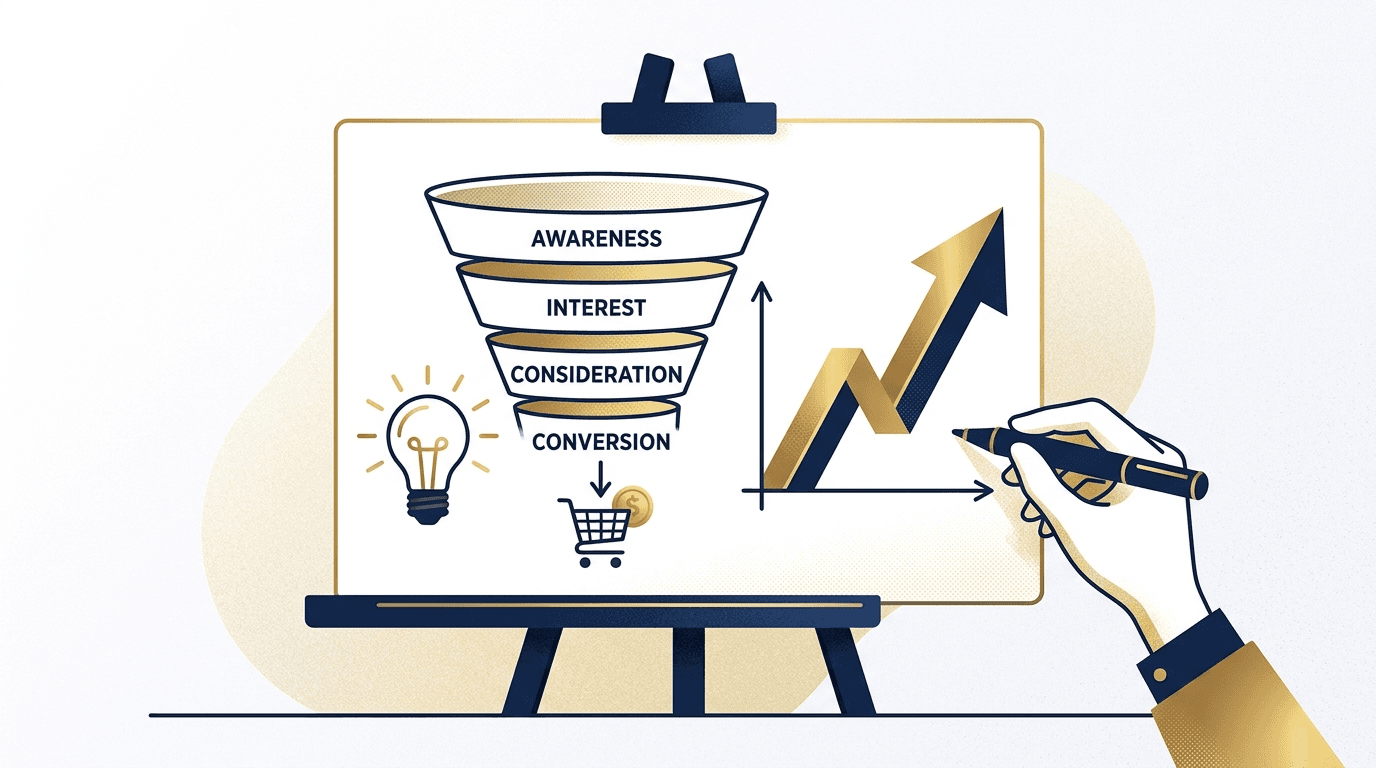
Plan: We build a channel plan that assigns paid media and organic to specific objectives. Paid media targets high-intent, bottom-of-funnel queries where immediate conversion is the goal. Organic targets the full funnel, from awareness-stage informational content through to high-intent commercial pages.
Perform: Campaigns run, data flows, and the two channels inform each other. Paid search data reveals which keywords convert at the highest rate, and that intelligence is fed back into the SEO keyword prioritisation. Organic content that performs well gets amplified with paid promotion where ROI justifies it.
Case Study 1: Mortgage Broker Scales Back Paid as Organic Matures
A mortgage broking firm in South East Queensland came to us in early 2024 spending approximately $8,000 per month on Google Ads, generating around 35 to 40 leads per month. Their cost per lead was sitting at around $200 to $230, and their organic traffic was negligible.
We implemented a structured SEO programme alongside the paid activity. The paid programme continued at full budget for the first eight months while organic built momentum. By month nine, organic was contributing 15 to 20 leads per month. By month 15, organic was delivering 40 to 50 leads per month.
At that point, we reduced paid spend from $8,000 to $4,500 per month, maintaining coverage on their highest-converting and most competitive terms while allowing organic to carry a greater portion of the volume. Total leads held steady at 70 to 80 per month, but the blended cost per lead dropped from $220 to under $90. Their total marketing investment went up modestly (adding the SEO management fee), but their lead volume nearly doubled and their cost per acquisition was less than half what it had been.
This is the compounding model working as intended.
Case Study 2: Professional Services Firm Uses Both Channels Together
A mid-sized accounting and business advisory firm in Melbourne engaged 3P Digital to generate more consistent inbound leads for their business advisory division. They had reasonable organic visibility for generic accounting terms but almost no traction for higher-value advisory keywords.
We built a dual-channel strategy. Paid search campaigns targeted high-intent commercial queries ("business advisor Melbourne," "business growth consultant," "SMSF strategy advice") to generate immediate enquiries while the organic programme built out. Simultaneously, we developed a content hub targeting informational queries ("how to structure a business for sale," "business valuation methods Australia") to capture buyers in the research phase.
The paid campaigns generated 12 to 18 qualified enquiries per month from the outset. The organic content hub began ranking for informational terms by month four, and commercial terms by month eight. By month 12, organic was matching paid in total lead volume and adding a layer of brand authority that the paid campaigns alone couldn't deliver. The firm's pipeline value increased by over 60% year on year, with a blended cost per lead that was commercially sustainable and improving quarter over quarter.
Client Testimonial
"We'd been running Google Ads for years and felt like we were on a treadmill. Spending the same money, getting similar leads, and never really building anything lasting. 3P Digital restructured our paid campaigns and finally started our SEO properly. Twelve months later, we're getting more leads than we ever have, and the organic side keeps growing even when we haven't touched it for weeks. It's changed how I think about marketing investment."
Principal, Financial Planning Firm, Brisbane
Budget Allocation by Business Stage
One of the most practical questions I get from business owners is: how should I split my marketing budget between paid and organic? The honest answer is that it depends on your stage, your competitive landscape, and your objectives. But here are the models we typically apply at 3P Digital.
Startup Stage (0 to 18 Months)
At this stage, you have no organic authority, no ranking history, and often no proven messaging. You need leads now to validate the business and generate revenue to reinvest.
Recommended split: 70% paid media, 20% SEO foundations, 10% analytics and CRO
The SEO work at this stage is foundational: technical setup, keyword research, on-page optimisation of core service pages, and beginning the content programme. It won't drive significant traffic yet, but it ensures the asset you're building is structurally sound from day one.
The paid programme is your primary lead generation engine. Every dollar needs to be tracked, attributed, and optimised. This is where a solid analytics infrastructure matters enormously. Without clean tracking, you're optimising blind.
Growth Stage (18 Months to 4 Years)
You have proof of concept, some organic traction, and a clearer picture of your most profitable customer segments. This is the stage where the balance begins to shift.
Recommended split: 50% paid media, 35% SEO and content, 15% CRO and analytics
Organic is now contributing real leads and should be treated as a serious investment. The content programme expands. Link acquisition becomes more systematic. Paid media remains important but starts to be informed by organic data.
Conversion rate optimisation becomes increasingly valuable at this stage because the volume of traffic is now large enough that even a 1 to 2% improvement in conversion rate has a material impact on total lead volume and cost efficiency.
Scale Stage (4 Years Plus)
You have established domain authority, strong organic rankings for core keywords, and a mature paid programme. The priority now is maximising the efficiency of your total marketing investment.
Recommended split: 35% paid media, 45% SEO and content, 20% CRO, analytics, and retention
At this stage, organic should be your largest traffic driver for most categories. Paid media is retained for competitive coverage, new product testing, and seasonal amplification. The focus shifts to extracting more value from existing traffic through CRO and understanding the full customer journey through attribution modelling.
To forecast what this might mean in dollar terms for your specific situation, use the 3P Digital ROI calculator.
Measuring What Matters: Attribution Across Channels
One of the most persistent mistakes Australian businesses make with mixed-channel programmes is attributing all conversions to the last click. This systematically undervalues organic content and upper-funnel paid activity, and leads to budget decisions that favour bottom-of-funnel channels at the expense of the overall programme's effectiveness.
In 2026, the gold standard for attribution in Australian digital marketing involves:
Data-Driven Attribution Models: Google Ads and GA4 both offer data-driven attribution, which uses machine learning to assign conversion credit across all touchpoints in the customer journey. This is significantly more accurate than last-click for multi-channel programmes.
CRM Integration: For businesses with longer sales cycles, especially in B2B, integrating your marketing data with your CRM is essential. You need to know not just which channels generate leads but which channels generate leads that close at higher rates and higher values.
Blended Cost Per Acquisition Reporting: Rather than measuring paid CPA and organic CPA in isolation, track your blended CPA across all marketing spend. This gives you a true picture of what it costs to acquire a customer when all channel investments are accounted for.
Organic Assist Tracking: Set up assisted conversion reporting in GA4 to understand how often organic content is part of a conversion path that ultimately closes via paid or direct. This data routinely reveals that organic is contributing significantly more revenue than last-click attribution suggests.
You can explore how 3P Digital approaches this layer of measurement in the marketing ROI forecasting guide and through our analytics services.
For businesses at any stage, the worst thing you can do is continue spending without a clear measurement framework. Channels that look expensive in isolation often look very different when you understand the full customer journey. And channels that appear to be performing well on last-click data can turn out to be capturing credit for conversions driven by earlier touchpoints in the funnel.
If you're unsure where to start or want a clear picture of how your current channel mix is performing, reach out to the 3P Digital team for a channel audit.
FAQs
Is paid media or SEO cheaper in Australia?
Neither is inherently cheaper. The comparison depends heavily on your time horizon and business stage. Paid media has a lower upfront investment and delivers results quickly, but costs continue indefinitely as long as you want the traffic. SEO has a higher upfront investment and takes three to twelve months to generate meaningful results, but the cost per acquisition decreases over time as rankings compound. Over a two to three year period, SEO typically delivers a significantly lower blended cost per lead than paid media in most Australian categories.
How long does SEO take to generate leads in Australia?
For most Australian SMEs targeting competitive commercial keywords, a realistic timeline is six to twelve months before organic is contributing meaningful lead volume. Lower-competition niches or local markets may see results in three to six months. This is not a reflection of SEO being slow; it reflects the time required to build content authority and earn the trust signals that Google's algorithm requires to rank new or lower-authority domains. The key is starting the programme early so it matures alongside your paid activity.
Which channel is better for lead generation?
Both can be highly effective for lead generation, but they work differently. Paid media captures demand that exists right now. It is best at converting buyers who are already in the market and searching for what you offer. SEO builds a pipeline of intent-based traffic over time and is particularly effective for capturing buyers across the full funnel, from early research through to high-intent commercial searches. For most lead generation objectives in Australia, the optimal strategy combines both channels with clear role definition for each.
Is paid media or SEO better for B2B businesses?
B2B businesses typically benefit from a strong organic content programme given the longer sales cycles and research-intensive buying process common in B2B. Buyers often consume multiple pieces of content before making contact, which makes SEO-driven thought leadership content highly valuable. That said, paid media on LinkedIn and Google remains an effective B2B tool for reaching decision-makers with targeted messaging. The B2B split often looks like 40% paid, 60% organic compared to a more balanced B2C split.
How do you measure ROI from organic marketing?
Measuring organic ROI requires tracking organic sessions, organic conversion rates, and the revenue or lead value attributed to organic traffic. Use GA4's attribution reports to capture assisted conversions from organic, not just last-click organic conversions. Integrate with your CRM to track which organic leads close and at what value. Organic ROI should also account for the opportunity cost of the alternative: what would you have paid for the same volume of traffic through paid channels? That comparison often reveals organic ROI figures of 300 to 600% over a two to three year horizon.
What is the minimum budget for Google Ads in Australia?
For Google Ads to generate statistically meaningful data and allow Smart Bidding algorithms to function effectively, we recommend a minimum of $3,000 per month in ad spend. Below this level, daily spend is too low to capture sufficient impressions, clicks, and conversions for meaningful optimisation. In highly competitive categories like finance or legal, the effective minimum is higher, often $5,000 to $8,000 per month, to achieve adequate reach on high-intent keywords.
When should I add SEO to an existing paid media programme?
The honest answer is: immediately, or as soon as you have a proven offer and a functional website. Many businesses delay SEO until paid media is profitable, but this means they're always dependent on ongoing ad spend and never building the durable organic asset that reduces their long-term acquisition costs. The ideal model is to start both simultaneously, with appropriate budget weighting based on your stage. If you're already running paid media successfully, adding an SEO programme now means your organic rankings will start contributing in six to twelve months, reducing your reliance on paid spend at exactly the time your paid costs are likely to continue increasing.
What are the most common mistakes Australian businesses make with paid vs organic?
The most common mistakes we see are: (1) running paid media without proper conversion tracking, so there's no way to know which campaigns are actually generating leads; (2) treating SEO as a one-off task rather than an ongoing programme, which means rankings stagnate or decline; (3) stopping paid media the moment organic starts working, rather than letting both channels complement each other; (4) using last-click attribution, which systematically undervalues organic and upper-funnel paid activity; and (5) not aligning channel strategy with business stage, either over-investing in SEO too early before the site has any authority, or over-investing in paid media for so long that the business never builds a sustainable organic foundation.
References
Google Ads Industry Benchmarks Report (2025/26): Published by Google and summarised by WordStream Australia, this report provides average CPC, CTR, conversion rate, and cost per lead data broken down by industry vertical. Used as the basis for CPC benchmarks cited in this article across finance, professional services, and fitness categories.
SEMrush Digital Marketing Trends Report: An annual global study with Australian market data covering organic search performance, keyword difficulty by industry, and the time-to-ranking curves for new versus established domains. Informs the SEO timeline and compounding ROI discussion in this article.
IAB Australia Digital Advertising Revenue Report (2025/26): Published by the Interactive Advertising Bureau Australia, this report tracks total digital advertising spend in Australia by channel, including search, display, social, and programmatic. Provides context for the growth of paid search investment in the Australian market.
Ahrefs State of Search Report: A comprehensive study of organic search performance data across millions of websites globally, with insights on content performance, backlink value, and the relationship between domain authority and ranking outcomes. Referenced in the technical SEO and link acquisition sections.
Borrell Associates Local Advertising Forecast: A widely cited research firm that tracks local and digital advertising spend and ROI benchmarks across small and medium-sized businesses in markets comparable to Australia. Used as a reference point for SME digital marketing budget allocation patterns.
Google Analytics 4 Attribution Documentation: Google's official documentation on data-driven attribution models in GA4, providing the technical foundation for the attribution and measurement recommendations in the final section of this article.