Marketing Automation for Australian SMEs: How to Set Up Workflows That Actually Convert in 2026
Introduction
Most Australian SMEs that invest in marketing automation never actually get it working. They sign up for HubSpot, ActiveCampaign, or Klaviyo, connect their website, import a contact list, and then... nothing. The workflows stay unbuilt. The sequences go unsent. The subscription renews month after month while the pipeline sits empty. Sound familiar?
This is not a technology problem. It is a strategy and configuration problem. Marketing automation is one of the highest-leverage investments a small or medium business can make, but only when it is set up with intent, connected to your CRM, and built around workflows that reflect how your buyers actually behave. Done right, automation can generate qualified leads around the clock, warm cold contacts before your sales team ever picks up the phone, and reduce the manual load on your marketing team by 40 to 60 percent.
In this guide, I am going to walk you through exactly how we approach marketing automation at 3P Digital for our Australian clients, from the readiness checklist through to platform selection, workflow design, and ROI measurement. Whether you are starting from scratch or trying to fix a broken setup, this is the most practical resource you will find on marketing automation in Australia in 2026.
Key Takeaways
Most automation failures happen before a single workflow is built — fix your data, your offer, and your ICP first
The five workflows that generate the most pipeline impact are lead welcome, nurture, re-engagement, sales handoff, and post-purchase
For Australian SMEs, ActiveCampaign and HubSpot are the strongest all-round platforms, with Klaviyo leading for ecommerce
CRM integration is non-negotiable — automation without a connected CRM creates blind spots in your sales process
The right metrics to track are not open rates; they are pipeline created, deals influenced, and revenue attributed to automation
Knowing when to DIY versus engaging an agency is a critical decision that affects how quickly you see returns
Summary Table: Marketing Automation Platform Comparison for Australian Businesses (2026)
Platform | Starting Price (AUD/mo) | AU-Based Support | Integration Depth | Best Fit |
HubSpot | $65 (Starter) / $1,400+ (Pro) | Email and chat (US hours, some AU) | Very deep — CRM, CMS, ads, service | Mid-market SMEs, B2B, professional services |
ActiveCampaign | $29 (Lite) / $149+ (Plus) | Email and live chat | Strong — 900+ integrations, solid CRM add-on | SMEs, agencies, service businesses |
Klaviyo | $45+ (based on contacts) | Email support, AU-friendly docs | Deep for ecommerce — Shopify, WooCommerce native | Ecommerce, DTC brands, retail |
Zoho CRM + Marketing | $25 (Standard) / $65+ (Professional) | AU office in Sydney | Strong within Zoho ecosystem | Budget-conscious SMEs, existing Zoho users |
Article Body
What Marketing Automation Actually Means (And What It Doesn't)
Let's clear something up immediately. Marketing automation is not email blasting. It is not scheduling a newsletter to go out every Tuesday. And it is definitely not a "set and forget" system that replaces strategic thinking.
Marketing automation is the use of software to trigger personalised, behaviour-based communications and actions across your buyer's journey, at scale, without manual intervention for each touchpoint. The key word there is behaviour-based. When a lead downloads your guide, fills out a form, visits your pricing page three times in a week, or goes quiet after 30 days of engagement, automation detects that signal and responds accordingly.
According to HubSpot's 2025 State of Marketing Report, businesses that use marketing automation to nurture leads see a 451 percent increase in qualified leads, and nurtured leads make purchases that are 47 percent larger than non-nurtured leads. Those numbers are not hypothetical. We have seen them replicated in our own client work across mortgage broking, professional services, and fitness in Australia.
What automation does not do is create your strategy for you. It does not write compelling copy. It does not define your ideal customer profile. And it will not fix a broken offer. Think of automation as a delivery mechanism for a great marketing strategy. If the strategy is weak, automation just delivers weak content faster and at scale.
This distinction matters because too many Australian SMEs approach automation as a shortcut. They assume the tool will do the thinking. It won't. What it will do, once configured correctly, is compound the impact of every good marketing decision you make.
The Automation Readiness Checklist: 7 Things to Have in Place Before You Start
Before you touch a single workflow, you need to audit your readiness. Here are the seven things I check with every new client before we configure a single automation:
1. A Clearly Defined Ideal Customer Profile (ICP)
Automation segments and personalises based on data. If you do not know who you are targeting, your segmentation will be meaningless and your messaging will be generic. Your ICP should include industry, company size, role, pain points, buying triggers, and objections. If you have not built yours yet, start with our 3P Framework which includes ICP development as a foundational step.
2. A Functional CRM
Automation without a CRM is like running paid ads without a landing page. You will generate activity but capture nothing useful. Your CRM is where contact records live, deals are tracked, and sales and marketing data converge. Before setting up automation, your CRM needs to have clean contact data, defined deal stages, and someone responsible for maintaining it. We cover this in detail in our CRM development services.
3. A Lead Magnet or Conversion Point
Automation needs something to trigger it. That something is usually a form fill, a content download, a booking, or a purchase. If you do not have a compelling offer that drives people to identify themselves, your contact list will not grow and your automation will have nothing to work with.
4. Audience Segmentation Logic
Not all leads are the same. A mortgage broker referral partner is not the same as a direct borrower enquiry. A returning ecommerce customer is not the same as a first-time visitor. Before building workflows, map out the different audience segments you serve and what they need to hear at each stage.
5. Clean Contact Data
Dirty data is the silent killer of automation performance. Duplicate contacts, incorrect fields, and outdated email addresses inflate your list size while dragging down deliverability and engagement rates. Before launching any automation, run a data audit and clean your list.
6. Defined Goals and KPIs
What does success look like? If you cannot answer that before you start, you will not be able to evaluate it after. Set specific targets: leads to MQL conversion rate, time to first contact, email open and click rates, pipeline value influenced by automation.
7. Someone Accountable for the System
Automation requires ongoing management. Workflows need to be reviewed, updated when offers change, and optimised based on performance data. Without a named owner, even a great setup will decay over time. This might be your marketing manager, your operations lead, or an agency partner.
The Five Essential Workflows Every SME Should Build First
There are dozens of workflows you could theoretically build. I always tell clients to start with five that directly impact pipeline. Everything else is secondary until these are running and converting.
1. Lead Welcome Workflow
This is triggered the moment someone enters your database, whether through a form fill, a content download, or a referral. The goal is to immediately deliver value, set expectations, and establish your brand as credible and trustworthy.
A strong lead welcome sequence runs for five to seven days and includes:
An immediate thank-you email with the promised asset or next step
A follow-up email 24 hours later introducing who you are and what you do
A social proof email on day three featuring a case study or testimonial
A soft call to action on day five or seven inviting them to book a call or explore your services
Average open rates for welcome sequences in Australian B2B markets sit around 45 to 55 percent, compared to 20 to 25 percent for standard broadcast emails. This is your highest-engagement window. Use it.
2. Lead Nurture Workflow
Most leads are not ready to buy when they first engage with you. In B2B services, the average sales cycle in Australia ranges from four to twelve weeks depending on deal size. The nurture workflow bridges that gap, keeping you front of mind while building trust.
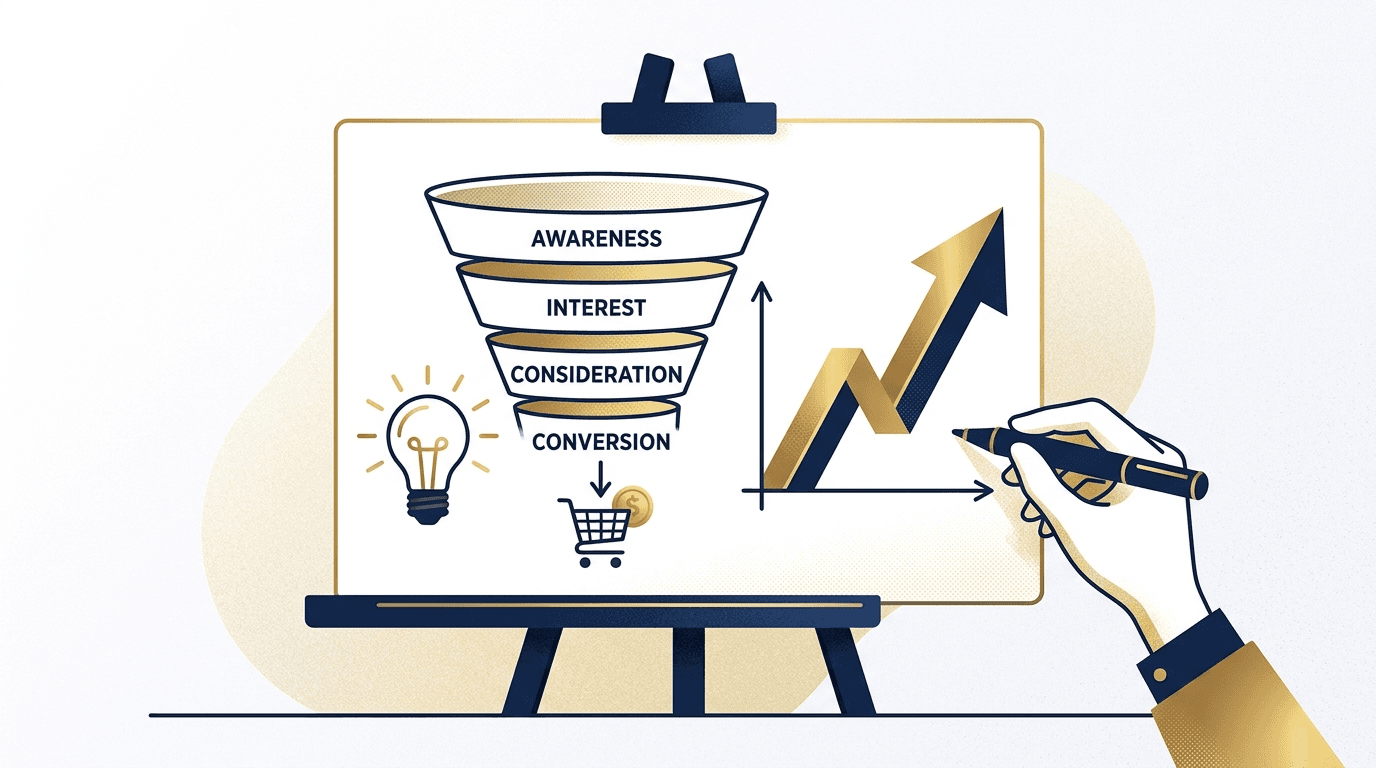
A nurture sequence should deliver educational content aligned to the buyer's journey: awareness content first, then consideration-stage content that positions your approach against alternatives, then decision-stage content like case studies, pricing guides, or consultations.
The key to effective nurture is relevance. Use behavioural triggers to branch your sequence based on what links the contact clicks, what pages they visit, and what emails they open. A contact who clicks on a pricing page link should receive different follow-up content than one who clicks on a how-it-works article.
3. Re-Engagement Workflow
Every database has a segment of contacts who went quiet. They opened emails early on, maybe clicked a few times, and then went cold. A re-engagement workflow targets these contacts with a specific campaign designed to either win them back or clean them from your list.
The standard re-engagement sequence runs three to five emails over two to three weeks. The subject lines are direct and pattern-interrupting: "Are we breaking up?", "Last chance to stay in touch", or "We noticed you've been quiet." If the contact does not engage after the sequence, suppress or unsubscribe them. A smaller, engaged list always outperforms a large, unengaged one in terms of deliverability and conversion.
4. Sales Handoff Workflow
This is the most critical workflow for B2B businesses and it is the one most often overlooked. When a lead hits a defined threshold of engagement, whether that is a lead score, a specific page visit, or a booking, they need to be handed to your sales team with full context.
A strong sales handoff workflow does three things simultaneously: it notifies your sales rep with a task and a summary of the lead's engagement history, it sends the lead a personalised email from the sales rep's address introducing them and proposing a next step, and it logs the activity in the CRM so nothing falls through the cracks.
This is where automation directly connects to revenue. A five-minute response time to a high-intent lead has been shown to increase conversion rates by up to 900 percent compared to a 30-minute response (Harvard Business Review, Lead Response Management study). Automation makes that five-minute response possible at scale. Our sales enablement services are built around making this handoff seamless.
5. Post-Purchase Workflow
For ecommerce and service businesses alike, the sale is not the end of the relationship. It is the beginning of your most valuable marketing asset: a happy customer. Post-purchase workflows serve multiple functions: onboarding new clients, collecting reviews, upselling complementary services, and generating referrals.
For service businesses, a post-purchase workflow might include a welcome sequence, a 30-day check-in, a request for a Google review at the 60-day mark, and a referral ask at 90 days. For ecommerce brands, it includes order confirmation, shipping updates, a first-use education sequence, a review request, and a cross-sell recommendation based on purchase history.
We have seen post-purchase automation sequences generate 20 to 35 percent of total revenue for ecommerce clients without any additional acquisition spend.
Platform Comparison for Australian Businesses
Choosing the right platform is one of the most consequential decisions in your automation setup. The wrong choice costs you money, time, and momentum. Here is my honest assessment for the Australian market in 2026.
HubSpot is the gold standard for mid-market B2B businesses. The CRM is best-in-class, the automation builder is intuitive, and the reporting is genuinely powerful. The catch is price. HubSpot Starter gives you basic automation, but you need Marketing Hub Professional at around $1,400 AUD per month to access the features that make automation genuinely effective: lead scoring, dynamic content, A/B testing, and multi-touch attribution. For businesses generating more than $3M in annual revenue with an active marketing team, HubSpot is often the right call. For smaller businesses, the cost-to-value ratio does not stack up until you are using the platform at full capacity.
ActiveCampaign is our most recommended platform for Australian SMEs in the $500K to $5M revenue range. At $29 to $149 AUD per month for the most relevant tiers, it offers genuinely sophisticated automation including conditional logic, site tracking, lead scoring, and a decent native CRM. The automation builder is visual and accessible without sacrificing depth. Integration with Xero, Shopify, WordPress, and most Australian business tools is solid. The support experience has improved significantly and the platform's deliverability is strong in Australian sending environments.
Klaviyo is the clear leader for ecommerce. If you are running a Shopify or WooCommerce store in Australia, Klaviyo's native integrations, pre-built flows, and revenue attribution reporting make it significantly more powerful than alternatives for that use case. The SMS capability is also strong and increasingly important for Australian ecommerce brands as email saturation increases.
Zoho CRM plus Marketing is the right choice for budget-conscious businesses that are already in the Zoho ecosystem or that need a full suite (CRM, helpdesk, marketing, HR) under one subscription. Zoho's Sydney office means genuine local support, which matters for Australian compliance questions around the Spam Act 2003 and the Privacy Act 1988. The automation is capable but less intuitive than HubSpot or ActiveCampaign, and it rewards businesses willing to invest time in configuration.
How to Connect Automation to Your CRM and Sales Process
Automation that is disconnected from your CRM is marketing theatre. It creates the appearance of activity without generating pipeline visibility or enabling your sales team to act on intent signals.
The connection between automation and CRM needs to flow in both directions. From automation to CRM: contact activity (email opens, link clicks, page visits, form fills) should sync as timeline events on the contact record. Lead scores calculated by your automation platform should map to a field in the CRM. When a contact reaches sales-ready status, a deal should be automatically created and assigned to the appropriate rep.
From CRM to automation: deal stage changes should trigger or suppress automation sequences. A contact who becomes a client should immediately exit all nurture workflows and enter an onboarding sequence. A closed-lost deal should trigger a re-engagement sequence 60 days later when the timing may be more favourable.
This bidirectional data flow is what creates a unified view of each contact across your marketing and sales functions. Without it, your sales team is flying blind, your marketing team has no feedback on lead quality, and you cannot attribute revenue to specific campaigns or workflows.
If your current CRM setup is not capable of this level of integration, it is worth reviewing your architecture before investing further in automation. Our CRM development team works with Australian businesses to build CRM systems that are genuinely automation-ready.
Measuring Automation ROI: The Metrics That Matter
Too many businesses measure their automation performance by open rates and click rates. Those are engagement metrics, not business metrics. Here is the measurement framework we use with our clients.
Pipeline Created by Automation: How much pipeline value (in dollars) was generated by contacts whose first touchpoint was an automated workflow? This is your top-level ROI indicator.
Marketing Qualified Lead (MQL) Volume and Conversion Rate: How many leads reached MQL status through automation, and what percentage of those converted to sales conversations?
Time to First Contact: How quickly does your sales team respond to automation-triggered alerts? This directly impacts close rates.
Revenue Influenced by Automation: Beyond deals sourced by automation, how many closed deals had automation touchpoints in their journey? This multi-touch attribution view gives you a more complete picture of automation's commercial impact.
Sequence Engagement Rate: For each workflow, track open rate, click rate, and the conversion rate to the next desired action (booking, reply, download). This tells you which sequences are working and which need to be rewritten.
List Health Metrics: Deliverability rate, bounce rate, unsubscribe rate, and spam complaint rate. In Australia, the Spam Act 2003 carries penalties of up to $2.2 million for serious breaches, so list hygiene is both a performance issue and a compliance issue.
For deeper analytics integration and custom attribution modelling, our analytics services can connect your automation data to a full reporting stack.
Client Case Study 1: Mortgage Broking Firm, Victoria
A mortgage broking business in regional Victoria came to us with 4,200 contacts in their database and a monthly newsletter as their only automated touchpoint. They had HubSpot Starter and had never built a single workflow.
Over a 90-day engagement, we built out a five-workflow automation system including a lead welcome sequence, a loan type-specific nurture track (split between first home buyers, refinancers, and investors), a broker team sales handoff workflow triggered by a lead score of 50 or above, a re-engagement sequence for contacts dormant for more than 60 days, and a post-settlement referral request sequence.
We also integrated HubSpot with their loan origination software and Xero so that deal stage changes triggered appropriate automation responses.
Results at the six-month mark:
38 percent increase in leads progressing to discovery call
22 percent reduction in average sales cycle length
14 new deals directly attributed to re-engagement sequences targeting cold contacts
$340,000 in pipeline created from contacts previously classified as dormant
The broker principal told us the re-engagement campaign alone paid for the entire engagement within the first three months.
Client Case Study 2: Fitness Studio Group, Queensland
A Queensland-based fitness studio group with four locations was relying on Instagram DMs and manual follow-up calls to convert trial leads. They had Klaviyo connected to Mindbody but no active flows beyond an abandoned cart email.
We built a trial-to-membership conversion sequence triggered by a free trial sign-up, a post-class feedback loop connected to Google Reviews, a lapsed member win-back sequence targeting members who had not attended in 28 days or more, and a referral automation triggered at the 30-day membership milestone.
We also worked with their conversion optimisation across their landing pages to improve the quality of leads entering the automation.
Results at the four-month mark:
Trial-to-paid membership conversion rate increased from 34 percent to 51 percent
Lapsed member win-back sequence reactivated 18 percent of contacted members
Google Review count increased by 210 across all four locations, directly impacting local SEO rankings
Net revenue from automation-attributable conversions exceeded $85,000 in the period
Client Testimonial
"Before working with 3P Digital, we had ActiveCampaign and almost no idea what to do with it. Alex and the team came in, understood our business properly, and built a system that now does more lead follow-up in a week than we used to do in a month. Our sales team actually thanks us now instead of complaining about lead quality."
Sarah M., Operations Director, Professional Services Firm, Sydney
Common Automation Mistakes That Kill Conversion Rates
I have audited dozens of automation setups for Australian businesses and the same mistakes appear repeatedly. Here are the ones that cost businesses the most.
Sending Too Many Emails Too Quickly
Enthusiasm about automation leads some businesses to build sequences with daily emails for four weeks. Australian consumers are among the most email-fatigued in the world, and aggressive sending frequency triggers unsubscribes and spam complaints fast. For most B2B sequences, three to five emails over two to four weeks is the right frequency. For ecommerce, up to five to seven emails over two weeks is acceptable if the content is genuinely valuable.
Not Using Behavioural Triggers
Sending the same email to everyone regardless of what they have done is broadcasting, not automation. If you are not using behaviour-based branching, you are leaving most of automation's power on the table. The moment someone clicks a specific link, visits a specific page, or opens a specific email, your sequence should adapt.
Neglecting Mobile Optimisation
In Australia, over 68 percent of marketing emails are now opened on mobile devices (Litmus Email Analytics, 2025). If your email templates are not mobile-optimised, you are losing more than two thirds of your audience in the first second. This applies to both design and subject line length: keep subject lines under 40 characters for mobile.
Building Automation Before Validating the Offer
Automation amplifies what works and amplifies what doesn't work. If your offer is weak, your lead magnet is irrelevant, or your pricing is uncompetitive, automation will simply deliver that weak message to more people more efficiently. Validate your core offer and ICP before scaling with automation.
Ignoring Compliance
Australia's Spam Act 2003 and the Privacy Act 1988 (currently being updated under the Privacy and Other Legislation Amendment Act) impose real obligations on businesses sending commercial electronic messages. Every email must include a clear unsubscribe mechanism, your sender identity must be accurate, and you must honour unsubscribe requests within five business days. Make sure your platform is configured to handle this automatically and that your data collection practices include proper consent capture.
Not Testing Before Launching
This sounds obvious, but we regularly find automation workflows that were never tested with a live contact. Send yourself through every sequence before activating it for real contacts. Check timing, personalisation tokens, link destinations, and mobile rendering.
When to DIY vs Hire an Agency
This is a question I get asked constantly and I will give you a straight answer.
DIY makes sense when you have a marketing manager with time and technical aptitude, you are using a relatively simple platform like ActiveCampaign or Mailchimp, your automation needs are limited to two or three core sequences, and you have the patience to learn through iteration over three to six months.
Hiring an agency makes sense when automation is critical to your growth plan and you cannot afford a six-month learning curve, when you need CRM integration and multi-system architecture that requires technical expertise, when you have tried DIY and your setup is not converting, or when your team is at capacity and automation is being deprioritised indefinitely.
The risk with DIY is not that it cannot work. It is that it takes longer, and time in business is expensive. A poorly configured automation setup running for six months is not just a wasted subscription. It is six months of leads falling through the cracks and six months of your sales team chasing unqualified contacts.
If you want to understand what a properly configured automation system looks like for your business, get in touch with our team for a no-obligation automation audit. You can also review our case studies to see how we have approached similar challenges for Australian SMEs.
Hero Stats: Marketing Automation in Australia (2026)
451% increase in qualified leads reported by businesses using lead nurture automation (HubSpot State of Marketing)
63% of Australian SMEs say manual follow-up is their biggest sales bottleneck (Salesforce Connected Customer Report)
47% larger average purchase value from nurtured leads vs non-nurtured leads (HubSpot)
5 minutes is the optimal response window for high-intent leads — automation makes this achievable at scale
$2.2M maximum penalty for serious spam breaches under Australia's Spam Act 2003
68% of marketing emails in Australia are opened on mobile devices (Litmus, 2025)
FAQs
What is marketing automation?
Marketing automation is the use of software to send personalised, behaviour-triggered communications to prospects and customers at scale. Unlike broadcast email, automation responds to what a contact does — visiting a page, opening an email, submitting a form, making a purchase — and delivers the right message at the right time without manual intervention. For Australian SMEs, this means being able to nurture leads, follow up on enquiries, and onboard new clients consistently, even without a large marketing team.
How much does marketing automation cost in Australia?
Costs vary significantly by platform and business size. Entry-level tools like Mailchimp or ActiveCampaign Lite start from around $25 to $50 AUD per month for up to 1,000 contacts. Mid-tier platforms like ActiveCampaign Plus or HubSpot Starter range from $100 to $300 AUD per month. Enterprise platforms like HubSpot Marketing Hub Professional cost $1,400 AUD per month and above. You should also factor in the cost of setup, which can range from a few hundred dollars for a simple DIY configuration to $3,000 to $15,000 AUD or more for a full agency-configured system with CRM integration.
What is the best marketing automation platform for small business in Australia?
For most Australian SMEs in professional services or B2B, ActiveCampaign offers the best balance of capability and affordability. For ecommerce businesses, Klaviyo is the strongest option. If you are already using HubSpot CRM and want everything in one platform and have the budget for it, HubSpot Marketing Hub is worth the investment. If you are on a tight budget and already using Zoho products, Zoho Marketing Plus is a practical choice with local Sydney-based support.
How long does it take to see results from marketing automation?
Basic workflows like welcome sequences and abandoned cart emails can generate results within the first two to four weeks of going live. More complex nurture and re-engagement workflows typically take eight to twelve weeks to show meaningful pipeline impact, as you need sufficient contact volume moving through the sequence to generate statistically meaningful conversion data. Full attribution-based ROI reporting usually requires three to six months of data. Set realistic expectations: automation is not a quick fix but a compounding investment.
Do I need a CRM before setting up marketing automation?
Yes, if your goal is to convert leads into revenue. You can technically run basic email automation without a CRM, but you will have no visibility into how leads progress through your sales pipeline, no way to prevent your sales team from contacting already-engaged leads at the wrong time, and no ability to measure revenue attributed to automation. A connected CRM is what transforms automation from a marketing activity into a revenue-generating system. Even a simple CRM like HubSpot Free or Zoho CRM is better than none.
Can marketing automation replace my marketing team?
No. Automation executes strategy; it does not create it. You still need people to develop your ICP, write compelling copy, design offers, analyse performance, and make strategic decisions. What automation does is reduce the manual, repetitive execution burden so your marketing team can focus on strategy and creativity. Businesses that use automation to downsize their marketing team before the strategy is mature typically see performance decline. Use automation to amplify your team's output, not to replace it.
What workflows should I set up first?
Build in this order: lead welcome workflow first (highest engagement, immediate ROI), then sales handoff workflow (directly impacts revenue), then lead nurture workflow (builds pipeline over time), then re-engagement workflow (unlocks dormant database value), then post-purchase workflow (drives retention and referrals). Get these five running and optimised before building anything else. The temptation to build complex, branching workflows before the fundamentals are in place is one of the most common reasons automation setups fail to convert.
How do I measure marketing automation ROI?
Measure marketing automation ROI using these five metrics: pipeline created by automation (total deal value where automation was the first touchpoint), MQL to SQL conversion rate (what percentage of automation-qualified leads become sales conversations), revenue influenced by automation (deals that had automation touchpoints in their journey), sequence engagement rate by workflow (which sequences drive the most action), and time to first contact for sales-ready leads. Open rates and click rates are secondary indicators, useful for optimising individual emails but not for measuring business impact.
References
HubSpot State of Marketing Report (2025) — Annual global survey of marketing professionals covering automation adoption, lead nurturing performance benchmarks, and email marketing metrics. Published by HubSpot Inc. Used for statistics on qualified lead volume increases and purchase value data.
Salesforce State of the Connected Customer Report (2025) — Biannual Salesforce research report covering customer expectations, digital engagement trends, and SME sales challenges across APAC markets. Used for data on manual follow-up as a sales bottleneck for Australian businesses.
Australian Digital Inclusion Index (ADII) 2025 — Published by RMIT University, Swinburne University of Technology, and Telstra. Tracks digital access, affordability, and ability across Australian demographics. Referenced for context on Australian digital adoption rates.
IBISWorld Digital Advertising in Australia Industry Report (2025) — Provides market size, growth forecasts, and competitive landscape data for the Australian digital marketing sector. Used for context on marketing technology investment trends among Australian SMEs.
Litmus Email Analytics Report (2025) — Annual analysis of global and regional email marketing engagement data including device usage, open rates by platform, and mobile rendering performance. Used for Australian mobile email open rate statistic.
Australia's Spam Act 2003 and Privacy Act 1988 (as amended) — Australian Government legislation governing commercial electronic messaging and data privacy. Cited for compliance requirements including unsubscribe obligations and penalty provisions. Available via the Office of the Australian Information Commissioner (OAIC) and the Australian Communications and Media Authority (ACMA).
Harvard Business Review, Lead Response Management Study — Research published in Harvard Business Review examining the relationship between lead response time and conversion rates. Referenced for the five-minute response window data point.
ActiveCampaign 2025 Marketing Automation Benchmarks Report — Platform-published benchmarks covering email engagement rates, automation performance by industry, and workflow conversion data. Used for welcome sequence open rate benchmarks.