Lead Nurturing Strategies for Australian Businesses: How to Convert More Leads Into Paying Customers in 2026
Most Australian SMEs are sitting on a goldmine they never dig up. They spend thousands on Google Ads, SEO, and social media to attract leads, then watch those leads go cold because there is no structured follow-up process in place. According to HubSpot's State of Marketing report, more than 79% of marketing leads never convert into sales, and the primary reason is not a bad product or weak messaging. It is a lack of nurturing.
Here is the uncomfortable truth: if you are generating leads in Australia right now and not running a deliberate nurture process, you are likely losing more than 70% of your potential revenue. A prospect who fills out a contact form on Monday is not necessarily ready to buy on Monday. They might be ready in three weeks. The businesses that win are the ones still in the conversation when the buyer is finally ready to make a decision.
In this guide, I am going to walk you through exactly how to build a lead nurturing system that works for Australian businesses in 2026. We will cover email sequences, SMS, retargeting, CRM setup, lead scoring, and how to measure whether any of it is actually working. Whether you are a mortgage broker in Brisbane, a recruitment firm in Sydney, or a professional services business in Melbourne, the frameworks here are built for your context.
Key Takeaways
Un-nurtured leads cost Australian businesses billions in lost revenue annually. The fix is a structured, multi-touch follow-up system, not more ad spend.
A high-converting lead nurture sequence combines email, SMS, retargeting, and direct outreach across a minimum of 8 to 12 touchpoints.
Email remains the highest-ROI nurturing channel in Australia, but it only works when sequences are segmented, personalised, and timed correctly.
CRM platforms like HubSpot, Salesforce, and Zoho are the operational backbone of any serious nurture strategy. Without pipeline visibility, you are flying blind.
Lead scoring allows your sales team to focus on the 20% of leads that will generate 80% of your revenue, reducing wasted time and increasing close rates.
Success in lead nurturing is measured by pipeline velocity, lead-to-close rate, and cost per acquisition, not just open rates and click-throughs.
Small businesses can start nurturing leads effectively with free or low-cost tools. A CRM is helpful but not always essential to get started.
Summary Table: Lead Nurturing Tactics Compared
Tactic | Estimated Cost | Complexity | Effectiveness | Best-Fit Business Type |
Email Sequences | Low ($50–$500/mo) | Low–Medium | High | All business types, especially B2B and professional services |
SMS Nurturing | Low–Medium ($100–$400/mo) | Low | Medium–High | Fitness, mortgage broking, local services, recruitment |
Retargeting Ads | Medium ($500–$3,000/mo) | Medium | High | E-commerce, SaaS, mid-market B2B |
Sales Calls / Direct Outreach | Low (time cost) | High | Very High | B2B, high-ticket services, recruitment |
Direct Mail | Medium–High ($1–$10 per piece) | Medium | Medium | Professional services, finance, real estate |
LinkedIn Outreach | Low–Medium | Medium | High (B2B) | B2B services, consulting, SaaS |
Webinars / Content Events | Medium | High | High (long-term) | SaaS, professional services, education |
Why Most Australian Leads Go Cold (and What It Actually Costs)
Let us start with the numbers, because the numbers make the case better than any argument I could put together.
Research from the Harvard Business Review found that companies that respond to leads within one hour are seven times more likely to have a meaningful conversation with a decision-maker than those who wait even 60 minutes. Yet studies consistently show that the average lead response time in Australian SMEs is between 24 and 48 hours. Some businesses take days. A significant proportion never follow up at all.
Here is what that delay costs in practical terms. If your business generates 100 leads per month at an average acquisition cost of $150 per lead, you are spending $15,000 per month on lead generation. If 70% of those leads go cold because of no nurture process, you have effectively wasted $10,500 every single month. That is $126,000 per year in marketing spend generating zero return.
The problem is compounded by the nature of how Australian buyers make decisions in 2026. The buying journey is longer and more research-heavy than it was five years ago. A prospective client in the professional services space might visit your website four or five times, read two or three blog posts, check your Google reviews, and browse your LinkedIn profile before they are ready to pick up the phone. If you are not visible and in communication throughout that process, a competitor who is running a structured nurture sequence will be.
The Three Reasons Australian Leads Go Cold
1. No follow-up system. The lead comes in, someone sends a quote or a quick reply, and then nothing. There is no automated sequence, no calendar reminder, no CRM task created. The lead falls through the cracks.
2. Premature sales pressure. Some businesses do follow up, but they lead with a hard sell too early. A prospect who downloaded a free guide or enquired about your pricing is often at the top of the funnel. Pushing for the close immediately signals that you care more about the transaction than the relationship. In Australian business culture, trust is built before deals are signed.
3. Generic, untargeted communication. Sending the same email to every lead regardless of their industry, pain point, or stage in the buying journey is the fastest way to get unsubscribes. Personalisation is not optional in 2026. It is the baseline expectation.
The Anatomy of a High-Converting Lead Nurture Sequence
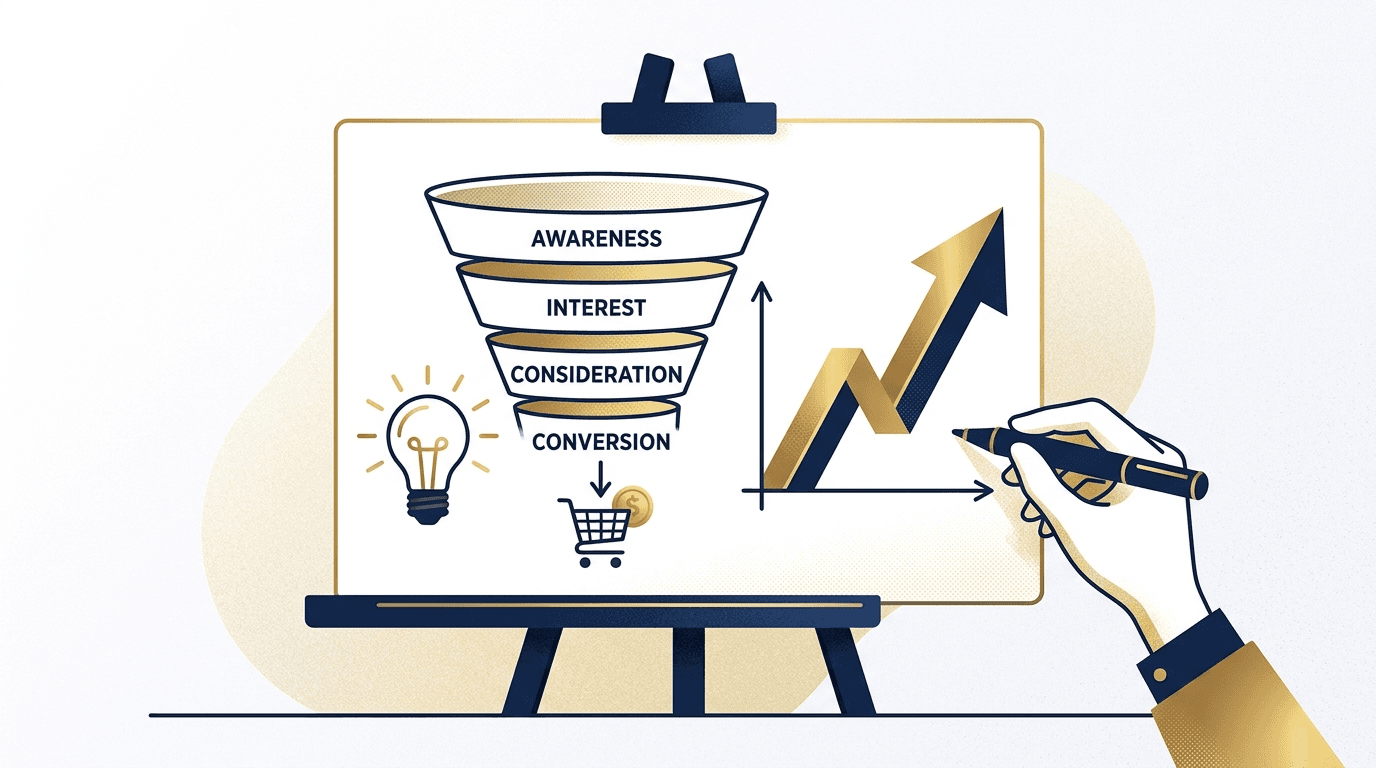
A lead nurture sequence is not just a series of emails. It is a coordinated set of touchpoints across multiple channels, designed to move a prospect from awareness through to conversion at their own pace while keeping your brand front of mind.
The most effective nurture sequences I have built for Australian clients share five structural characteristics.
1. A Clear Trigger Point
Every sequence starts with a trigger. This might be a form submission, a content download, a webinar registration, a paid ad click, or a sales conversation that did not close. The trigger determines which sequence the prospect enters and what messaging is appropriate. Someone who downloaded a pricing guide needs different content than someone who attended a discovery call but did not proceed.
2. A Defined Objective for Each Stage
Each email or touchpoint in the sequence should have one job. The first email might be to deliver on the promise (send the guide they requested). The second might be to establish credibility with a relevant case study. The third might invite them to book a call. Every message should advance the relationship by one step, not jump straight to the close.
3. Multiple Channels Working Together
Email is the foundation, but it should not be the only channel. A prospect who receives an email sequence and then sees a retargeting ad on Instagram or LinkedIn that reinforces the same message is far more likely to convert than one receiving email alone. The research suggests it takes between 8 and 12 touchpoints to move a B2B prospect to a buying decision. No single channel is going to generate that volume of contact.
4. Timing and Cadence Benchmarks
The optimal cadence varies by industry and lead temperature, but a general framework that works well for Australian businesses looks like this:
Day 0 (trigger): Immediate automated response confirming receipt or delivering promised content
Day 1: Value-add email (relevant insight, blog post, or short video)
Day 3: Social proof email (case study, testimonial, or results story)
Day 5: Problem-framing email (address the core pain point your product solves)
Day 8: Soft CTA (invite to a free consultation, audit, or demo)
Day 12: Follow-up to the soft CTA with urgency or additional value
Day 18: Check-in or alternative offer
Day 25+: Long-term nurture (monthly value content to maintain relationship)
5. An Exit Condition
Every sequence needs a clear exit. When a lead books a call, they exit the automated sequence and enter a human-led follow-up process. When a lead unsubscribes, they exit and are flagged in the CRM. When a lead converts, they move to an onboarding sequence. Without exit conditions, you risk bombarding converted or disengaged leads, which damages your brand and your sender reputation.
Email Nurturing: Sequences, Timing, and Subject Lines That Work in Australia
Email remains the highest-ROI digital marketing channel available to Australian businesses. Campaign Monitor's research consistently shows email generating an average return of $42 for every $1 spent. But that return only materialises when email is done well.
Segmentation Is Non-Negotiable
The biggest mistake I see Australian businesses make with email nurturing is treating their list as a single audience. A mortgage broker's list might include first home buyers, property investors, and people refinancing. Each of those segments has entirely different pain points, timelines, and objections. Sending the same email to all three is a guaranteed way to reduce engagement and increase unsubscribes.
At a minimum, segment your leads by:
Lead source (how they found you)
Stage in the buying journey (top, middle, or bottom of funnel)
Industry or demographic
What they expressed interest in (product type, service category, or content topic)
Subject Lines That Drive Opens in the Australian Market
Australian buyers are sceptical of hype. Subject lines that work well in the US market often fall flat locally because they feel over-promised. What works in Australia is directness, specificity, and a clear indication of value.
High-performing subject line formulas for Australian audiences include:
"[First Name], here is what we found when we audited similar businesses"
"The reason most [industry] businesses struggle with [problem]"
"Quick question about your [goal or challenge]"
"Case study: How [similar business] achieved [specific result] in [timeframe]"
"You asked about [topic]. Here is the honest answer."
Avoid clickbait, excessive capitalisation, and vague subject lines like "Important update" or "Something special for you." Australian audiences respond better to substance over style.
Email Content That Converts
The best nurturing emails are short, focused, and written in plain language. A 200 to 300 word email with a single clear call to action will outperform a 1,000-word newsletter in almost every scenario. Use the following structure:
Opening line: Reference something specific to the prospect or their situation
Body: Deliver one piece of value or address one specific concern
CTA: One clear next step, not three options
For our email marketing automation workflows, we build these sequences directly into the CRM so they trigger automatically based on lead behaviour, saving hours of manual follow-up time.
Beyond Email: Retargeting, SMS, and Multi-Channel Nurturing
Email is the engine of lead nurturing, but multi-channel sequences are what separate businesses with 20% lead-to-close rates from those achieving 40% or higher.
Retargeting Ads as a Nurturing Tool
Most Australian businesses think of retargeting purely as a way to re-engage website visitors. But it is also one of the most powerful nurturing tools available, particularly when combined with email sequences.
The strategy is straightforward. Sync your email list with your Meta and Google Ads audiences. When a prospect is in a nurture sequence, they simultaneously see ads that reinforce the same message. If your email sequence is focused on social proof, your retargeting ads show testimonials or case study results. If your email is driving to a free audit, your ads show a matching offer.
This creates the impression that your brand is everywhere, which builds trust and keeps you top of mind without requiring a disproportionate ad budget. A well-structured retargeting campaign supporting a nurture sequence can be run for as little as $500 to $1,000 per month for an Australian SME.
SMS Nurturing: High Open Rates, High Responsibility
SMS has a 98% open rate compared to email's average of around 20 to 25%. That makes it a powerful nurturing channel, but also one that requires careful use. In Australia, the Spam Act 2003 requires that you have explicit consent to send commercial SMS messages. Do not skip this step.
Best practice for SMS nurturing in Australia:
Use SMS for high-value, time-sensitive messages only (appointment reminders, event notifications, limited-time offers)
Keep messages under 160 characters where possible
Always include an opt-out option
Do not send SMS more than once per week in a nurture sequence
Personalise with first name at minimum
For fitness studios, mortgage brokers, and local service businesses in Australia, SMS nurturing has been one of the highest-performing channels we have integrated into client campaigns.
LinkedIn Outreach for B2B Lead Nurturing
For B2B businesses targeting decision-makers in Australia, LinkedIn is an underutilised nurturing channel. A structured LinkedIn outreach sequence, where a connection request is followed by a value-add message and then a conversation starter, can work in parallel with email to dramatically increase touchpoint frequency.
The key is to avoid the generic "I would love to connect and tell you about our services" approach. Reference something specific about the prospect's business, a recent post they made, or a challenge relevant to their industry. LinkedIn Sales Navigator makes this scalable for teams with a B2B focus.
CRM Setup for Effective Lead Nurturing (HubSpot, Salesforce, Zoho Examples)
A CRM is the operational backbone of any serious lead nurturing strategy. Without it, you have no visibility over where leads are in the pipeline, which sequences they have received, or which ones are ready for a sales conversation.
Here is how the three most common platforms used by Australian businesses approach nurturing.
HubSpot
HubSpot is the most popular CRM for Australian SMEs running inbound marketing strategies. Its free tier includes contact management, email marketing, and basic automation, making it accessible for businesses just starting out. The paid tiers unlock advanced lead scoring, multi-step workflows, and detailed reporting.
For lead nurturing, HubSpot's Workflows tool allows you to build automated sequences triggered by contact properties, form submissions, page views, or deal stage changes. The platform also integrates natively with Google Ads, Meta, and LinkedIn for retargeting audience syncing.
Salesforce
Salesforce is the enterprise standard, used widely by mid-market and larger Australian businesses, particularly in financial services, recruitment, and professional services. Salesforce's Marketing Cloud or Pardot (now called Account Engagement) tools are purpose-built for lead nurturing, with sophisticated segmentation, lead scoring, and campaign attribution capabilities.
The trade-off is complexity. Salesforce requires more setup time and often a dedicated administrator or CRM development partner to configure effectively. The ROI is significant once properly implemented, but it is not a day-one solution for small businesses.
Zoho CRM
Zoho is the most cost-effective option for Australian SMEs that need a full-featured CRM without the HubSpot or Salesforce price tag. Zoho CRM includes lead scoring, email automation, workflow rules, and native integration with Zoho Campaigns for email nurturing. It lacks some of the polish of HubSpot but delivers excellent functionality for the investment.
CRM Pipeline Stages for Lead Nurturing
Regardless of which platform you use, your pipeline should reflect the buyer journey. A typical setup for an Australian B2B or professional services business looks like:
New Lead: Entered into the system, automated welcome sequence triggered
Engaged: Has opened emails, clicked links, or visited key pages
Qualified: Has indicated buying intent through a form, call request, or lead score threshold
Discovery Call Booked: Sales-ready, removed from automated sequence
Proposal Sent: Active sales process
Closed Won / Closed Lost: Outcome recorded, triggers relevant follow-up sequence
For help setting up your CRM to support a nurture strategy, our CRM development service is built specifically for Australian businesses at the SME and mid-market level.
Lead Scoring: How to Prioritise Follow-Up Without Wasting Sales Time
Lead scoring is the practice of assigning numerical values to lead behaviours and attributes to rank prospects by their likelihood to convert. It is the single most effective way to help your sales team focus their time on the leads most likely to close.
How Lead Scoring Works
You assign points based on two categories:
Demographic or Firmographic Fit (Explicit Scoring)
Correct industry: +10 points
Correct company size: +10 points
Decision-maker title (e.g. Director, CEO, Manager): +15 points
Located in target geography: +5 points
Incorrect industry or company size: -10 points
Behavioural Engagement (Implicit Scoring)
Opened email: +2 points
Clicked email link: +5 points
Visited pricing page: +10 points
Visited case studies page: +8 points
Requested a consultation: +20 points
Downloaded a lead magnet: +5 points
No email activity in 30 days: -10 points
Once a lead reaches a defined threshold (commonly 50 to 75 points), they are automatically flagged as sales-ready and assigned to a rep for direct outreach. Leads below the threshold remain in the automated nurture sequence.
This approach ensures your sales enablement effort is focused where it matters most, rather than burning time on tyre-kickers who are not yet ready to buy.
Measuring Nurture Performance: Metrics That Actually Matter
Too many Australian businesses measure their nurture performance by vanity metrics. Open rates and click-through rates tell you something about email deliverability and content relevance, but they do not tell you whether your nurture strategy is generating revenue.
Here are the metrics that actually matter.
Lead-to-Close Rate
This is the percentage of leads that ultimately become paying customers. Benchmark this before and after implementing a nurture strategy. In our experience with Australian clients, a structured nurture process typically improves lead-to-close rate by 20 to 40% within the first six months.
Pipeline Velocity
Pipeline velocity measures how quickly leads move from entry to close. The formula is: (Number of Deals x Average Deal Value x Win Rate) / Length of Sales Cycle. Improving nurture shortens the sales cycle, which directly increases pipeline velocity.
Cost Per Acquisition (CPA)
If your lead nurturing is working, your CPA should decrease over time because you are converting a higher percentage of the leads you are already paying to generate. This is arguably the most important commercial metric for any Australian SME to track.
Sequence Engagement Rate
Look at the aggregate engagement across your entire sequence, not just the first email. Which emails in the sequence generate the most clicks? Which have the highest unsubscribe rates? Use this data to continuously refine your content and timing.
Sales Handoff Quality
Track what percentage of leads handed off from marketing to sales actually result in a discovery call or proposal. A low conversion rate from handoff to meeting often indicates that the lead scoring threshold needs adjustment.
For deeper performance analysis, our analytics service gives Australian businesses full-funnel visibility from first touch to closed deal.
Case Study 1: Recruitment Agency Improves Lead-to-Close Rate by 38%
One of our clients, a mid-sized recruitment firm operating across Sydney and Melbourne, was generating between 80 and 100 inbound leads per month through a combination of Google Ads and LinkedIn. Their sales team was following up manually, which meant inconsistent outreach and a lead-to-close rate sitting at around 11%.
We implemented a three-phase nurture strategy using HubSpot:
Immediate automated response sequence for all new enquiries, delivering relevant content based on the type of role they were hiring for
Lead scoring model that ranked prospects by company size, hiring urgency, and engagement behaviour
Sales handoff protocol that triggered a personal email and call from a senior recruiter when a lead crossed the 60-point threshold
Within four months, the lead-to-close rate improved from 11% to 15.2%, a 38% relative increase. Monthly revenue from inbound leads increased by approximately $67,000 without any increase in the advertising budget. The sales team reported spending 40% less time chasing cold leads and significantly more time on qualified conversations.
Case Study 2: Professional Services Firm Reduces Sales Cycle by 22 Days
A professional services firm in Brisbane, providing financial consulting to mid-market businesses, had a typical sales cycle of around 65 days from first enquiry to signed engagement letter. Their primary complaint was that prospects would enter the pipeline, have an initial conversation, and then go silent for weeks before either converting or disappearing.
We built a multi-channel nurture sequence that combined bi-weekly email content (industry insights, case studies, and regulatory updates relevant to their target market), LinkedIn connection and messaging sequences for decision-makers who had not yet responded, and retargeting ads on Google Display targeting people who had visited their services pages.
After six months, the average sales cycle had reduced from 65 days to 43 days, a 22-day improvement. The pipeline velocity improvement translated to a 31% increase in annual revenue capacity without hiring additional sales staff.
"Before working with 3P Digital, we had no real system for following up with leads. Enquiries would come in and our team would respond once, maybe twice, and then move on. The nurture framework they built us changed everything. We are closing deals faster and with far less effort from our sales team. The CRM setup alone was worth the investment." — Director, Professional Services Firm, Brisbane
You can find more detailed breakdowns of client outcomes in our case studies section.
Hero Stats: Lead Nurturing by the Numbers
Average lead response time in Australian SMEs: 24 to 48 hours (best practice is under 5 minutes)
Leads that convert without nurturing: Approximately 2 to 5%
Leads that convert with a structured nurture process: Typically 15 to 25%
Average number of touchpoints required to close a B2B deal: 8 to 12
Email ROI benchmark: $42 return per $1 spent (Campaign Monitor, global benchmark)
Lead nurturing emails generate 4 to 10 times the response rates compared to standalone email blasts
Building Your Lead Nurturing Strategy: The 3P Digital Approach
At 3P Digital, every lead nurturing engagement follows our proprietary 3P Framework: Profile, Plan, Perform.
Profile: We start by mapping your ideal customer profile in detail. Who are they, what are their pain points, how do they make buying decisions, and what content resonates at each stage of their journey. Without this foundation, any nurture sequence is guesswork.
Plan: We design the full sequence architecture, including triggers, content, channels, timing, lead scoring model, and CRM pipeline stages. This phase also includes a conversion optimisation review of the pages leads are landing on before they enter the sequence.
Perform: We implement, test, and continuously optimise. Lead nurturing is not a set-and-forget exercise. The best sequences are refined based on real data every 90 days.
If you want a professional assessment of where your current lead nurture process has gaps, request a lead nurture audit. We will review your current setup and give you a clear picture of what is costing you revenue.
FAQs
What is lead nurturing and why does it matter for Australian businesses?
Lead nurturing is the process of building relationships with prospects over time through relevant, personalised communication, with the goal of moving them from initial interest through to a buying decision. It matters for Australian businesses because the average B2B buying cycle involves multiple decision-makers and extensive research. Most prospects are not ready to buy when they first make contact. Without a nurture process, you lose these prospects to competitors who maintain consistent communication. A structured nurture strategy can improve lead-to-close rates by 20 to 40% without increasing your lead generation budget.
How long should a lead nurture sequence be?
The length of a nurture sequence depends on your sales cycle and average deal complexity. For short-cycle consumer services like fitness memberships or mortgage enquiries, a sequence of 5 to 8 touchpoints over 2 to 3 weeks is often sufficient. For B2B professional services with longer sales cycles, sequences of 12 to 20 touchpoints spread over 30 to 90 days are more appropriate. The key principle is to maintain contact until the prospect either converts, unsubscribes, or explicitly indicates they are not interested. Long-term nurture sequences that send monthly value content indefinitely are appropriate for prospects who are not yet ready but have not opted out.
What tools do I need to run lead nurturing in Australia?
At a minimum, you need an email marketing platform with automation capabilities. Options like Mailchimp, ActiveCampaign, or HubSpot's free tier allow you to build basic automated sequences without significant investment. As your volume and complexity grow, a full CRM like HubSpot, Salesforce, or Zoho CRM will give you the pipeline visibility, lead scoring, and multi-channel integration needed for a sophisticated programme. For SMS, tools like MessageMedia or Klaviyo serve the Australian market well. Retargeting requires access to Meta Ads Manager or Google Ads, both of which most businesses already use for lead generation.
How does lead scoring work and how do I set it up?
Lead scoring assigns numerical points to prospects based on two factors: how well they match your ideal customer profile (explicit scoring) and how actively they are engaging with your content and communications (implicit scoring). You assign positive points for favourable attributes (right industry, decision-maker title, visited your pricing page) and negative points for disqualifying factors (wrong company size, no engagement in 30 days). When a lead crosses a defined threshold score, typically 50 to 75 points, they are flagged as sales-ready and handed off to your sales team for direct outreach. Most CRM platforms including HubSpot, Salesforce, and Zoho CRM have built-in lead scoring tools that can be configured without technical expertise.
When should I hand a lead from marketing to sales?
The handoff point should be determined by your lead scoring model, not by arbitrary time triggers. A lead is sales-ready when they have demonstrated both a strong fit with your ideal customer profile and a meaningful level of buying intent through their behaviour. Common intent signals include visiting a pricing page multiple times, requesting a consultation or demo, downloading a bottom-of-funnel resource like a buyer's guide, or responding to an email with a direct question. Handing leads off too early leads to poor conversion rates and frustrated sales teams. Handing them off too late means missing the buying window. Define your threshold clearly, review it quarterly, and adjust based on actual conversion data.
How do I measure the ROI of my lead nurturing programme?
The primary metrics for measuring lead nurturing ROI are: lead-to-close rate (percentage of leads that become customers), pipeline velocity (how quickly leads move through the funnel), cost per acquisition (total marketing spend divided by number of new customers), and revenue influenced by nurturing (revenue from deals where the prospect engaged with at least one nurture touchpoint before closing). Track these metrics before implementing your nurture strategy to establish a baseline, then compare at 90-day intervals after launch. A well-executed nurture programme should show measurable improvement in CPA and lead-to-close rate within the first four to six months.
What is the difference between lead generation and lead nurturing?
Lead generation is the process of attracting new prospects into your pipeline through channels like paid advertising, SEO, social media, events, or content marketing. Lead nurturing is what happens after a prospect enters your pipeline. It is the process of building the relationship, delivering value, and maintaining communication until the prospect is ready to buy. Both are essential and neither works well without the other. Many Australian businesses invest heavily in lead generation but neglect nurturing, which means they are effectively paying to fill a bucket with a hole in the bottom. The businesses that grow efficiently invest proportionally in both.
Can small businesses do lead nurturing without a CRM?
Yes, you can start without a CRM, although your capacity will be limited. At a basic level, you can run automated email sequences through platforms like Mailchimp or ActiveCampaign, track lead activity in a shared spreadsheet, and manage follow-up reminders through your email calendar. This approach works reasonably well up to around 50 to 100 leads per month. Beyond that volume, manual tracking becomes unreliable and you will start losing leads through the cracks. At that point, the investment in even a free CRM like HubSpot's free tier pays for itself almost immediately through improved conversion rates. If you are serious about growing your business, implementing a CRM as early as possible will be one of the highest-ROI decisions you make.
References
HubSpot State of Marketing Report (annual publication): A comprehensive global survey of marketing professionals covering email performance benchmarks, lead conversion rates, CRM adoption, and lead nurturing effectiveness. Widely cited in digital marketing research for its large sample size and cross-industry coverage.
Salesforce State of Sales Report (annual publication): Published annually by Salesforce, this report surveys thousands of sales professionals globally including Australian respondents. Covers sales cycle benchmarks, lead follow-up behaviour, and CRM usage rates. Particularly relevant for B2B sales nurturing strategy.
Campaign Monitor Email Marketing Benchmarks (Australian edition): Campaign Monitor is an Australian-founded email marketing platform. Their annual benchmark report provides Australia-specific open rate, click-through rate, and unsubscribe rate data by industry, making it the most relevant email performance reference for Australian marketers.
Harvard Business Review: "The Short Life of Online Sales Leads" (Oldroyd, McElheran, Elkington): Landmark research study demonstrating that companies contacting leads within one hour are seven times more likely to qualify the prospect than those who wait longer. Forms the empirical basis for lead response time recommendations globally.
Australian Bureau of Statistics (ABS) Business Characteristics Survey: Provides data on Australian SME business structure, technology adoption rates, and digital tool usage, providing the market context for understanding how Australian businesses currently manage customer communications and CRM adoption.
Marketo (Adobe) Lead Nurturing Benchmark Study: Research from Marketo documenting that nurtured leads produce, on average, a 20% increase in sales opportunities compared to non-nurtured leads, and that lead nurturing emails generate 4 to 10 times the response rates of standalone email blasts.