LinkedIn Ads for B2B Lead Generation in Australia: Campaign Structures, Costs, and What Actually Works in 2026
Most Australian B2B companies waste more than 60% of their LinkedIn Ads budget within the first 90 days. Not because LinkedIn doesn't work. Because they set it up the same way they'd set up Google Ads, then wonder why their cost per lead is blowing out past $400 with nothing to show for it.
LinkedIn is not a search intent platform. People aren't scrolling their feed looking for your software solution or your recruitment service. They're consuming content, building their professional brand, and networking. That means your campaign structure, your creative, your offer, and your measurement framework all need to reflect an interruption-based model, not a demand-capture model. The companies getting strong ROI from LinkedIn Ads in Australia understand this distinction deeply. The ones burning budget don't.
This guide is built from real campaign data, real client results from the 3P Digital team, and the latest Australian LinkedIn benchmarks available in 2026. Whether you're spending $3,000 a month or $30,000, you'll walk away with a clear picture of what campaign structures work, what targeting options to prioritise, what the realistic costs look like in the Australian market, and what mistakes to stop making immediately.
Key Takeaways
LinkedIn CPMs in Australia run 5–10x higher than Google Display, but the quality of leads in B2B contexts is significantly stronger when targeting is done correctly
Lead Gen Forms consistently outperform landing pages for mid-funnel offers in the Australian B2B market, especially on mobile
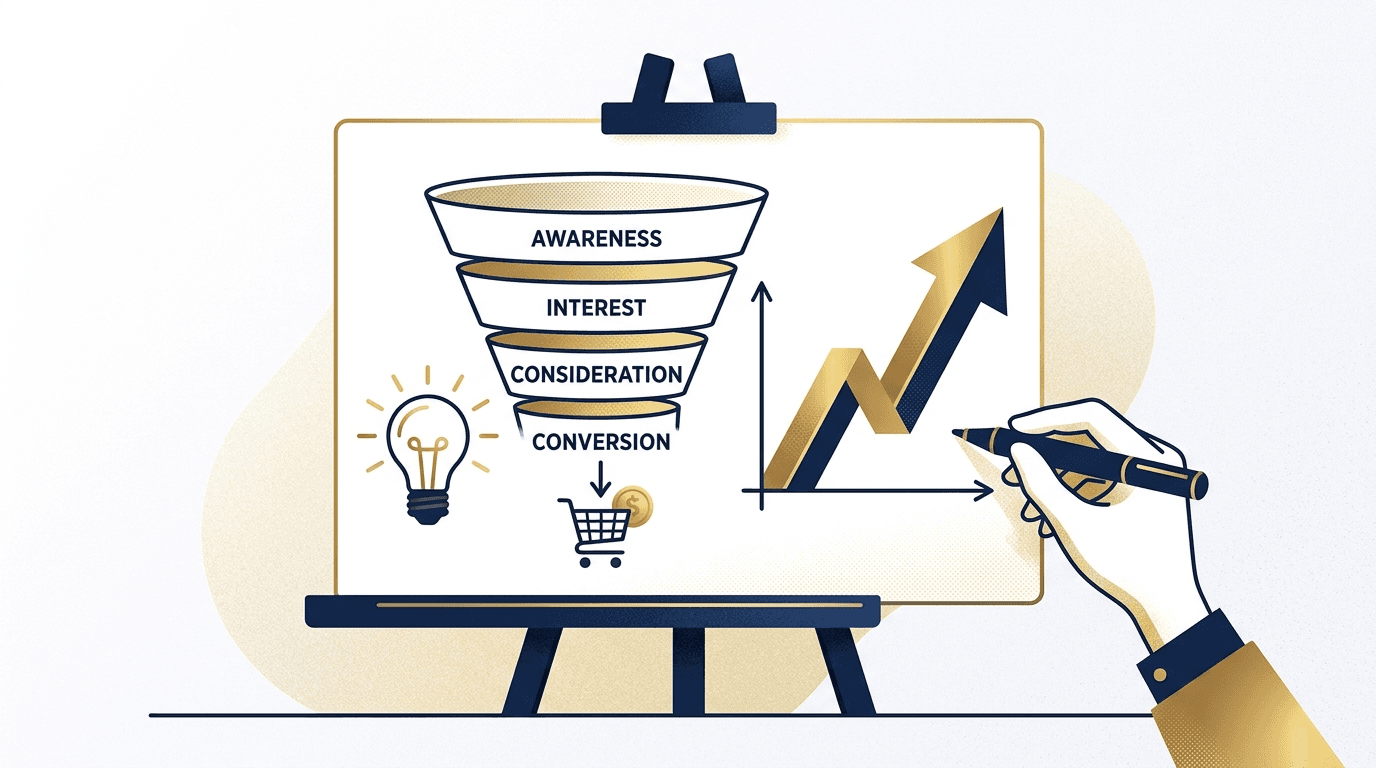
A three-layer funnel structure (awareness, consideration, conversion) dramatically outperforms single-campaign cold targeting
Retargeting sequences built around content engagement and video views are one of the highest-ROI tactics available on LinkedIn right now
A realistic minimum viable budget for LinkedIn Ads in Australia is $3,000–$5,000 per month to gather statistically meaningful data
Attribution setup matters as much as the ads themselves. Without proper CRM integration, you're flying blind
Summary Table: LinkedIn Ad Formats Compared
Ad Format | Estimated AU CPM | Estimated AU CPL | Best Use Case | Funnel Stage |
Sponsored Content (Single Image) | $25–$45 | $80–$180 | Brand awareness, content distribution | Top of funnel |
Sponsored Content (Video) | $20–$40 | $90–$200 | Thought leadership, product demos | Top to mid funnel |
Lead Gen Forms | $30–$50 | $60–$150 | Gated content, event sign-ups, consultation requests | Mid to bottom funnel |
Document Ads | $25–$45 | $70–$160 | Whitepapers, guides, frameworks | Mid funnel |
Message Ads (InMail) | $0.40–$0.90 per send | $80–$220 | Direct outreach, event invites, high-value offers | Bottom funnel |
Conversation Ads | $0.35–$0.80 per send | $70–$200 | Nurture sequences, multi-step CTAs | Mid to bottom funnel |
Dynamic Ads | $15–$30 | $100–$250 | Personalised retargeting, follower campaigns | Bottom funnel |
CPL ranges are indicative benchmarks based on 3P Digital campaign data and industry reporting. Actual results vary by industry, offer quality, and targeting configuration.
Why LinkedIn Ads Work Differently for B2B
Let me be blunt about something that most agencies won't say out loud: LinkedIn Ads are expensive, and if you approach them with a Google Ads mindset, they will punish you fast.
Google Search captures demand that already exists. Someone types "B2B recruitment software Australia" and they're actively looking for a solution. Your job is to show up and not stuff it up. LinkedIn is the opposite. You're interrupting someone mid-scroll to make them aware that a problem exists, that a solution exists, and that your company is the right provider. That requires a completely different creative and structural approach.
Where LinkedIn earns its premium is in targeting precision. Nowhere else in digital advertising can you target by job title, seniority level, company size, industry, skills, group membership, and years of experience simultaneously. For B2B companies with a clearly defined ICP (Ideal Customer Profile), that precision can be transformative. A Sydney-based HR tech company can serve ads exclusively to HR Directors and People and Culture Managers at ASX-listed companies with between 500 and 5,000 employees. No other platform offers that level of specificity.
The second reason LinkedIn works differently is intent signal. Users on LinkedIn are in a professional mindset. They are consuming content related to their industry, their career, and their business challenges. A well-positioned piece of thought leadership or a useful downloadable guide lands very differently on LinkedIn than it would on Facebook or Instagram. The audience is receptive to professional, substantive content in a way that doesn't apply on consumer-oriented platforms.
The third factor is the B2B buying cycle. In most B2B categories, especially in professional services, SaaS, recruitment, and finance, the sales cycle is long. Someone doesn't see one ad and book a discovery call. They need multiple touchpoints across weeks or months before they're ready to engage. LinkedIn's retargeting capabilities, combined with its unique audience attributes, make it ideal for building that kind of sustained presence. Done correctly, LinkedIn Ads don't just generate leads. They build brand familiarity with exactly the right decision-makers over time, which makes every other part of your sales process easier.
Australian LinkedIn Ads Cost Benchmarks 2026
Cost data for LinkedIn Ads in Australia is often misleading because it's heavily influenced by industry, audience size, bid type, and campaign objective. Here's what we're seeing across 3P Digital client campaigns and consistent with what's reported in current industry benchmarks.
Cost Per Click (CPC): The average CPC for LinkedIn Ads in Australia sits between $8 and $18 depending on audience competitiveness. Highly competitive audiences such as C-suite executives at large enterprise companies can push CPC above $25. More niche audiences in less competitive sectors can come in under $10.
Cost Per Mille (CPM): Australian LinkedIn CPMs typically range from $20 to $50. Compare this to Google Display Network CPMs of $2 to $8, and you can see immediately why budget management matters so much. You're paying a significant premium for access to this audience, so every dollar needs to be earning its keep.
Cost Per Lead (CPL): This is the number most marketers obsess over, and it varies enormously. For Lead Gen Forms with a strong mid-funnel offer (a practical guide, a free audit, a benchmark report), we consistently see CPLs in the $60 to $150 range in Australia. For bottom-funnel direct response offers like demo requests or consultation bookings, CPLs of $150 to $350 are common and often still commercially viable given the deal values involved.
Minimum Budget Guidance: LinkedIn's own recommendation is a minimum of $10 per day per campaign, but that's nowhere near enough to gather meaningful data. In the Australian market, where audience sizes are smaller than in the US or UK, we recommend a minimum of $3,000 per month to run a properly structured campaign. Below that, you don't have enough impressions to optimise, you can't split test meaningfully, and your results will be too noisy to draw conclusions from. A realistic budget for a full three-layer funnel setup is $5,000 to $10,000 per month.
One important note on budget: LinkedIn's algorithm needs time and volume to learn. The first four to six weeks of any new campaign should be treated as a learning phase. Don't make drastic changes, don't pause campaigns after three days because the CPL looks high. Give the algorithm the data it needs to find your best audience within the parameters you've set.
Campaign Structure: The Three-Layer Funnel
The single biggest structural mistake we see from B2B companies running LinkedIn Ads is treating the entire funnel as one campaign. They create a campaign, target a cold audience, run a "book a call" CTA, then wonder why nobody's converting.
The correct approach is a three-layer funnel, each layer with a distinct campaign objective, distinct creative, and a distinct offer.
Layer One: Awareness
The goal of Layer One is simple. Get in front of your ICP, deliver value, and build familiarity. You are not selling anything at this stage. You are earning attention.
Best formats for awareness: video ads, single image sponsored content, thought leadership posts from your personal profile (boosted as sponsored content), and document ads featuring useful insights.
Your offer at this stage should be frictionless. A useful article. A short video explaining a common industry problem. A statistic or insight your audience will find genuinely interesting. The goal is engagement (video views, link clicks, post interactions), not lead capture.
Target audience at Layer One: Cold audiences built from job title, seniority, industry, and company size targeting. Lookalike audiences based on your existing customer list can also perform well here.
Layer Two: Consideration
Layer Two targets people who have already engaged with your Layer One content. This is your warm audience: people who've watched at least 25% of your video, clicked on a sponsored post, visited your website, or engaged with your company page in the last 90 days.
Your offer here increases in value and in ask. A detailed guide. A benchmark report. A free audit framework. A webinar invite. This is where Lead Gen Forms become your best friend (more on that below).
The creative at this stage can be more direct about your solution and your unique value proposition because the audience already has some familiarity with your brand.
Layer Three: Conversion
Layer Three is your bottom-funnel conversion push. This audience has engaged multiple times, downloaded a resource, or visited key pages on your site (pricing, services, case studies). They know who you are. Now you ask them to take a direct commercial action: book a discovery call, request a proposal, or sign up for a demo.
Keep the audience tight here. The smaller and more qualified, the better. A direct CTA backed by a strong offer (often a limited-time consultation, a free strategy session, or a specific ROI promise) works best.
Message Ads and Conversation Ads can be particularly effective at Layer Three because they feel personal and direct, which suits the warm relationship you've built across Layers One and Two.
Targeting Strategy: Getting Your Audience Right
LinkedIn's targeting interface is powerful but it's easy to over-refine your audience to the point where you have an audience of 2,000 people and your campaign can barely spend. Here's how to think about it correctly.
Job Title vs Job Function
Job title targeting is the most intuitive but it's also the most fragmented. The same role is listed under dozens of different titles across different companies. "Head of Marketing," "Marketing Director," "CMO," "VP Marketing" are all potentially the same decision-maker. Use job function and seniority in combination (for example, Marketing function, Director and VP level) to capture the full breadth of your target buyer without fragmenting your audience.
Company Size and Industry
For most Australian B2B campaigns, we recommend starting with company size filters of 51 to 1,000 employees unless you're specifically targeting enterprise accounts. Very small companies often don't have the budget for complex B2B solutions, and large enterprise accounts require a completely different sales approach. Layer in industry filters to keep the relevance high.
Matched Audiences
This is where LinkedIn's targeting becomes genuinely powerful. You can upload a CSV of your existing customers or target accounts and LinkedIn will match them to profiles. You can retarget website visitors with the LinkedIn Insight Tag, retarget video viewers, retarget Lead Gen Form openers, and build lookalike audiences from all of the above. Matched audiences should form the backbone of your Layer Two and Layer Three targeting.
Audience Size Guidelines for Australia
Australia's professional LinkedIn user base is significantly smaller than the US or UK. A well-defined cold audience for a B2B campaign in Australia will typically sit between 30,000 and 150,000 people. Below 30,000, you'll find frequency capping limits your reach and burns out the audience quickly. Above 300,000, you're likely being too broad and wasting budget on poor-fit prospects.
Ad Format Selection Guide
Choosing the right format is not just about what looks good. It's about matching the format to the objective and the funnel stage.
Single Image Sponsored Content is your workhorse format. Reliable, flexible, and works at every funnel stage. Use it for content distribution at the top, offers at the middle, and direct response at the bottom. Keep headlines under 150 characters and include a clear, specific CTA.
Video Ads are underutilised by Australian B2B marketers. Short-form videos (30 to 90 seconds) work extremely well for thought leadership, product demos, and founder-led content. More importantly, video viewers become a retargetable audience, which makes them critical for building your Layer Two pool.
Document Ads allow users to scroll through a PDF-style document directly in their feed without clicking away. They generate high engagement and are ideal for distributing research reports, frameworks, or step-by-step guides. Use them at Layer Two with a Lead Gen Form gate at the final page.
Lead Gen Forms are discussed in detail in the next section, but in short: they reduce friction dramatically and should be your default format for any gated offer.
Message Ads and Conversation Ads work best with small, warm audiences. Sending a cold Message Ad to 200,000 people will feel spammy and your open rate will reflect that. Send a well-crafted Message Ad to 2,000 warm prospects who've already engaged with your content and the response rate changes completely.
Lead Gen Forms vs Landing Pages: Which Wins?
This is one of the most common questions we get from B2B marketers, and the data is fairly clear in most contexts: Lead Gen Forms outperform standalone landing pages for mid-funnel offers on LinkedIn, particularly on mobile.
The reasons are structural. LinkedIn pre-fills Lead Gen Forms with profile data (name, email, job title, company, phone number). The user doesn't have to type anything. They tap a button, confirm their details, and they're done. The friction is almost zero.
Compare that to a landing page experience. The user clicks the ad, waits for the page to load (and LinkedIn's in-app browser is notoriously slow), arrives on a page they've never seen before, reads the copy, decides whether they trust it, fills in a form manually, and submits. Each of those steps is a dropout point.
In our experience running campaigns for Australian professional services and B2B clients, Lead Gen Forms typically convert at two to four times the rate of landing pages for equivalent offers. A guide download that converts at 8% on a landing page will often convert at 18 to 25% via a Lead Gen Form.
However, Lead Gen Forms are not always the right choice. For high-intent bottom-funnel offers like demo requests and consultation bookings, a dedicated landing page with strong social proof, testimonials, and specific outcome messaging can outperform a Lead Gen Form. The landing page experience allows you to do more selling before the conversion action, which matters when the ask is significant.
The practical approach: use Lead Gen Forms for content downloads, webinar registrations, and early-stage engagement offers. Use landing pages for direct commercial asks where the quality of the conversion experience justifies the added friction. For guidance on building high-converting landing pages, our conversion optimisation service covers the full process.
Retargeting Sequences That Convert
Retargeting on LinkedIn is where the real money gets made, and it's where most B2B marketers in Australia are leaving enormous value on the table.
Here's a retargeting sequence that we've validated across multiple client campaigns.
Week 1–2 (Layer One): Run video content or thought leadership sponsored content to a cold audience. Budget roughly 30% of your total monthly spend here. The goal is impressions, not conversions.
Week 3–4 (Layer Two activation): Once you have a pool of video viewers and content engagers (typically 500 to 2,000 people after two weeks at adequate spend), activate your Layer Two retargeting campaign. Serve a Lead Gen Form with a high-value offer. Budget 40% here.
Week 5+ (Layer Three): Your Layer Two engagers, Lead Gen Form openers, and website visitors from the LinkedIn Insight Tag now become your Layer Three audience. Hit them with a direct conversion offer. Message Ads work particularly well here. Budget the remaining 30%.
The key insight is timing. Don't activate Layer Three retargeting until you've given your audience sufficient warm-up time. People who've seen your content twice and downloaded a resource are dramatically more likely to book a call than someone who's seen one cold ad.
Measuring ROI Beyond CPL
CPL is a vanity metric if it's not connected to pipeline and revenue. This is a critical point that separates mature LinkedIn advertisers from beginners.
We work with clients to set up a full-funnel attribution model that tracks the lead from LinkedIn all the way through to closed revenue. This requires three things: the LinkedIn Insight Tag properly installed on your site, CRM integration (HubSpot, Salesforce, or similar), and UTM parameters on every ad campaign.
The metrics that actually matter are cost per qualified lead (CPQL), cost per sales accepted lead (CPAL), and cost per closed deal. A CPL of $200 looks expensive until you realise that 30% of those leads become qualified opportunities and 20% of those close at $25,000 average deal value. The maths then becomes very clear.
We also recommend tracking LinkedIn-attributed pipeline as a percentage of total pipeline over time. In most Australian B2B categories where we run LinkedIn campaigns, LinkedIn-attributed pipeline grows as a share of total pipeline over six to twelve months as the retargeting audiences build and the brand recognition compounds. Our analytics service can help you set up the right attribution framework from day one.
Common Mistakes Australian B2B Marketers Make
Targeting an audience that's too small. Australian audiences are already smaller than US equivalents. When you add six layers of targeting filters, you can end up with an audience of 8,000 people. At that size, your frequency caps out fast, audience fatigue sets in within two to three weeks, and your results crater. Aim for a cold audience of at least 30,000.
Running one campaign to do everything. One campaign with a "book a call" CTA served to a cold audience. No awareness phase, no nurture, no retargeting. This approach nearly always fails on LinkedIn.
Ignoring creative fatigue. LinkedIn recommends rotating creatives every three to four weeks. In small Australian audiences, fatigue can set in even faster. Always have two to three ad variants running per ad set and refresh them regularly.
Not connecting the LinkedIn Insight Tag to their CRM. Without this connection, you're making decisions based on LinkedIn's reported data alone, which often overstates performance. CRM integration gives you the ground truth.
Giving up too early. LinkedIn campaigns need four to six weeks of data before they're optimisable. We regularly see clients pause campaigns after two weeks because the CPL looks high. That's exactly the wrong move. Give the algorithm time to learn.
Sending traffic to a homepage. If your ad promotes a specific offer or solution and it clicks through to your homepage, you're leaking conversions. Every ad needs a dedicated, message-matched landing page or Lead Gen Form. This connects directly to our work on paid media strategy.
LinkedIn Ads vs Google Ads for B2B: Choosing the Right Mix
This is not an either-or question. The best B2B digital marketing strategies in Australia use both, but they use them for different jobs.
Google Ads excels at capturing demand that already exists. If your ideal customer is already searching for your solution, Google Search is almost always the highest-ROI channel. If there's sufficient search volume (and in Australian B2B markets, there often isn't), Google should be your first dollar spent.
LinkedIn Ads excels at creating and nurturing demand. If you're selling a new category of solution, if your buyers don't know they need what you're selling yet, or if you need to stay front of mind across a long sales cycle, LinkedIn is often the better platform.
For most Australian B2B companies, the optimal allocation looks something like this: 40 to 50% of paid media budget to Google Search (demand capture), 30 to 40% to LinkedIn Ads (demand generation and nurture), and the remainder to retargeting and testing across other channels.
The industries where LinkedIn tends to dominate the paid media mix include HR technology, recruitment, professional services, financial services, SaaS, and management consulting. These are categories where the buyer is a specific type of professional, the sales cycle is long, and relationship-building matters. Our full B2B digital marketing strategy framework covers how we approach this channel mix for different business types.
Case Study One: B2B Recruitment Firm, Sydney
A mid-sized recruitment firm in Sydney came to 3P Digital with a LinkedIn Ads account that had been running for six months with a consistent CPL of $340 and a close rate on those leads of less than 5%. They were spending $6,000 per month and seeing almost no ROI.
The diagnosis was clear. They were running a single campaign targeting HR Managers and Directors with a cold "book a consultation" CTA. No awareness phase, no retargeting, no Lead Gen Forms.
We restructured into a three-layer funnel. Layer One used video case studies (60 seconds each) targeting HR professionals at companies between 200 and 2,000 employees in NSW, VIC, and QLD. Layer Two retargeted video viewers and site visitors with a Lead Gen Form offering a free "Talent Acquisition Benchmark Report" specific to their industry verticals. Layer Three hit Lead Gen Form completers and report downloaders with a Message Ad sequence from the MD's LinkedIn account inviting them to a 30-minute strategy session.
Results after 90 days: CPL dropped from $340 to $118. Lead quality improved significantly, with close rate rising from 5% to 18%. Total pipeline attributed to LinkedIn over the quarter exceeded $400,000.
Case Study Two: Professional Services Firm, Melbourne
A Melbourne-based B2B consulting firm specialising in finance transformation wanted to target CFOs and Finance Directors at mid-market companies across Australia. Their previous LinkedIn Ads had been managed in-house with minimal results.
We implemented a document ad strategy at Layer One, serving a heavily designed "Finance Function Maturity Model" as a document ad to a cold audience of Finance Directors and CFOs at companies with 100 to 1,000 employees. The document ad generated strong engagement (average 4.2 pages viewed per session) and built a large warm audience quickly.
At Layer Two, we retargeted document engagers with a Lead Gen Form offering a personalised maturity assessment call. The offer was highly specific ("See where your finance function sits on the maturity curve") and resonated strongly with the audience's professional interests.
Results: 47 qualified leads generated in 60 days at an average CPL of $94. Six of those leads progressed to proposals within the quarter, with two projects closed at a combined value of $180,000. The campaign ROI was clear, trackable, and repeatable.
This is the kind of outcome that's available when LinkedIn Ads are built on a proper strategic foundation. To understand how we approach this work within a broader growth framework, see our 3P Framework overview.
FAQs
What is the minimum budget for LinkedIn Ads in Australia?
LinkedIn allows campaigns to start from as little as $10 per day, but this is far too low to generate meaningful data in the Australian market. We recommend a minimum of $3,000 per month to run a single properly structured campaign. If you want to run a full three-layer funnel across awareness, consideration, and conversion stages, budget $5,000 to $10,000 per month. Below these thresholds, your audience sizes are too small and your impression volumes too low to optimise effectively.
What CPL should I expect from LinkedIn Ads in Australia?
CPL varies significantly based on your offer, audience, ad format, and industry. For mid-funnel gated content offers using Lead Gen Forms, a CPL of $60 to $150 is achievable for well-structured campaigns. For bottom-funnel direct response offers like demo or consultation requests, CPLs of $150 to $350 are common. These numbers sound high compared to other channels, but in B2B contexts with deal values of $10,000 or more, a CPL of $200 is often extremely strong ROI.
How do LinkedIn Ads compare to Google Ads for B2B lead generation?
They serve different purposes. Google Search captures existing demand (buyers already searching for a solution), while LinkedIn creates and nurtures demand among buyers who fit your ICP but may not be actively searching. LinkedIn is generally better for longer sales cycles, complex solutions, and targeting specific professional demographics. Google is better when sufficient search volume exists for your category. The optimal strategy usually involves both, with Google capturing active searchers and LinkedIn building brand awareness and nurturing over time.
How long does it take to see results from LinkedIn Ads?
Expect four to six weeks before you have enough data to make meaningful optimisation decisions. The LinkedIn algorithm requires a learning phase, and in smaller Australian audience sizes, building your retargeting pools takes time. Most campaigns start showing strong, optimised results from month two or three. Don't judge performance in the first two weeks and don't make major structural changes during the learning phase.
Which industries see the best results from LinkedIn Ads in Australia?
LinkedIn Ads perform best in industries with clearly defined professional buyer personas, longer sales cycles, and higher deal values. In the Australian market, the strongest performers include HR technology, recruitment, professional services (consulting, legal, accounting), SaaS and B2B software, financial services, and management consulting. Industries with lower deal values or consumer-oriented sales cycles will typically find LinkedIn's premium CPMs harder to justify.
What makes a high-performing LinkedIn Lead Gen Form?
Several factors matter. First, the offer has to be genuinely valuable to your audience, not a thinly veiled sales pitch. A practical guide, a benchmark report, or a useful diagnostic tool performs far better than "download our brochure." Second, keep the form fields to the minimum required. LinkedIn pre-fills name, email, and job title automatically, so only add custom questions if they're truly necessary for lead qualification. Third, the thank-you message and follow-up sequence after form submission are often neglected but critical for conversion rate from lead to opportunity.
How should I set up attribution for LinkedIn Ads?
Start with the LinkedIn Insight Tag installed correctly on all pages of your website. Set up conversion events for your key actions (Lead Gen Form submissions, landing page form completions, key page visits). Integrate LinkedIn's conversion data with your CRM using UTM parameters on every ad. In HubSpot or Salesforce, create a LinkedIn Ads traffic source grouping so you can track leads from first touch through to closed revenue. Avoid relying solely on LinkedIn's self-reported conversion data, as it can include view-through attributions that overstate performance. Ground truth comes from your CRM. If you need help building this infrastructure, our analytics team can set this up properly from the start.
Should I run LinkedIn Ads in-house or use an agency?
This depends on your budget, internal capability, and the complexity of your campaigns. In-house management works well when you have a dedicated digital marketer with LinkedIn Ads experience, a budget below $3,000 per month, and a straightforward single-offer campaign. For anything more complex, particularly multi-layered funnels, matched audience strategies, and full-funnel attribution, an experienced agency will typically deliver better results faster and with less wasted spend. The learning curve on LinkedIn Ads is steep and the platform's high CPMs mean mistakes are expensive. If you're investing $5,000 or more per month, the ROI on expert management is almost always positive. Get in touch with the 3P Digital team if you'd like an honest assessment of your current setup.
References
LinkedIn Marketing Solutions Blog — LinkedIn's official marketing resources blog, covering platform updates, best practices, ad format guidance, and B2B campaign benchmarks. Published and maintained by LinkedIn's own marketing team, this is the primary authoritative source for LinkedIn Ads specifications and recommended campaign structures.
HubSpot State of Marketing Report 2026 — HubSpot's annual global marketing benchmarks report covering B2B lead generation costs, channel performance comparisons, and conversion rate benchmarks across paid social, search, and email. Widely referenced across the digital marketing industry for CPL and ROI benchmarking.
Metadata.io LinkedIn Ads Benchmark Report — Metadata's annual report aggregating performance data from B2B LinkedIn Ad campaigns across multiple industries and geographies, including CPM, CPL, and click-through rate benchmarks segmented by ad format and audience type. One of the most data-rich third-party LinkedIn performance benchmarking resources available.
B2B Marketing Australia Industry Survey 2026 — An Australian-specific survey of B2B marketing professionals covering budget allocation, channel performance, and lead generation priorities. Provides local context for LinkedIn Ads adoption and ROI perceptions within the Australian professional services and technology sectors.
Hootsuite Digital 2026 Australia Report — Hootsuite's annual report on digital and social media usage in Australia, covering LinkedIn penetration rates, professional demographic data, and platform engagement trends relevant to B2B advertisers targeting Australian professionals.