AdWords PPC Management in Australia: How to Structure, Optimise, and Scale Google Ads Campaigns That Actually Convert
Introduction
Most Australian businesses running Google Ads are lighting money on fire. Not because the platform does not work, but because their accounts are structured for convenience rather than conversion. Campaigns are built in a rush, keywords are dumped into broad ad groups, bidding is left on autopilot, and nobody reviews the search terms report until the monthly bill arrives. The result is wasted spend of between 40 and 60 percent of the total budget on clicks that were never going to convert. I have audited hundreds of Google Ads accounts across Australia and the pattern is almost always the same.
The good news is that poor PPC management is fixable. The bad news is that fixing it requires more than switching a bidding strategy or writing a new headline. AdWords PPC management done properly is a system — one that connects campaign structure to buyer intent, keyword strategy to landing page messaging, and bidding logic to actual business goals. When those elements align, the economics of paid search become genuinely compelling. When they do not, you are subsidising Google's revenue with no meaningful return.
This guide is the most detailed resource on Google Ads management for Australian businesses that I have put together. Whether you are running campaigns in-house, evaluating a PPC management agency, or trying to understand why your current setup is underperforming, this article will give you the framework, the tactics, and the benchmarks you need to make better decisions. We will cover campaign structure, keyword strategy, Quality Score, bidding selection, negative keyword architecture, ad copy testing, landing page alignment, and conversion tracking. Let us get into it.
Key Takeaways
Campaign structure should mirror the buyer journey, not your internal product catalogue
Quality Score is a multiplier on everything in your account — ignoring it costs you money every single day
Bidding strategy selection must be tied to your data maturity and conversion volume, not set-and-forget
Negative keyword lists are not optional — they are the difference between a profitable account and a leaking one
Conversion tracking with proper attribution is the foundation of every optimisation decision
In-house PPC management is viable for some businesses, but a specialist agency typically delivers better ROAS at scale
Summary Table: Google Ads Bidding Strategy Comparison
Bidding Strategy | Best For | Data Requirement | Control Level | Risk Level |
Manual CPC | New accounts, low volume, testing | None | High | Medium |
Maximise Clicks | Brand awareness, traffic building | Low | Low | Medium |
Maximise Conversions | Accounts with some conversion history | Medium (30+ conversions/month) | Low | Medium-High |
Target CPA | Lead generation, service businesses | High (50+ conversions/month) | Medium | Low-Medium |
Target ROAS | Ecommerce, high-volume accounts | Very High (100+ conversions/month) | Medium | Low |
Enhanced CPC | Transitioning from manual to smart bidding | Low-Medium | Medium-High | Low-Medium |
Why Most Google Ads Accounts Bleed Money
Before you can fix a Google Ads account, you need to understand why it is broken. In my experience auditing accounts for Australian SMEs and mid-market businesses, there are six recurring problems that account for the majority of wasted spend.
Problem 1: No Intentional Campaign Structure
The most common mistake I see is campaigns built around products or services rather than buyer intent. A mortgage broker might have a single campaign called "Home Loans" with forty keywords crammed into one ad group. That single ad group mixes people searching "home loan calculator" (research intent) with people searching "best home loan rates compare" (comparison intent) and "home loan broker Sydney" (high commercial intent). Google serves the same ads to all of them, the Quality Scores suffer, the cost-per-click climbs, and conversion rates collapse.
Problem 2: Broad Match Without Controls
Google has been aggressively expanding broad match behaviour since 2021. In 2026, broad match keywords now trigger for queries that are semantically related but not necessarily commercially aligned. Running broad match without a robust negative keyword list is the equivalent of handing Google a blank cheque. I have seen accounts where 70 percent of spend was going to irrelevant queries because someone ticked "broad match" and never reviewed the search terms report.
Problem 3: Smart Bidding Without Enough Data
Target CPA and Target ROAS are powerful tools when accounts have sufficient conversion data. The problem is that most small business accounts do not have enough volume for the algorithm to work properly. Google's own guidance suggests you need at least 50 conversions per month for Target CPA to function reliably. When you enable smart bidding on an account generating 10 conversions a month, the algorithm is making decisions on statistically meaningless data. The result is unpredictable spend and inconsistent results.
Problem 4: Weak Ad-to-Landing Page Alignment
A user clicks an ad for "commercial cleaning services Melbourne" and lands on a generic homepage. The headline does not reflect what they searched, there is no clear call to action above the fold, and the trust signals are buried at the bottom. The landing page experience score tanks, Quality Score drops, CPC rises, and the conversion rate stays below one percent. This is one of the most expensive mistakes in paid search and it is entirely preventable.
Problem 5: Conversion Tracking Gaps
You cannot optimise what you cannot measure. I regularly encounter accounts where conversions are tracked inconsistently — phone calls are missing, form submissions are double-counted, or the wrong event is being used as the primary conversion action. When conversion data is unreliable, every bidding decision and budget allocation is built on a flawed foundation.
Problem 6: No Negative Keyword Strategy
Negative keywords are the guardrails of a Google Ads account. Without them, your ads show for searches that have zero commercial value. A plumbing business without negatives might be showing ads for "plumbing apprenticeship" or "plumbing tools wholesale" — clicks that cost real money but convert at near-zero rates. A well-maintained negative keyword list can reduce wasted spend by 20 to 40 percent on its own.
Campaign Structure That Mirrors the Buyer Journey
Effective AdWords PPC management starts with structure. The Google Ads account hierarchy runs from Account to Campaign to Ad Group to Keywords and Ads. Each level has a specific function and decisions made at the top levels constrain everything below them.
The Account Level
At the account level, you manage billing, access, conversion actions, and shared assets like audiences and negative keyword lists. Decisions made here affect every campaign. This is where you set up your conversion tracking, define your remarketing audiences, and build your shared negative keyword lists.
The Campaign Level
Campaigns control budget, geographic targeting, network settings, and bidding strategy. A well-structured account separates campaigns by intent stage, not just by product. For a professional services firm, this might look like:
Brand campaign (searches including your business name)
High-intent service campaigns ("accountant Melbourne", "tax agent near me")
Problem-aware campaigns ("how to reduce business tax", "ATO audit help")
Competitor campaigns (targeting competitor brand terms)
Remarketing campaigns (previous website visitors)
Each of these has different conversion rates, different CPCs, and different bidding strategies. Grouping them together obscures performance data and prevents accurate optimisation.
The Ad Group Level
Ad groups should be tightly themed around a single keyword concept. The Single Keyword Ad Group (SKAG) approach, where each ad group contains one primary keyword, has evolved in 2026 given Google's keyword matching changes. A more practical approach is the Single Theme Ad Group (STAG), where each ad group contains a tight cluster of 3 to 5 keywords that share the same search intent and can be served by the same ad copy and landing page.
For a recruitment agency, the structure might look like:
Campaign: IT Recruitment Sydney
Ad Group: Software Developer Recruitment
Ad Group: IT Project Manager Recruitment
Ad Group: Cybersecurity Recruitment
Campaign: Engineering Recruitment Melbourne
Ad Group: Civil Engineer Recruitment
Ad Group: Mechanical Engineer Recruitment
This structure means every ad is highly relevant to the search query, landing pages are tightly aligned, and Quality Scores stay high.
Case Study 1: Recruitment Agency, Sydney
A Sydney-based recruitment agency came to us spending $18,000 per month on Google Ads with a cost per qualified lead of $340. Their account had three campaigns, fourteen ad groups, and over 200 keywords — all on broad match. After restructuring the account into 22 tightly themed ad groups mapped to specific job categories and seniority levels, adding 680 negative keywords, and aligning landing pages to each ad group theme, the cost per qualified lead dropped to $127 within 90 days. The same budget was now generating 2.7 times as many qualified leads. Total ROAS improved from 1.8x to 4.6x within six months.
Keyword Match Type Strategy for 2026
Google's keyword matching behaviour has changed significantly over the past few years. In 2026, the practical differences between match types are smaller than they once were, but the strategic implications of getting this wrong are larger.
Exact Match
Exact match is no longer truly exact. Google now triggers exact match keywords for close variants, including misspellings, singular and plural forms, abbreviations, and implied words. What exact match does give you is the tightest control over which queries trigger your ads. Use exact match for your highest-value, highest-converting keywords where you want maximum control and are willing to accept lower volume.
Phrase Match
Phrase match is the workhorse of most well-managed accounts. It triggers for queries containing the meaning of your keyword, in the correct order, but allows additional words before and after. For most Australian service businesses, phrase match on your core service keywords combined with a robust negative keyword list is the most efficient structure.
Broad Match
Broad match in 2026 is not the keyword massacre it was in 2018. When paired with smart bidding and sufficient conversion data, broad match can surface high-quality queries that you would not discover with phrase or exact. However, it requires strong negative keyword controls and regular search term analysis. Do not use broad match in new accounts or accounts with low conversion volume.
Practical Match Type Approach
For most Australian SMEs, I recommend starting with phrase match on your primary keywords and exact match on your top-converting terms. Review the search terms report weekly for the first three months. Add negatives aggressively. Once you have 60 or more conversions per month and smart bidding is performing well, test broad match on a subset of campaigns with careful monitoring.
Quality Score: The Lever Most Advertisers Ignore
Quality Score is Google's rating of the relevance and quality of your keywords, ads, and landing pages. It is scored from 1 to 10 and directly affects your Ad Rank and the CPC you pay. A keyword with a Quality Score of 8 might cost you $3.00 per click, while the same keyword with a Quality Score of 4 costs a competitor $7.00 per click for the same position. Quality Score is not a vanity metric — it is a cost multiplier.
The Three Components
Expected Click-Through Rate (CTR): Google compares your historical CTR to other advertisers on the same keyword. Write compelling, specific ad copy that speaks to the exact intent behind the search query. Generic headlines destroy CTR.
Ad Relevance: How closely does your ad copy match the keyword being searched? Your ad headlines should include or closely reflect the search query. Ad group themes that are too broad make it impossible to achieve high ad relevance across all keywords.
Landing Page Experience: Google's crawlers assess whether your landing page is relevant to the keyword and ad, loads quickly, is mobile-friendly, and provides a good user experience. A landing page that takes four seconds to load on a 4G connection is penalised, regardless of how good the copy is.
How to Improve Quality Score
Use Responsive Search Ads with keyword inclusion in at least two headline positions
Create tightly themed ad groups so every ad is relevant to every keyword in the group
Ensure landing pages reflect the exact promise made in the ad
Improve page load speed — Google's Core Web Vitals are part of landing page quality assessment
Test ad copy continuously and pause underperformers
Our conversion optimisation service specifically addresses landing page experience as part of our PPC engagement because it is one of the highest-leverage levers available.
Bidding Strategy Decision Tree
Choosing the right bidding strategy is not about picking what sounds most sophisticated. It is about matching the strategy to your data maturity and business objective.
Step 1: How Many Conversions Are You Getting Per Month?
If fewer than 30: Start with Manual CPC or Maximise Clicks. Your account does not have enough data for smart bidding to work reliably. Focus on generating conversion volume first.
If 30 to 50: Consider Maximise Conversions without a target CPA. This tells Google to get as many conversions as possible within your budget, and it will begin learning without being constrained by a CPA target you may have set incorrectly.
If 50 or more: You are ready for Target CPA or, for ecommerce, Target ROAS. Set your initial CPA target based on your actual average CPA from the previous 60 days, not a wishful number.
If 100 or more: Test Target ROAS. This strategy requires substantial conversion data to optimise effectively and works best for businesses where revenue is directly tied to ad spend, such as ecommerce.
Step 2: What Is Your Primary Goal?
For lead generation businesses (mortgage brokers, law firms, recruiters, consultants), Target CPA is typically the most appropriate smart bidding strategy once conversion volume supports it. For ecommerce businesses, Target ROAS aligns the bidding algorithm directly with revenue outcomes.
Step 3: Are You in a New Market or Competitive Category?
In highly competitive categories like financial services, legal, and healthcare, smart bidding can be slow to learn and may underbid during the learning period. In these cases, starting with Manual CPC with Enhanced CPC overlay gives you more control during the initial months.
Negative Keyword Architecture
Negative keywords are not a set-and-forget task. They require a systematic architecture that operates at multiple levels.
Account-Level Negatives
These are keywords that should never trigger any ad in your account, regardless of campaign. For most businesses, this includes job-related terms ("jobs", "careers", "apprenticeship", "salary"), DIY or information-only terms ("how to do it yourself", "free template"), and competitor-irrelevant terms. Build a master negative list and apply it as a shared negative keyword list at the account level.
Campaign-Level Negatives
Use campaign-level negatives to prevent cross-contamination between campaigns. If you have a brand campaign and a generic services campaign, add your brand terms as negatives in the generic campaign so branded searches always flow to the brand campaign. This keeps your data clean and your bidding efficient.
Ad Group-Level Negatives
Use ad group negatives to prevent adjacent keywords from triggering the wrong ad group. If you have separate ad groups for "business loans" and "personal loans", add "personal" as a negative to the business loan ad group and vice versa.
Building Your Negative List
Start with a seed list of obvious negatives before launch. Then review the search terms report weekly for the first month and fortnightly thereafter. Look for patterns, not just individual terms. If you see multiple queries containing the word "cheap" and your business competes on quality rather than price, add "cheap" as a broad match negative. After six months of active management, a well-maintained account should have between 300 and 1,000 negative keywords depending on the industry.
Ad Copy Testing Framework
Google's shift to Responsive Search Ads (RSAs) as the default ad format means that ad copy testing has changed. With RSAs, you provide up to 15 headlines and four descriptions, and Google assembles combinations dynamically. This has advantages and disadvantages for systematic testing.
RSA Testing Best Practices
Do not fill all 15 headline slots with variations of the same message. Provide distinct value propositions across different headline groups: one group focused on the problem being solved, one on your unique differentiator, one on social proof or credentials, and one on the call to action. Google will learn which combinations perform best for which queries.
Pin specific headlines to positions when message control is critical. If your headline 1 must always include your brand name or a regulatory requirement, pin it. Be selective — over-pinning defeats the purpose of RSA optimisation.
Ad Copy Principles for Australian Markets
Australian searchers respond well to specificity. "Mortgage brokers with access to 40+ lenders" outperforms "find the best home loan" because it answers the implicit question of why you should be chosen. Include Australian-specific trust signals where relevant: "MFAA accredited", "ASIC licensed", "locally owned", "serving Sydney for 15 years".
Price transparency performs well in competitive categories. If you have a compelling offer or competitive pricing, include it in your headlines. Hiding price until the landing page often increases click volume but decreases conversion rate — not a good trade-off.
Landing Page Alignment
No amount of brilliant PPC management can compensate for a landing page that does not convert. Landing page alignment means that the message a user sees in the ad is immediately reinforced when they arrive on the page.
The Message Match Principle
If your ad headline is "Commercial Cleaning Services Melbourne — Free Quote in 24 Hours", your landing page headline must reinforce both elements: the service (commercial cleaning), the location (Melbourne), and the offer (free quote in 24 hours). A generic "Welcome to Clean Co" headline breaks message match and increases bounce rate.
Landing Page Conversion Elements
Every PPC landing page should include a clear headline reflecting the ad's promise, a benefit-focused subheadline, social proof (testimonials, logos, review counts), a single clear call to action above the fold, trust signals relevant to your industry, and a fast load time (under 2.5 seconds on mobile).
For lead generation businesses, the form should ask for the minimum information required to qualify the lead. Every additional field reduces conversion rate. If you need a phone number and postcode to qualify a lead, do not ask for date of birth and company turnover on the first interaction.
Our conversion optimisation service includes landing page audits and A/B testing as a core deliverable for clients on paid media retainers.
Conversion Tracking and Attribution Setup
Conversion tracking is the foundation of every optimisation decision in a Google Ads account. If your tracking is wrong, every decision you make based on that data is also wrong.
What to Track
For lead generation businesses, primary conversion actions typically include form submissions, phone calls (using Google's call tracking or a dedicated call tracking platform), and live chat initiations where qualifying conversations occur. Secondary conversion actions might include PDF downloads, video views, or scroll depth milestones — these are useful for audience building but should not be used as primary bidding signals.
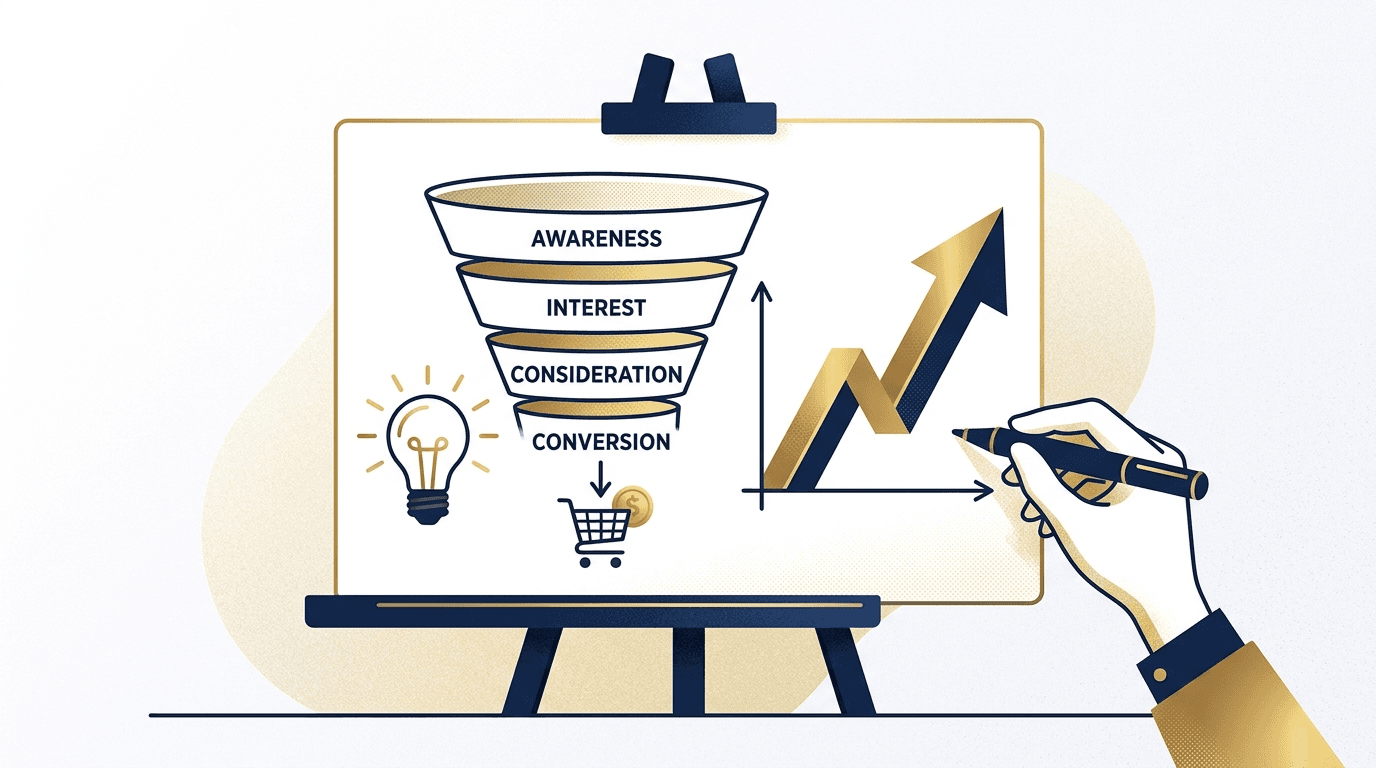
For ecommerce businesses, track the full funnel: add to cart, checkout initiation, and purchase. Use enhanced ecommerce tracking via Google Tag Manager to capture product-level data that feeds back into your bidding and audience strategy.
Attribution Models
Google Ads defaulted to data-driven attribution for most accounts in recent years, and for accounts with sufficient conversion volume, this is the right model to use. Data-driven attribution uses machine learning to assign credit across the touchpoints in the conversion path rather than simply crediting the last click. This gives smart bidding algorithms better signals to optimise against.
For accounts with lower volume, last-click attribution remains straightforward and easy to interpret. Avoid first-click attribution for PPC optimisation — it overstates the value of awareness-stage clicks and understates the contribution of your high-intent keywords.
Our analytics service provides full conversion tracking implementation, including GA4 integration, server-side tagging, and custom reporting dashboards for PPC accounts.
The Conversion Tracking Checklist
Google Ads conversion tag firing correctly on the thank-you page or confirmation event
Phone call conversions tracked with a minimum call duration filter (typically 60 seconds for lead gen)
No double-counting between Google Ads and GA4 imported goals
Cross-device and cross-browser conversions captured where possible
Conversion window set appropriately for your sales cycle (30 days for high-intent leads, 90 days for considered purchases)
When to Hire a PPC Management Agency
In-house Google Ads management is viable for some businesses, but it comes with real limitations. The question is not whether you can manage Google Ads yourself — technically anyone can — but whether it is the best use of your time and whether you have the expertise to compete against businesses running professionally managed accounts.
Signs You Should Consider an Agency
Your cost per acquisition is increasing quarter over quarter with no clear explanation. You are spending more than $3,000 per month on Google Ads but have not reviewed the search terms report in the past 30 days. Your Quality Scores are below 5 across most keywords. Your conversion tracking has gaps. You are running the same ad copy you launched with 12 months ago. Your campaigns have no A/B testing in place.
If more than two of those apply to your account, you are almost certainly leaving significant performance on the table.
What a Good PPC Agency Delivers
A quality Google Ads agency in Australia should be delivering monthly reporting that goes beyond clicks and impressions. You should see cost per conversion trends, Quality Score movement, search impression share, top search queries, budget pacing, and test results. If your agency is sending you a PDF with a bar chart and a green tick, that is not PPC management — that is reporting theatre.
Case Study 2: Mortgage Broker, Brisbane
A Brisbane mortgage brokerage was spending $12,000 per month through a large national agency and receiving 18 to 22 qualified leads per month at a cost per lead of approximately $560. After migrating the account to 3P Digital and applying our PPC management framework — including a full account restructure, negative keyword overhaul, landing page redesign with message-match alignment, and a shift to Target CPA bidding — the account generated 51 qualified leads in month three at a cost per lead of $218. At a 25 percent close rate and an average trail income value of $3,800 per settlement, the improved lead quality and volume represented a measurable increase in broker revenue from paid search.
"Before 3P Digital, I had no idea what my Google Ads were actually doing. Now I get a weekly update, I can see exactly where every dollar went, and my leads are actually converting. The difference in cost per lead alone has paid for the management fee several times over." — Mark T., Mortgage Broker, Brisbane
How 3P Digital Manages PPC Campaigns Using the 3P Framework
At 3P Digital, every paid media engagement runs through our proprietary 3P Framework: Profile, Plan, and Perform. This is not a marketing tagline — it is the operational structure that drives every campaign we manage.
Profile
Before we touch a Google Ads account, we build a complete commercial profile of the business. This includes ideal customer profile (ICP) development, competitive analysis of the paid search landscape in your category, keyword demand mapping, and an audit of existing conversion infrastructure. Most agencies skip this step and jump straight to launching campaigns. We do not. Understanding who you are trying to reach and what they are actually searching for is the prerequisite to everything else.
You can learn more about our approach to profiling on our framework page.
Plan
The Plan phase involves building the campaign architecture, keyword strategy, negative keyword lists, ad copy, landing page briefs, and conversion tracking setup before a single dollar is spent. We define KPIs, set realistic benchmarks based on industry data and account history, and agree on the metrics that will determine success. Every client receives a 90-day performance roadmap at the start of an engagement.
Perform
The Perform phase is ongoing optimisation. We operate on a weekly optimisation cycle for active accounts: search terms review and negative keyword additions, bid adjustments, ad copy testing review, landing page performance analysis, and budget pacing checks. Monthly we conduct a deeper structural review looking at Quality Score trends, audience performance, device and geographic performance, and campaign-level attribution. Quarterly we run a full account audit against the original benchmark.
If you want to see how this applies to your specific account, you can book a free strategy session and we will audit your current setup before we have any commercial conversation.
For additional resources on Google Ads and paid media management, visit our Google Ads PPC management guide.
Hero Stats Bar
40-60% of Google Ads spend is wasted in poorly structured accounts
Quality Score improvement from 4 to 8 can reduce CPC by up to 50%
Top Australian industries spending on Google Ads: finance, legal, real estate, healthcare, education
Average Australian SME spends between $3,000 and $15,000 per month on Google Ads
Target CPA bidding requires a minimum of 50 conversions per month to function reliably
FAQs
What is a good ROAS for Google Ads in Australia?
ROAS benchmarks vary significantly by industry. For ecommerce businesses in Australia, a ROAS of 4x (four dollars of revenue for every dollar of ad spend) is a commonly cited benchmark, but this varies based on your gross margin. If your product margin is 80 percent, a 3x ROAS is profitable. If your margin is 20 percent, you need a ROAS of 6x or higher to break even after ad costs. For lead generation businesses, ROAS is typically measured differently — either as cost per lead against average lifetime client value, or as revenue attributed to ad-sourced leads. For Australian professional services, a cost per qualified lead below $200 is typically achievable in most categories with well-managed campaigns.
How much should PPC management cost in Australia?
PPC management fees in Australia typically range from $1,000 to $5,000 per month depending on account complexity, spend volume, and the agency's service model. Some agencies charge a flat monthly fee, others charge a percentage of ad spend (commonly 10 to 20 percent), and others use a hybrid model. Be cautious of very low-cost management options — at under $800 per month, there is simply not enough time to manage a Google Ads account properly. A full weekly optimisation cycle, monthly reporting, and ongoing strategy takes between 8 and 15 hours per month at minimum for a mid-sized account. You can learn more about our paid media service and what is included.
How long before Google Ads campaigns become profitable?
For new accounts, expect a three-month learning and optimisation period before campaigns are performing at their potential. The first month is typically dominated by data collection and negative keyword building. The second month should see initial optimisation of bids, ad copy, and landing pages based on real data. By month three, smart bidding strategies should be learning effectively and cost per conversion should be trending downward. It is unrealistic to expect new campaigns to deliver your target CPA in week two. Agencies that promise instant results are either setting unrealistic expectations or planning to use black-hat shortcuts that will cost you more in the long run.
What is Quality Score and why does it matter?
Quality Score is Google's 1-to-10 rating of the relevance and quality of your keywords, ads, and landing pages. It affects both your Ad Rank (your position in the auction) and the price you pay per click. A higher Quality Score means you can achieve the same ad position at a lower cost than a competitor with a lower score. Practically speaking, improving Quality Score from 4 to 8 on a keyword can halve your effective CPC, meaning your budget goes twice as far. The three components are expected click-through rate, ad relevance, and landing page experience. All three can be improved through structural and creative optimisation.
Should I use broad match or exact match keywords?
The answer depends on your account's data maturity and your negative keyword infrastructure. In 2026, broad match paired with smart bidding and a robust negative keyword list can discover high-performing queries that phrase and exact match would miss. However, broad match without those controls leads to significant wasted spend. For most Australian SMEs starting out or with lower conversion volumes, phrase match is the most practical default — it provides reasonable reach with more predictable targeting behaviour. Exact match should be used for your highest-value terms where you want precise control. As your account matures and your conversion data builds, gradually testing broad match on selected campaigns is a worthwhile strategy.
How do I know if my Google Ads agency is managing my ads well?
There are several objective indicators of quality PPC management. First, your agency should be providing detailed weekly or fortnightly reporting that includes search terms data, Quality Score trends, and conversion attribution — not just a summary of clicks and spend. Second, your negative keyword list should be growing over time, not static. Third, there should be active ad copy tests running at all times. Fourth, your cost per conversion should be trending downward as the account matures. Fifth, your agency should be proactively flagging opportunities and issues, not just responding to your questions. If the last time you heard about a campaign change was when you asked, that is a red flag. You can contact us if you want an independent second opinion on your current account.
What is the difference between Google Ads and AdWords?
Google AdWords was rebranded to Google Ads in July 2018. The two terms refer to the same platform. Many Australian businesses and marketers still use "AdWords" colloquially, particularly when referring to search campaigns, and the term remains widely understood in the industry. When someone refers to "AdWords PPC management", they are referring to the management of Google Ads search campaigns. The platform has evolved significantly since the rebrand — Responsive Search Ads replaced Expanded Text Ads, smart bidding has matured considerably, and Performance Max campaigns now sit alongside traditional search and shopping campaigns.
Can I manage Google Ads myself or do I need an agency?
Self-managing Google Ads is feasible for businesses with straightforward campaigns, limited competition, and a founder or marketing manager with the time and willingness to learn the platform deeply. Google's own educational resources and certifications are genuinely useful for building baseline knowledge. However, as campaign complexity increases, competition intensifies, and budgets grow, the opportunity cost of in-house management climbs. An experienced PPC specialist has seen hundreds of accounts, understands the edge cases, knows which tests are worth running, and can implement optimisations faster than someone managing ads as a secondary responsibility. For businesses spending more than $5,000 per month on Google Ads, professional management almost always delivers a positive return on the management fee.
References
Google Ads Help Centre — Google's official documentation on campaign structure, bidding strategies, Quality Score components, and conversion tracking setup. The authoritative source for platform-specific technical guidance. Accessible via Google's support portal.
WordStream Google Ads Benchmarks Report (2026) — WordStream's annual analysis of Google Ads performance benchmarks by industry, including average CTR, CPC, conversion rate, and cost per lead across Australian and global markets. Used as a reference for industry CPA and ROAS benchmarks.
Search Engine Journal: PPC Management Guides — A comprehensive collection of practitioner-level articles on Google Ads strategy, keyword match type behaviour, smart bidding evolution, and ad copy testing frameworks. Authored by industry practitioners and updated regularly to reflect platform changes.
Google's Smart Bidding Documentation — Google's own guidance on the data requirements and operational mechanics of Target CPA, Target ROAS, Maximise Conversions, and Maximise Conversion Value bidding strategies. Referenced for the conversion volume thresholds cited in the bidding strategy decision framework.
Think with Google: Australian Consumer Insights — Google's research platform providing Australian-specific data on search behaviour, device usage, and consumer intent signals across key verticals including finance, home services, and professional services.