Best Web Design in Brisbane: How to Choose a Web Design Agency That Turns Visitors Into Qualified Leads in 2026
Most Brisbane businesses that invest in a new website walk away with something that looks impressive and does almost nothing. The agency delivered on the brief. The colours are right, the logo is prominent, the photography is sharp. But three months later, the enquiry form is quiet, the phone is not ringing from organic traffic, and the business owner is wondering whether to run ads just to get people to a site that cost them $12,000 to build.
That is not a design problem. It is a strategy problem, and it is the most common failure mode I see in the Brisbane web design market. Studios compete on portfolio aesthetics. Clients choose based on how the demo looks on a MacBook screen. Nobody in that transaction is asking the only question that matters: will this website generate qualified leads at a cost that makes commercial sense?
This article is written for Brisbane business owners and marketing managers who are done paying for digital assets that sit there looking good while doing nothing. I will walk you through why most Brisbane web design fails commercially, what a lead-generating website actually requires, how to evaluate agencies on evidence rather than aesthetics, and how the 3P Framework we use at 3P Digital forces every website decision back to the question of measurable commercial result.
Key Takeaways
A website that does not generate qualified leads is a liability, not an asset, regardless of how well it is designed.
The Brisbane web design market is dominated by studios selling aesthetics. Commercial outcomes require a different kind of brief.
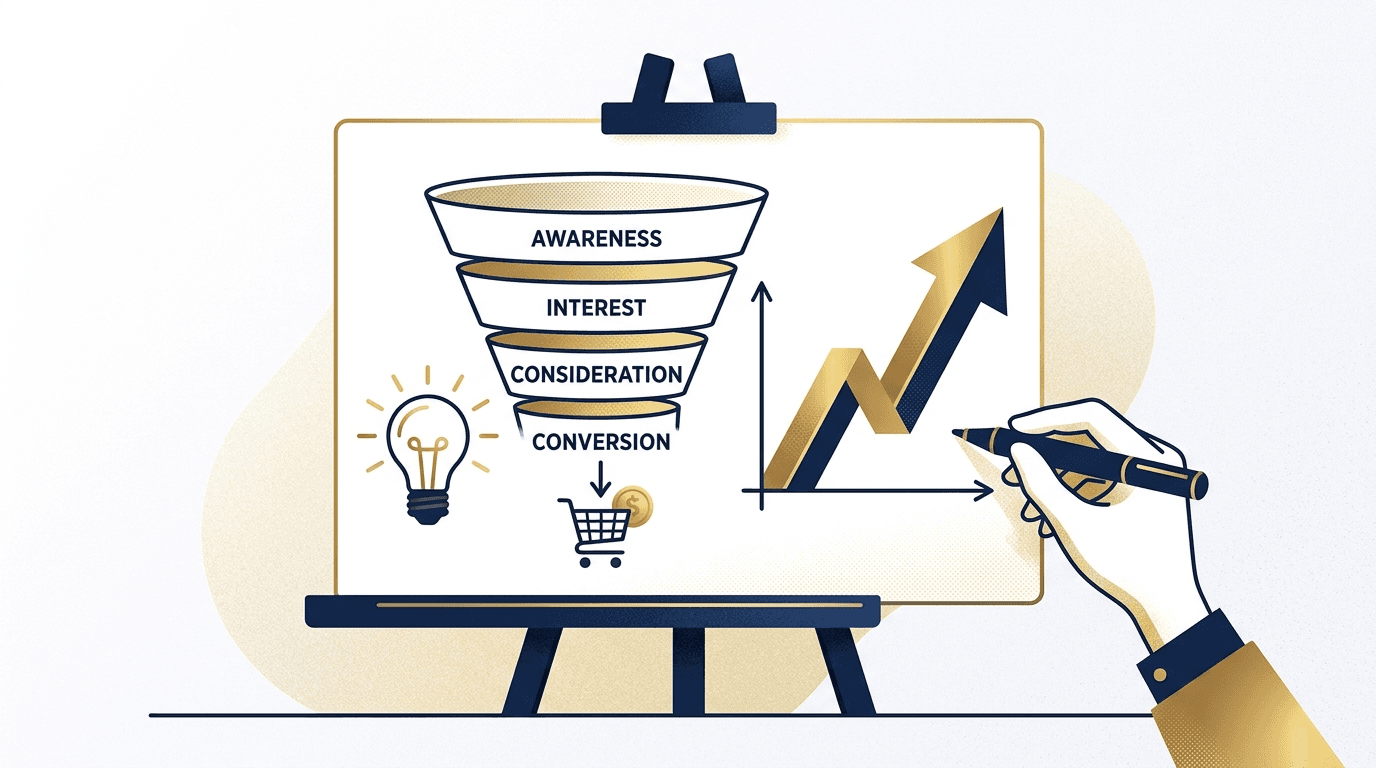
Conversion is a function of strategy: who you are targeting, what they need to see, and how the site is structured to move them from visitor to enquiry.
Agency selection should be based on documented evidence of conversion uplift, SEO integration, and lead-level reporting, not portfolio looks.
Owned organic channels, built around a properly optimised website, consistently outperform rented paid reach on cost efficiency and consistency over time.
Before you sign anything, ask for conversion rate data, lead volume outcomes, and examples of SEO-integrated builds. If an agency cannot answer those questions, keep looking.
Summary Table
Factor | Brochure Website | Lead-Generating Website |
Primary goal | Brand presence | Qualified enquiries |
Design decisions driven by | Aesthetics and client preference | ICP behaviour and conversion data |
SEO integration | Often bolted on after launch | Built into architecture and content |
Success metric | Traffic, bounce rate, time on site | Leads, cost per lead, conversion rate |
Reporting | Vanity dashboards | Pipeline-connected outcomes |
Long-term cost efficiency | Requires ongoing paid spend to drive traffic | Compounds over time via owned organic traffic |
Typical Brisbane agency model | Project-based, scope and deliver | Performance-aligned, results-accountable |
Why Most Brisbane Web Design Fails the Only Test That Matters
Brisbane has no shortage of web design agencies. A quick search surfaces dozens of studios, freelancers, and full-service shops all competing for the same brief: build us a new website. The pitches look similar. Portfolios feature restaurants, law firms, and real estate brands with clean typography and bold hero images. Pricing ranges from $3,000 for a templated build to $25,000 for a custom development engagement. The differentiators are mostly visual.
Here is the problem with that market dynamic: design, in isolation, does not produce revenue. A visitor landing on a beautifully designed website still needs to be guided, persuaded, and converted. That guidance comes from strategy, not from how the site looks.
When I audit websites for Brisbane SMEs, particularly in professional services, fitness, and mortgage broking, the pattern is consistent. The homepage headline is about the business, not the customer. The call to action is a generic "Contact Us" with no framing around what happens next. The service pages are descriptive rather than persuasive. There is no alignment between what the target customer is searching for and what the page delivers. And because the brief was built around aesthetics, the technical SEO foundations are usually an afterthought.
None of that is the client's fault. They hired a design studio. Design studios design. But a Brisbane business owner who needs consistent inbound leads does not need a designer. They need a performance partner whose deliverable is qualified enquiries, not a polished website.
The most honest commercial test for any website is simple: how many qualified leads did it generate this month, and what did those leads cost? If your agency cannot answer that question, or worse, is not tracking it, you are paying for activity reports versus results.
Brochure Site vs Lead-Generating Asset: Understanding the Real Difference
The distinction between a brochure website and a lead-generating asset is not about sophistication or budget. I have seen $30,000 custom builds that function as expensive brochures, and I have seen lean, well-structured $8,000 sites driving 40 or more qualified enquiries per month because the strategy behind them was sound.
The difference comes down to intent alignment and conversion infrastructure.
Intent alignment means the website is built around what your ideal customer is actually searching for, at the moment they are ready to act. A mortgage broker in Brisbane does not need a homepage that describes their philosophy. They need service pages structured around high-intent queries like "best fixed rate mortgage Brisbane" or "first home buyer loan broker Brisbane", written to match what a borrower at the decision stage is looking for, and designed to move them toward an enquiry in as few steps as possible.
I worked with a Queensland mortgage broker who was generating minimal inbound enquiries from organic search, sitting on page 3 for their primary keyword and dependent almost entirely on referrals. We rebuilt their content architecture around borrower search behaviour, combined on-page optimisation with local SEO signals, and restructured their service pages around high-intent queries. Within six months, organic traffic increased by 312% and the broker was receiving 40 or more qualified leads per month from search alone. The referral dependency evaporated because they had built an owned acquisition channel that worked around the clock.
Conversion infrastructure means the structural elements that turn traffic into action: clear value propositions above the fold, friction-reduced enquiry paths, trust signals placed where hesitation typically occurs, mobile-first layouts that do not force users to hunt for a contact button, and tracking that connects form submissions and phone calls back to specific pages and traffic sources.
Without both of these elements, a website is a brochure. It might represent the brand accurately. It will not fill your pipeline.
What to Look for in a Brisbane Web Design Agency
The Brisbane market gives you plenty of options. Evaluating them correctly requires asking different questions than most buyers think to ask.
Evidence of Conversion Uplift, Not Just Portfolio Work
Every agency has a portfolio. The relevant question is not "do their sites look good" but "can they show documented evidence that a site they built increased the client's lead volume or conversion rate?" Ask for specific numbers. Before and after conversion rates. Lead volume at three months post-launch versus pre-launch. If an agency cannot produce that evidence, they are selling you aesthetics.
At 3P Digital, every client engagement is measured against commercial outcomes. When our building and pest inspection client came to us running Google Ads with high cost per conversion and wasted spend on postcodes they could not service, we did not just fix the ads. We restructured the landing pages, tightened conversion tracking, and aligned ad copy to high-intent local queries. Over six months, they generated 574 additional leads, reduced cost per conversion by $37.93, and cut cost per click to $12.56 on average. That business went from sole operator to hiring additional staff to handle demand. That is the standard a web design engagement should be held to.
SEO Integration From Day One, Not as an Add-On
A website that is not built with organic search in mind from the architecture stage will require expensive rework later. URL structure, internal linking, page speed, Core Web Vitals, schema markup, and content aligned to keyword intent all need to be considered before a single line of code is written, not after launch when the client realises their beautifully designed site is not showing up in Google.
Our SEO services are integrated into every web design engagement we run, because the two are inseparable if the goal is organic lead generation. The site architecture we build reflects the keyword landscape first and the visual design second. That order of operations is what produces compounding organic results rather than a traffic plateau.
Reporting on Leads, Not Vanity Metrics
Be sceptical of any agency that leads with impressions, page views, or time on site as primary success metrics. Those numbers are not revenue. They are context.
A properly instrumented Brisbane website should be able to tell you, at any time, how many leads came from organic search versus paid versus direct, which pages are driving the most conversions, what the cost per lead is across each channel, and how lead quality is tracking over time. If an agency is not building that reporting infrastructure into the engagement from day one, ask why not.
Our conversion rate optimisation work sits at the centre of every web build we do, because a website without conversion tracking is a marketing asset without a scoreboard. You cannot improve what you cannot measure.
Red Flags and Green Flags in Agency Selection
For a detailed breakdown of how to evaluate digital marketing agencies before you sign, including the specific questions that separate performance-focused partners from activity-reporting vendors, the red flags and green flags agency-selection guide is worth reading before you enter any negotiation. A few headline signals to act on immediately:
Red flags: Agencies that cannot show lead-level outcomes from past clients. Contracts that lock you into long terms without performance triggers. Reporting dashboards that show traffic without revenue connection. Designs built on your behalf without documented ICP research.
Green flags: Documented case studies with specific commercial results. Clear integration between design, SEO, and analytics from the scoping stage. Performance-aligned pricing models. Reporting that starts with leads and works back to channels.
How the 3P Framework Shapes a Website Built Around Commercial Results
Every engagement at 3P Digital runs through the same three-stage framework: Profile, Plan, Perform. It is not a branding exercise. It is a commercial decision-making structure that ensures every website element serves a defined purpose.
Profile: Know Exactly Who You Are Building For
Before we talk about design, we talk about your ideal customer profile. For a Brisbane mortgage broker, the ICP might be first home buyers aged 28-38 in specific suburbs, motivated by rate certainty and first-home owner grant eligibility, searching on mobile during lunch breaks and evenings. For a Brisbane recruitment firm, the ICP splits into two distinct audiences: candidates searching for specific role types and employers searching for specialist sourcing support.
The ICP determines the keyword strategy, the page structure, the trust signals, the imagery, and the calls to action. Building a website without a documented ICP is like writing a sales pitch to nobody in particular. It might be elegant. It will not convert.
This is where most Brisbane web design engagements fail before they start. The brief is brand-level, not customer-level. The agency designs something that reflects the business's identity rather than the customer's decision-making journey.
Plan: Strategy Before Tactics, Always
With a defined ICP, we build the site architecture around the go-to-market strategy. Which services generate the highest-margin leads? Which search queries do those customers use at the point of highest intent? Where are competitors weak in the organic search landscape? What does the conversion path look like from first click to booked appointment or submitted enquiry?
The plan stage produces a site map, a keyword-to-page mapping document, a conversion framework for each key page, and an analytics instrumentation plan. Design comes after that. Every visual and structural decision is made with a documented strategic reason.
This is the difference between strategy preceding tactics and tactics being retrofitted to a goal. Bad digital work starts with a channel or a design direction. Good work starts with a precise customer profile and a growth thesis, then selects the execution accordingly.
Perform: Build, Measure, Improve
The website launch is not the outcome. It is the start of the measurement cycle. In the Perform phase, we track lead volume by source and page, cost per lead where paid channels are active, organic ranking movements for target keywords, and conversion rate by page and device. We hold ourselves to the same standard we hold our clients to: what measurable commercial result did this produce?
For a national recruitment firm we worked with, replacing their job board dependency with an integrated SEO and content strategy built around high-intent search traffic from both candidate and employer audiences generated leads at 63.5% lower cost per lead compared to their previous job board spend. That outcome was only possible because the site was built with the search architecture and conversion infrastructure to support it from day one.
The 3P Framework is not a checklist. It is a feedback loop. Profile informs Plan, Plan shapes the build, and Perform data refines both. That is how websites compound in value over time rather than depreciating.
Owned Organic vs Rented Reach: The Long-Term Commercial Case
Paid advertising has a place in most Brisbane businesses' marketing mix. But if your primary acquisition channel is rented, meaning you stop paying and the leads stop coming, you are running a cost centre, not building a marketing asset.
I have a clear position on this, and it is not the consensus view in the agency market: owned organic channels, built correctly, outperform rented platform spend on both cost efficiency and consistency over any meaningful time horizon. The recruitment case study I mentioned earlier is the clearest illustration. A national firm was spending heavily on job board placements, watching costs rise and lead volume fluctuate with platform pricing changes outside their control. Replacing that spend with an SEO and content strategy reduced their cost per lead by 63.5% and gave them a pipeline that did not move with Seek's or Indeed's pricing decisions.
For Brisbane SMEs, the compounding logic of organic search is especially powerful. An automotive dealership group we worked with invested in local SEO and high-intent service page optimisation across their geographic footprint. Within 12 months, they achieved a 46:1 return on their SEO investment. That is not a traffic metric. That is revenue against cost.
A properly built, SEO-integrated website is an owned acquisition channel. Every page that ranks is an asset working for you without ongoing per-click spend. That is fundamentally different from Google Ads or Meta campaigns, where the moment your budget pauses, your visibility disappears.
This does not mean paid search has no role. For a new business or a new service line, paid search generates leads while organic builds. But the strategic goal should always be to shift as much acquisition as possible from rented channels to owned ones. A well-designed website, built around the right keyword architecture and conversion infrastructure, is the foundation of that shift.
For Brisbane businesses evaluating their mix of paid and organic investment, our performance and pay-for-results marketing work covers how to structure acquisition spending to compound over time rather than just sustain a traffic level.
Questions to Ask Before You Sign (and Red Flags to Avoid)
The Brisbane web design market is not short of agencies willing to take your money and deliver a polished-looking website. Protecting yourself from a $15,000 brochure comes down to asking the right questions before you commit.
Questions That Reveal Whether an Agency Is Outcomes-Focused
1. Can you show me documented lead volume or conversion rate outcomes from a comparable client? Not a portfolio screenshot. Actual before-and-after numbers. If they cannot produce this, move on.
2. How do you integrate SEO into the build from the architecture stage? A vague answer about "SEO-friendly code" is not sufficient. You want to hear about keyword-to-page mapping, site structure decisions, Core Web Vitals, and schema markup as part of the standard build process.
3. What does your analytics setup look like at launch? A properly instrumented site should track lead source, page-level conversion rates, and where possible, connect through to CRM outcomes. If the answer is "we set up Google Analytics," ask what events and goals are configured.
4. How do you define success for this engagement? If the answer centres on design satisfaction, site speed, or traffic, that tells you where their accountability ends. You want to hear lead volume and conversion rate as the primary measures.
5. What does the handover and ongoing optimisation process look like? A website is not a finished product at launch. Agencies that treat it as such are delivering a project, not a marketing asset.
Red Flags That Should End the Conversation
Pricing quoted before any ICP or keyword research has been discussed.
Portfolios with no accompanying commercial results.
Contracts that specify deliverables (pages, features, design revisions) but not outcomes (leads, conversions, rankings).
Reporting structured around traffic and bounce rate with no lead-level data.
Any agency that suggests you can worry about SEO "after the site is live."
No documented process for testing and iterating on conversion performance post-launch.
We only succeed when you succeed. That is not a marketing line. It is the structural logic of a pay-per-performance model that aligns agency incentives directly with client revenue. An agency that gets paid the same whether your leads double or stagnate has no financial reason to push for commercial outcomes. Make sure you understand what incentives are embedded in any agency model before you sign.
FAQs
How much does quality web design cost in Brisbane in 2026?
For a lead-generating website built with proper SEO architecture, conversion infrastructure, and analytics setup, Brisbane businesses should expect to invest between $8,000 and $25,000 depending on the number of service lines, the complexity of the conversion journey, and whether the engagement includes ongoing optimisation. Template-based builds can be cheaper, but if the strategy and conversion framework are missing, the cost of the build is less relevant than the cost of missed leads. Always evaluate cost against expected lead volume and cost per lead, not just the sticker price.
How long does it take to see leads from a new website?
For paid traffic pointed at a well-structured site, lead volume can begin within days of launch. For organic search, realistic timelines depend on the competitive landscape, the existing domain authority, and the quality of the SEO work built into the site. For most Brisbane SMEs in competitive verticals like professional services or trades, meaningful organic lead flow typically takes three to six months. A Queensland mortgage broker we worked with achieved 312% organic traffic growth and 40 or more qualified leads per month within six months of a targeted SEO and content strategy. That timeline is achievable with the right foundation.
What is the difference between a Brisbane web design agency and a performance digital marketing agency?
A web design agency's primary deliverable is a finished website. A performance digital marketing agency's primary deliverable is a commercial outcome, of which the website is one component. The practical difference is in how success is defined and measured. Design agencies report on deliverables. Performance agencies report on leads, conversion rates, and return on investment. If your goal is consistent qualified lead flow, you need the latter, even if they also build the website.
Should I build my website on WordPress, Webflow, or a proprietary CMS?
The platform matters less than the strategy built on top of it. That said, for Brisbane SMEs prioritising SEO and long-term content management, WordPress remains the most flexible platform for technical SEO implementation and plugin ecosystem depth. Webflow is a strong choice for design-led builds with developer-free content management. Proprietary CMS platforms built by agencies introduce dependency risk: if you need to change agencies, you may not be able to take your site with you. Always clarify ownership and portability before committing to a platform.
How important is mobile optimisation for Brisbane web design in 2026?
Critical. Google's mobile-first indexing means your mobile experience is the version that determines your organic rankings, not the desktop version. Beyond rankings, the majority of high-intent local searches in Brisbane happen on mobile devices. A site that is not fully optimised for mobile conversion, with fast load times, click-to-call functionality, and simplified form fields, will leak leads at every stage of the funnel. Mobile optimisation is not an optional extra. It is a baseline requirement for any site expected to generate enquiries.
What analytics should I insist on from a web design agency at launch?
At minimum: Google Analytics 4 configured with conversion events tracking form submissions, phone call clicks, and any other enquiry actions. Google Search Console connected for organic performance monitoring. If paid search is running, conversion tracking linked between Google Ads and GA4. Ideally, UTM parameter conventions documented so all traffic sources are accurately attributed. If the agency is not setting all of this up as standard, ask why and insist it is included in the scope.
Can a website replace paid advertising for lead generation in Brisbane?
For many Brisbane businesses, an SEO-optimised website can become the primary lead generation channel over time, reducing or eliminating dependence on paid spend. This is not a quick outcome: it requires proper technical SEO, content aligned to high-intent queries, and consistent optimisation over months. But the compounding economics are compelling. A recruitment firm we worked with replaced job board spend with an SEO and content strategy that delivered leads at 63.5% lower cost per lead. An automotive group achieved a 46:1 return on their SEO investment within 12 months. The business case for owned organic is strong. The caveat is that it requires upfront investment in strategy and execution to work.
What is conversion rate optimisation and why does it matter for Brisbane websites?
Conversion rate optimisation (CRO) is the systematic process of increasing the percentage of website visitors who take a desired action, submitting an enquiry form, calling, booking, or purchasing. For a Brisbane service business, improving conversion rate from 1.5% to 3% on existing traffic effectively doubles lead volume without increasing acquisition spend. CRO involves analysing user behaviour through heatmaps and session recordings, testing alternative page structures and calls to action, and making data-driven decisions about what to change. It is the discipline that ensures a website continues to improve its commercial performance after launch, rather than staying static.
References
Google Search Central, Core Web Vitals Documentation (2026), Google's official guidance on the page experience signals used in organic ranking, including Largest Contentful Paint, Interaction to Next Paint, and Cumulative Layout Shift. Relevant for understanding why technical performance is inseparable from SEO outcomes in any Brisbane web build.
Australian Bureau of Statistics, Business Indicators, Australia (2026), ABS data on SME business activity, digital adoption rates, and online revenue sources across Australian industries. Provides market context for the proportion of Australian small businesses with active web presences and the gap between presence and lead generation performance.
Google, The Mobile Playbook for Australian Marketers, Google Australia's research on mobile search behaviour, including data on local intent searches and click-to-call conversion rates in the Australian market. Supports the mobile-first optimisation requirement for Brisbane lead-generating websites.
Search Engine Journal, State of SEO Report (2026), Annual industry survey covering organic search performance benchmarks, agency reporting practices, and conversion rate data across sectors. Useful for contextualising average time-to-results timelines for SEO campaigns.
ACCC, Digital Platforms Services Inquiry (2025-2026 updates), The ACCC's ongoing scrutiny of digital advertising platform dominance in Australia, relevant to the strategic argument for building owned organic channels rather than deepening dependency on rented platform reach via Google Ads or Meta.
BrightEdge, Organic Search Benchmarks Report (2026), Industry-level organic traffic and conversion rate benchmarks by sector, including professional services and trades. Provides comparative context for the 312% organic traffic increase and 46:1 ROI figures achievable with correctly executed SEO strategies.