Maximising Your Online Presence: Expert Google Ads Management Services
Google Ads can put an Australian business in front of people actively searching for its products or services. It can also consume a substantial budget while producing irrelevant clicks, weak enquiries and reports that conceal the commercial problem. The platform provides access to demand. It does not guarantee that the demand is valuable, that your offer is competitive or that your website will convert it.
An expert Google Ads management service should therefore do more than adjust bids and write advertisements. It should identify your best customers, clarify why they should choose you, map their search behaviour, build campaigns around commercial intent and connect advertising activity to qualified leads and revenue. That is the standard we apply at 3P Digital.
This guide explains how professional Google Ads management works, where campaigns commonly fail and how our Profile, Plan, Perform framework creates a stronger foundation for paid media. It also outlines the questions Australian business owners and marketing managers should ask before appointing an agency.
Key Takeaways
Google Ads captures existing search demand, but profitable performance depends on positioning, targeting, measurement and conversion experience.
Campaign execution should begin only after the business has profiled its best customers, mapped the market and identified a defensible advantage.
Clicks, impressions and cheaper traffic are not sufficient measures of success. Management should be reported against qualified leads, sales opportunities and revenue.
Search terms, negative keywords, landing pages, offers, CRM data and conversion tracking matter as much as bids and advertisements.
Automated bidding can support performance, but it needs accurate conversion data and clear commercial controls.
A capable agency should provide transparent account ownership, live reporting, strategic reasoning and accountable execution.
Summary Table
Management area | Weak approach | Expert approach | Commercial purpose |
Customer profile | Target anyone who might buy | Define the most valuable and winnable customer segments | Concentrate spend on likely buyers |
Market planning | Copy common competitor messages | Map alternatives, objections and gaps in positioning | Find the advantage your competitors missed |
Campaign structure | Group unrelated searches together | Organise campaigns around intent, service and commercial priority | Improve control and message relevance |
Keyword management | Treat keyword lists as fixed | Review actual search terms and exclude poor-fit demand | Reduce wasted spend |
Advertising | Promote generic capabilities | Match specific problems, proof and offers to buyer intent | Attract qualified enquiries |
Landing pages | Send every click to the home page | Build focused pages with clear continuity from search to action | Improve conversion quality |
Measurement | Report clicks and impressions | Connect advertising data with qualified leads, pipeline and revenue | Show whether marketing creates commercial value |
Optimisation | Make isolated platform changes | Test the complete journey from query to sale | Improve the system rather than one metric |
What Google Ads Management Actually Involves
Google Ads is an advertising platform through which businesses can display messages across Google properties and participating websites. Search campaigns are particularly relevant to lead generation because they can reach people when those people express intent through a search query. Google's own explanation of the platform confirms that advertisers can select goals, define audiences, set budgets and pay based on interactions with their advertisements (Google Ads, https://ads.google.com/home/how-it-works/).
That accessibility is useful, but it creates a false impression that a campaign is simply a collection of keywords, advertisements and budget settings. Those elements are only the visible part of the system.
Professional Google Ads management covers the commercial and technical decisions that determine what happens before, during and after a click. It includes:
Customer and market research
Account and campaign architecture
Keyword and search-intent analysis
Negative keyword management
Advertisement and asset development
Offer design
Landing-page planning
Geographic, device and audience controls
Budget allocation
Bidding strategy
Conversion tracking
CRM and lead-quality feedback
Testing and optimisation
Commercial reporting
A campaign can look technically sound and still fail commercially. Imagine a professional services firm advertising a broad service category. The account may generate traffic at an acceptable cost, yet most enquiries come from students, job seekers, consumers outside the service area or prospects seeking the cheapest option. The platform has delivered clicks. It has not delivered the right buyers.
The central management question is not, "How can we get more clicks?" It is, "How can we direct every dollar of spend towards the searches, buyers and offers most likely to produce profitable work?"
Google Ads is an auction, not a directory listing
Advertisers do not purchase a permanent position in search results. Eligibility and placement are determined dynamically when searches occur. Bid settings matter, but relevance, expected performance, the usefulness of the destination and the competitive environment also affect outcomes.
That is why simply raising the budget is rarely a complete answer. If a campaign has weak positioning, broad targeting or a poor landing page, more budget can amplify those weaknesses. The business buys more of the wrong traffic before it understands why the traffic is not converting.
Management should instead control the relationship between:
The words entered by the searcher
The intent implied by those words
The keyword and match configuration
The advertisement displayed
The promise made in that advertisement
The landing page experience
The action recorded as a conversion
The eventual quality and value of the lead
When these elements align, Google Ads can become a dependable acquisition channel. When they do not, the account becomes an expensive source of misleading activity.
Keywords are instructions, while search terms reveal behaviour
A keyword is an advertiser's targeting input. A search term is what a person actually entered. The distinction matters because keyword match settings can allow advertisements to appear for searches that do not exactly reproduce the chosen keyword.
Google documents broad, phrase and exact keyword matching, including how each setting affects which searches may trigger an advertisement (Google Ads Help, https://support.google.com/google-ads/answer/7478529). Match types should not be treated as simple labels from loose to precise. They are controls that must be selected according to the account's data quality, available budget, market and tolerance for exploration.
Broad matching may uncover valuable demand that a rigid keyword list misses. It can also expose the account to ambiguous or irrelevant searches if conversion signals and exclusions are weak. Exact matching provides tighter control, but it does not remove the need to inspect search terms or understand intent.
An expert manager reviews the language buyers use, identifies recurring patterns and maintains negative keywords to block poor-fit traffic. This is continuing market research, not routine account hygiene. Search-term data can reveal customer concerns, emerging competitors, price sensitivity, adjacent needs and gaps in the landing-page message.
Paid search is only one part of paid media
Paid media may also include display, video, remarketing and other campaign formats. Each serves a different purpose. Search is usually strongest when a buyer can describe an immediate need. Visual or video campaigns may support awareness, consideration or remarketing when the purchase is less direct.
The correct channel mix depends on the buying journey. A mortgage broker, recruiter, builder and national parts supplier do not share the same decision cycle. Their prospects use different language, require different proof and respond to different offers. A standard package applied across all of them ignores the commercial context that determines performance.
The framework can be repeatable. The strategy cannot be generic.
Why Australian Businesses Use Expert Google Ads Management
Google Ads gives SMEs and mid-market businesses a way to compete for high-intent demand without waiting for organic visibility to develop. That does not make it a shortcut. It makes speed, control and measurement possible when the account is built correctly.
Reach people already expressing intent
Search advertising can intercept demand at the moment a potential customer describes a problem, service or product. This is different from interruptive advertising, where the audience may fit a demographic profile but has not indicated an immediate need.
Intent still varies substantially. A person searching for a definition is different from someone comparing providers, and both are different from a buyer requesting a quote. Effective management separates these states instead of treating every search containing a relevant word as equally valuable.
Commercial modifiers, location terms, service specificity and urgency can all indicate intent. However, the manager should assess the full meaning of a query rather than applying simplistic rules. A long query is not automatically valuable, and a short query is not automatically poor. The correct interpretation depends on the market.
Control how budget follows commercial priorities
A business may offer several services, but those services are unlikely to have equal margins, capacity constraints, close rates or strategic value. Budget allocation should reflect those realities.
Consider a professional services firm that wants more recurring advisory work but continues to direct most advertising towards low-value transactional enquiries. The account may appear efficient because the transactional leads are cheaper. Commercially, however, it reinforces the wrong service mix.
Expert management starts with questions such as:
Which customers produce the strongest gross profit and retention?
Which services can the team fulfil well?
Where does the business have credible proof?
Which enquiries convert into sales?
Which customer segments create operational strain?
Which markets are strategically important?
What does the business not want to sell?
These answers shape campaign priorities. Cost per lead is useful only when lead quality and eventual value are understood.
Generate evidence faster than organic channels alone
Paid search can provide immediate feedback about search language, offers and landing-page messages. That evidence can inform SEO, content marketing, conversion optimisation and sales enablement.
For example, a campaign may reveal that prospects respond more strongly to a specific service outcome than to the broad category language used throughout the website. That insight can guide future landing pages and organic content. It should not be accepted uncritically, but it gives the business behavioural evidence rather than relying solely on internal assumptions.
SEO remains important because it builds organic visibility and can reduce dependence on paid acquisition over time. The strongest programmes often use paid and organic search as connected sources of market intelligence while measuring each channel accurately.
Improve accountability when tracking is designed properly
Google Ads can record actions such as submitted forms, calls and purchases. Google provides formal guidance on setting up website conversion measurement through the Google tag or connected analytics tools (Google Ads Help, https://support.google.com/google-ads/answer/1722022).
The presence of a conversion tag does not mean the account is measuring commercial success. Common measurement failures include:
Counting page views as leads
Recording the same action more than once
Treating low-value downloads as equivalent to sales enquiries
Missing telephone enquiries
Importing unqualified CRM stages as successful outcomes
Optimising towards whichever event occurs most frequently
Failing to test whether tags still work after website changes
Expert management defines a measurement hierarchy. A form submission might be a primary lead event, while a brochure download is an observation signal. A qualified opportunity may be imported from the CRM so bidding and reporting can distinguish genuine buyers from spam or poor-fit contacts.
This is how reporting moves from activity to commercial evidence.
Reduce the cost of poor decisions
Businesses often assess management fees without assessing the cost of unmanaged waste. Wasted spend is not limited to irrelevant clicks. It includes budget assigned to low-margin services, poor geographic coverage, uncompetitive offers, weak follow-up and automated systems trained on the wrong conversion signals.
A low management fee can become expensive if no one challenges the strategy. Conversely, a technically active agency can also underperform if it optimises platform metrics without understanding the business.
The objective is not constant activity. It is better decision-making.
The 3P Framework for Google Ads Management Services
Our approach is built around a simple sequence: Profile. Plan. Perform.
Most agencies begin inside the advertising account. We begin with the business. Campaign execution should start only after we understand who the business should attract, what the market already offers and where a defensible advantage exists.
Without that work, even well-managed campaigns amplify generic positioning. The advertisements attract price shoppers because price is the only obvious point of comparison. A more disciplined process can find the advantage hiding in plain sight and make it the organising idea for the campaign.
Profile: identify the best customers
The Profile phase defines the buyers the business can serve profitably and credibly. This goes deeper than broad demographics or an ideal customer profile assembled from assumptions.
We examine factors such as:
Customer profitability and lifetime value
Reasons customers initially started searching
Trigger events that created urgency
Services or products purchased
Common objections
Decision criteria
Sales cycle and internal approval process
Retention and repeat purchasing behaviour
Operational fit
Language used by customers
Existing customer interviews are especially valuable. Internal teams often describe services using technical or organisational language, while customers describe the practical event that caused them to act. Those phrases can influence keyword research, advertisement copy, qualification criteria and landing-page structure.
This phase should also identify exclusions. A campaign becomes more efficient when the business is willing to state which customers are not a fit. That may involve project size, location, urgency, industry, budget, technical requirements or service expectations.
Profiling is not about making the audience as small as possible. It is about making investment deliberate.
Plan: map the market and define the advantage
The Plan phase turns customer understanding into a strategic blueprint. We map how prospects search, what competitors promise, where alternatives are similar and which claims the business can defend.
Competitor research should not be a copywriting exercise. Repeating the most common category claims creates interchangeable advertising. If every provider promises quality, service and expertise, the prospect has no meaningful basis for choosing one over another.
Planning considers:
Search demand and intent clusters
Direct and indirect competitors
Competitor messages and offers
Geographic opportunities
Customer objections
Evidence available to support claims
Landing-page requirements
Lead qualification
Budget priorities
Measurement and CRM integration
Sales follow-up
The result is a clear answer to a practical question: why should the right prospect choose this business rather than another result on the page?
That answer must be real. Australian advertising claims must not be false or misleading. The ACCC explains that businesses must be able to substantiate claims and consider the overall impression created by advertising, not merely the literal wording (ACCC, https://www.accc.gov.au/business/advertising-and-promotions/false-or-misleading-claims). Evidence, qualification and careful wording are therefore both performance and compliance issues.
The Plan phase also determines what should happen after the click. If a complex service requires trust and consultation, a generic "contact us" form may be too weak. A clearer consultation offer, useful qualification information and strong evidence can reduce uncertainty and improve the quality of the enquiry.
Perform: execute, measure and improve
The Perform phase covers campaign build, launch, monitoring and ongoing optimisation. This is where the strategic decisions become advertisements, keywords, landing pages, tracking and reporting.
Accountable execution includes:
Building campaigns around defined intent and commercial priorities
Writing advertisements that continue the positioning established in planning
Applying suitable match settings and exclusions
Configuring location and audience controls
Establishing reliable conversion actions
Checking landing-page continuity and usability
Selecting bidding strategies that match available data
Reviewing search terms and lead quality
Testing meaningful variables
Reallocating budget according to commercial results
Reporting performance through a live dashboard
Optimisation should follow evidence. Changing several variables at once may create activity but make it impossible to understand what caused the result. Tests should begin with a clear hypothesis, such as whether a more specific offer attracts stronger prospects or whether a dedicated landing page improves qualified enquiry rates.
The process also requires communication with sales teams. If marketing reports a high volume of conversions while sales says the leads are unsuitable, the discrepancy must be investigated. Possible causes include loose targeting, misleading copy, spam, poor qualification, delayed follow-up or inconsistent CRM use.
Google Ads management is not complete when a form is submitted. The purpose is to create revenue.
Building a Google Ads Account Around Buyer Intent
A clean account structure helps managers control budgets, messages, search terms and measurement. Structure should reflect the business and market rather than a fashionable template.
Separate services with different economics
Services with different margins, capacity or customer value should not be forced into one undifferentiated campaign. Separate control allows budget to follow business priorities and makes reporting more meaningful.
The same principle applies to locations. An Australian business serving several cities may face different demand, competition and operational constraints in each market. Geographic segmentation can improve control, but unnecessary fragmentation can leave campaigns without enough meaningful data. The manager must balance precision with practical learning.
Organise keywords by intent, not cosmetic similarity
Keywords that look similar can represent different customer needs. A search for pricing, a provider comparison, an urgent service and a general explanation should not automatically receive the same advertisement or landing page.
Intent-led grouping lets the business answer the searcher's actual concern. Pricing searches may require context about scope and value. Comparison searches need differentiation and proof. Urgent searches need clear availability and action. Research searches may be more appropriate for educational content than aggressive lead generation.
Use negative keywords as a strategic control
Negative keywords prevent advertisements from appearing for specified types of searches. They are particularly important where industry terms have multiple meanings or where the business serves only a defined segment.
A negative keyword list should be informed by actual search terms, known exclusions and the semantics of the market. Careless exclusions can block valuable searches, so negatives require the same attention as positive targeting.
Categories that often warrant review include employment searches, education, free resources, do-it-yourself intent, unrelated locations, consumer searches for a business-to-business offer and products or services the advertiser does not provide. Whether these should be excluded depends entirely on the campaign.
Write advertisements that qualify as well as persuade
Advertisement copy should not aim to maximise clicks from everyone. It should attract suitable buyers and give poor-fit users enough information to opt out.
Useful copy can communicate:
The specific service or outcome
The customer segment served
The location or delivery area
A defensible point of difference
Relevant evidence
The next step
Important eligibility or scope requirements
Qualification may reduce raw click volume while improving the commercial value of the remaining traffic. That is a good trade when the account is measured against buyers, not vanity traffic.
Claims should be precise and supportable. Generic superlatives usually add little because competitors can make the same assertion. Concrete details about process, specialisation, availability or customer fit often communicate more value without resorting to hype.
Use assets to provide useful decision information
Google Ads supports additional assets that can show links, calls, locations and other information with advertisements. These should not be added merely to occupy space. Each asset should help the prospect navigate, verify relevance or take an appropriate next step.
A service business might use links to specific service categories, evidence, locations or consultation information. A call asset may be valuable when telephone enquiries are operationally supported. If calls are not answered promptly, promoting them more aggressively may create a poor experience rather than a performance gain.
Landing Pages, Offers and Conversion Optimisation
The advertisement earns the visit. The landing page must earn the enquiry.
Sending every visitor to a general home page often creates unnecessary work for the prospect. They must locate the relevant service, confirm that the business serves their situation and determine what to do next. A dedicated landing page can continue the conversation started by the search.
Maintain message continuity
A visitor should immediately recognise that the page addresses the query and promise in the advertisement. If an advertisement promotes a specific service for a defined customer segment, the page should not open with a broad corporate statement.
Strong continuity covers:
Service or product relevance
Customer segment
Location where relevant
Offer
Evidence
Call to action
This does not mean repeating the keyword mechanically. It means reducing uncertainty.
Design the offer around buyer readiness
A strong call to action fits the decision being made. A routine service may support an immediate booking or quote. A complex, high-value engagement may require a consultation, assessment or scoped discussion.
The offer should explain what happens next. Prospects are more likely to hesitate when a form gives no indication of the process, required information or expected response. Clarity can also improve qualification by helping unsuitable prospects recognise that the service is not for them.
Lead magnets and downloads can be useful for early-stage buyers, but they should not be reported as equivalent to direct sales enquiries. Different actions represent different commercial intent and should be labelled accordingly.
Use proof that addresses risk
Buyers look for evidence that the provider can fulfil its promise. Depending on the market, appropriate proof may include recognised qualifications, documented processes, relevant case studies, warranties, clear service scope or customer reviews.
Proof should be relevant to the decision. A large collection of generic logos may be less persuasive than a specific example involving the prospect's problem. Claims and testimonials must also be used accurately and in line with Australian consumer law.
Reduce friction without removing qualification
Conversion optimisation is often described as making forms shorter and actions easier. That can help, but lower friction is not always the correct commercial objective.
A high-value business may benefit from asking a small set of relevant qualification questions. The form may receive fewer submissions, yet sales receives better information and spends less time on unsuitable enquiries. The correct balance depends on value, complexity, urgency and sales capacity.
The page should still remove accidental friction. Common issues include unclear form errors, poor mobile layouts, slow or unstable pages, competing calls to action and requests for information that the business does not need.
Connect the landing page to follow-up
A lead loses value when it enters an unmanaged inbox. Google Ads management should consider what occurs after submission:
Is the lead acknowledged?
Is it assigned to the right person?
Can the team see the source and search context?
Is there a defined follow-up process?
Are outcomes recorded in the CRM?
Can qualified and unqualified outcomes be returned to reporting?
Paid media cannot compensate indefinitely for slow or inconsistent sales handling. Marketing and sales must share definitions, systems and feedback.
Measurement, Attribution and Privacy
Accurate measurement is a prerequisite for useful optimisation. If the account counts the wrong actions, automated bidding and human decisions will both move in the wrong direction.
Define conversions according to business value
Primary conversions should represent actions that matter commercially and that bidding systems should prioritise. Secondary observations can provide diagnostic information without being treated as equal outcomes.
A suitable measurement plan may distinguish among:
Initial enquiry
Qualified lead
Booked consultation
Sales opportunity
Completed sale
Existing-customer action
Recruitment or supplier enquiry
Spam
Not every business can connect every sale to an advertisement, particularly where sales happen offline or over a long period. That limitation should be documented rather than concealed. A practical system may begin with reliable lead measurement and develop deeper CRM integration as data quality improves.
Validate tracking rather than assuming it works
Tags can break when forms, domains, consent tools or website templates change. Managers should test important actions and compare platform records with website and CRM evidence.
Validation should consider duplicate events, missing events, telephone attribution, cross-domain journeys and internal submissions. A dashboard cannot correct faulty source data. It only displays the fault more neatly.
Understand attribution limitations
A prospect may interact with paid search, organic results, email, social content and direct website visits before becoming a customer. No attribution model provides a complete account of human decision-making.
Google Ads reporting is valuable, but it should be interpreted alongside CRM history, sales evidence and broader analytics. Last-click reporting can understate earlier interactions, while platform-specific reporting can assign substantial credit to the platform's own touchpoints.
The goal is not to create a fictional model of perfect certainty. It is to establish sufficiently reliable evidence for budget decisions.
Handle customer data responsibly
Advertising and analytics systems may process information about website visitors and customers. Australian businesses should understand their obligations under applicable privacy law, maintain appropriate notices and obtain advice where their circumstances require it.
The Office of the Australian Information Commissioner provides guidance for businesses on privacy rights and responsibilities under the Privacy Act (OAIC, https://www.oaic.gov.au/privacy). Technical advertising settings do not replace a business's legal and governance responsibilities.
Privacy changes can affect how conversions are observed and modelled. Managers should explain these limitations honestly rather than presenting every reported conversion as a perfectly traced individual journey.
Budgeting, Bidding and Ongoing Optimisation
Budget decisions should follow commercial priorities, not arbitrary package tiers. The appropriate level depends on demand, competition, geography, sale value, conversion performance and the amount of useful learning the campaign can generate.
Start with the business equation
Before deciding what to spend, establish:
The value of a customer
Gross margin or contribution
Typical close rate from qualified leads
Sales capacity
Repeat purchase or retention value
Acceptable acquisition cost
Services that deserve priority
These inputs do not create certainty, but they establish boundaries. A business cannot decide whether a lead cost is acceptable without understanding how leads become customers and what those customers are worth.
Treat automated bidding as a tool, not a strategy
Automated bidding can process auction signals at a scale a person cannot manually reproduce. It still depends on the goal and conversion data supplied by the advertiser.
If the account reports every form completion as valuable, automation may find more people likely to submit forms, including poor-fit prospects. If qualified outcomes are recorded reliably, the system receives a more useful objective.
Managers remain responsible for market selection, conversion definitions, budget controls, advertisement claims, landing pages and lead-quality review. Automation changes the mechanics of bidding. It does not decide which customers the business should pursue.
Optimise across the whole acquisition system
A narrow account audit may focus on bid settings while ignoring the offer or sales process. We prefer to examine the full chain:
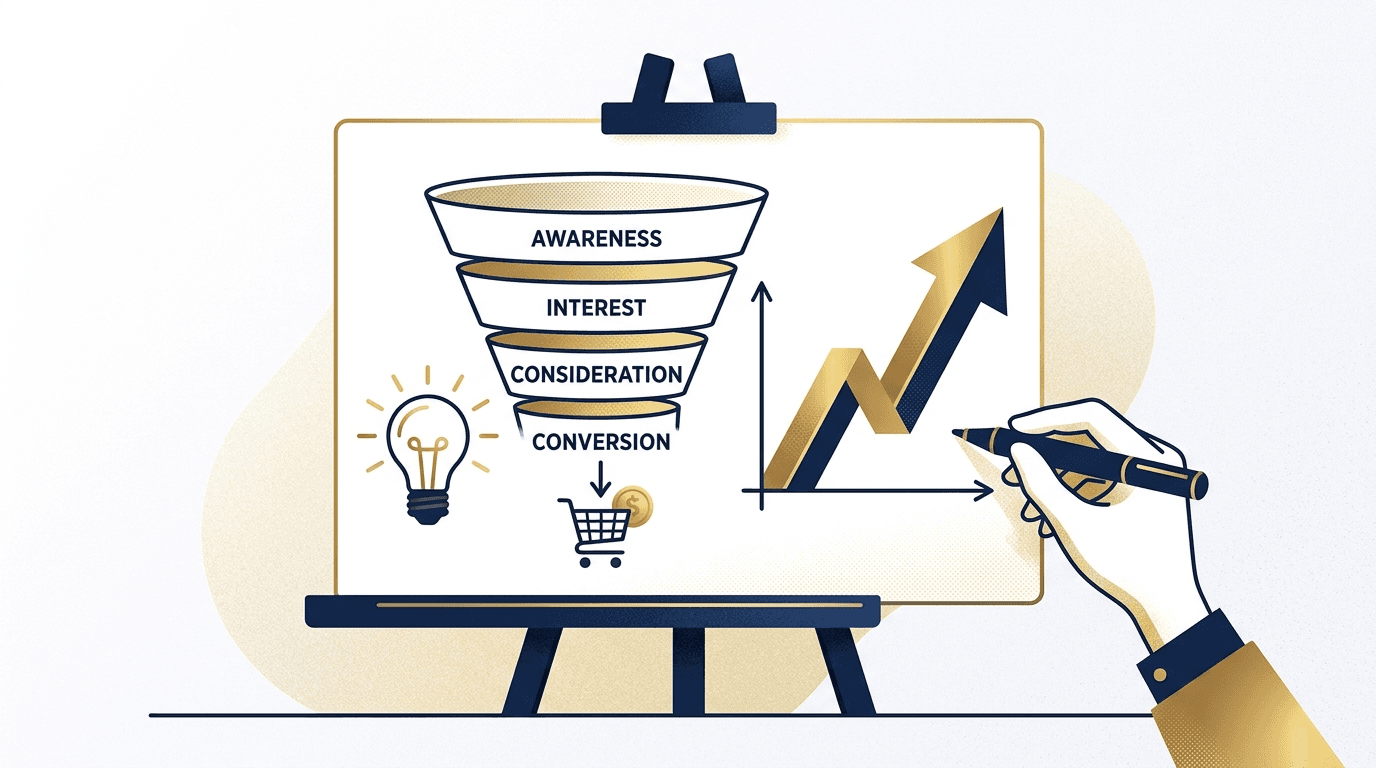
Search query to keyword. Keyword to advertisement. Advertisement to landing page. Landing page to enquiry. Enquiry to qualification. Qualification to sale.
A weak point anywhere in that chain can limit performance. If click-through behaviour is strong but enquiries are weak, the problem may be landing-page continuity or offer clarity. If enquiries are plentiful but sales are low, the issue may be targeting, qualification or follow-up. If sales are healthy but volume is constrained, broader reach or additional services may deserve testing.
The correct optimisation depends on the constraint.
Use reporting to support decisions
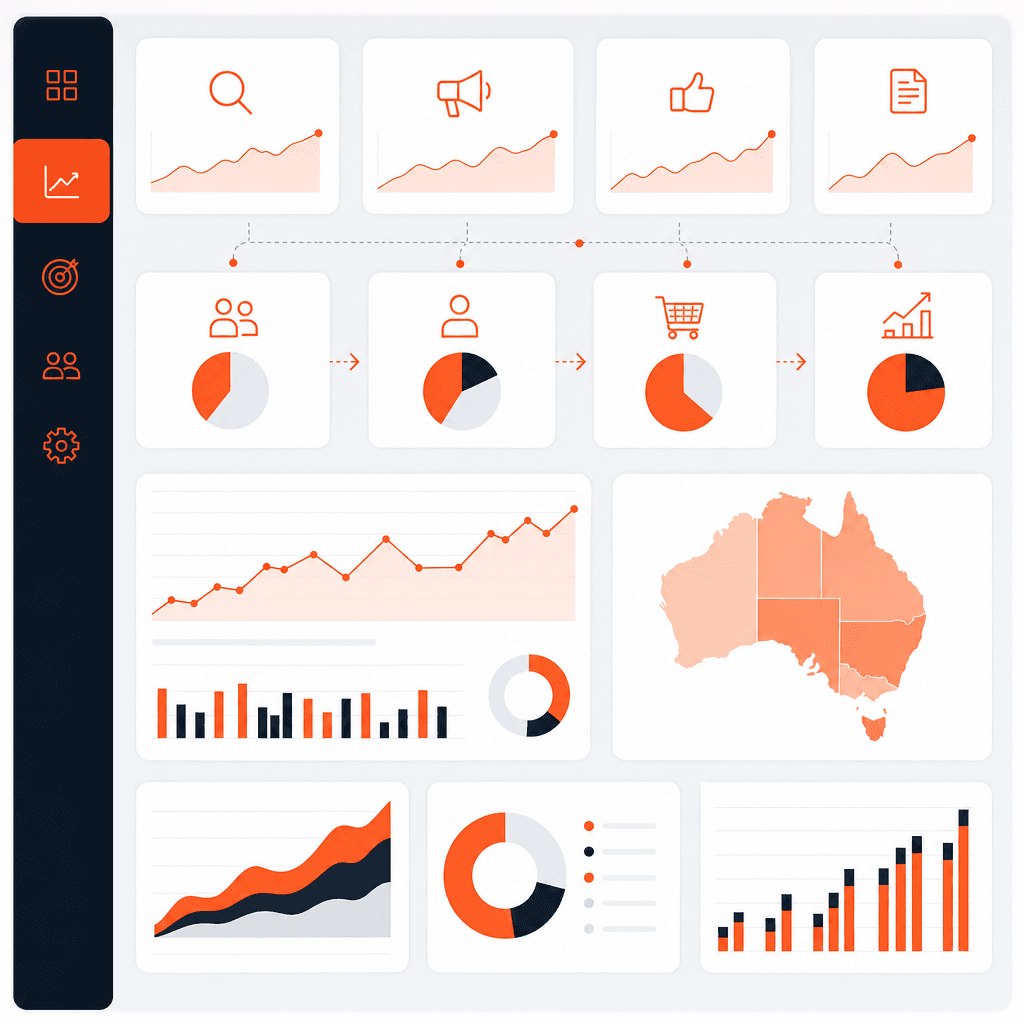
A useful dashboard should let decision-makers see where budget went, what outcomes occurred and how those outcomes relate to commercial goals. It should not require the client to interpret a wall of platform terminology.
We favour reporting that can connect:
Spend
Search demand
Conversion actions
Qualified leads
Opportunities
Sales or attributed revenue where available
Service and geographic priorities
Lead-quality feedback
Narrative matters as well. The agency should explain what changed, why it changed, what evidence supports the decision and what will be assessed next. This is accountable execution, reported against leads and revenue.
Real Results and What They Teach Us
Case studies are useful when they explain the mechanism behind the outcome. A percentage without context does not tell another business what strategy it should use. Markets, margins, sales processes and starting points differ.
The following examples come from 3P Digital's own client work and illustrate why positioning and conversion experience must be addressed before media settings alone.
MEC Builders: fixing the market message before scaling paid search
MEC Builders was spending $8,000 per month on Google Ads. The business was paying $247 per lead, and only 1.2% of visitors converted. Three previous agencies had been unable to improve performance.
The account did not simply need more keyword adjustments. We interviewed 20 profitable customers and found a clearer opportunity among first-time renovators. That insight changed the positioning, advertisements and landing pages. We introduced a consultation offer and added CRM nurturing so that the journey did not stop at the initial enquiry.
Across this six-month construction and renovation engagement, 3P Digital's client data records that cost per lead fell 63%, from $247 to $91. The conversion rate rose 292%, from 1.2% to 4.7%. The sales cycle shortened from 47 days to 21 days, while average project value increased from $52,000 to $67,000.
The lesson is not that every builder should target first-time renovators. That would turn a specific advantage into another generic template. The lesson is that customer research identified an overlooked segment, and every part of the acquisition system was then aligned with it.
This was Profile, Plan, Perform in practice. The campaign improved because the business stopped advertising an interchangeable proposition.
Why traffic growth must be interpreted commercially
Across reported 3P Digital client results, our average traffic increase is 312%. One documented example involved a Queensland mortgage broker that was on page three for its primary organic keyword and lacked a dependable source of inbound enquiries.
We implemented an SEO strategy focused on high-intent search visibility. Within six months, organic traffic increased 312%, the primary keyword reached position one and organic search generated more than 40 qualified leads per month, according to 3P Digital's client data.
This was an SEO engagement rather than a Google Ads case study, so it should not be presented as evidence that paid search will produce the same result. Its relevance is the measurement principle. Traffic became valuable because it represented high-intent visibility and produced qualified leads. A traffic percentage on its own would have been incomplete.
The same discipline applies to Google Ads. More visits are useful only when they contribute to the commercial objective.
The best recorded return came from finding a new market
In a separate 12-month automotive business-to-business SEO engagement, 3P Digital recorded its best return on investment of 46:1. The national automotive parts supplier had plateauing growth, low conversion from existing traffic and an over-reliance on retail customers.
We identified an overlooked trade market, developed business-to-business positioning and created high-intent content for trade buyers. According to 3P Digital's client data, the strategy generated $2.3 million in new business-to-business revenue, increased qualified trade leads by 127% and produced an average order value 34% higher than retail.
Again, this was SEO rather than Google Ads. The strategic lesson applies across digital marketing services: the largest opportunity may not come from making the current channel slightly cheaper. It may come from identifying the customer segment and advantage competitors have missed.
Paid media can accelerate that strategy once the market, offer and measurement are clear.
Retention is a signal, not proof of universal results
3P Digital reports a client retention rate of 98% across a portfolio of more than 250 clients served. We regard retention as evidence that deep discovery, transparent reporting and month-to-month accountable execution are valued by clients.
It is not a promise that every campaign will produce the same outcome. Advertising performance is affected by competition, demand, pricing, website quality, operational capacity, sales follow-up and the strength of the offer. An honest agency should identify those dependencies rather than guaranteeing a result it cannot control.
Real businesses, real numbers, real revenue. That requires context as well as confidence.
Common Reasons Google Ads Campaigns Underperform
Poor results rarely come from one isolated setting. They usually reflect a chain of decisions that were never aligned.
Launching before defining the customer
A rushed launch often begins with a broad service list and generic keyword research. The account then attracts everyone who appears loosely relevant. Sales teams receive mixed lead quality, and optimisation becomes a reactive effort to remove waste.
Deep discovery prevents this. The business should decide whom it wants to attract before the platform starts finding traffic.
Copying competitor language
Competitor advertisements provide market context, but they should not become a template. If every provider uses equivalent claims, prospects compare convenience and price.
A stronger strategy identifies a credible difference, such as a specialised customer segment, process, service model, technical capability or offer. The difference must matter to the buyer and be defensible.
Optimising for the easiest conversion
Advertising systems can often generate more of whatever action they are instructed to value. If an easy, low-intent action is treated as the main goal, the campaign may report improvement while sales quality falls.
Conversion actions need hierarchy and commercial meaning. Qualified CRM outcomes are particularly valuable where they can be recorded consistently.
Ignoring search terms
A keyword list is not a complete record of where advertisements appear. Search-term review reveals actual behaviour and helps managers discover irrelevant intent, new opportunities and changes in customer language.
This work should inform negative keywords, new campaign groups, landing-page content and broader market research.
Sending traffic to weak pages
An advertisement cannot compensate for a page that is vague, difficult to use or inconsistent with the searcher's need. Improving bids while ignoring the destination addresses the wrong constraint.
Landing pages should be assessed for relevance, clarity, evidence, action and mobile usability. They should also set realistic expectations about the service.
Measuring leads without reviewing quality
A cheaper lead is not automatically a better lead. Businesses need a consistent way to classify suitability and feed that information back to marketing.
Without lead-quality evidence, an agency may continue scaling searches that generate high form volume but little revenue. Sales feedback should be structured rather than anecdotal, with agreed definitions and CRM stages where practical.
Treating the account as separate from sales
Campaign performance is affected by response time, consultation quality, follow-up and sales capacity. If no one owns these steps, paid media receives blame for problems it cannot solve, or it receives credit for revenue that came from another source.
Good management clarifies responsibilities and makes the handover visible.
How to Assess a Google Ads Management Service
Choosing an agency should involve more than comparing package inclusions. A long list of tasks does not show whether the provider understands your market or will make commercially sound decisions.
Ask how strategy is developed
A capable agency should be able to explain how it learns about customers, margins, competitors, sales cycles and positioning. If the process begins and ends with keyword research, it is too narrow.
Ask what information the agency needs before launch and how it will use that information. Deep discovery should lead to visible strategic choices, not disappear into a document that has no effect on execution.
Confirm account ownership and access
The business should understand who owns the advertising account, billing relationship, conversion infrastructure and campaign history. Transparent access reduces dependency and lets the client verify what is being done.
The agency should also explain which systems it needs to access and how permissions will be managed. Data handling and security should not be afterthoughts.
Examine how success will be defined
Ask which events will be counted as conversions, how lead quality will be assessed and whether reporting can connect with the CRM. If the agency promises more traffic without discussing sales economics, its definition of success may not match yours.
Commercial measures could include qualified enquiries, opportunities, sales cycle, customer value and attributed revenue. The exact model must fit the business and the reliability of its data.
Ask how budget decisions are made
A recommendation should reflect demand, economics and strategic priorities. It should not merely correspond with a predefined package.
The agency should explain how it will allocate spend among services, markets and campaign types, as well as what evidence would justify increasing or reducing investment.
Review the reporting approach
Useful reporting should be accessible, current and understandable. Ask whether you will receive a live dashboard, how often strategic reviews occur and how changes are documented.
The conversation should cover what the numbers mean and what action follows. A report that lists impressions, clicks and cost without commercial interpretation is an activity report.
Challenge guarantees and unsupported claims
No agency controls auction competition, customer demand, competitor behaviour or your sales team's performance. Guaranteed rankings, lead volumes or returns should therefore be examined carefully.
Strong agencies set goals and take responsibility for their work, but they also identify assumptions and external constraints. Confidence and caveats can coexist.
Look for business-specific thinking
A repeatable operating framework creates consistency. A cookie-cutter strategy creates mediocrity.
The agency should be able to explain why its proposed customer profile, positioning, offer, account structure and measurement plan fit your business. If the same proposal could be sent to any competitor with the name changed, it is not a strategy.
What Working With 3P Digital Looks Like
Our Google Ads management service is designed for Australian SMEs and mid-market companies that want consistent, qualified leads and measurable marketing return.
We do not start by selling a standard bundle of campaigns. We begin by understanding the commercial problem.
Discovery and diagnosis
We review the business model, customer base, sales process, existing marketing, market position and available data. Where an account already exists, we assess campaign structure, search terms, advertisements, budgets, bidding, tracking and landing pages.
An audit is not a list of platform warnings. It should explain why performance is constrained and which issues have the greatest commercial consequence.
Strategic blueprint
We define the priority customer profiles, market opportunity, positioning, offer and channel role. We then map campaign architecture, landing-page requirements, measurement and reporting.
This step prevents paid search from operating as an isolated channel. Google Ads may need to connect with SEO, content, analytics, CRM processes or conversion optimisation. The plan establishes those relationships before execution becomes fragmented.
Campaign build or restructure
We create or reorganise campaigns according to intent and business priorities. This includes advertisements, assets, keyword controls, location settings, budgets, bidding and conversion configuration.
Where landing pages are weak, we provide direction or build the required conversion experience as part of the broader engagement scope. There is little value in buying traffic before the destination can support it.
Launch and learning
Initial performance is monitored closely to verify delivery, tracking and search relevance. Early data is useful, but it should not be mistaken for a mature result. Search terms, conversion behaviour and lead quality provide the evidence needed for ongoing decisions.
We avoid making changes simply to demonstrate activity. Material adjustments should have a reason.
Ongoing accountable execution
Management continues across targeting, creative, landing pages, budgets and measurement. We review lead quality and commercial outcomes, not only platform totals.
Clients receive transparent reporting through live dashboards and strategic communication. Our preference for month-to-month execution keeps accountability clear. Retention should be earned through value, not secured through avoidable lock-in.
Integrated digital marketing services where required
Google Ads may be the immediate priority, but it does not exist in isolation. Search data can inform SEO. Landing-page findings can influence the wider website. CRM evidence can improve qualification. Content can answer objections that advertisements cannot resolve alone.
The correct scope depends on the business. We do not add channels to make a programme look larger. Each component must have a defined role in creating demand, capturing demand or converting it.
Turn Google Ads Spend Into a Commercial System
Google Ads can generate qualified demand quickly, but only when the business knows who it wants, why those buyers should choose it and how success will be measured.
That is why our process begins before campaign execution. Profile the best customers. Plan the market position and offer. Perform through disciplined paid media, conversion optimisation, analytics and reporting. Profile. Plan. Perform.
If your current campaigns produce traffic without dependable lead quality, or if you are preparing to invest in paid search for the first time, 3P Digital can help you identify the constraint and build a practical acquisition plan. Contact 3P Digital to discuss a Google Ads management service focused on every dollar of spend pointed at buyers and performance reported against leads and revenue.
FAQs
What does a Google Ads management service include?
A Google Ads management service typically includes strategy, campaign structure, keyword research, search-term review, negative keywords, advertisement development, bidding, budget control, conversion tracking, landing-page guidance, optimisation and reporting. A strong service also examines customer fit, positioning, lead quality, CRM outcomes and sales performance. The objective is not merely to operate the platform. It is to connect advertising spend with qualified demand and measurable commercial results.
How much should an Australian business spend on Google Ads?
There is no responsible universal budget. The appropriate investment depends on search demand, competition, location, customer value, margins, close rates and the amount of data needed to make useful decisions. Budget should begin with business economics and capacity rather than an arbitrary package. An agency should explain what the proposed spend is intended to test or achieve, how it will be allocated and what evidence would justify a change.
How quickly can Google Ads produce results?
Campaigns can begin showing advertisements after launch and approval, but immediate activity is not the same as dependable performance. Tracking must be validated, search terms reviewed and lead quality assessed before conclusions are drawn. The learning process varies according to demand, budget, sales cycle and conversion volume. Be cautious of any provider that guarantees a specific result or timing without first understanding the market and business.
Is Google Ads better than SEO?
Neither channel is universally better. Google Ads can provide faster access to search demand and tighter control over messages and budgets. SEO can build durable organic visibility and reduce reliance on paid traffic. The appropriate mix depends on commercial goals, existing visibility, market competition and available resources. Paid-search data can also inform SEO by revealing search language, offer response and conversion behaviour.
Can I manage Google Ads myself?
Yes. Google makes the platform accessible to businesses, and an owner or internal marketer can manage campaigns. The practical question is whether that person has the time and expertise to handle strategy, search intent, tracking, landing pages, bidding, compliance and commercial analysis. An agency becomes valuable when it provides better decisions, specialist execution and accountability that exceed the cost of management.
Why am I getting clicks but no qualified leads?
Common causes include broad or ambiguous targeting, weak negative keywords, generic advertisements, poor landing-page continuity, an uncompetitive offer, incorrect conversion tracking and inadequate qualification. Sales follow-up can also be a constraint. The account should be reviewed as a complete journey from search query to sale. Increasing bids or traffic before finding the weak point may simply increase waste.
What should a Google Ads report show?
A useful report should show spend, search activity, meaningful conversion actions and the commercial quality of resulting leads. Where data permits, it should connect qualified leads with opportunities, sales and revenue. It should also explain what changed, why it changed and what will be assessed next. Clicks and impressions provide diagnostic context, but they are not sufficient evidence that the campaign is creating value.
References
Google Ads, "How Google Ads works", https://ads.google.com/home/how-it-works/
Google Ads Help, "About keyword matching options", https://support.google.com/google-ads/answer/7478529
Google Ads Help, "Set up your web conversions", https://support.google.com/google-ads/answer/1722022
Australian Competition and Consumer Commission, "False or misleading claims", https://www.accc.gov.au/business/advertising-and-promotions/false-or-misleading-claims
Office of the Australian Information Commissioner, "Privacy", https://www.oaic.gov.au/privacy