Best Web Design in Sydney: How to Choose a Web Design Agency That Converts Visitors Into Qualified Leads in 2026
Every week, a Sydney business owner signs a web design contract based on a portfolio of stunning mockups, a polished sales deck, and a promise that the new site will "elevate the brand". Six months later, they have a beautiful website and the same dry pipeline they had before. The site looks great on an awards submission. It just does not generate qualified leads.
That is the central problem with how most Sydney businesses approach web design. The brief starts with aesthetics and ends with aesthetics. Questions about conversion architecture, ICP alignment, buyer intent, and attribution come last, if they come at all. The agency does its job, producing something visually impressive, and the client is left wondering why the phone is not ringing. The website was never designed to make the phone ring. It was designed to win approval.
This guide is for Sydney business owners and marketing managers who are about to commission or rebuild a website and want a clear framework for making a decision that actually moves commercial outcomes. I am going to walk you through why most web design briefs fail, what "best" actually means when your goal is qualified leads and measurable ROI, the questions you need to ask any agency before signing, and how to evaluate a proposal with your pipeline, not your designer's eye. If you are looking for someone to validate your colour preferences, this is the wrong article. If you want a website that can be traced to revenue, keep reading.
Key Takeaways
A visually impressive website is commercially worthless if it is not built around a clear conversion strategy, aligned ICP, and measurable attribution.
The best web design in Sydney starts with strategy: understanding your ideal customer profile, your go-to-market positioning, and your buyer's decision journey before a single wireframe is drawn.
The right questions to ask a Sydney web design agency are about CRO methodology, analytics setup, SEO integration, and how they define and measure a qualified lead, not about their design awards.
Web design is not a project with a delivery date. It is an ongoing system that compounds over time when paired with conversion rate optimisation, SEO, and data infrastructure.
The 3P Framework (Profile, Plan, Perform) sequences web design correctly: strategy and audience clarity come first, so the site reflects who you are selling to and what will convince them to act.
Red flags in a web design proposal are easy to spot once you know what to look for. Green flags are rarer and worth paying for.
Summary Table: Design-Led vs Strategy-Led Web Design
Factor | Design-Led Approach | Strategy-Led Approach |
Brief starts with | Aesthetics, brand look and feel | ICP, conversion goals, GTM alignment |
Success metric | Visual approval, award entries | Qualified leads, cost per acquisition, revenue |
SEO integration | Bolt-on or ignored | Built in from architecture stage |
Analytics setup | Basic Google Analytics install | Full attribution, goal tracking, funnel visibility |
CRO methodology | None or post-launch as an afterthought | Embedded in design decisions from day one |
Typical outcome | Beautiful site, flat pipeline | Measurable lead volume growth |
Ongoing work | Sporadic updates | Systematic testing and iteration |
Agency incentive | Project completion | Revenue-attributable outcomes |
Why Most Sydney Web Design Briefs Fail Before the Agency Writes a Single Line of Code
The failure point in most Sydney web design projects is not the execution. It is the brief. Businesses arrive at an agency with a mood board, a list of competitor sites they admire, and a vague mandate to "modernise" or "refresh" the brand. The agency, incentivised to begin a billable project, takes that brief at face value and starts designing.
What is missing from that conversation is almost everything that determines whether the site will ever generate a qualified lead.
There is no discussion of who the ideal customer actually is, what problem they are trying to solve, how they search for solutions, what objections they carry into the buying process, or what would need to be true for them to submit an enquiry or pick up the phone. Without that foundation, the agency is essentially building a shop window for a store whose customers have never been described.
The "Beautiful but Broke" Problem
I have seen this pattern repeat across industries. A mortgage broking firm in Queensland came to us after spending a significant sum on a website rebuild with a well-regarded Sydney design studio. The site was genuinely impressive: clean, modern, mobile-responsive, with high-quality photography and smooth animations. Their traffic was flat, their leads were flat, and they were still on page three of Google for their primary keyword. The design agency had done exactly what was asked of them. Nobody had asked them to build a lead generation system.
Within six months of working through the 3P Framework, overhauling their on-page SEO, building topical authority through content, and strengthening local search signals, that broker was sitting in position one for their primary keyword and generating 40 or more qualified leads per month from organic search alone. That is a 312% increase in organic traffic. The site that delivered those results was not the most visually spectacular thing on the internet. It was strategically structured, built around buyer intent, and connected to a measurement system that told us exactly what was working.
The lesson is not that design does not matter. It is that design without strategy is decoration.
Why Agencies Default to the Design-Led Brief
The design-led approach persists because it is easier to sell and easier to deliver. Showing a client a beautiful mockup creates an emotional response that is simple to convert. Asking a client to articulate their ICP, define what a qualified lead looks like, map their buyer's decision journey, and align their messaging to their GTM positioning is harder. It takes longer. It requires the client to do genuine strategic thinking, often for the first time.
Most agencies do not start that conversation because their business model is project delivery. The incentive is to complete the project and move to the next one. That structure is not inherently malicious. It just produces outcomes that are misaligned with what the client actually needs.
At 3P Digital, we run on a different model. Our pay-per-performance model structurally removes the incentive to optimise for activity that does not connect to client revenue. We only succeed when you succeed. That changes what conversations happen at the start of an engagement.
The Cost of Getting This Wrong
A new website for an SME in Sydney typically costs between $8,000 and $50,000 depending on complexity, and mid-market builds regularly exceed that. Add the internal time invested, the months of project management, the copy briefs, the photography shoots, and the disruption of a domain migration done poorly, and the true cost of a failed web design project is substantial.
More importantly, there is the opportunity cost. Every month a website fails to convert qualified traffic is revenue that goes to a competitor. For a mortgage broker generating 10 leads per month from a site that should be generating 40, the gap is not a rounding error. It is the difference between a thriving practice and one that is permanently dependent on referrals and word of mouth to survive.
What "Best" Actually Means: Conversion, Qualified Leads, and Cost Per Acquisition
When business owners search for the best web design in Sydney, they are usually thinking about quality. They want a site that looks professional, works on mobile, loads quickly, and reflects well on the brand. Those are legitimate requirements. They are table stakes, not differentiators.
The best web design agency in Sydney, from the perspective of an SME that needs a return on its investment, is the one that builds a site which converts qualified visitors into enquiries, appointments, or applications at a measurable rate, and does so in a way that can be tracked, attributed, and improved over time.
That definition shifts the evaluation criteria entirely.
Conversion Rate as the Primary Metric
A website's conversion rate is the percentage of visitors who complete a desired action. For most Sydney SMEs, that action is a form submission, a phone call, a booking, or a direct enquiry. Industry conversion rates vary significantly. A well-structured professional services website should convert qualified organic traffic at somewhere between 3% and 8%. Most small business websites in Australia convert at under 2%, often under 1%.
The gap between a 1% conversion rate and a 4% conversion rate on a site receiving 1,000 qualified visitors per month is the difference between 10 leads and 40 leads. Without changing the traffic volume, without increasing the ad spend, purely by improving how the site converts the visitors it already receives, the business has quadrupled its lead pipeline.
That is what conversion rate optimisation delivers when it is embedded in the design process from the start, not bolted on afterward. The best Sydney web design agencies treat conversion architecture as a first-order design problem, not a phase-two nice-to-have.
Qualified Leads, Not Just Traffic
Volume without qualification is noise. I see plenty of websites that generate a high number of form submissions but produce almost no pipeline because the site is attracting the wrong visitors and converting them on vague offers. The result is a sales team drowning in enquiries from people who are not ready to buy, cannot afford the service, or are completely outside the target market.
The design and messaging of a website should do pre-qualification work. It should be specific enough about who the service is for that the wrong people self-select out and the right people feel spoken to. That specificity comes from a clearly defined ICP (ideal customer profile). Without that input, a designer has no basis for making those structural decisions. They will default to broad messaging that appeals to everyone and converts no one.
Cost Per Acquisition Over Impressions and Awards
Activity metrics, impressions, sessions, bounce rate, time on page, are not the measure of a successful website. They are signals that inform optimisation decisions. The metric that matters to a business owner is cost per acquisition: what does it cost, in total marketing spend, to generate one qualified lead or one paying customer?
When I look at a website's performance, I am asking: given the organic traffic this site receives, the paid traffic we send to it, and the offline referral traffic that lands on it, what does it cost us to produce one qualified enquiry? If we can reduce that number while maintaining quality, every dollar works harder. If we cannot measure it, we are flying blind.
Awards and design accolades are not irrelevant. A well-designed site builds trust and credibility with visitors. But they are a means to an end, not the end itself. The best Sydney web design, by the only measure that matters to an SME, is the site that produces the most qualified leads at the lowest cost per acquisition.
The Questions to Ask Any Sydney Web Design Agency Before You Sign
Most web design proposals in Sydney contain the same elements: a portfolio of previous work, a proposed sitemap, a technology recommendation, a timeline, and a price. Almost none of them address the questions that will determine whether the resulting website actually grows your business.
Here are the questions you should ask before signing anything.
Strategy and ICP Alignment
"Before you start designing, how do you define our ideal customer and align the site to their decision journey?"
If the answer involves anything other than a structured discovery process that explores your ICP, your buyer's objections, your competitive positioning, and your conversion goals, press harder. A design brief that does not start with the customer will not end with a site that converts that customer.
Watch for agencies that treat the discovery phase as a one-hour kickoff call before jumping to wireframes. Genuine strategic alignment takes time and requires your input. If an agency is not asking you hard questions about your business, they are not doing strategy. They are doing production.
Measurement and Attribution
"How will you set up tracking so we can measure the commercial impact of this website?"
The answer should reference Google Analytics 4 configuration, Google Tag Manager setup, goal and conversion tracking, call tracking integration if relevant to your business, and ideally CRM integration so leads from the website are visible in your sales pipeline.
If the answer is "we will install Google Analytics," that is not enough. Basic Analytics installation without goal tracking, funnel visualisation, and attribution setup gives you session data. It does not give you revenue-attributable insight. You will know how many people visited your site. You will not know how many of them became paying customers.
SEO Integration
"How does your design process integrate with SEO requirements from the architecture stage?"
SEO should not be a separate service bolted onto a finished site. The site architecture, URL structure, internal linking, page speed performance, mobile optimisation, structured data, and on-page content all have SEO implications that are significantly harder and more expensive to fix after the site is built than to get right during the design process.
Ask specifically about Core Web Vitals performance, their approach to keyword-informed information architecture, and whether the content strategy for the site is developed in parallel with the design. A Sydney web design agency that understands SEO will have clear answers. One that treats SEO as someone else's problem will not.
For deeper context on what a conversion-focused SEO strategy looks like, our SEO services approach covers the compounding relationship between site architecture and organic lead generation.
Conversion Rate Optimisation Methodology
"What is your CRO methodology, and how does it influence design decisions during the build?"
This question separates agencies that talk about conversion from agencies that systematically practise it. CRO is not adding a "Get a Free Quote" button. It is a structured process of hypothesising what will improve conversion rates, designing to test those hypotheses, measuring outcomes, and iterating.
At the design stage, CRO thinking should influence the placement and hierarchy of calls to action, the structure and length of landing pages, the use of social proof, the handling of objections in copy, the friction in forms, and the clarity of value propositions. These are design decisions, not afterthoughts.
For more on what a rigorous CRO programme looks like, our conversion rate optimisation services outline how we embed this thinking from the first wireframe.
Ongoing Optimisation
"What happens after launch, and how do you improve performance over time?"
A website is not a finished product on launch day. It is a starting point. The sites that compound in performance over time are the ones with an active programme of testing, iteration, and improvement based on real user data.
If an agency's engagement ends at go-live, they are selling you a project. What you need is a system. Ask what the ongoing relationship looks like, how often they review performance data, what their testing cadence is, and how they communicate results. The answer tells you whether they are invested in your commercial outcomes or just in completing the build.
The 3P Framework: How to Sequence Web Design So Your Site Reflects Your ICP and GTM Strategy
At 3P Digital, every engagement runs through the 3P Framework: Profile, Plan, Perform. Web design sits in the Perform stage. That sequencing is not arbitrary. It reflects the commercial reality that execution without strategy produces activity without results.
Here is what each stage means and why the order matters.
Profile: Know Exactly Who You Are Selling To
Profile is about clarity. Who is your ideal customer? What problem are they solving when they search for your service? What are they afraid of getting wrong? What alternatives have they already tried or considered? What does trust look like to them? What is the cost of inaction?
The ICP is not a demographic description. It is a behavioural and psychological profile that informs every decision downstream. When we know the ICP with precision, we know which pages to build, what objections to address in copy, what social proof will be most persuasive, what the call to action should promise, and how specific the messaging needs to be.
Without a clear ICP, a designer cannot make those decisions. They will default to generic language, broadly appealing imagery, and watered-down value propositions that fail to convert the exact customer the business needs.
The Profile stage also involves brand archetype development. Understanding the brand's personality and positioning relative to competitors shapes the visual and tonal language of the site. Design choices, typography, imagery, layout density, colour palette, all communicate something about the brand's character. Those choices should be intentional and informed by positioning strategy, not just personal preference.
Plan: Build a GTM Strategy Before a Single Wireframe
Plan is about the go-to-market strategy. What channels will drive traffic to the site? What is the messaging architecture across those channels? How does the site fit into the broader conversion funnel? What does the buyer's journey look like from first awareness to signed contract?
These questions determine the site's structural requirements. If the primary acquisition channel is organic search, the site needs a content architecture that supports topical authority and captures high-intent queries at multiple stages of the funnel. If the primary channel is paid search, the site needs dedicated landing pages with tightly aligned messaging to minimise cost per click and maximise quality score. If the primary channel is referral or social, trust-building content, case studies, and social proof need to be prominent in the architecture.
Building a website before answering these questions is like building a distribution centre before deciding what you are distributing or how it will arrive. The structure might look reasonable on the outside, but it will not function correctly for its actual purpose.
Perform: Execute Web Design as Part of a Broader Lead Generation System
Perform is where design, development, content, SEO, and analytics come together in the build. At this stage, the ICP is defined, the GTM strategy is clear, the messaging architecture is documented, and the conversion goals are agreed. Design execution can now produce something that is both visually compelling and strategically functional.
The distinction matters because design decisions in the Perform stage are justified by strategy, not by taste. The reason the homepage leads with a specific value proposition is because the ICP research identified that objection as the primary barrier to conversion. The reason the case studies are prominent in the navigation is because the Plan stage identified trust and proof as the highest-leverage conversion lever for this particular audience. The reason the contact form is short is because the data showed friction was the primary abandonment point.
Every element has a rationale. Every rationale is traceable to a commercial outcome.
Web Design as a System, Not a Project: Pairing Design With CRO, Analytics, and SEO
One of the most expensive misconceptions in web design is that a new website is a capital project with a completion date. Build it, launch it, move on. The businesses that get the best return from their web design investment treat the site as a living system that improves continuously based on data.
Here is what that system looks like when it is functioning correctly.
SEO: The Traffic Engine That Compounds Over Time
A website with no traffic is a billboard in the desert. SEO is the mechanism that brings qualified visitors to the site through organic search, and when it is integrated from the architecture stage rather than retrofitted, the compounding effect is significant.
Across our SEO client base, we see an average organic traffic increase of 312%. That figure is not the result of a single tactic. It is the compounded effect of technical SEO, content strategy, on-page optimisation, link authority, and local search signals all working together on a site architecture that was designed to support them.
For the recruitment firm I mentioned earlier, the integration of SEO and content strategy into the site's design and architecture allowed us to replace expensive job board dependency with owned organic acquisition. The result was 574 additional leads, a 63.5% reduction in cost per lead, and a saving of $37.93 per conversion. That kind of outcome does not happen when SEO is an afterthought. It happens when the site is built as an SEO asset from the start.
If you want to understand what that strategy looks like in practice, our SEO services and our article on the best SEO in Sydney cover the methodology in depth.
CRO: Turning Traffic Into Qualified Pipeline
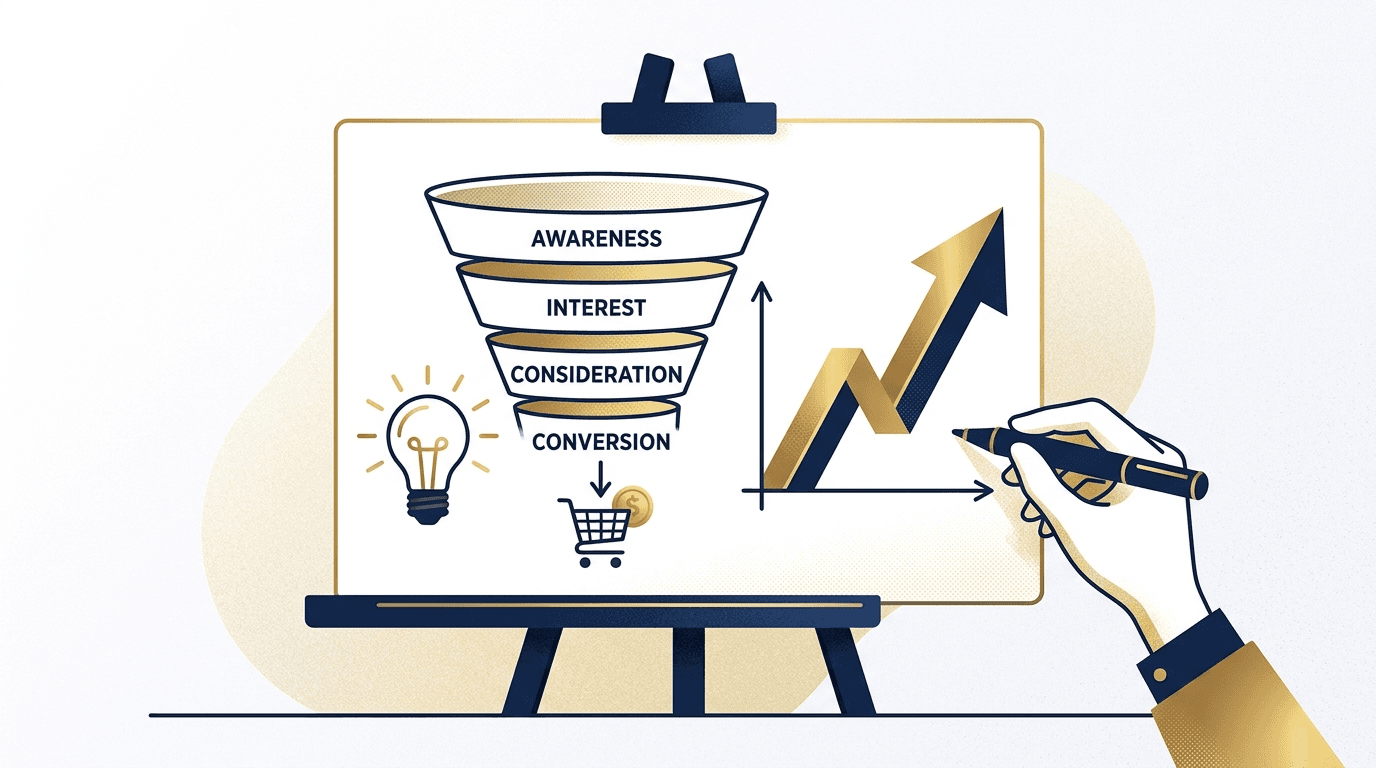
SEO brings qualified visitors. CRO turns those visitors into leads. The two work together, and the relationship between them is where most SME websites leave the most money on the table.
A structured CRO programme operating on a live website typically works through a cycle of data collection, hypothesis generation, test design, implementation, and result analysis. The inputs are analytics data, user session recordings, heatmap analysis, and in some cases qualitative user research or customer interviews. The outputs are design and copy changes that incrementally improve the site's conversion rate.
For a B2B professional services firm we worked with, a full digital marketing overhaul covering SEO, paid media, and conversion rate optimisation produced a 247% increase in qualified inbound enquiries. The firm effectively tripled its inbound pipeline without tripling its marketing spend. That kind of leverage is what happens when CRO is treated as a core part of the system rather than a line item on a proposal that never gets activated.
Our conversion rate optimisation services describe how this programme works in practice for Australian SMEs.
Analytics: The Nervous System of the System
Neither SEO nor CRO can function without accurate, comprehensive data. Analytics is the nervous system that connects every element of the website's performance to commercial outcomes.
A properly configured analytics setup for a Sydney SME website should include GA4 with enhanced measurement, Google Tag Manager for flexible event tracking, goal and conversion tracking for every meaningful action on the site (form submissions, phone calls, chat initiations, document downloads), channel attribution to understand which sources are producing qualified leads, and ideally CRM integration so the sales team can close the loop between lead source and eventual revenue.
The value of this infrastructure is not just in the reporting. It is in the decisions it enables. When you know that organic search produces leads with a 40% close rate and paid social produces leads with an 8% close rate, you can allocate budget with confidence. When you know that 70% of form abandonment happens on the fourth field of your contact form, you know exactly where to focus the next CRO sprint. Data does not replace judgment. It makes judgment accountable.
For more on how we build and interpret this infrastructure, our analytics and data services cover the full measurement stack.
Paid Media: Amplifying What Organic Cannot Reach
Organic search is the highest-quality, longest-lasting acquisition channel for most Sydney SMEs. It is also the slowest to build. Paid media, primarily Google Search Ads, fills the gap in the short term and amplifies the system in the medium term by capturing high-intent queries that the site has not yet earned organic visibility for.
The key integration point between paid media and web design is the landing page. A paid search campaign that sends traffic to a generic homepage is a waste of budget. The best-performing paid campaigns run traffic to purpose-built landing pages with messaging that precisely matches the search query, a single conversion goal, and no navigation distractions that pull the visitor off the conversion path.
This is another reason the design process needs to include paid media strategy from the start. If the GTM plan includes Google Ads as a traffic source, the site architecture needs to include landing pages designed specifically for that channel, with the copy, proof elements, and conversion mechanics that will minimise cost per click and maximise conversion rate.
Content Marketing: Building Authority That Earns Traffic at Scale
Content marketing is the long-term compounding investment that most Sydney SMEs underinvest in because the returns are not immediate. A well-structured content strategy, producing articles, guides, and resources that answer the questions your ICP is asking at every stage of the buying journey, builds topical authority that earns organic traffic at scale over time.
The web design implication is that the site needs to be built with a content architecture that supports this strategy. That means a logical blog or resource structure, internal linking architecture that distributes authority to commercial pages, category structures that reflect topical clusters, and technical infrastructure that keeps content pages loading quickly and indexing correctly.
When content strategy and site architecture are aligned, the compounding effect is significant. The 312% average organic traffic increase we see across our SEO client base is substantially driven by content strategies that were built into the site's architecture from the start, not crammed into a blog section that the original designers never really thought about.
Red Flags vs Green Flags in Sydney Web Design Proposals
Once you know what to look for, evaluating a web design proposal becomes significantly less mysterious. Here is a practical framework for separating the agencies that will move your pipeline from the ones that will produce a beautiful distraction.
Red Flags: Walk Away
The proposal leads with the portfolio. Showing you pretty websites first is a sales technique, not a strategic conversation. The agency is selling aesthetics because that is the easiest thing to sell. If the first half of the meeting is about how the site will look, ask what happens in the second half when you discuss how it will convert.
There is no discovery process before pricing. If an agency can give you a price before understanding your ICP, your GTM strategy, your current conversion rate, your buyer's decision journey, and what success looks like to you commercially, they are pricing a production job, not a strategy engagement. They do not know enough about your business to know what you actually need.
SEO is a separate line item and is described as optional. SEO is not an add-on. It is a design requirement. If the agency is treating it as something you can bolt on later, the site will be built in a way that makes SEO harder, more expensive, and less effective to retrofit.
The success metrics are visual. If the agency describes success in terms of stakeholder approval, design awards, or brand consistency, those are legitimate considerations but they are not the measure of commercial performance. Ask directly: how will we measure whether this website is generating qualified leads and contributing to revenue? If the answer is vague, that tells you everything you need to know.
There is no post-launch plan. A proposal with a go-live date and no ongoing engagement model is a project delivery contract, not a performance partnership. The sites that compound in performance are the ones with active optimisation programmes. If the relationship ends at launch, the site's performance on day one is the best it will ever be.
They cannot explain their conversion methodology. Ask the agency to walk you through a specific example of how they improved conversion rates on a previous client site. A good answer includes specific hypotheses they tested, what the data told them, what they changed, and what the measured outcome was. A vague answer about "best practices" and "user experience" is not a methodology.
They talk about activity, not outcomes. If the agency's reporting centres on impressions, sessions, and bounce rate without connecting those metrics to leads and revenue, you are looking at an activity report, not a performance programme. Activity reports without commercial outcomes are the hallmark of an agency that is not accountable for your results.
Green Flags: These Signal a Serious Agency
They ask about your ideal customer before they ask about your budget. The first conversation with a performance-focused agency should be about your business: who you serve, what problems you solve, how customers find you today, what is stopping more of them from converting. If the agency is asking those questions before they talk about design, they are thinking about the right things.
They have a structured discovery and strategy phase. A genuine strategy engagement before design begins is a positive signal. It means the agency is invested in understanding your business well enough to make design decisions that serve your commercial goals. It will add time and cost to the front end. It will save you far more on the back end.
They integrate SEO into the architecture from day one. Ask how their design process incorporates SEO requirements. If the answer includes keyword-informed information architecture, technical SEO requirements built into the development brief, and content strategy developed in parallel with design, you are talking to an agency that understands how websites actually generate organic traffic.
Their case studies cite commercial outcomes. The difference between a portfolio and a case study is specificity. A portfolio shows you what a site looks like. A case study tells you what it produced: qualified leads generated, cost per lead achieved, organic traffic growth, conversion rate improvement, revenue attributed. Agencies with real commercial outcomes lead with those numbers because those numbers are the actual product.
They have a clear CRO methodology. Ask how they approach conversion rate optimisation. A serious answer references data collection, hypothesis development, test prioritisation, and measurement. It is specific about what tools they use and how they decide what to test. It acknowledges that conversion rates improve through iteration, not through a single brilliant design decision.
They discuss attribution and analytics infrastructure proactively. Before you raise the subject, a genuinely performance-focused agency should bring up how the site will be tracked. Goal setup, call tracking, CRM integration, attribution modelling: these are things that need to be planned before the site is built. An agency that raises them without prompting is building for accountability.
They are transparent about what they can and cannot do. No agency is equally strong across every discipline. A web design agency that openly describes where they partner with specialists in SEO, paid media, or analytics, rather than claiming to do everything equally well, is demonstrating the kind of professional honesty that indicates they will be straight with you about your site's performance too.
How Much Does Web Design Cost in Sydney? What SMEs Should Actually Budget
Sydney web design costs vary enormously depending on scope, complexity, and the type of agency you engage. Here is a realistic breakdown for 2026.
Template-based builds ($3,000-$8,000): WordPress or Squarespace builds using pre-designed templates with minimal customisation. Suitable for very early-stage businesses with limited budgets. Significant limitations in conversion architecture, SEO customisation, and performance optimisation. Fine as a starting point, problematic if it is still in place three years later.
Custom design, small business scope ($8,000-$20,000): A custom-designed site for a Sydney SME with 10-20 pages, a clear conversion focus, proper analytics setup, and SEO-friendly architecture. This is the appropriate investment level for most professional services firms, mortgage brokers, fitness businesses, and recruitment companies that are serious about lead generation. At this level, you should expect a strategy phase, custom design and development, and a basic analytics and tracking setup at launch.
Mid-market custom builds ($20,000-$60,000): Complex sites for mid-market businesses with multiple services, multiple audience segments, integration requirements (CRM, booking systems, job boards), and significant content volume. At this investment level, ongoing optimisation should be included in the engagement, not treated as an optional extra.
Enterprise and high-complexity builds ($60,000+): Multi-site environments, e-commerce at scale, complex integrations, and enterprise CMS requirements. These engagements typically involve multiple agencies or specialist contractors working in parallel.
The number that matters more than the build cost is the total cost of ownership over 24 months, which includes the build, any ongoing platform fees, hosting, the ongoing optimisation programme, and the cost of not generating leads while a failed project is rebuilt. A $15,000 build that generates 40 qualified leads per month is significantly more valuable than a $35,000 build that generates 8.
The Compounding Effect: Why Design Plus SEO Plus CRO Beats Any Single Channel
The most powerful outcome in digital marketing is not a single channel performing well. It is multiple integrated channels reinforcing each other, with the website as the conversion hub at the centre.
When organic SEO brings high-intent traffic to a site that converts at 5% through disciplined CRO, and paid search fills the short-term gaps with dedicated landing pages built into the site architecture, and content marketing builds topical authority that earns organic visibility for new queries over time, the system compounds. Each element makes the others more effective.
The 312% average organic traffic increase we see across our SEO client base is the result of this kind of integration. The 63.5% cost per lead reduction for the recruitment firm happened because organic and content strategy replaced a paid dependency. The 46:1 ROI achieved for an automotive dealership group within 12 months happened because SEO was not just generating traffic but was generating the right traffic to pages specifically designed to convert it.
Those outcomes are not achievable through any single tactic. They require a system, and the website is the foundation of that system. If the foundation is built without strategy, the system cannot perform.
Choosing a Sydney Web Design Agency: The Practical Checklist
Before you sign a web design contract with any Sydney agency, work through this checklist. If you are getting fewer than seven of these boxes ticked, either push harder in the questions phase or reconsider the engagement.
The agency has conducted a structured discovery process covering your ICP, GTM strategy, and conversion goals before presenting any design concepts.
SEO requirements are built into the site architecture from the start, not treated as an optional add-on.
The proposal includes a specific analytics and conversion tracking setup plan.
The agency can articulate a clear CRO methodology and provide a specific example of improving conversion rates on a previous client site.
The case studies in the proposal cite commercial outcomes (leads, cost per acquisition, revenue) not just design quality.
There is a documented post-launch optimisation programme with a clear cadence and accountability metrics.
The agency has clearly defined what a qualified lead looks like for your business and how the site will be designed to attract and convert that specific person.
The proposal addresses how the website will integrate with your paid media and content marketing channels.
The agency has been transparent about their pricing model and any ongoing costs.
The agency has directly addressed how they will measure commercial performance, not just traffic, and how they will communicate that to you.
If you want to see what this checklist looks like in practice against the full evaluation framework for choosing a digital marketing agency, our article on red flags and green flags when choosing a digital marketing agency covers the broader picture in detail.
Why Strategy Must Come Before Design: A Direct Position
I want to be direct about something that most Sydney web design agencies will not say because it is not in their immediate commercial interest.
If you commission a web design project before you have clarity on your ideal customer profile, your go-to-market positioning, and your conversion goals, you are almost certainly wasting a significant portion of your investment. The site may look excellent. It will not perform.
Most SMEs come to web design because they feel their site is embarrassing them. It is old, it looks dated, it does not reflect the quality of the business. That is a legitimate problem. But the solution is not a new site that looks better. The solution is a new site that converts better. Those are not the same brief.
At 3P Digital, we insist on working through the Profile and Plan stages before any design work begins. It is not a nice-to-have. It is a structural requirement for the Perform stage to produce commercial outcomes. Businesses that come to us having already done rigorous ICP and GTM work can move through the design phase faster and with more confidence. Businesses that have not done that work need to do it first, even if it means delaying the design brief.
The businesses we work with are not broken. They are usually generating some results from their marketing but have no system connecting their brand, their audience targeting, and their conversion infrastructure. When those three elements align, the results scale disproportionately. That is not a pitch. It is what we have observed across hundreds of engagements. The 312% organic traffic growth, the 247% increase in qualified enquiries, the 46:1 ROI, those outcomes all have one thing in common: strategy came before execution.
If you are about to commission a web design project, the single most valuable thing you can do before you brief any agency is to be able to answer these three questions with precision:
Who is the specific person your website needs to convert, and what does that person need to believe before they will submit an enquiry?
What channels will bring qualified versions of that person to your site, and does your current design support those channels structurally?
How will you measure whether the new site is generating qualified leads, and what would have to be true for you to consider the investment successful?
If you can answer those questions confidently, you are ready to brief a web design agency. If you cannot, the most valuable use of your time and budget is to answer them first.
Ready to Build a Website That Generates Qualified Leads?
If this article has given you a clearer picture of what a conversion-focused web design engagement looks like, and what to watch out for when evaluating agencies, the next step is a strategy consultation where we map your Profile and Plan before any design begins.
At 3P Digital, we do not start with wireframes. We start with your ideal customer, your go-to-market positioning, and the commercial outcomes you need the site to deliver. Everything after that is designed to produce those outcomes, measurably, and with full attribution to revenue.
The goal is not to give you a beautiful website. It is to take you from chasing leads to having them come to you.
Book a strategy consultation with 3P Digital and we will show you exactly what a Profile-first, Plan-informed web design engagement looks like for your business.
Frequently Asked Questions
How much does web design cost in Sydney in 2026?
Sydney web design costs range from approximately $3,000 for a basic template-based build to $60,000 or more for a complex custom build for a mid-market business. For most Sydney SMEs in professional services, mortgage broking, recruitment, or fitness, a conversion-focused custom build with proper SEO architecture and analytics setup will typically fall in the $8,000-$25,000 range. The more important number is cost per qualified lead over 12-24 months, not the upfront build cost. A $25,000 site that generates 40 qualified leads per month will produce far more commercial value than a $10,000 site that generates 4.
What is the difference between a web design agency and a digital marketing agency?
A web design agency's primary output is the design and development of a website. A digital marketing agency's primary output is measurable commercial performance, with the website as one component of a broader system. The distinction matters when you are commissioning a website for lead generation, because the skills required to build a site that converts, including CRO methodology, SEO integration, analytics infrastructure, and paid media alignment, are digital marketing skills, not just design skills. The best outcome for an SME is typically an agency that does both with genuine depth in each discipline.
How long does it take to build a website in Sydney?
A typical custom web design project for a Sydney SME takes 8-16 weeks from the start of discovery through to launch. Projects that skip the strategy and discovery phase may move faster but tend to require expensive rework after launch when the site fails to perform. Builds that integrate SEO architecture, CRO methodology, and analytics setup properly from the start take longer upfront and perform significantly better over the following 12-24 months.
What makes a website good for SEO in 2026?
A website that performs well in organic search in 2026 needs: a logical information architecture built around keyword-informed topical clusters, fast load times and strong Core Web Vitals scores, mobile-first responsive design, properly structured on-page content with clear intent alignment, internal linking that distributes authority to commercial pages, structured data markup where relevant, and a content strategy that builds topical authority over time. These requirements should inform the design and development brief from the start. Retrofitting SEO onto a site built without these principles is significantly more expensive and less effective than building them in from day one.
How do I measure the ROI of a new website?
ROI on a new website is measured by comparing the commercial value of the additional qualified leads the site generates against the cost of building and maintaining it. The measurement infrastructure required includes conversion tracking for all meaningful actions on the site (form submissions, phone calls, bookings), channel attribution to understand which sources are producing leads, and ideally CRM integration so you can track leads from source through to signed contracts. Without this infrastructure in place from day one, you cannot calculate ROI. Ask any web design agency you are considering how they will set up this tracking as part of the build.
Should my website be built on WordPress in 2026?
WordPress remains a strong choice for most Sydney SME websites in 2026, particularly when SEO performance and content flexibility are priorities. It has a mature ecosystem, strong SEO plugin support, and significant flexibility for developers. Alternatives like Webflow offer advantages in design control and performance, while Shopify is the standard for e-commerce. The platform decision should be driven by your specific requirements, your team's ability to manage the site post-launch, and the agency's genuine depth of expertise in that platform. Be cautious of agencies that recommend a platform primarily because it is the one they are most comfortable building in rather than the one that best serves your goals.
What is conversion rate optimisation and do I need it for my website?
Conversion rate optimisation (CRO) is the structured practice of improving the percentage of website visitors who complete a desired action, typically a form submission, phone call, or booking. If your website is already receiving qualified traffic and you want more of those visitors to become leads without increasing your traffic spend, CRO is the mechanism. For most Sydney SMEs, the gap between a current conversion rate of 1-2% and an optimised rate of 3-5% on existing traffic represents a two-to-three-times increase in lead volume at no additional acquisition cost. CRO should be built into the design process from the start and run as an ongoing programme post-launch, not treated as a one-time project.
How do I know if a Sydney web design agency is actually performance-focused?
Ask for case studies that cite commercial outcomes: qualified leads generated, cost per acquisition, organic traffic growth with a revenue connection, conversion rate improvements with before-and-after data. Ask how they define and measure a qualified lead for a business like yours. Ask what their CRO methodology is and for a specific example of how they have improved conversion rates on a client site. Ask what the post-launch engagement model looks like and how they will communicate performance to you. Agencies that are genuinely performance-focused will welcome those questions. Agencies that are primarily design studios will redirect the conversation back to aesthetics.
References
Google Search Central, Core Web Vitals Documentation (2026) - Google's official technical documentation on page experience signals, Core Web Vitals metrics (LCP, CLS, INP), and their role in organic search ranking. Describes the measurement standards and passing thresholds relevant to web design and technical SEO. Available via developers.google.com.
Australian Bureau of Statistics (ABS), Business Conditions and Sentiments Survey (2026) - ABS survey data covering digital adoption rates and online investment priorities among Australian SMEs. Provides context for the rate at which Australian small and medium businesses are investing in website and digital infrastructure improvements.
Google Analytics 4 Official Documentation, Conversion Measurement and Attribution (2026) - Technical documentation covering GA4 goal setup, event tracking, conversion paths, and attribution models. The foundational reference for configuring website performance measurement infrastructure for Australian businesses.
Baymard Institute, E-Commerce Checkout Usability Research (2026 benchmark report) - Independent research organisation producing large-scale UX and usability research. Their conversion funnel and form abandonment studies provide benchmark data for conversion rate expectations across industries. Referenced for context on the gap between average and optimised conversion rates.
Search Engine Journal, State of SEO Report (2026) - Annual industry survey covering organic search trends, algorithm developments, and integration of SEO with web design and content strategy. Provides context for SEO best practices relevant to Australian markets and the technical requirements of conversion-focused site architecture.
Conversion Rate Experts, Website Optimisation Case Study Library - Published case studies from one of the world's leading CRO consultancies, providing documented examples of conversion rate improvements achieved through structured testing programmes. Referenced for context on typical CRO outcomes and methodology.