What to Look For in a CRO Audit Service Page Before Hiring an Agency
Most Australian businesses are bleeding revenue every month because they prioritise traffic over conversions. They pour thousands of dollars into SEO and paid ads, watch their analytics dashboards climb, and assume their marketing is working. But high traffic is a vanity metric if it consists of price shoppers rather than serious buyers. Marketing is useless unless it is reported against revenue.
I am Alex Frew, founder of 3P Digital. Time and again, I review the analytics of Australian businesses that boast 20,000 monthly sessions but struggle to generate five qualified enquiries. The problem is rarely the product or the service. The problem is that their website is fundamentally unprepared to convert the traffic it receives. They need a proper conversion rate optimisation audit, not another traffic campaign.
When you start looking for help, evaluating a CRO audit service page can be difficult. Most agencies sell activity reports and generic recommendations based on industry averages. They rely on templates to do the work that requires critical thinking. This post breaks down exactly what you need to look for in a provider, how to spot the warning signs of a fake audit, and why the right conversion rate optimisation Australia strategy will turn your website from a static brochure into a functional revenue engine.
Key Takeaways
High traffic without conversion optimisation is wasted ad spend.
A real CRO audit focuses strictly on deep user behaviour, not surface-level design preferences.
Look for an agency that structures its audits around your ideal customer profile rather than generic templates.
Every marketing activity must be reported against revenue and actual leads.
Lock-in contracts protect agencies from their own underperformance. Retain an agency that operates month-to-month.
Summary: What to Expect From a Real CRO Audit
Feature | Cookie-Cutter Template Audit | 3P Digital Framework Audit |
Data Source | Google Analytics overview | Server logs, CRM data, session recordings |
Focus | Traffic generation | Cost per lead reduction and revenue |
User Behaviour | Assumptions based on bounce rate | Deep dive into session recordings and friction points |
Methodology | Standard checklists | The 3P Framework: Profile, Plan, Perform |
Deliverable | 20-page generic PDF | Prioritised revenue actions and accountable execution |
The Vanity Traffic Trap: Why Clicks Fail Without Optimisation
The biggest lie in digital marketing is that more traffic equals more revenue. It does not. If your website has a structural conversion problem, sending more traffic to it simply amplifies your inefficiency. You are paying more to lose more.
I see this consistently across the Australian market. An automotive dealership group approached us a few years ago. They were spending heavily on broad SEO campaigns to drive traffic to their website. The traffic numbers were high, but the return on investment was exceptionally poor. Their previous agency was celebrating the traffic increases in their monthly reports, while the dealership was struggling to turn a profit.
We pivoted the strategy completely. Instead of focusing on empty vanity metrics, we directed the strategy to local SEO and high-intent service page optimisation. We ignored generic traffic and focused entirely on intent. Within 12 months, the strategy generated a 46:1 return on SEO investment. The traffic volume was lower than the previous campaigns, but the traffic quality was vastly superior. It was pointed at buyers, not vanity traffic.
A reliable website audit services provider will tell you the same thing. Traffic is cheap. Attention is expensive. Conversions require strategic alignment. When a conversion rate optimisation audit is done correctly, the focus shifts entirely from volume to value. You stop asking how many people visited the site and start asking why the right people left without buying.
The 3P Framework Application
At 3P Digital, we do not believe in guessing. Our proprietary 3P Framework dictates every engagement. We start with deep discovery to map the market, build a strategic blueprint around your ideal customer profile, and execute with accountable precision. A high-quality CRO audit service page should reflect a similar commitment to methodology. Here is how we apply the framework.
Profile
The first stage of a real conversion optimisation process is deep discovery. We have to understand who your serious buyers are before we can ask them to take action. We analyse market data, look at historical conversion trends, and map out your exact ideal customer profile. We identify the audience segments that actually generate revenue.
If an agency offers you a CRO audit without first asking detailed questions about your profit margins, customer lifetime value, and ideal client demographics, they are guessing. Good work is founded on finding the hidden advantage your competitors missed. We find that advantage by starting with the data that matters. We look at the profiles of the people who actually buy, not just the people who browse.
Plan
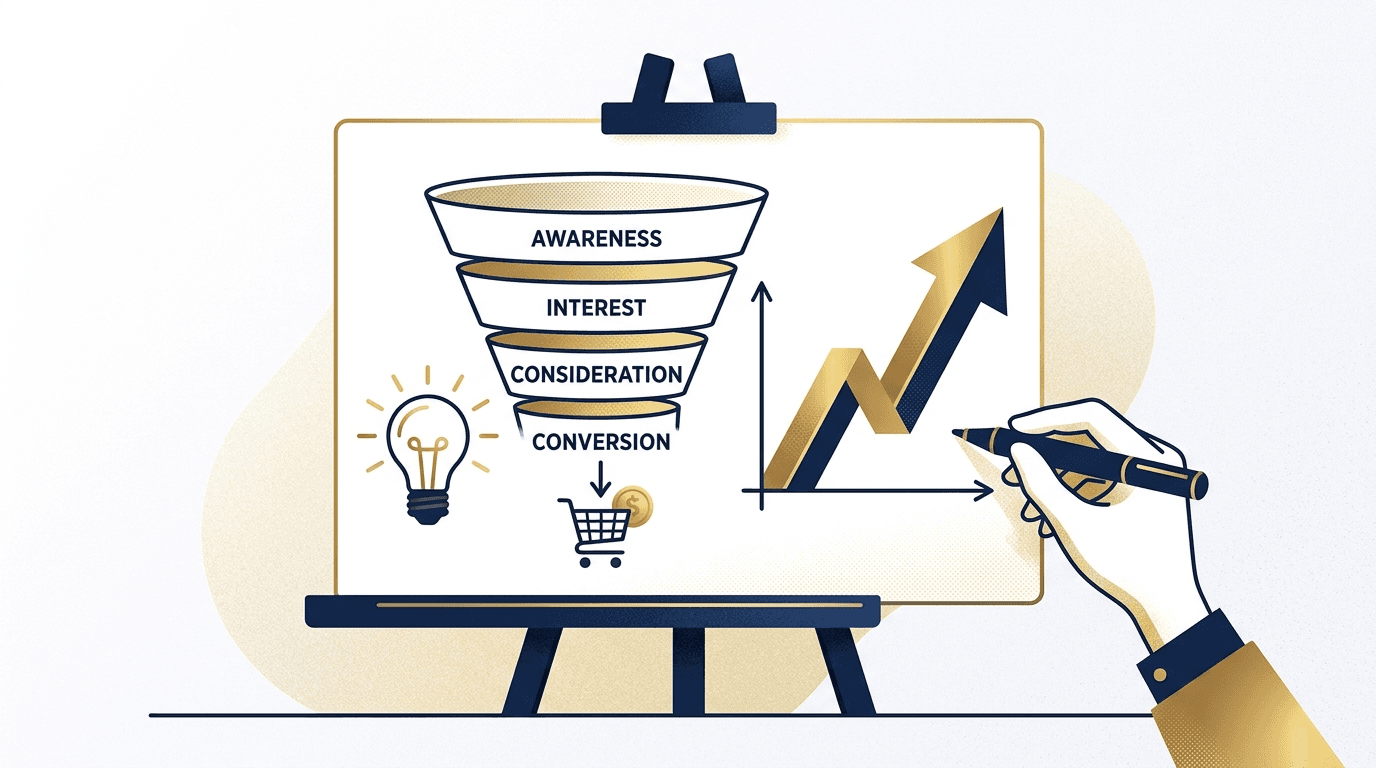
Once the profile is established, we build a strategic blueprint. This stage of the audit evaluates the structural elements of your website against the behaviours and expectations of your target audience. We map the user journey from the initial search query to the final conversion point.
A proper conversion rate optimisation audit identifies the friction points in this journey. We assess the copy, the layout, the technical performance, and the user flow. We determine why people drop off. We prioritise actions based on revenue potential, not just design aesthetics. This is how we ensure the audit is pointed at buyers, not vanity traffic. We create a highly specific plan of action.
Perform
The final stage is accountable execution. We do not hand you a report and leave. A CRO audit service page that lists recommendations without offering implementation support is selling you half a solution. We execute the prioritised actions. We monitor the results. We report against revenue. If a change does not increase qualified leads, we revise it. This strict process is the only way to guarantee a measurable return on investment. Our 98% client retention rate across the entire 3P Digital agency exists because we focus on performance, not on selling hours.
What a Real CRO Audit Includes: Beyond Activity Reports
Most agencies treat a CRO audit as a quick checklist. They run your URL through a software programme, export a PDF, and email it to you. That is an activity report. A real conversion rate optimisation audit is a comprehensive investigation into deep user behaviour. Here is what actually goes into a professional audit.
Deep User Behaviour Analysis
A software tool cannot tell you why a user abandoned a form. It can only tell you that they did. Deep behaviour analysis requires reviewing session recordings, setting up heatmaps, and examining the exact mouse movements and scroll depths of real users.
When you evaluate website audit services, you must ensure they include qualitative data, not just quantitative data. We need to know the emotional state of the user when they hit a wall. Did the form ask for a mobile number when an email address would have sufficed? Did the value proposition disappear below the fold? We look at the micro-interactions that drive or kill conversion rates.
Technical and Structural Friction
Page speed and mobile responsiveness are critical components of conversion. According to the Australian Bureau of Statistics, mobile internet usage is exceptionally high across the country. If your mobile experience is slow or visually cluttered, you are losing the majority of your audience. However, speed is only part of the equation.
A thorough audit analyses the technical architecture of your pages. We look at the hierarchy of information. We ensure that calls to action are impossible to miss. We remove structural bottlenecks. This detailed structural work is the difference between a website that acts as a brochure and one that acts as a sales representative.
Data Integration and CRM Alignment
The biggest failure of standard marketing reports is that they do not connect to revenue. A real CRO audit service page should clearly state that the agency integrates your website analytics with your Customer Relationship Management system. We need to trace the journey from the first click to the closed deal.
We recently worked with a national recruitment firm that was over-relying on expensive job board spend. Their acquisition costs were unsustainable. We did not just look at their website. We integrated their analytics with their CRM. We analysed the data to find the friction. We then replaced the job board ad spend with a targeted SEO and content strategy. The result was the generation of 574 highly qualified leads, and we reduced their cost per lead by 63.5%. We could not have achieved that without aligning the website audit data with their internal sales records.
The Deliverable Structure
Be wary of agencies that promise a 100-page report. A longer report is often just a sign of obfuscation. A real audit provides clarity. The deliverable should be a prioritised list of actions based on the impact they will have on your bottom line. At 3P Digital, we deliver a blueprint. It tells you what to fix, why it needs to be fixed, and the expected revenue impact of fixing it. That is what accountable execution looks like.
The Performance Difference: Why a Thorough Audit is a Revenue Driver
A conversion rate optimisation audit should never be treated as a compliance exercise. It is a revenue generation exercise. When the audit uncovers the right advantages, the financial returns are massive.
We applied our full framework to a B2B professional services firm that was struggling with generic lead generation and low enquiry volumes. They had decent traffic, but the leads were poor quality. Their previous agency had focused on broad search terms that attracted students and researchers instead of corporate clients.
We executed a full digital marketing overhaul. The key was starting with the Profile stage. We identified their true ideal customer profile and rebuilt the website experience specifically for that demographic. We optimised every page for intent. We stripped away the noise. The outcome was a 247% increase in qualified inbound enquiries. We did not just increase their traffic. We completely changed the quality of their traffic.
This is why a thorough audit matters. It is the strategic work required to find the advantage hiding in plain sight. Australian businesses lose millions of dollars a year on inefficient websites. The ACCC consistently highlights the importance of fair trading and accurate advertising, but many businesses still fail to deliver on their digital promises. Your website must deliver on the promise made in your ad copy. A thorough CRO audit ensures alignment between your traffic sources and your landing pages.
No Lock-In Guarantee: The Importance of Month-to-Month Agreements
The standard business model for digital marketing agencies relies on lock-in contracts. They will tell you that SEO and conversion optimisation take time. They will ask you to sign a 12-month or 24-month agreement to see results. I completely disagree with this approach.
My position is clear. Agencies should operate on month-to-month agreements with no lock-in contracts.
If an agency is genuinely performing and reporting against actual revenue, the client will naturally stay. The results will speak for themselves. Lock-in clauses often protect the agency from their own underperformance. If an agency needs a legal threat to retain your business, their work is not good enough.
When you are reviewing a CRO audit service page, look for an agency that stands by its work. We retain clients through performance. Our 98% client retention rate is not maintained by contractual obligation. It is maintained by consistent, measurable results. When we achieve a 46:1 return on investment or a 63.5% reduction in cost per lead, clients do not leave. They increase their investment.
This is the exact reason why 3P Digital operates without restrictive contracts. We want our team focused on finding the next advantage for your business, not on finding ways to justify our monthly retainer. We prioritise serious buyers over vanity metrics. We treat your marketing budget as an investment that must yield a return.
How to Evaluate an Australian CRO Agency in 2026
The landscape for conversion rate optimisation in Australia continues to mature. In 2026, the technology available to track user behaviour is highly advanced. However, the logic required to interpret that data remains rare. When you are looking to hire an agency, you need to move past the surface-level claims.
Ask for Case Studies Based on Revenue
Do not ask for case studies that show a percentage increase in traffic. Ask for case studies that show a reduction in cost per acquisition. Ask for examples where the agency directly influenced the bottom line. If the agency cannot provide specific examples of how their audit led to a revenue change, they are not the right partner.
Review Their Process for the 3P Framework
An agency must have a structured approach to profiling your audience, planning the intervention, and performing the work. Ask them how they build an ideal customer profile. Ask them how they map user journeys. If their answer is based on assumptions rather than hard CRM data, walk away.
Check Their Stance on Reporting
The agency must report against revenue. Activity reports are easy to generate and completely useless. You need an agency that understands the relationship between a design change and a closed deal. Ensure they have the capability to integrate server-side tracking and advanced analytics into their audit process.
Frequently Asked Questions
What exactly is a CRO audit service page?
A CRO audit service page is a dedicated landing page on an agency's website outlining their conversion rate optimisation audit process. For businesses, it acts as a blueprint of the provider's methodology, detailing how they analyse user behaviour, identify friction points, and propose revenue-generating changes to your website.
How long does a professional conversion rate optimisation audit take?
A genuine audit requires time to gather baseline data. Typically, a comprehensive analysis takes between 2 and 4 weeks. This allows the agency to collect sufficient session recordings, integrate CRM data, and build a prioritised strategic blueprint rather than rushing a generic template.
Why do you ignore high traffic volumes during an audit?
Traffic is vanity if it consists of price shoppers rather than serious buyers. Sending more traffic to a broken website wastes money. We prioritise traffic quality over quantity. We ensure your marketing spend is pointed at buyers, not vanity traffic, which is why our clients see massive returns on investment despite sometimes having lower overall traffic numbers.
How much does a CRO audit cost in Australia?
The cost of a real CRO audit in Australia varies based on the complexity of your website and the volume of data to be analysed. It is an investment that should pay for itself rapidly through increased conversions and reduced cost per lead. Avoid cheap audits that rely on automated software reports.
Do I need to sign a long-term contract for a CRO audit?
No. At 3P Digital, we strictly believe agencies should operate on month-to-month agreements with no lock-in contracts. If we deliver measurable results and report against actual revenue, our clients stay. We rely on accountable execution, not legal clauses, to retain our partnerships.
Can a CRO audit help my B2B professional services firm?
Absolutely. We recently applied our framework to a B2B professional services firm struggling with generic leads. By optimising their site for their exact ideal customer profile, we achieved a 247% increase in qualified inbound enquiries. Conversion optimisation is highly effective for complex B2B sales cycles.
What is the difference between a CRO audit and standard SEO?
SEO focuses on driving relevant traffic to your website. A CRO audit focuses on ensuring that traffic takes the desired action once they arrive. Both are necessary, but a conversion rate optimisation Australia strategy ensures your existing traffic yields a higher return on investment without requiring additional ad spend.
References
Australian Bureau of Statistics (ABS). Internet Activity, Australia.
Australian Competition and Consumer Commission (ACCC). Scamwatch and Consumer Guarantees Guidelines.
Google Search Central. Core Web Vitals and Technical SEO Guidelines.
Nielsen Norman Group. UX Research and User Behaviour Methodologies.