CRO for Ecommerce Specifically: Turning Australian Traffic into Actual Sales
Most Australian ecommerce store owners are losing money on perfectly good traffic. They pour thousands of dollars into Google Ads, Meta Ads, and SEO, only to watch visitors bounce from their product pages without buying a single thing. The problem is rarely the product or the traffic source. The problem is a leaky sales funnel that drains revenue.
At 3P Digital, we see this pattern constantly. Business owners come to us frustrated by high bounce rates and abandoned carts, insisting that their marketing is broken. In reality, their marketing has done exactly what it was supposed to do. It delivered a human being to the website. The failure happened at the point of sale. When you treat web design as an aesthetic afterthought rather than a revenue driver, you actively sabotage your return on ad spend.
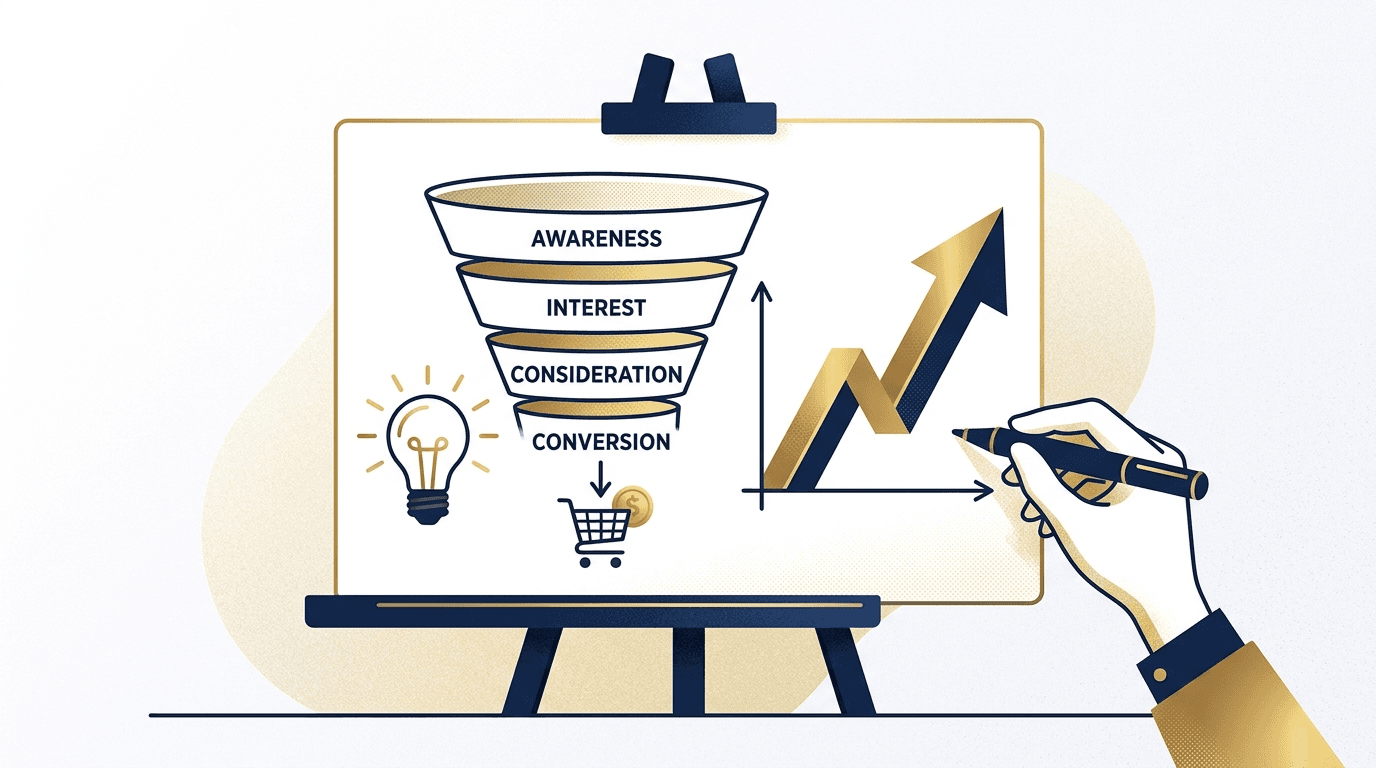
Ecommerce conversion rate optimisation is the process of fixing that leaky bucket. This is not about changing button colours blindly. CRO for ecommerce specifically demands strict accountability, focusing purely on actual sales, user behaviour analysis, and systematic friction reduction. We do not care about superficial clicks. Every campaign we run is reported against revenue, not vanity traffic. If your online store has decent traffic but poor sales, this guide explains exactly how to plug the holes and turn those visitors into paying customers.
Key Takeaways
Vanity traffic is expensive: Driving visitors to an unoptimised store burns your ad budget without yielding a return.
CRO is a revenue driver: Ecommerce conversion rate optimisation is a core financial strategy, not a superficial web design task.
Mobile friction kills sales: Australian consumers buy heavily on mobile. A clunky mobile experience actively destroys your conversion rate.
The 3P Framework uncovers hidden revenue: Using Profile, Plan and Perform ensures your optimisation strategy targets actual buyers.
Accountability matters: Your agency should report against actual sales and operate without lock-in contracts.
Ecommerce CRO Concepts at a Glance
Concept | Traditional Web Design | CRO for Ecommerce Specifically |
Primary Goal | Visual appeal and brand awareness | Maximising completed transactions and revenue |
Methodology | Redesigning pages based on opinions | Data-driven user behaviour analysis and A/B testing |
Mobile Approach | Basic responsive design | Frictionless, thumb-friendly mobile checkout flows |
Success Metric | Page views and time on page | Conversion rate, average order value and cost per acquisition |
Budget Focus | Sunk cost every 3-5 years | Continuous investment with measurable ROI |
The Vanity Traffic Trap
The biggest mistake Australian ecommerce owners make is prioritising traffic volume over conversion readiness. It is a trap that catches almost every growing business. You look at your Google Analytics, see a spike in sessions, and assume the business is scaling. Then the end of the month arrives, the GST is due, and you realise the revenue is not there to back up the clicks.
Driving visitors to an unoptimised online store is like opening a spectacular retail flagship store in the middle of a busy shopping centre, but leaving the cash registers empty, stacking boxes in the aisles, and locking half the fitting rooms. You spent heavily on marketing to get people through the front door, only to deliver a frustrating experience that ensures they leave empty-handed.
This is where the concept of vanity metrics becomes critical. We constantly push back against the industry habit of reporting on clicks and impressions. If you want to understand why this obsession misleads business owners, you should read our recent thoughts on why you need a landing page optimisation service instead of just chasing clicks. Traffic is a tool. It is completely useless if your digital storefront cannot close the deal. When you focus purely on top-of-funnel acquisition, you effectively pour water into a sieve.
The Hidden Cost of Unoptimised Ad Spend
Let us look at the actual maths. Imagine you run an Australian online store selling fitness equipment. You spend $5,000 a month on Google Shopping ads. You receive 2,000 highly targeted clicks. Your cost per click is $2.50.
If your ecommerce conversion rate sits at the industry average of 1.5 percent, you will get 30 sales from that campaign. If your average order value is $150, that campaign generates $4,500 in revenue. You just lost money on every acquisition once you factor in the cost of goods sold.
Now, apply strict online store optimisation in Australia. You do not increase your ad spend. You simply fix your product page layout, clarify your shipping rates, and streamline your checkout. You lift your conversion rate from 1.5 percent to 3.0 percent. You still receive 2,000 clicks for your $5,000. Now, you get 60 sales. Your revenue jumps to $9,000.
You doubled your revenue without spending an extra cent on marketing. This is the power of CRO for ecommerce specifically. It turns red ink into black ink by maximising the value of your existing audience.
Core Ecommerce CRO Fundamentals
Optimising an online store requires a disciplined approach. You cannot rely on guesswork. We use our proprietary 3P Framework, which stands for Profile, Plan and Perform, to methodically dismantle friction and guide buyers toward the checkout. This framework ensures that every change we make serves a specific commercial purpose.
1. Profile: Deep User Behaviour Analysis
Before you change a single pixel on your website, you must understand exactly how your users interact with it. We start every engagement with the Profile phase. This involves heavy data analysis to find the advantage hiding in plain sight.
You need to map the digital body language of your customers. We utilise heat-mapping, session recording and deep funnel analysis to see exactly where users experience friction. We look at mouse movements, scroll depth, and click patterns. We want to know where they stop, where they hesitate, and what makes them abandon the page.
Consider a recent scenario we faced with an Australian automotive parts supplier. They were over-reliant on retail customers and losing market share to online competitors despite generating massive SEO traffic. The traffic was there, but the revenue was lagging. We executed the Profile phase and quickly realised their retail-focused website architecture confused trade buyers.
By mapping user behaviour, we identified a significant blue ocean opportunity. We did not need more retail traffic. We needed to reposition the site to serve high-intent mechanics and workshops. Profiling your users means moving past generic personas and looking at the raw, unfiltered data of how people actually use your website.
2. Plan: Reducing Mobile Friction and Streamlining UX
Once we profile the friction points, we move into the Plan phase. Here we develop a targeted strategy to eliminate roadblocks. For Australian ecommerce stores, mobile friction is the most common and lethal roadblock.
Australians are prolific mobile users. According to the Australian Communications and Media Authority, the vast majority of internet traffic in Australia originates from mobile devices. Yet, many online stores still design primarily for desktop and merely scale the layout down for smaller screens. This creates a catastrophic amount of friction.
Reducing mobile friction requires deliberate online store optimisation in Australia. We look at thumb zones, ensuring that critical buttons like Add to Cart and Checkout sit comfortably within the natural arc of a user's thumb. We strip away intrusive pop-ups that cover the screen on mobile devices. We ensure that forms auto-populate where possible and use numerical keyboards for credit card inputs.
During the Plan phase, we also address site speed. A one-second delay in page load time can reduce conversions significantly. Google's Core Web Vitals are not just SEO ranking factors. They are fundamental indicators of user experience. If your mobile site takes four seconds to load a product image, your conversion rate will plummet. We plan specific technical interventions to cache content, compress images, and minify code to ensure the store loads instantly.
3. Perform: Streamlining the Checkout Process
The Perform phase is where we implement the planned changes and execute rigorous testing. This is the definition of accountable execution. We do not just launch a redesign and hope for the best. We deploy specific A/B tests to validate every hypothesis.
If you want a deeper look at why this methodology outperforms standard agency models, read why your agency partner needs an A/B testing services page, not just monthly reports. Real CRO requires a dedicated testing infrastructure.
The checkout process is the ultimate battleground for CRO for ecommerce specifically. If a user has added a product to their cart, they have signalled a clear intent to buy. Any friction at this stage directly costs you money.
We systematically audit the checkout flow. First, we mandate guest checkout. Forcing users to create an account to complete a purchase is a conversion killer. We strip away unnecessary form fields, asking only for information strictly required to ship the product and process the payment.
We also implement trust signals throughout the process. This includes prominent SSL certificates, clear return policies, and recognisable payment gateways like PayPal, Apple Pay and AfterPay. Australian consumers demand flexible payment options. Displaying these options clearly at the beginning of the checkout flow, rather than at the very end, significantly reduces cart abandonment.
The 3P Framework Advantage: Real Results vs Empty Promises
Digital marketing is an industry plagued by empty promises. Agencies sell generic packages, lock clients into 12-month contracts, and hide behind vanity metrics. We reject this model entirely. Our 3P Framework ensures that every action we take is directly tied to revenue generation.
When we took on a national recruitment firm experiencing high costs and low margins, they were competing against 200-plus generic recruiters with a frustrating 6-month sales cycle. They were burning cash on traffic that did not convert. We applied the 3P Framework to completely overhaul their digital strategy.
We Profiled their market and identified a highly specific niche of tech scale-ups that competitors had completely ignored. We Planned a targeted SEO and content marketing strategy to reposition the agency for this specific audience. Finally, we Performed with relentless execution.
The results were definitive. We reduced their cost per lead by 63.5 percent. That is the power of reducing cost per lead ecommerce strategies when executed correctly. We generated $2 million in new revenue for the firm, increased their placement fees by 87 percent, and slashed their sales cycle from 6 months down to just 2 months.
How CRO Directly Reduces Cost Per Lead
Many business owners view lead generation and ecommerce sales as two separate disciplines. They are not. Every visitor who joins your email list, requests a product catalogue, or abandons a high-ticket cart represents a lead or a lost sale.
Reducing cost per lead ecommerce strategies rely on maximising the conversion rate of your highest-intent traffic. If you run a lead generation campaign that costs $50 per lead, and only 1 in 10 leads converts to a sale, your cost per acquisition is $500.
If CRO improves your lead quality and landing page persuasion, and 1 in 4 leads now converts to a sale, your cost per acquisition drops to $200. You just increased your marketing ROI by 60 percent purely through conversion optimisation. This is how CRO compounds the effectiveness of every other marketing channel you use.
Proven Australian Success: Data and Accountability
Data without context is useless. We measure our success by the actual financial outcomes we generate for Australian businesses. We do not hide behind complex reports filled with jargon. We look at the metrics that matter.
Consider our work with a Queensland mortgage broker. They were stuck on page 3 of search results, relying on inconsistent lead generation and fighting for scraps. The previous agency had focused purely on broad awareness. We implemented a targeted strategy to optimise their digital presence and capture high-intent local search traffic.
By focusing strictly on user intent and conversion readiness, we achieved a 312 percent increase in organic traffic over 6 months. We moved them from page 3 to position 1 for their primary keywords. More importantly, that highly targeted, conversion-ready traffic generated 40+ qualified leads per month.
For the automotive parts supplier I mentioned earlier, the results were even more staggering. By shifting the strategy from retail DIYers to the B2B trade market, creating a dual-brand strategy and trade-focused content, we unlocked massive revenue. We achieved a 46:1 return on SEO investment. We generated $2.3 million in new B2B revenue in the first 12 months and increased qualified trade leads by 127 percent.
No Lock-In Contracts: The Ultimate Accountability
We operate on a month-to-month basis with no lock-in contracts. In the Australian digital marketing industry, this is a contrarian stance. Most agencies insist on 12-month lock-in contracts to ensure stable revenue. We believe exactly the opposite.
If an agency's marketing execution is genuinely driving revenue and accountable results, the client will naturally stay. Lock-in clauses are often used to mask poor performance and a lack of measurable return on investment. We maintain a 98 percent client retention rate across all 3P Digital clients. We earn that retention every single month by delivering measurable financial growth.
When you partner with an agency for CRO, you need alignment. If they are doing their job, your revenue goes up. If your revenue goes up, you happily pay their retainer. It is a simple, transparent relationship built on mutual success.
Deep Dive: Essential Ecommerce Optimisation Tactics
To rank highly and convert fiercely, your ecommerce store needs granular optimisation. Let us explore the specific tactics required to dominate the Australian market.
Mastering Product Page Persuasion
Your product page is your digital salesperson. If it fails to persuade, your entire business fails. We constantly analyse product pages to find the advantage hiding in plain sight.
First, imagery must be precise. Users cannot touch the product, so you must eliminate uncertainty. Use high-resolution images, zoom functionality, and video where possible. For Australian retailers, showing the product in a recognisable local context helps build an immediate connection.
Second, your copy must address objections. Do not just list features. Translate features into tangible benefits. If you sell a waterproof hiking jacket, do not just say it has a 10,000mm waterproof rating. Say it will keep you completely dry during a sudden downpour in the Blue Mountains.
Third, display social proof aggressively. Star ratings and customer reviews directly impact conversion rates. A product page with 50 genuine reviews will consistently outperform a page with zero reviews. Ensure your platform automatically requests reviews post-purchase to build this crucial trust signal.
Finally, make your pricing and shipping completely transparent. Nothing kills an ecommerce conversion faster than hidden shipping costs at the checkout. Display shipping calculations on the product page itself. Better yet, offer free shipping thresholds to increase your average order value.
Cart Abandonment Recovery Strategies
Even with flawless CRO, cart abandonment will happen. Industry averages hover around 70 percent. However, you can claw back a significant portion of this lost revenue through automated recovery strategies.
Implement an automated email sequence that triggers when a user abandons their cart. The first email should go out within one hour. It should simply remind them of what they left behind and offer a direct link back to their populated cart.
If they do not convert, send a second email 24 hours later. This email should address common objections. Provide links to your FAQ, highlight your return policy, or showcase reviews of the specific product they abandoned.
If they still do not buy, send a third email 72 hours later offering a small incentive. A 10 percent discount or free shipping can often push the user over the line. Just ensure you calculate your profit margins carefully so you do not erode your bottom line.
Technical SEO and Site Architecture for Conversions
Site structure plays a massive role in CRO. If users cannot find what they are looking for in three clicks or less, they will leave. Your site architecture must guide users intuitively from broad categories to specific products.
Implement faceted navigation correctly. Allow users to filter by size, colour, price and brand. However, ensure you use proper canonical tags or robots.txt rules to prevent search engines from indexing duplicate filtered URLs, which can dilute your SEO authority.
Breadcrumbs are another essential element. They help users understand their location within your store and easily navigate back to broader categories. They also provide search engines with clear contextual signals about your site structure.
Finally, ensure your internal search function is robust. For larger catalogues, a poor search function cripples your conversion rate. Implement autocomplete suggestions, allow for common misspellings, and ensure the search results page clearly displays relevant products, not just blog posts or category pages.
Using Data to Drive Continuous Improvement
CRO is never finished. Consumer behaviours change, new competitors enter the market, and your product lines evolve. You must adopt a mindset of continuous improvement.
We build live dashboards for our clients so they can see exactly how their campaigns perform in real time. These dashboards track metrics like revenue, transaction volume, conversion rate and average order value. We monitor these metrics daily.
When you spot a drop in conversions, you can react immediately. Perhaps a specific product page is underperforming after a recent description update. Perhaps a checkout plugin updated and broke a critical payment gateway. Live data allows you to catch these issues before they cost you tens of thousands of dollars.
This dedication to accountable execution is what separates successful ecommerce brands from failing ones. You must treat your website as a living, breathing commercial asset that requires constant tuning and optimisation.
Overcoming Common Australian Ecommerce Challenges
Operating an online store in Australia presents unique challenges. You must account for vast geographical distances, specific consumer expectations, and local competition.
Navigating Australian Shipping and Logistics
Shipping logistics in Australia are notoriously difficult. High costs and long delivery times to regional and rural areas can destroy your conversion rate. You must be strategic about how you handle this.
First, be transparent. If delivery to Western Australia takes 10 days, state that clearly on the product page. Do not surprise the customer at the checkout. Uncertainty causes cart abandonment.
Second, negotiate aggressively with couriers. As your volume grows, use your scale to secure better shipping rates. Pass a portion of these savings onto your customers to increase your competitive advantage.
Third, offer click and collect if you have physical locations. This provides an immediate solution for customers who need the product quickly and bypasses shipping costs entirely.
Building Trust with Australian Consumers
Australian consumers are highly discerning. They value trust and transparency over flashy marketing. To optimise your conversion rate, you must build immediate credibility.
Display clear contact information. A physical address, a local phone number, and a responsive customer service email build trust. If you hide your contact details, consumers will assume you are a dropshipping scam.
Ensure your returns policy is fair and easy to find. A generous returns policy reduces the perceived risk of purchasing. If a customer knows they can return an item easily within 30 days, they are far more likely to complete the initial purchase.
Finally, utilise local trust badges. Displaying that you are an Australian registered business, a member of relevant industry associations, or certified by independent review platforms provides the social proof necessary to convert cautious buyers.
Implementing the 3P Framework in Your Store
You do not need to guess your way to higher conversions. The 3P Framework provides a clear, actionable path to scale your ecommerce revenue.
Step 1: Conduct a Comprehensive Audit
Start with the Profile phase. Audit your current analytics. Look at your bounce rates, your exit pages, and your funnel drop-off points. Install heat-mapping software and spend a week just watching how users interact with your store. You will quickly identify the most glaring friction points.
Step 2: Build a Hypothesis-Driven Plan
Move into the Plan phase. Take the data you gathered and build specific hypotheses. For example, you might hypothesise that adding trust badges to your checkout page will increase conversions by 5 percent. Or you might hypothesise that simplifying your mobile navigation menu will reduce your bounce rate. Prioritise your hypotheses based on the potential revenue impact and the ease of implementation.
Step 3: Execute and Measure Relentlessly
Enter the Perform phase. Implement your changes using A/B testing tools. Test your original page against the new variation. Ensure you run the test long enough to achieve statistical significance. If the new variation wins, implement it permanently. If it loses, learn from the data and form a new hypothesis.
This cycle of testing and refinement is the foundation of CRO for ecommerce specifically. It removes guesswork and replaces it with data-backed certainty.
Stop Wasting Ad Spend on Unoptimised Stores
If your ecommerce store has traffic but no sales, you have a conversion problem. Continuing to pump money into ads without fixing your funnel is financial suicide.
At 3P Digital, we help Australian businesses find the advantage hiding in plain sight. We turn leaky websites into high-performing revenue generators using our Profile, Plan, Perform methodology. We operate with full transparency, we report against actual sales, and we never lock our clients into long-term contracts.
Stop wasting your marketing budget on vanity traffic. If you are ready to turn your current traffic into actual sales, book a complimentary 3P Profile session today. We will analyse your current ecommerce store, identify the hidden revenue opportunities, and show you exactly how to increase your conversions and reduce your cost per acquisition.
Frequently Asked Questions
What is CRO for ecommerce specifically?
CRO for ecommerce specifically is the process of optimising your online store to increase the percentage of visitors who complete a purchase. Unlike general website optimisation, it focuses entirely on ecommerce metrics like transaction volume, average order value, cart abandonment rates and revenue generation.
How is ecommerce conversion rate optimisation different from SEO?
SEO focuses on driving quantity and relevance of traffic to your website. Ecommerce conversion rate optimisation focuses on what those visitors do once they arrive. SEO gets people to your front door. CRO ensures they actually walk in and buy something. Both are essential, but CRO ensures you get a return on your SEO investment.
How long does it take to see results from CRO?
You can see initial results from CRO within the first few weeks of implementing obvious fixes, such as speeding up a slow checkout page or clarifying shipping costs. However, true CRO is an ongoing process. Significant, compounding revenue increases typically require 3 to 6 months of continuous A/B testing and refinement.
How much does online store optimisation in Australia cost?
The cost depends entirely on the size of your store and the complexity of your funnel. Unlike agencies that charge flat retainers for generic packages, we focus purely on return on investment. The cost of our service should be a fraction of the additional revenue we generate for your business through improved conversions.
Why do you not use lock-in contracts?
We believe results should retain clients, not legal clauses. Lock-in contracts are often used by agencies to mask poor performance. We operate on a month-to-month basis because we are confident our accountable execution will drive measurable revenue growth for your ecommerce store. We maintain a 98 percent retention rate based purely on performance.
What is a good ecommerce conversion rate?
A standard ecommerce conversion rate typically sits between 1.5 percent and 3.0 percent. However, what constitutes a good rate depends on your industry, your price point and your traffic source. Instead of comparing yourself to broad averages, you should focus on continuously beating your own baseline through rigorous testing.
Can CRO help with reducing cost per lead ecommerce strategies?
Yes. CRO fundamentally improves the efficiency of your marketing spend. If your conversion rate doubles, your cost per acquisition halves. By ensuring your website converts higher percentages of your ad traffic, you directly reduce the cost per lead and cost per sale for your entire business.
References
Australian Communications and Media Authority (ACMA). Communications report: A snapshot of the Australian digital landscape.
Australian Competition and Consumer Commission (ACCC). Digital platforms inquiry: Final report.
Australian Bureau of Statistics (ABS). Retail Trade, Australia: Online sales data and consumer behaviour trends.
Google. Core Web Vitals: Technical performance metrics for web developers and SEO professionals.