LinkedIn Ads service page (especially given B2B focus)
A LinkedIn Ads service page, especially given B2B focus, should explain how the agency identifies real buying committees, builds role-specific offers, selects suitable ad formats, tracks conversions through to sales, and improves commercial return. It should sell accountable execution, not access to LinkedIn's targeting tools or a promise of more clicks.
Introduction
LinkedIn Ads can put an offer in front of professionals selected by role, seniority, industry and company characteristics. That does not automatically make the channel profitable. Effective campaigns require accurate customer intelligence, a credible offer, disciplined measurement and a clear connection between advertising activity and the sales pipeline.
For Australian SMEs and mid-market companies, the central question is not whether LinkedIn can reach business buyers. It can. The question is whether the economics work after accounting for lead quality, sales conversion, deal value and sales cycle length. This guide explains how we make that decision and manage the channel.
Key takeaways
The strongest LinkedIn Ads programmes begin with commercial strategy rather than campaign settings. They define the buyer, buying situation and sales value before choosing targeting or creative. They also measure qualified pipeline, not just platform conversions, because a low-cost form submission can still be commercially worthless.
Start with Profile intelligence covering customers, buying committees, competitors and commercial advantage.
Match each offer to the buyer's role, problem awareness and stage in the buying process.
Use LinkedIn's professional targeting carefully, without making audiences so narrow that delivery becomes unstable.
Treat conversion tracking, CRM attribution and lead-quality feedback as core campaign infrastructure.
Compare LinkedIn against paid search, SEO and other channels using qualified pipeline and revenue.
Scale budget only where the tracked return justifies it.
Summary table
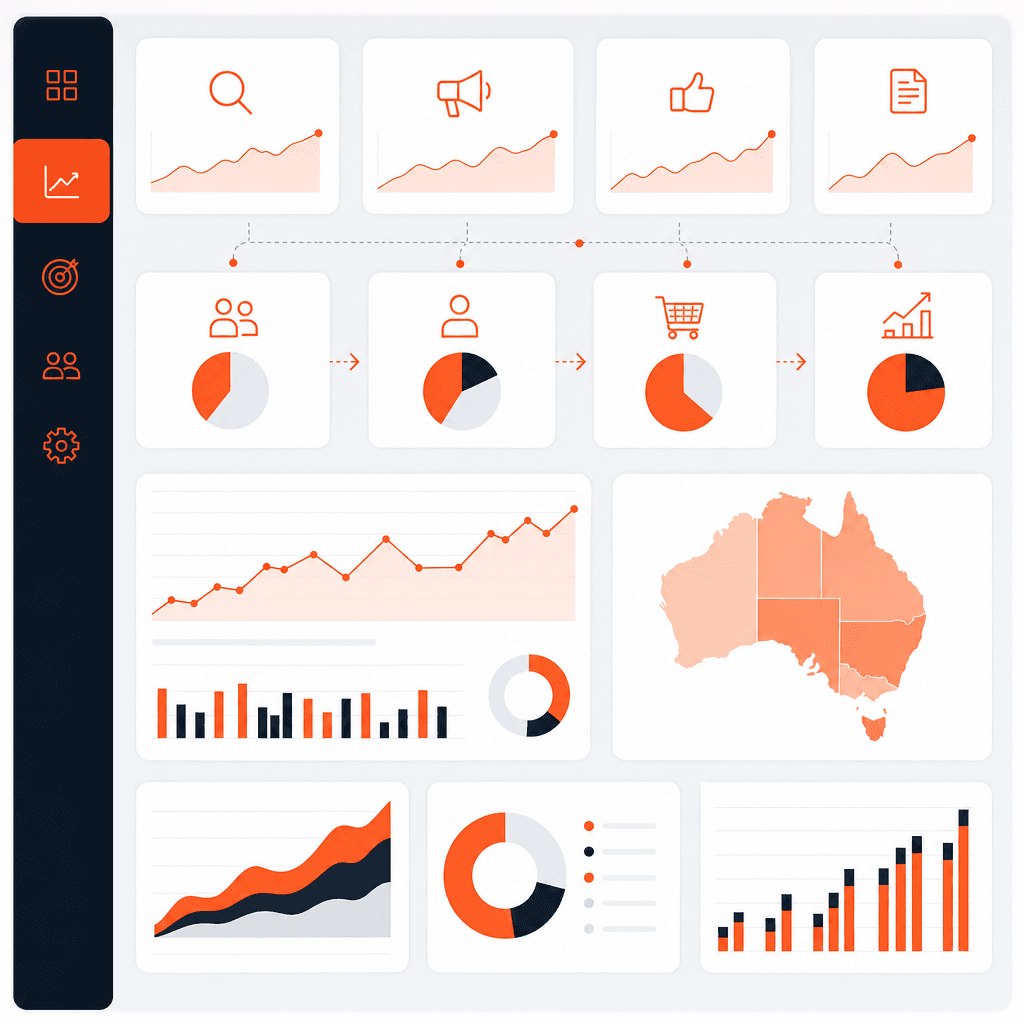
LinkedIn campaigns work best when strategy, targeting, creative and measurement support the same commercial objective. The table below shows how each component should function within a B2B advertising programme and the warning signs that usually indicate wasted spend or weak positioning.
Component | What effective execution looks like | Common warning sign |
Profile | A defined ideal customer profile, buying committee and commercial problem | Broad personas based mainly on age or job title |
Plan | A strategic blueprint connecting offers, messages, formats and sales stages | Campaigns launched because competitors appear active |
Perform | Accountable execution, testing and sales-quality feedback | Reporting centred on impressions and clicks |
Targeting | Relevant combinations of company and professional attributes | Excessive filters creating a small, fragile audience |
Creative | Role-specific value propositions with credible evidence | Generic brand claims used for every decision-maker |
Measurement | Platform, website and CRM data connected to qualified outcomes | Lead forms counted without checking sales acceptance |
Why LinkedIn Ads suit B2B marketing
LinkedIn Ads suit B2B marketing because the platform lets advertisers define audiences using professional and organisational attributes. That can help a business reach people involved in a purchase before those people conduct an obvious search. The advantage is audience context, but the campaign still needs a relevant problem, offer and commercial case.
LinkedIn states that its advertising platform reaches more than one billion professionals worldwide and supports targeting by attributes such as job title, seniority, company, industry and professional interests. These capabilities are outlined on LinkedIn Marketing Solutions.
This matters when a product or service has a recognisable buying committee. Consider a technology consultancy selling an enterprise governance engagement. The economic buyer may be a managing director, while a CIO assesses delivery risk and procurement examines contractual requirements. Sending all three people the same advertisement ignores how B2B decisions are made.
A stronger campaign separates audiences by their role in the decision:
Executives receive a commercial message about risk, cost and strategic impact.
Technical evaluators receive evidence about implementation, integration and operational control.
Procurement stakeholders receive material that reduces supplier and compliance uncertainty.
End users receive practical information about adoption and day-to-day value.
LinkedIn can also create demand where search volume is limited. A buyer cannot search for a category they do not understand yet. An expert-led report, diagnostic or briefing can introduce the problem and establish useful language before the buyer reaches an active vendor comparison.
The limitation is intent. A relevant job title does not prove someone needs the offer now. Search advertising often captures declared intent through a query. LinkedIn identifies people who fit a professional profile. That distinction should shape both the offer and the way performance is judged.
What a LinkedIn Ads service should include
A credible LinkedIn Ads service should include discovery, audience design, offer development, campaign production, tracking, optimisation and commercial reporting. Campaign management alone is insufficient. If an agency starts by selecting job titles and uploading advertisements, it is making tactical decisions without understanding why the right buyer should respond.
At 3P Digital, our approach follows Profile, Plan, Perform.
Profile: understand the market before the media
Profile intelligence identifies the ideal customer, buying committee, commercial problem and credible reason to choose the business. This is where we examine customer evidence, sales conversations, existing conversion data, competitive claims and the economics of acquiring a new account.
The work should answer practical questions:
Which organisations can receive and pay for the service?
Which roles experience the problem, approve the budget and influence the decision?
What event makes the issue urgent?
Which objections delay action?
What evidence would make the offer credible?
What is a qualified opportunity worth to the business?
The advantage hiding in plain sight is often found here. It may be specialist expertise, faster implementation, lower operational risk or a delivery model suited to Australian organisations. It is rarely the vague claim that a business offers quality service.
Plan: create the strategic blueprint
The Plan stage converts customer intelligence into campaign architecture. We define audience groups, propositions, content, landing pages, conversion actions and the relationship between LinkedIn and other channels.
A cold executive audience may need a concise briefing or diagnostic before accepting a sales conversation. A retargeting audience that has already reviewed a service page may be ready for a consultation. Treating both groups identically usually creates either premature sales pressure or an unnecessarily weak call to action.
Planning also establishes exclusions. Existing staff, irrelevant job functions, unsuitable company categories and converted contacts can consume budget without adding pipeline. Exclusions are not administrative housekeeping. They are a direct part of media efficiency.
Perform: execute, measure and improve
Perform covers campaign setup, creative production, launch checks, budget control, audience monitoring and reporting. Optimisation should examine more than click-through activity. It should connect each audience and advertisement to meaningful actions, accepted leads, opportunities and revenue where the sales data allows it.
This is accountable execution. The objective is results, not just activity reports.
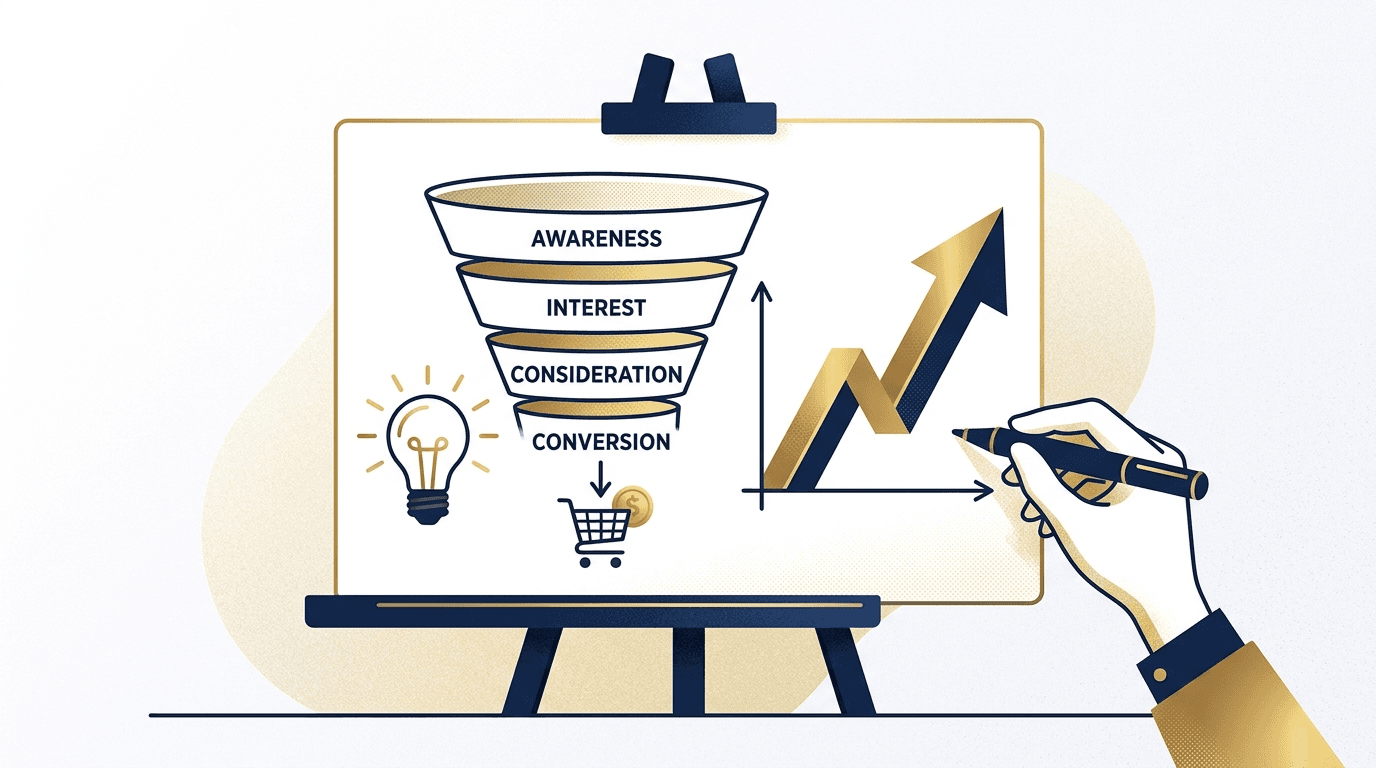
Choosing LinkedIn ad formats for the buying journey
The right LinkedIn ad format depends on the buyer's awareness, the complexity of the offer and the required next action. Sponsored Content is generally useful for reach and education, while lead forms reduce submission friction. Messaging, Dynamic Ads and Text Ads should be selected for a defined role, not added merely because the formats exist.
LinkedIn describes its main advertising options on its advertising overview. Each format solves a different communication problem.
Sponsored Content
Sponsored Content appears in the LinkedIn feed and can carry a single image, video, document or carousel. It is suitable for expert insights, research, service propositions and retargeting messages.
The creative should make sense without relying on the caption. Busy decision-makers need to recognise the problem and value quickly. A strong advertisement usually combines a specific commercial issue, a clear audience and credible evidence. Generic claims such as "grow your business" provide little reason to stop scrolling.
Lead generation forms
LinkedIn lead forms can pre-fill information from a member's profile, reducing the effort required to respond. Lower friction can increase form completion, but completion is not the same as qualification.
Ask only for information the sales team will use. Then validate whether submitted details match the ideal customer profile. If sales repeatedly rejects leads from a particular offer or audience, the campaign should change even if the platform reports an attractive conversion result.
Sponsored Messaging
Sponsored Messaging can deliver a message within LinkedIn's messaging environment. It requires restraint. The message should feel relevant to the recipient's role and provide a useful reason to engage. An automated sales pitch presented as a personal note can damage trust before a salesperson speaks with the account.
Dynamic Ads and Text Ads
Dynamic Ads can personalise elements using member profile information. Text Ads provide a compact desktop placement. Both can support awareness and retargeting, but neither compensates for weak positioning. Format customisation should serve the message rather than become the message.
Building B2B targeting without wasting budget
Effective LinkedIn targeting combines a small number of meaningful professional and company attributes, then tests whether those audiences produce qualified opportunities. More filters do not automatically mean greater precision. Over-targeting can restrict delivery, while broad job-title lists can include people with similar labels but entirely different responsibilities.
Start with the account characteristics that determine commercial fit. These may include industry, company size, location and named organisations. Add the professional characteristics that indicate buying influence, such as function or seniority.
Job titles require particular care. Titles vary between organisations. A growing Australian business may give one manager responsibilities handled by several specialists inside a larger enterprise. Targeting only exact titles can exclude relevant buyers, while targeting broad seniority can introduce unrelated functions.
We prefer to build audience hypotheses around buying roles:
The problem owner feels the operational impact.
The technical evaluator assesses feasibility and risk.
The economic buyer controls or approves expenditure.
The internal advocate helps the proposal move through the organisation.
Matched Audiences can add website visitors, contact lists or company lists where the available data and privacy obligations support that use. Retargeting is particularly useful when a buyer has engaged with a detailed service page or expert resource but is not ready to enquire.
Audience expansion features should be monitored carefully. Additional reach is only valuable when it maintains relevance. Review demographic delivery data, lead records and sales feedback rather than assuming the platform's expansion reflects the intended market.
Offers and creative that generate qualified leads
B2B LinkedIn creative should make a commercially important problem specific, show why the advertiser understands it and offer a proportionate next step. Cold audiences rarely need more adjectives. They need useful evidence, a clear point of view and a reason to believe the business can solve the issue.
Strong offers often reduce uncertainty before asking for a sales meeting. Examples include a diagnostic, calculator, practical briefing, benchmark using verified business data, case study or consultation focused on a defined problem.
The offer must fit the buyer's stage. An executive who has only just recognised an emerging compliance issue may engage with an expert briefing. Someone who has visited pricing and implementation pages may be ready to discuss scope.
Creative testing should isolate meaningful variables. Test a commercial problem against another problem, or an evidence-led proposition against a process-led proposition. Constantly changing the audience, offer, copy and landing page together makes the result difficult to interpret.
Landing pages should continue the same argument made in the advertisement. They should explain:
Who the service is for.
Which costly problem it addresses.
What the engagement includes.
Why the provider is credible.
What happens after the enquiry.
Which action the visitor should take.
The goal is buyers, not vanity traffic. A smaller group of relevant visitors can be worth more than a large audience attracted by an overly broad resource.
Tracking LinkedIn Ads from lead to revenue
LinkedIn Ads measurement should connect campaign activity to website actions, CRM records, sales acceptance, opportunities and revenue. Platform-reported conversions are useful diagnostic signals, but they are not the final commercial result. Without downstream data, an agency cannot reliably distinguish a cheap enquiry from a valuable prospect.
LinkedIn's Insight Tag documentation explains how the tag supports conversion tracking, website audience creation and campaign insights. Implementation should be checked against the website's consent controls and the organisation's privacy obligations.
A practical measurement structure includes:
Consistent campaign naming and URL parameters.
LinkedIn conversion events for meaningful actions.
CRM fields preserving original source and campaign data.
A defined difference between enquiries, marketing-qualified leads and sales-accepted leads.
Opportunity and revenue feedback where the sales system supports it.
Regular reconciliation between platform, analytics and CRM records.
Attribution will never be perfect. B2B purchases can involve multiple people, devices and channels. A decision-maker may see an advertisement, read an organic article, attend a webinar and later search the brand name. The correct response is not to abandon measurement. It is to document attribution limits and compare multiple signals.
Australian advertisers also need to consider privacy and advertising obligations. Where the Privacy Act applies, data handling should align with the Australian Privacy Principles. Claims in advertisements and landing pages must also be accurate and supportable. The ACCC guidance on false or misleading claims provides the relevant baseline.
LinkedIn should earn its place in the channel mix
My view is simple: LinkedIn should not receive budget merely because the business sells to other businesses. It should earn its place against paid search, SEO, content, email and direct sales activity. The winning channel is the one producing commercially valuable opportunities at an acceptable acquisition cost.
This is where many LinkedIn service pages become too platform-focused. They describe targeting features, advertisement formats and campaign dashboards. Those are tools. They do not explain whether LinkedIn is the right channel for the business.
A technology advisory firm we worked with illustrates the broader principle. The firm competed for CIO and board-level buyers, but tracking was unreliable and paid search efficiency was weak. We rebuilt tracking, developed expert-led content and managed bids and search terms while holding the paid media budget flat.
According to 3P Digital's live account data, organic traffic increased by 170%, from 200 to 540 monthly visits over six months. Ad clicks rose by 44% on the same budget, cost per click fell by 30%, and June delivered 437 tracked conversions at $9.28 each. This was not a LinkedIn campaign, and that is precisely the point. Better measurement and buying-intent control came before spending more on another platform.
The same principle applies to LinkedIn. If paid search captures strong existing demand, protect that opportunity first. If the market needs education or the target accounts are identifiable before they search, LinkedIn may fill an important gap. Strategy must fit the business, not the agency's preferred channel package.
How 3P Digital manages LinkedIn Ads
Our LinkedIn Ads service begins with customer and market discovery, then moves into a strategic blueprint and accountable execution. We do not treat media buying as a standalone task. Campaign decisions must reflect the sales model, commercial advantage, internal capacity and evidence available to support the offer.
The engagement can include:
Ideal customer profile and buying-committee development.
Competitor and market analysis.
Offer and message development.
LinkedIn audience architecture and exclusions.
Campaign and creative production.
Landing page and conversion-path recommendations.
Insight Tag and analytics implementation support.
CRM attribution planning.
Lead-quality and pipeline reporting.
Ongoing testing, budget control and optimisation.
Reporting explains what is working, what is wasting money and why. We do not recommend extra spend because impressions are rising. Budget only scales where the tracked return justifies it.
We also avoid long contracts used as a substitute for performance. Our model is month to month, no lock-in. According to 3P Digital's own client records, the agency has maintained a 98% retention rate across more than 250 clients served. Retention should come from useful work and transparent results, not contractual friction.
To assess whether LinkedIn Ads fit your B2B growth plan, contact 3P Digital through the contact page at /contact. We will examine the audience, offer, economics and tracking requirements before recommending spend.
Frequently asked questions
These questions address the practical concerns Australian business owners and marketing managers raise when assessing LinkedIn Ads. The right answer depends on deal value, audience size, sales capacity and measurement quality. No platform benchmark can replace an assessment of whether acquired opportunities become profitable customers.
Are LinkedIn Ads effective for B2B companies?
LinkedIn Ads can be effective when the target buyers are identifiable through professional attributes and the value of a qualified opportunity supports the acquisition cost. They are less compelling when the audience is extremely broad, the offer lacks evidence or the business cannot track leads through its sales process.
Are LinkedIn Ads better than Google Ads for B2B leads?
Neither platform is universally better. Google Ads can capture people expressing active demand through search. LinkedIn can reach suitable professionals before they search or when search volume is limited. Many B2B programmes need both, with each channel assessed against qualified pipeline and revenue rather than clicks alone.
How much should an Australian business spend on LinkedIn Ads?
There is no responsible universal budget. The amount should reflect audience size, deal value, conversion expectations, sales capacity and the cost of obtaining enough evidence to make decisions. Start with a controlled test and scale only after lead quality and commercial return support the increase.
Which LinkedIn ad format is best for lead generation?
Sponsored Content combined with a relevant landing page or LinkedIn lead form is often a practical starting point, but the best format depends on the offer and buyer stage. Messaging, Dynamic Ads and Text Ads should be used when their placement supports a clear campaign role.
How should LinkedIn lead quality be measured?
Measure whether each lead matches the ideal customer profile, is accepted by sales, progresses to an opportunity and contributes revenue. Form completion cost alone is inadequate. Feed rejection reasons and opportunity outcomes back into audience, offer and creative decisions.
Does 3P Digital require a long-term LinkedIn Ads contract?
No. 3P Digital works month to month, with no lock-in. The engagement begins with Profile, Plan, Perform and remains accountable to agreed commercial measures. Continuation should depend on transparent work, strategic value and measurable performance rather than a restrictive contract.
References
The sources below support the platform, tracking, privacy and advertising-compliance information used in this article. Commercial examples and performance figures are identified separately as 3P Digital's own account data. No third-party benchmark should be applied without considering the advertiser's market, sales process and attribution limits.
Office of the Australian Information Commissioner: Australian Privacy Principles
Australian Competition and Consumer Commission: False or misleading claims
FAQ_SCHEMA_JSON