Social Media Marketing Strategy for Australian Businesses: How to Build a Lead-Generating Presence in 2026
Introduction
Most Australian SMEs are active on social media. They post regularly, build a following, get a few likes, and then wonder why none of it translates into revenue. The problem is not effort. It is strategy. Social media has been sold to small business owners as a brand awareness tool, and while awareness has value, awareness alone does not pay invoices. In 2026, with over 21.3 million active social media users in Australia and average daily usage sitting at around 1 hour 47 minutes per person, the audience is there. The question is whether your strategy is built to convert that audience into leads, or simply entertain them.
The gap between businesses that generate consistent leads from social media and those that do not comes down to three things: platform alignment, content intent, and measurement discipline. Most businesses get none of these right from the start. They choose platforms based on personal preference rather than where their buyers actually spend time. They create content that is either purely promotional or purely entertaining without connecting either to a buying decision. And they measure success by follower counts and reach rather than pipeline contribution. This guide is designed to fix all three.
At 3P Digital, we have helped Australian businesses across mortgage broking, recruitment, fitness, and professional services build social media strategies that contribute directly to lead generation. This is not a generic content calendar template. This is a strategic framework grounded in how Australian buyers actually behave online, what platforms are worth your time and budget in 2026, and how to build systems that turn social activity into measurable business outcomes.
Key Takeaways
Platform selection should be driven by your buyer profile, not by platform popularity. LinkedIn dominates B2B lead generation in Australia while Meta still leads B2C reach and retargeting.
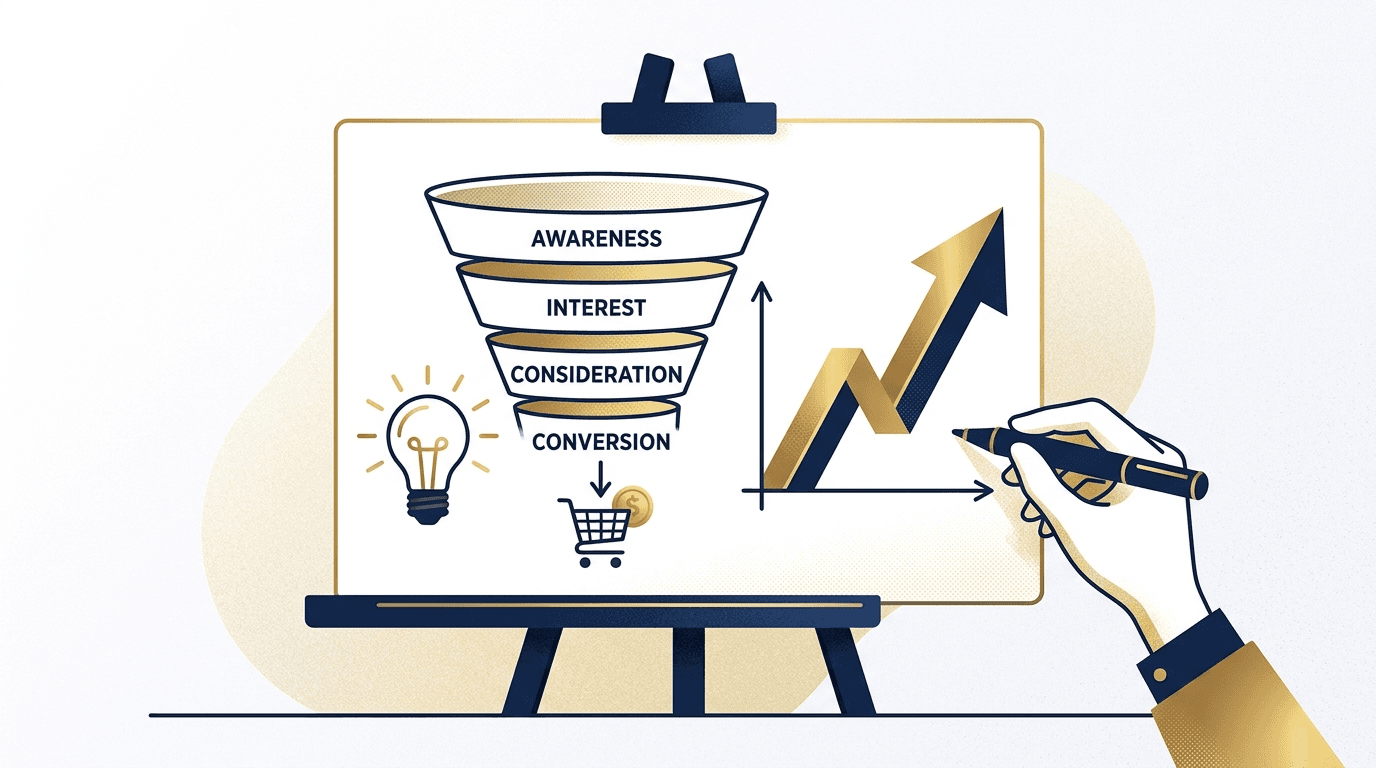
A content pillar model tied to buyer journey stages moves prospects from awareness to consideration to conversion rather than keeping them permanently entertained.
Organic and paid social are not competitors. Organic builds trust and warms audiences. Paid amplifies what already works and accelerates pipeline.
Vanity metrics including likes, reach, and impressions are not business metrics. Social media ROI must be measured in leads, cost per lead, and revenue attributed.
Lead capture mechanics, including native lead forms, DM automation, and dedicated landing pages, are the connective tissue between social content and your CRM.
The biggest mistake Australian SMEs make is inconsistency driven by lack of process. Strategy without a repeatable system fails within 90 days.
Summary Table: Social Media Platform Comparison for Australian Businesses in 2026
Platform | Australian Monthly Users | Primary Audience | Best Use Case | Avg. Cost Per Lead (AUD) | B2B or B2C Fit |
6.5 million | Professionals, decision-makers, 25-54 | B2B lead gen, thought leadership, recruitment | $80–$180 | Primarily B2B | |
Meta (Facebook) | 17.5 million | Broad demographic, 25-65+ | Retargeting, local lead gen, community building | $25–$70 | Both, stronger B2C |
11.2 million | 18-44, lifestyle-oriented | Brand building, product-based businesses, visual services | $30–$80 | Primarily B2C | |
TikTok | 8.9 million | 18-34, growing 35+ segment | Organic reach, brand awareness, early-funnel engagement | $40–$120 | B2C, emerging B2B |
Cost per lead benchmarks are indicative averages based on industry aggregates. Actual CPL varies significantly by industry, targeting precision, and creative quality.
Article Body
Why Most Social Media Strategies Fail to Generate Leads
The failure mode for Australian SME social media is predictable. A business owner or marketing manager decides the company needs to be more active on social. They start posting product photos, company updates, and motivational quotes three times a week. After 90 days, they have more followers but no new clients. They conclude that social media does not work for their industry and either scale back or hand it to a junior staff member to keep the lights on.
This pattern is not unique to any one industry. We see it in mortgage broking firms, recruitment agencies, fitness studios, and professional services practices across Australia. The root cause is almost always the same: the strategy was built around content creation rather than buyer intent.
Leads come from three conditions being met simultaneously. The right person sees relevant content at the right stage of their buying journey, and there is a clear next step for them to take. Most social media strategies satisfy none of these conditions consistently.
The right person condition fails when businesses post for everyone rather than for a specific buyer profile. A mortgage broker posting generic homeownership tips will attract first home buyers, property investors, refinancers, and people who are simply curious. None of these groups will take action without content that speaks directly to their specific situation.
The relevant content condition fails when businesses treat all content as top-of-funnel. Awareness content builds audiences. But if every post is awareness content, prospects never move toward a decision. There is no consideration content that handles objections. There is no conversion content that prompts action.
The clear next step condition fails when businesses post without a call to action connected to a lead capture mechanism. Telling someone to visit your website is not a next step. A specific offer, a lead magnet, a booking link, or a DM conversation opener is a next step.
Fix these three failure points and you have the foundation of a strategy that works.
Choosing the Right Platforms for Your Australian Audience
Platform selection is one of the highest-leverage decisions in your social media strategy. Being present on the wrong platforms does not just waste time. It actively dilutes your effort and makes consistency harder to maintain.
The framework we use at 3P Digital is straightforward. Start with your Ideal Customer Profile (ICP). Identify where that person spends their time online and what they are doing when they are there. Then match your content format and budget to that behaviour.
LinkedIn for Australian B2B
If you sell to businesses, LinkedIn is non-negotiable. With 6.5 million Australian users and the highest concentration of senior decision-makers of any platform, LinkedIn is where B2B relationships are built and commercial conversations happen. Australian professionals use LinkedIn not just for job searching but for consuming industry content, validating vendors, and researching solutions before they engage.
For B2B companies, LinkedIn serves two functions. Organically, it is a trust-building engine. Founders, subject matter experts, and sales leaders who publish consistently build credibility that accelerates the sales cycle. Paid LinkedIn, while more expensive than other platforms, delivers qualified audiences that are difficult to replicate elsewhere. A $120 cost per lead sounds high until you factor in that the lead is a CFO, operations manager, or business owner rather than a curious consumer.
Meta for Australian B2C and Retargeting
Facebook's user base in Australia is ageing upward. In 2026, the most active demographic on Facebook is 35 to 64, which makes it highly relevant for businesses selling to homeowners, professionals, parents, and established consumers. Instagram skews younger but shares the same ad infrastructure, which means you can run unified campaigns across both placements.
Meta's real power for Australian SMEs is in retargeting and local audience targeting. A mortgage broker in Brisbane can run Facebook lead ads targeting 35-to-55-year-olds within 20 kilometres who have visited their website in the last 30 days. That level of granularity at $30-50 per lead is genuinely compelling for local service businesses.
TikTok for Reach and Younger Audiences
TikTok in Australia has matured significantly. The platform is no longer just for teenagers, with the 25-34 segment now representing a substantial portion of Australian TikTok users. For businesses targeting younger demographics, TikTok's organic reach is still the most generous of any platform. A well-executed video can reach tens of thousands of people without paid amplification.
TikTok works best as an early-funnel awareness channel that feeds into Meta retargeting or email capture. Running it as a standalone lead generation platform is possible but requires significant creative investment. If your audience is under 35 and your product or service has visual appeal or strong storytelling potential, TikTok deserves a serious look.
The One Platform Focus Rule for SMEs
If you are an SME with limited resources, resist the pressure to be everywhere. One platform executed with consistency, quality content, and a clear lead capture mechanism will outperform five platforms managed poorly. Choose based on where your ICP lives, commit for a minimum of six months, and measure properly before expanding.
Building a Content Pillar Framework Tied to the 3P Framework
Random content creation is the enemy of lead generation. Content pillars give your social media output a strategic structure that serves multiple stages of the buyer journey simultaneously.
The 3P Framework that underpins our work at 3P Digital maps directly to a content pillar model: Profile, Plan, Perform. In the context of social media content strategy, this translates to:
Profile Pillar: Who Are You and Who Do You Serve
This content establishes your authority, your perspective, and your relevance to your specific audience. Case studies, founder stories, team expertise, client results, and industry commentary all live here. This pillar answers the question your prospect is silently asking: why should I trust this business with my problem? For a content marketing strategy to work on social, this pillar needs to be populated consistently.
Plan Pillar: Education and Problem Awareness
This is your awareness and consideration content. It addresses the problems your ideal clients are experiencing, explains why those problems occur, and positions your approach as the solution. How-to content, industry explainers, myth-busting posts, and data-driven insights belong here. This content attracts new audiences and warms them toward a conversation.
Perform Pillar: Proof and Conversion
This is where most businesses underinvest. Perform content is the content that converts. Client testimonials, before-and-after results, ROI breakdowns, offer announcements, and direct calls to action all live here. This content targets people who are already considering a solution and need a reason to choose you specifically.
A healthy content mix across these three pillars in roughly a 40/40/20 ratio (Profile/Plan/Perform) ensures you are simultaneously attracting new audiences, nurturing existing ones, and converting those who are ready to act.
Organic Posting Cadence and Content Types That Drive Engagement
Consistency beats frequency. This is one of the most counterintuitive lessons for business owners who assume they need to post daily to succeed on social media. What actually matters is that you publish quality content on a schedule you can sustain for 12 months, not just 12 weeks.
For most Australian SMEs, the right organic cadence is:
LinkedIn: 3 to 4 posts per week for company page and personal profile combined. Text-based posts, carousels, and short-form video all perform strongly.
Facebook and Instagram: 4 to 5 posts per week across the two platforms. Reels drive the highest organic reach on Instagram in 2026. Facebook responds well to community-oriented content and longer-form posts in relevant groups.
TikTok: 5 or more videos per week if you are investing in the platform. TikTok's algorithm rewards volume alongside quality.
Content formats that are driving the strongest engagement for Australian B2B businesses on LinkedIn in 2026 include personal perspective posts from founders, data-led industry observations, short carousel explainers, and native video under 90 seconds. Avoid link-in-post formats where possible as LinkedIn continues to deprioritise content that pushes users off-platform.
For B2C businesses on Instagram and Facebook, Reels remain the dominant organic reach format. Static images have declining reach but still serve a purpose for retargeting audiences who already follow you. Stories work for daily engagement and behind-the-scenes content that humanises the brand.
The content types to avoid are stock images with generic captions, pure promotional posts with no value exchange, and content that was clearly repurposed from another platform without adaptation.
Integrating Paid Social Amplification Without Wasting Budget
Paid social is not a substitute for organic strategy. It is an amplifier. When you run paid spend on content that has not been validated organically, you are paying to accelerate uncertainty. When you run paid spend on content that has already demonstrated engagement with your organic audience, you are compounding a known winner.
The integration model we recommend for Australian SMEs follows three stages:
Stage 1: Organic Validation (Months 1 to 2) Post content organically across your chosen platform. Identify the posts that generate meaningful engagement relative to your audience size, not just impressions. These are your proven messages.
Stage 2: Paid Amplification of Proven Content (Month 3 onwards) Take your top-performing organic posts and run paid amplification to lookalike audiences and interest-based targeting. You are now spending money to show a proven message to more of the right people rather than testing creative with paid budget.
Stage 3: Dedicated Lead Generation Campaigns Once you understand what messaging resonates, build dedicated paid campaigns with specific lead generation objectives. Meta Lead Ads, LinkedIn Lead Gen Forms, and landing page conversion campaigns are all viable depending on your platform and offer.
For budget guidance, Australian SMEs running paid social for lead generation should budget a minimum of $2,000 per month in ad spend to get statistically meaningful data. Below this threshold, you will not have enough volume to optimise effectively. Our paid media team works with clients to structure campaigns that maximise return from this baseline.
One critical point on paid social for B2B: LinkedIn paid campaigns require patience. The audience sizes are smaller and CPLs are higher than Meta. But the quality of lead, measured by job title relevance, company size, and decision-making authority, is substantially better. Do not compare LinkedIn CPL to Meta CPL without accounting for lead quality in the equation.
Lead Capture Mechanics: Forms, Landing Pages, and DM Automation
Content without a conversion mechanism is brand marketing, not lead generation. The connective tissue between your social content and your CRM is the lead capture mechanic. In 2026, there are several options available to Australian businesses and each serves a different purpose.
Native Lead Forms
Meta Lead Ads and LinkedIn Lead Gen Forms allow prospects to submit their contact details without leaving the platform. The form is pre-filled with data from their profile, which dramatically reduces friction. Conversion rates on native lead forms are typically 2 to 4 times higher than landing page conversions for cold audiences. The trade-off is lead quality: because the barrier to entry is lower, you will sometimes capture leads who have lower intent. Qualifying questions within the form and a strong follow-up sequence help to filter these.
Dedicated Landing Pages
For higher-intent offers, a dedicated landing page gives you more control over the message, the qualification process, and the user experience. Landing pages work particularly well for webinar registrations, free consultation bookings, content downloads, and calculator tools. The key principle is that the landing page must match the ad creative precisely in terms of message, offer, and visual identity. Any mismatch between ad and landing page destroys conversion rates.
DM Automation
Direct message automation has matured significantly on both Instagram and LinkedIn. Tools that trigger automated responses when users comment on a post or send a specific keyword are now in widespread use by Australian businesses. A fitness studio, for example, might post an Instagram Reel about a free trial offer and automatically DM anyone who comments with a word like "trial" with a booking link. Done well, this creates a conversational lead capture experience that feels personal without requiring manual effort at scale.
All lead capture mechanisms should connect directly to your CRM. Leads that sit in a platform dashboard and are not actioned within 24 to 48 hours lose interest rapidly. Automated follow-up sequences that deliver immediate value, such as a welcome email with a useful resource, significantly improve conversion rates from lead to booked appointment.
Case Study 1: Mortgage Broking Firm, Melbourne
A Melbourne-based mortgage broking business came to 3P Digital with a Facebook page they had maintained for three years with minimal results. They had 2,200 followers, consistent posting, and were generating roughly two social media leads per month at an undefined cost.
We rebuilt their strategy from the ground up using the content pillar framework. We identified their ICP as property investors aged 35 to 55 in inner and middle Melbourne suburbs looking to refinance or expand their portfolio. We restructured their content into three pillars: broker expertise and team credibility posts, property investment education content, and client result case studies with permission.
On the paid side, we launched a Meta lead generation campaign targeting property investors using interest-based and lookalike audiences, with a lead magnet offer of a free refinancing rate analysis. The native lead form asked three qualifying questions about current mortgage size, property type, and timeline to refinancing.
Results after 90 days: 47 qualified leads per month, cost per lead of $38, and a booked appointment rate of 62% from leads to initial consultation. From a standing start of two social leads per month, the business now generates a consistent pipeline with attributable revenue from social media for the first time.
Case Study 2: Recruitment Agency, Sydney
A mid-sized recruitment agency specialising in technology and finance roles wanted to use LinkedIn to attract both candidates and corporate clients. They had been posting company updates and job listings, generating minimal organic engagement and no inbound business enquiries from social.
We restructured their LinkedIn presence with a dual-audience content strategy. For the candidate audience, content focused on career development, market salary benchmarks, and interview preparation. For the client audience, content focused on talent market insights, hiring trends in Sydney's tech sector, and case studies of successful placements.
The agency's two senior consultants began publishing personal LinkedIn content as subject matter experts rather than posting only from the company page. Personal profiles consistently outperform company pages on LinkedIn for organic reach, and this shift alone tripled their content visibility within 60 days.
We layered in a LinkedIn Sales Navigator outreach sequence for their business development director, combining content engagement triggers with personalised connection requests and a value-first message sequence.
Results after six months: 18 new client enquiries per quarter attributed to LinkedIn, organic content reach up 340%, and two enterprise hiring contracts won directly from LinkedIn relationships that began with content engagement.
Testimonial
"Before working with 3P Digital, we were posting on social media because we felt like we had to, not because it was working. Within three months of implementing their strategy, we had a proper lead capture system running, a content calendar our team could actually stick to, and leads coming in consistently from Facebook and LinkedIn. For the first time, we could tell our director exactly how much revenue social media was generating. That changed everything."
Sarah Nguyen, Marketing Manager, Sydney Professional Services Firm
Measuring Social Media ROI Beyond Likes and Followers
Vanity metrics are comfortable because they always trend upward if you post consistently. Followers grow slowly over time. Reach accumulates. Likes feel like validation. None of these metrics tell you whether social media is contributing to your business.
The metrics that matter are:
Pipeline Metrics
Number of leads generated from social (by platform)
Cost per lead by platform and campaign
Lead-to-opportunity conversion rate
Revenue attributed to social media touchpoints
Engagement Quality Metrics
Profile visits from content (indicates intent to learn more)
Link clicks to landing pages and offer pages
DM conversation starts
Comments that contain buying signals or questions
Audience Quality Metrics
Follower demographics versus your ICP
Audience growth rate from target segments
Email list growth from social-driven lead magnets
To measure these properly, you need UTM parameters on every social link, conversion tracking via Meta Pixel and LinkedIn Insight Tag on your website, and your CRM capturing lead source at the point of entry. Our analytics team builds these measurement architectures for clients so that attribution is clear from first social touch to closed deal.
A realistic target for a well-executed social media strategy for an Australian SME is a cost per lead between $30 and $120 depending on industry and platform, with a 6-to-12 month runway to reach consistent monthly lead volume. Businesses that abandon the strategy after 60 days because they have not seen results are typically measuring the wrong things at the wrong time.
Common Mistakes Australian Businesses Make with Social Media
After working with dozens of Australian SMEs across multiple industries, these are the mistakes that consistently derail social media lead generation strategies:
Treating social media as a broadcast channel. Posting without engaging with comments, responding to DMs slowly, and never initiating conversations with your audience turns social media into a one-way megaphone. Social platforms reward interaction. Businesses that engage consistently see compounding organic reach benefits.
Copying competitor content. What works for your competitor may not work for you because your ICP, your offer, and your differentiation are different. Build your strategy from your buyer's perspective, not from your competitor's feed.
Stopping during slow periods. Social media algorithms reward consistency. A business that posts three times per week for six months and then disappears for a month loses significant algorithmic momentum. Build a content system that survives quiet periods, team changes, and busy seasons.
Ignoring paid social entirely. Organic reach on most platforms has declined significantly over the past five years. For businesses that need leads now rather than in 12 months, a modest paid budget accelerates results considerably.
Not having an offer. Content without a clear offer connected to a clear next step generates awareness, not leads. Every piece of content should have a pathway to a conversion action, even if that action is simply starting a conversation.
For businesses that are ready to stop guessing and build a strategy that works, contact 3P Digital to discuss what a lead-generating social media presence looks like for your specific industry and audience. We work across a range of industries and tailor every engagement to the specific buyer behaviour of your market.
FAQs
Which social media platform is best for Australian small businesses in 2026?
The best platform depends on your buyer profile rather than platform size alone. For B2B businesses targeting professionals and decision-makers, LinkedIn delivers the highest quality leads despite its higher cost per click. For B2C businesses selling to consumers, Meta (Facebook and Instagram) provides the broadest reach and the most sophisticated targeting options in Australia. TikTok is worth considering if your audience skews under 35 and your content can leverage short-form video effectively. The practical advice for SMEs with limited resources: choose one primary platform based on where your ideal customer spends time and execute it well before expanding.
How much should an Australian SME budget for social media marketing?
For organic social media management including content creation, copywriting, and scheduling, a realistic budget for a quality result is between $1,500 and $4,000 per month depending on whether you are managing in-house or through an agency. For paid social advertising, a minimum of $2,000 per month in ad spend is recommended to generate enough data for meaningful optimisation. Below this threshold you will struggle to get statistically significant results. Total social media investment for a small to mid-sized Australian business that wants consistent lead generation from social typically sits between $3,500 and $8,000 per month across management and ad spend.
How long does it take for a social media strategy to generate leads?
With a paid social component, you can begin generating leads within the first 30 to 60 days, though cost per lead and conversion rates will improve significantly as campaigns are optimised over the following months. Organic social media takes longer. Building an audience that trusts you enough to take action typically requires 3 to 6 months of consistent, quality content. The most effective approach combines organic content for trust-building with a modest paid budget for near-term lead generation, running both simultaneously from day one.
Is organic social media still worth it in 2026?
Yes, but with adjusted expectations. Organic reach has declined on most platforms and will not return to the levels seen five years ago. However, organic social media still delivers meaningful value in three ways. First, it builds credibility and trust with audiences who encounter your brand through paid ads and then research your profile before deciding to engage. Second, it creates content assets that can be repurposed across paid campaigns, email marketing, and SEO. Third, it generates warm audiences (followers and engagers) that you can retarget with paid ads at significantly lower cost than cold audiences. Organic and paid are complementary, not competing.
Can B2B businesses generate leads from social media in Australia?
Absolutely, and the results can be substantial. LinkedIn is the primary channel for Australian B2B social media lead generation, with both organic thought leadership content from company leaders and paid lead generation campaigns proving highly effective. The recruitment agency case study in this article generated 18 new client enquiries per quarter from LinkedIn alone. The key for B2B is that the content must speak directly to business problems, not generic industry topics. Decision-makers in Australia consume LinkedIn content to stay informed and to identify credible partners. Position yourself as a genuine expert in your category and the pipeline follows.
What metrics should I use to measure social media ROI?
The metrics that matter for social media ROI in a lead generation context are: number of leads generated by platform, cost per lead, lead-to-appointment or lead-to-opportunity conversion rate, and revenue attributed to social media touchpoints in your CRM. Secondary metrics that indicate strategic health include profile visits from content (a signal of intent), link clicks to offer pages, and DM conversation starts. Vanity metrics including total followers, post reach, and post impressions are not irrelevant but should not be the primary way you evaluate whether social media is working for your business.
How often should I post on social media for my Australian business?
Consistency matters more than frequency. For LinkedIn, 3 to 4 posts per week across personal and company profiles is sufficient for most B2B businesses. For Facebook and Instagram combined, 4 to 5 posts per week is a reasonable cadence. For TikTok, higher frequency of 5 or more videos per week is beneficial if you are investing in the platform. The most important thing is to choose a cadence you can sustain for at least 6 months without a significant drop in quality. A business posting three high-quality, strategically structured posts per week will outperform one posting daily with mediocre content and no lead capture mechanism.
What is the difference between a social media strategy and a social media content plan?
This distinction matters because many businesses confuse the two. A content plan is a document that tells you what to post and when. A social media strategy defines why you are posting, who you are trying to reach, what action you want them to take, and how you will measure whether it is working. A strategy answers the business questions: what problem does social media solve in our marketing funnel, what does our ideal customer look like and where do they spend time online, and how does social media activity connect to revenue? A content plan is a tactical output of a strategy, not a substitute for one. Build the strategy first and the content plan becomes straightforward to execute.
References
Sensis Social Media Report 2026 — Annual Australian research report tracking social media usage by platform, demographic, and business type across Australian consumers and SMEs. Provides benchmark data on platform adoption rates and usage frequency in the Australian market.
Sprout Social Index 2026 — Global social media benchmark report published by Sprout Social covering engagement rates by platform, content format performance, and audience behaviour trends. Provides comparative data on content types that drive highest engagement across LinkedIn, Instagram, Facebook, and TikTok.
Meta Business Insights: Australia Market Data 2026 — Platform-published data from Meta covering Australian audience sizes, demographic breakdowns by platform (Facebook and Instagram), average cost per lead benchmarks across key verticals, and campaign performance data from Australian advertisers.
LinkedIn Marketing Solutions: B2B Benchmarks and Audience Data 2026 — Published by LinkedIn, this resource covers Australian professional user demographics, cost per click and cost per lead benchmarks for LinkedIn Ads in the Australian market, and organic content performance data by post format and industry vertical.
DataReportal: Digital 2026 Australia Report — Annual global digital report by DataReportal covering Australian internet usage, social media penetration, daily time spent by platform, and device usage patterns. Widely cited for accurate current-year Australian digital usage statistics.